
- English
- Español
- Português
- русский
- Français
- 日本語
- Deutsch
- tiếng Việt
- Italiano
- Nederlands
- ภาษาไทย
- Polski
- 한국어
- Svenska
- magyar
- Malay
- বাংলা ভাষার
- Dansk
- Suomi
- हिन्दी
- Pilipino
- Türkçe
- Gaeilge
- العربية
- Indonesia
- Norsk
- تمل
- český
- ελληνικά
- український
- Javanese
- فارسی
- தமிழ்
- తెలుగు
- नेपाली
- Burmese
- български
- ລາວ
- Latine
- Қазақша
- Euskal
- Azərbaycan
- Slovenský jazyk
- Македонски
- Lietuvos
- Eesti Keel
- Română
- Slovenski
- मराठी
- Srpski језик

What Drives the Cost of a Waterproof Bag: A Buyer's Breakdown
Sealock manufactures waterproof bags for OEM and wholesale buyers from factories in China and Vietnam, with an MOQ of 300 pieces and samples in 7–15 days. Buyers comparing quotes usually treat an FOB price as a single number. It is not — it is a stack of separate cost blocks, each moving on its own curve, and knowing which block a price difference came from is what separates a genuine saving from a specification that has been quietly downgraded. This is how to read a waterproof bag quote.
1. What an FOB Price Is Made Of
Across the bag industry a factory FOB price breaks down into roughly these blocks, and the proportions shift with product type:
| Block | Typical share | What sits inside it |
|---|---|---|
| Materials | Around 35–55% | Shell fabric and coating, lining, zippers, buckles, webbing, thread |
| Direct labour | Around 20–30% | Cutting, welding, sewing, assembly, finishing, packing |
| Factory overhead | Around 10–15% | Rent, utilities, equipment depreciation, management |
| Packaging | Around 5–8% | Polybag, hangtag, barcode, export carton |
| Quality control and testing | Around 3–5% | Incoming inspection, in-process checks, final AQL, lab testing |
| Factory margin | Around 8–15% | — |
Two adjustments matter for waterproof products specifically. Material share sits at the higher end of that range, because coated technical fabrics cost considerably more than plain polyester. And the labour block behaves differently: welding is equipment-driven rather than hand-driven, so a welded body can carry lower labour content than a heavily sewn one while requiring tooling the sewn version does not.
2. Materials: The Biggest Lever, and Where Quotes Diverge Invisibly
Fabric is the single largest line in almost every bag quote, which makes it the first place cost gets removed. The trap is that two factories can quote the same nominal specification and mean different things by it.
A widely cited example from the industry: two suppliers both quote "600D" — one uses a properly coated, heat-set, dye-stable fabric, the other a cheaper roll that fades within months and stretches at the strap anchors. The denier number is identical; the fabric cost difference can run around a dollar a yard, which lands as a meaningful difference in finished unit cost. On waterproof bags the same problem exists in a more consequential form, because the coating is the product.
What to specify so quotes are actually comparable:
- Coating type and thickness — PVC, TPU, or PU, and the coating weight, not just the base denier.
- Total fabric weight in GSM — the most honest single comparison between two fabrics of the same type.
- Colourfastness standard and whether custom Pantone dyeing is included, since a dedicated dye run carries its own minimum.
- Zipper grade — a rated airtight zipper is a specialised, expensive component and one of the largest single cost items on a sealed bag.
Material trade-offs across the main options are set out in the comparisons of TPU material advantages and PVC cost and performance.

3. Construction: What the Process Choice Costs
Waterproof bags carry a cost variable most bag categories do not — the construction method itself:
- Welded construction requires high-frequency welding equipment and a custom machined die for each geometry, quoted separately and built before sampling. That tooling is a one-time cost recovered across the run, which is why welded products reward volume more sharply than sewn ones.
- Sewn construction needs patterns rather than dies, so a new shape carries less upfront cost, but more of the unit price sits in labour minutes — every pocket, panel, and bartack is time on a machine.
- Hybrid builds carry both, and are still usually the right answer where a product needs a sealed body and a real carry system.
The practical consequence: complexity is a price driver in its own right. More compartments, more panels, and more binding steps mean more operator minutes per unit, which is why a simple roll-top dry sack and a multi-pocket technical pack in the same fabric can sit at very different price points. Which construction suits which product is covered in the guide to sewn versus welded construction.
4. Quantity Moves Price in Steps, Not a Slope
Buyers often assume unit price falls smoothly with volume. It does not, because each input has its own threshold — fabric mill minimums, hardware runs per plating or dye lot, print setup charges, and line batch sizes that reduce changeovers. The result is discrete tiers.
Across the industry, moving from a few hundred pieces to a few thousand typically takes a meaningful percentage out of unit cost, with further steps at higher volumes. The practical tactic is to ask for the same specification quoted at two or three quantities and compare — a target sitting just below a tier boundary can cost more in total than one slightly above it. Why the minimums land where they do is covered in the guide to dry bag MOQ.
5. The Costs That Are Not in the FOB Price
This is where budgets break. A factory quote covers producing the goods and delivering them to the port. Everything after that is yours, and the total is not marginal:
- Development costs — sample fees, revision rounds, and tooling for new welded geometries.
- Compliance testing — colourfastness, REACH, and market-specific requirements, priced per style and amortised across the order. Many sourcing guides omit this line entirely, and it is mandatory for a good deal of retail.
- Third-party inspection if you use SGS, QIMA, or equivalent.
- Freight — and for bags, ocean freight is charged on volume rather than weight, so carton dimensions and packing density matter as much as unit weight.
- Duty and clearance — the stacked layers applying to your HTS classification and origin, which changed repeatedly through 2026. The current structure is set out in the guide to choosing a manufacturing base.
- Insurance and last-mile delivery.
Taken together these commonly add a substantial percentage on top of FOB. Build the landed-cost model before setting a retail price, not after the container arrives.
6. Where Cutting Cost Is Legitimate, and Where It Is Not
A useful frame borrowed from field testing: cost reduction at stress points is brand-destroying, and it is also where savings are smallest. One published comparison found that adding bartack reinforcement at a shoulder strap junction cost a few cents per bag and roughly doubled the load the strap could take before failure. That is the shape of the trade across this category — the components that fail are cheap to specify properly and expensive to get wrong.
| Legitimate savings | False savings |
|---|---|
| Simplifying the design — fewer panels, fewer compartments | Thinner coating or lower-grade fabric behind the same denier label |
| Standard colours instead of custom dye runs | Unrated zippers on a bag sold as waterproof |
| Catalogue hardware instead of custom moulded parts | Removing bartacking and patch reinforcement at anchors |
| Sharing one base fabric across several SKUs | Skipping in-line QC or final inspection |
| Optimised packaging and carton density | Downgrading the base panel on a bag that gets set down and dragged |
| Longer lead times and volume commitments | Cutting sampling rounds to save two weeks |

7. How to Negotiate Without Damaging the Product
Effective negotiation in this category is about finding mutual cost reductions rather than demanding a lower number for the same specification. A price that drops without any change to the spec means something changed that you were not told about. Approaches that work:
- Give the factory the target price and let it propose the specification that reaches it. A good factory will tell you which trade-offs it would make, and you can accept or reject them knowingly.
- Commit to volume or a repeat schedule — forward commitment lets a factory buy materials with confidence, which is a real cost reduction rather than a margin concession.
- Accept longer lead times where your launch allows, letting the order fill line capacity rather than displace it.
- Standardise across SKUs — one base fabric, one hardware set, one colour family across several models.
- Ask for a line-item quotation rather than a single figure, so you can see which block a difference sits in.
8. Sealock Terms and Range
Sealock (YiFuLong Outdoor Gear Co., Ltd.) has built waterproof bags for over 20 years, producing for international outdoor brands including OSPREY, KAILAS, Helly Hansen, SIMMS, ORVIS, and West Marine.
- MOQ: 300 pcs on most models | Samples: 7–15 days | Bulk: 30–45 days
- Production: in-house 27.12 MHz high-frequency welding and industrial sewing, separate workshops on the same floor
- Facilities: Dongguan, China | Ho Chi Minh City, Vietnam — either origin on any model
- Terms: FOB Guangdong, T/T 30% deposit and 70% balance against inspection
- Certifications: ISO 9001, BSCI, SMETA, Sedex, HIGG, GRS, SCAN
| Image | Model | Category | Material | Construction | Product Page |
|---|---|---|---|---|---|
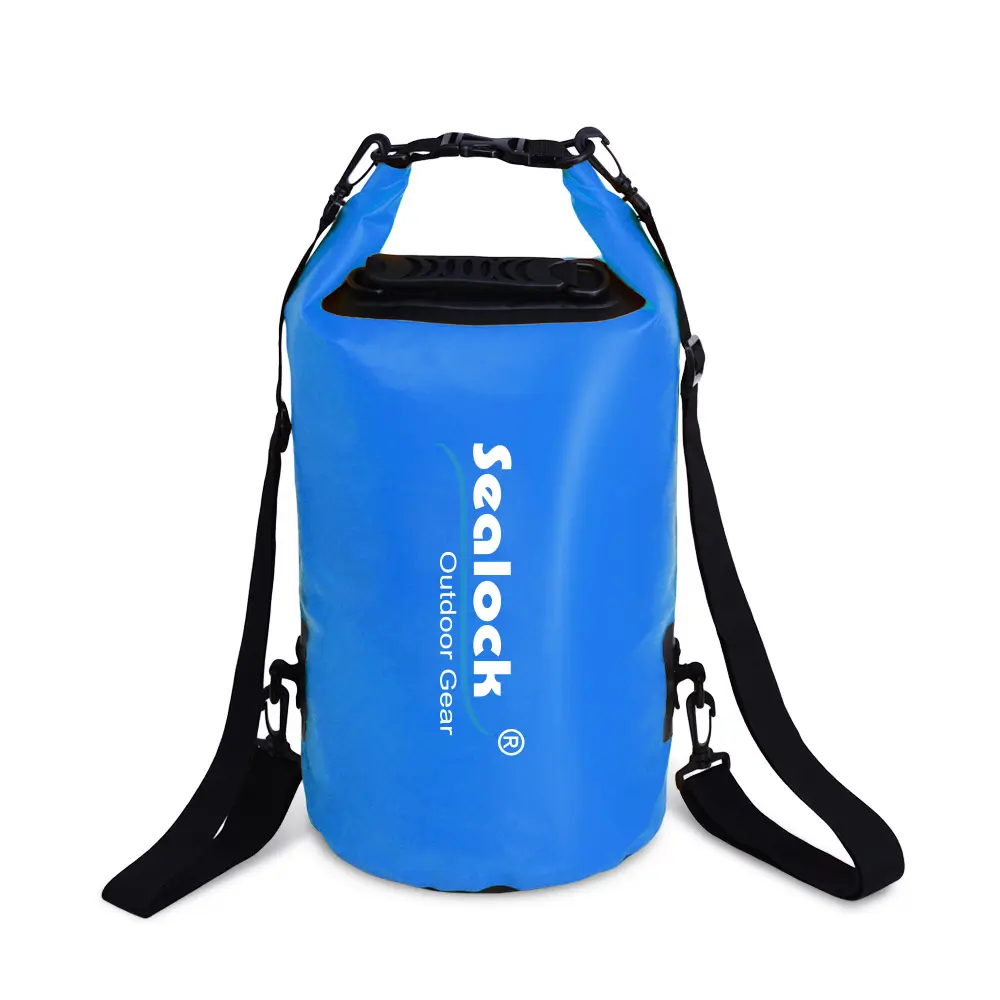
|
SL-D002 | Dry bag, 5–63L | 500D PVC | Fully welded — lowest complexity | View |
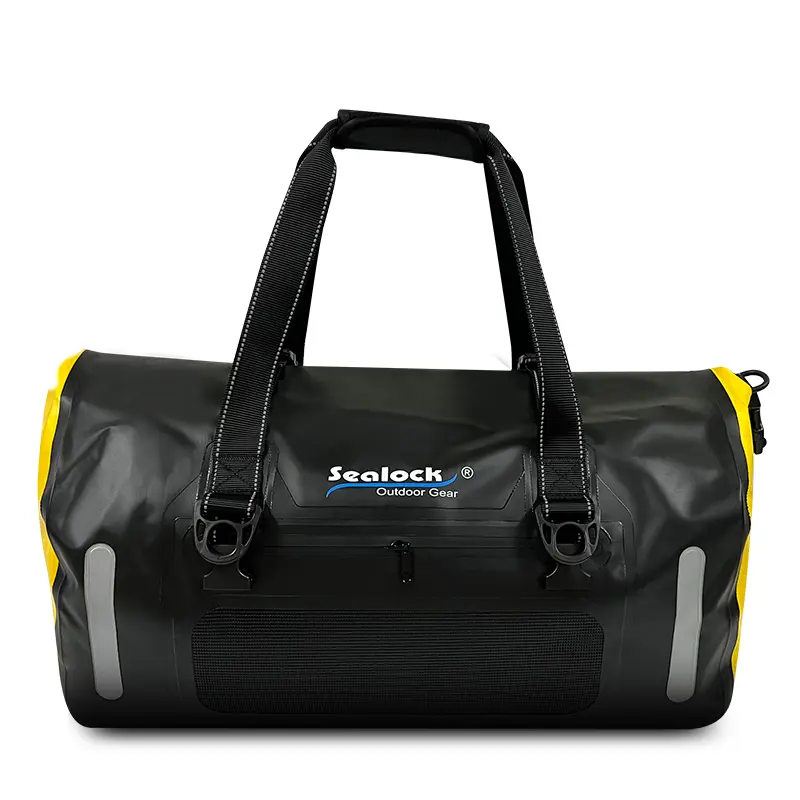
|
SL-K099 | Duffel, 40 / 60L | 840D TPU | Welded seamless | View |
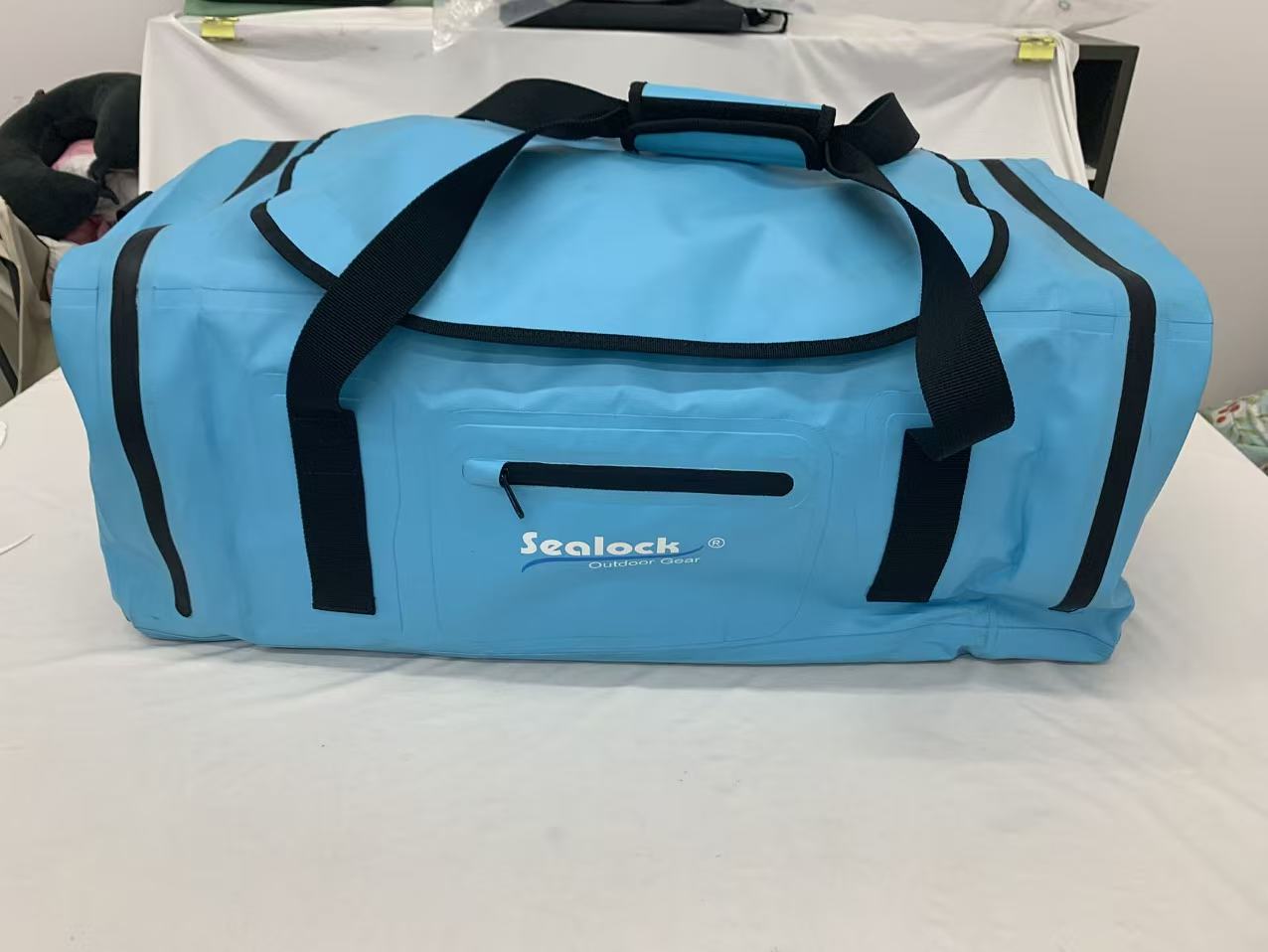
|
SL-C594 | Duffel, 55L | 500D PVC | Welded, three airtight zippers — higher component cost | View |

|
SL-E282 | Backpack, 35L | Coated poly + TPU | Sewing-led hybrid — higher labour content | View |
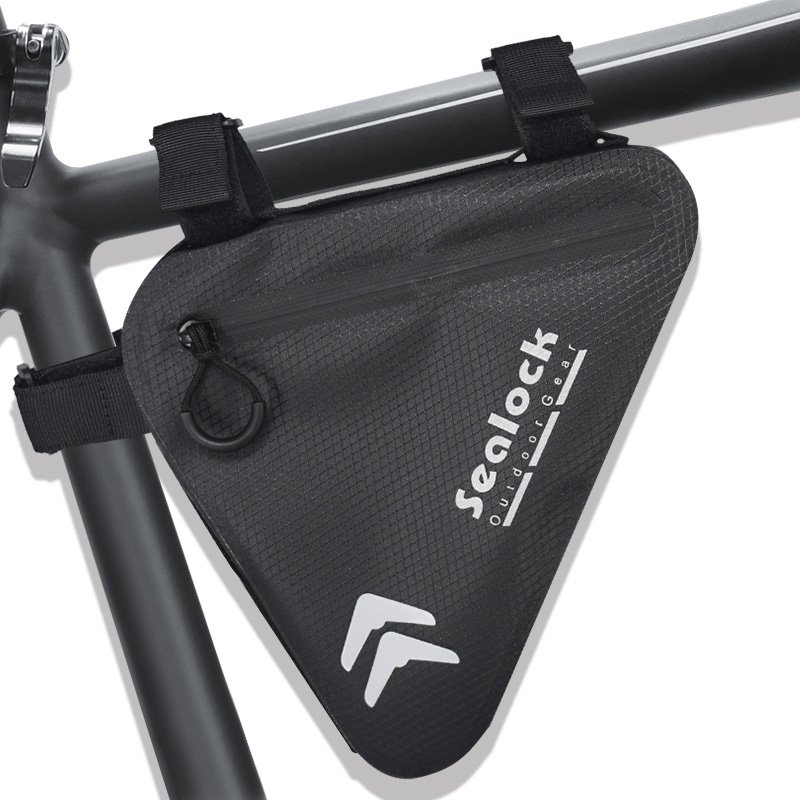
|
Frame Bag | Bike, 0.8L | 800D TPU | Small part, high denier | View |
|
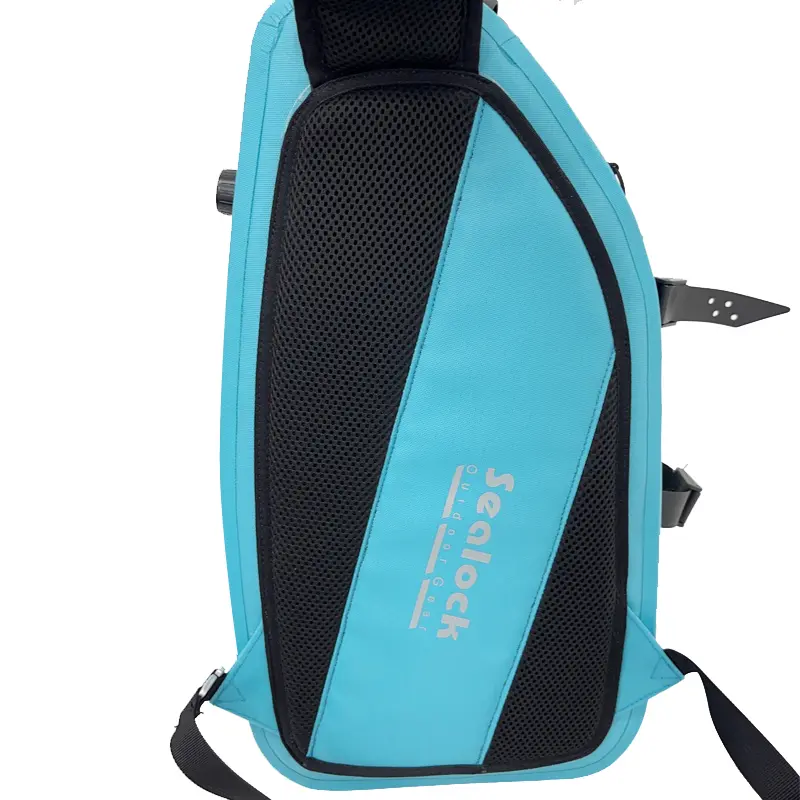
SL-E868A | Fishing sling, 12L | 840D TPU | Welded body, sewn carry, IPX8 zipper | View |
Full categories sit under waterproof bags, dry backpacks, and dry bags.
9. Quality Control Is a Cost Block, Not an Optional Extra
Inspection and testing sit inside the price rather than beside it, and removing them is how a suspiciously low quote is built. Every batch runs IQC on incoming fabric, zippers, and hardware; IPQC in process on both welding and sewing lines, including peel tests on sample welds at run start and stitch density and tension checks; and OQC with AQL sampling, batch testing to each model's stated rating, and signed gold-sample comparison. The full customer inspection procedure — unboxing, vacuum extraction, a 24-hour static rest, and air-leak determination — can be witnessed end to end, with SGS or QIMA inspection available. Standards are set out in the quality control standards for waterproof production.
10. FAQ
Q: Why do two quotes for the same specification differ so much?
A: Usually in the materials block. Two fabrics can carry the same denier label with different coating thickness, weight, and colourfastness — a difference invisible on a spec line but significant in cost and service life. Ask for coating type and thickness, GSM, and colourfastness alongside denier so the quotes describe the same thing.
Q: What proportion of the price is the fabric?
A: Materials generally run around 35–55% of factory cost across bag manufacturing, and waterproof products sit toward the upper end because coated technical fabrics cost more than plain textiles. It is the largest single lever, which is why it is also the first place cost gets quietly removed.
Q: If we double the order, does the unit price halve?
A: No — price moves in steps rather than a smooth curve, because fabric, hardware, printing, and line batching each have their own thresholds. Ask for the same specification quoted at two or three quantities; a target just below a tier can cost more in total than one slightly above.
Q: How much should we budget beyond the FOB price?
A: Enough to matter. Sample and tooling costs, compliance testing amortised per style, inspection, freight charged on volume rather than weight, duty under your HTS classification and origin, insurance, and last-mile delivery all sit outside the factory quote. Model landed cost before setting a retail price.
Q: Where can we safely cut cost?
A: Design complexity, standard colours instead of custom dye runs, catalogue hardware instead of custom mouldings, shared fabrics across SKUs, packaging optimisation, and longer lead times. What not to cut: coating grade, zipper rating, reinforcement at stress points, base panels, and inspection — the savings there are small and the failures expensive.
Q: A supplier dropped the price without changing the spec. Good sign?
A: Treat it as a question rather than a win. If nothing in the specification changed, something in the execution did. Ask what specifically is different, and request a line-item quotation so you can see which cost block moved.
Request a Line-Item Quotation
Send your specification and target quantities, and we can quote line by line and at two or three volumes so the cost structure is visible rather than bundled — submit an inquiry. Sealock responds to procurement enquiries within 24 hours, with production from Dongguan, China or Ho Chi Minh City, Vietnam.