- English
- Español
- Português
- русский
- Français
- 日本語
- Deutsch
- tiếng Việt
- Italiano
- Nederlands
- ภาษาไทย
- Polski
- 한국어
- Svenska
- magyar
- Malay
- বাংলা ভাষার
- Dansk
- Suomi
- हिन्दी
- Pilipino
- Türkçe
- Gaeilge
- العربية
- Indonesia
- Norsk
- تمل
- český
- ελληνικά
- український
- Javanese
- فارسی
- தமிழ்
- తెలుగు
- नेपाली
- Burmese
- български
- ລາວ
- Latine
- Қазақша
- Euskal
- Azərbaycan
- Slovenský jazyk
- Македонски
- Lietuvos
- Eesti Keel
- Română
- Slovenski
- मराठी
- Srpski језик

How to Get a Waterproof Bag Sample: Process, Cost and Lead Time
Sealock produces waterproof bag samples for OEM and wholesale buyers from factories in China and Vietnam, with samples in 7–15 days and an MOQ of 300 pieces. Sampling is the cheapest insurance available in this category and the step buyers most often try to compress. It is also where the questions that determine a project's cost get answered — how many revisions are included, whether the fee comes back, and what the factory needs from you before it can start. This is how the process actually runs.
1. Two Kinds of Sample, and Which You Need
Asking for "a sample" without specifying which kind wastes a fortnight. There are two, and they answer different questions:
- A stock or reference sample — an existing product from the factory's range, shipped so you can judge fabric, welding, stitching, hardware, and finish. It answers "is this factory any good," and it is the right first step when comparing suppliers. It is not your product.
- A custom prototype — built to your specification with your branding. It answers "can this factory build my product," and it becomes the reference for bulk. This is the sample that matters, and it is the one that should never be skipped.
Most projects need both, in that order. Evaluating three factories on stock samples costs a week and almost nothing; discovering the wrong factory during a custom prototype round costs a month.
2. What to Send Before Asking for a Quote
Sampling speed is decided by the brief, not by the factory. Send these and the first sample is usually right; leave gaps and the floor makes judgement calls you did not intend:
- Bag type and intended use, including the environment — rain, spray, or immersion changes the whole construction.
- Capacity and dimensions, or a reference product to match.
- Reference photos or a sketch. A physical reference sample is the fastest brief of all, because a factory reads pocket layout, zipper configuration, and strap design directly from it.
- Material and denier preference, or the performance target if you would rather the factory recommend.
- Waterproof rating required — IPX6 for heavy rain, IPX7 for brief immersion, IPX8 for sustained submersion.
- Logo file in vector, plus method and placement, and Pantone references for colour.
- Hardware and lining preferences, packaging requirements, target quantity, target FOB price, and your launch date.
The target price matters more than buyers expect: it drives fabric grade, hardware selection, and structural complexity, so stating it prevents a quote for a specification the programme cannot carry.
3. The Four Questions to Ask Before You Agree to Anything
Factory sampling policies vary widely, and the differences are large enough to change a project's budget. Ask all four explicitly:
- What is the sample fee, and is it refundable against the bulk order? Many suppliers credit the fee back once a production order is placed, often above a stated value. Some do not. Get it in writing.
- How many revisions are included? This is the one that catches people. Some factories include several rounds; others charge for each change, and the total can climb quickly on a design that needs iteration.
- How long does a sample take, and how long does each revision take? Sampling lead time varies from about a week to three weeks between suppliers, which matters enormously for a seasonal launch.
- Who pays courier, and is it refundable? Courier is normally separate and non-refundable regardless of the sample fee arrangement.
Sealock quotes samples at 7–15 days depending on model complexity, with tooling for new welded geometries quoted separately when a design needs its own die.

4. What Happens Between Your Brief and the Sample Arriving
- Design review. The factory checks whether the concept is manufacturable as drawn — whether a shape can be welded, whether a pocket layout fights a seam line, whether a strap anchor will take the load. Problems raised here are free; found later they are not.
- Material selection. Fabric and coating are chosen against weight, rating, cold performance, and cost. This decision affects MOQ and lead time as well as the product, since custom colours require a dedicated dye run.
- Pattern making. Drawings become patterns for every panel. Dimensional accuracy is set here and cannot be corrected downstream.
- Tooling, where the geometry is new. Welded shapes need a custom machined die, quoted separately and built before a sample can be produced.
- Logo testing. The branding method is trialled on the actual production material rather than a similar swatch, because adhesion behaves differently on a different coating.
- Sample making, on the same welding and sewing lines that will run the bulk order.
- Internal QC, then dispatch with the specification sheet against which you should evaluate it.
5. How to Evaluate the Sample
Inspecting a waterproof bag on a desk tells you very little. A meaningful evaluation:
- Test the waterproofing on the sealed, filled bag, not empty — and for a submersible claim, leave it under rather than dunking it briefly. Slow leaks and imperfect closure seating only appear over time.
- Load it to the weight the end user will carry and check the anchors, handles, and straps under that load.
- Operate the closure wet — and with gloves if the product will be used cold. An airtight zipper needs real leverage, and a seal the user cannot fully close is not a seal.
- Check it in context. A bike bag goes on the bike, a motorcycle bag on the machine, a fishing sling on the body. Fit problems do not show up on a table.
- Verify dimensions, weight, and colour against the specification and your Pantone reference.
Judge the supplier as well as the sample. One that asks clarifying questions, flags a manufacturability conflict, and proposes a fix is behaving as it will in bulk. One that silently guesses will do the same at scale.
6. The Approved Sample Becomes the Production Standard
Once approved, the sample stops being a prototype and becomes the contract. A signed gold sample is held by both sides, and the tech pack, patterns, stitch specifications, reinforcement points, materials, colour standard, and packaging are all locked against it. Every production batch is then compared to that reference at outgoing inspection.
This is why approving a sample you have not properly tested is expensive: whatever you signed off is what the factory is contractually building thousands of. It is also why skipping sampling to save two weeks is the single most common reason bulk bag orders go wrong.
7. Where Sampling Sits in the Whole Timeline
Buyers planning a launch should schedule backwards through the full sequence rather than against the sampling figure alone:
| Stage | Typical duration |
|---|---|
| Brief, quotation, material confirmation | Days |
| Sampling | 7–15 days per round here, plus courier |
| Revision rounds | Budget for one to two; a third usually signals a gap in the brief |
| Artwork, packaging and pre-production approval | Weeks, and often run in parallel |
| Bulk production | 30–45 days depending on quantity and model |
| Pre-shipment inspection and documentation | Days |
| Sea freight and customs | Varies by lane |
Ground-up development with new tooling runs longer than modifying an existing platform, so sharing the launch date at enquiry lets sampling be scheduled against it rather than discovered to be too late.
8. Sample Any Model in the Range
Models organized by category rather than priority:
| Image | Model | Category | Material | Rating | Product Page |
|---|---|---|---|---|---|
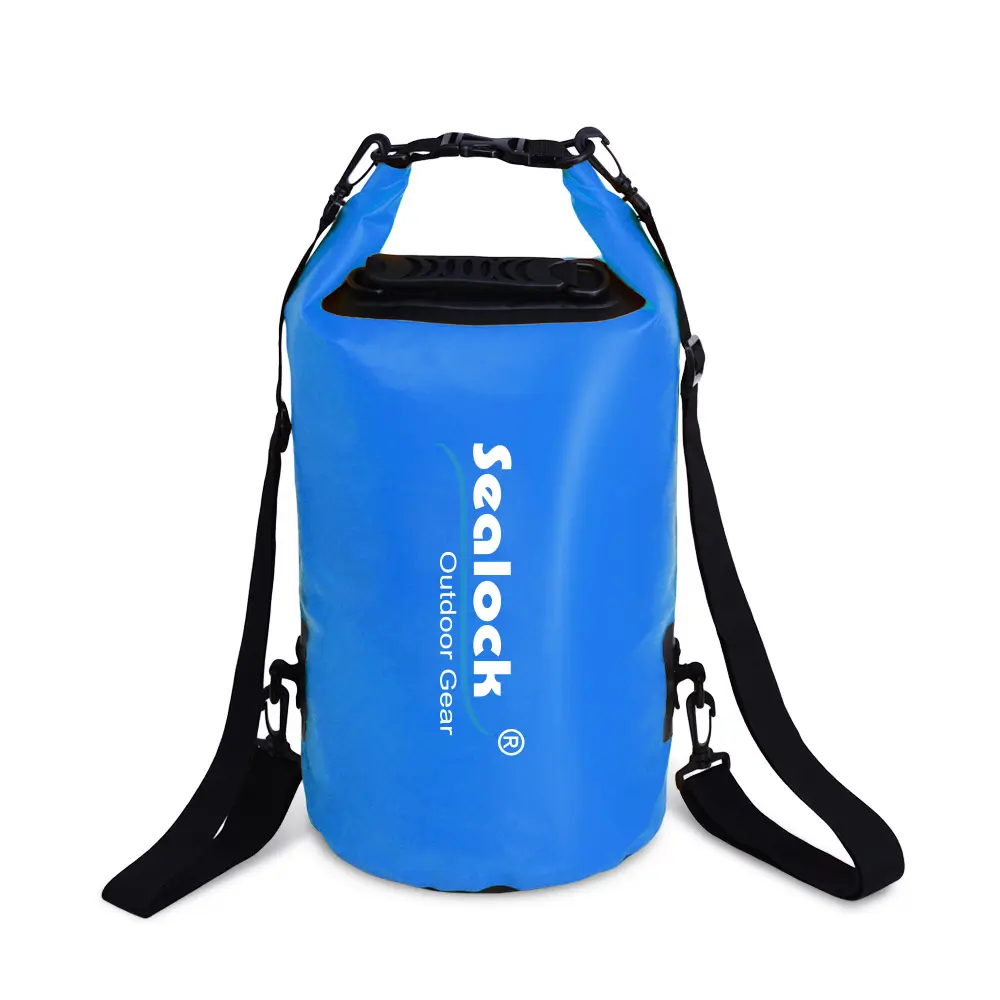
|
SL-D002 | Dry bag, 5–63L | 500D PVC | IPX7 | View |
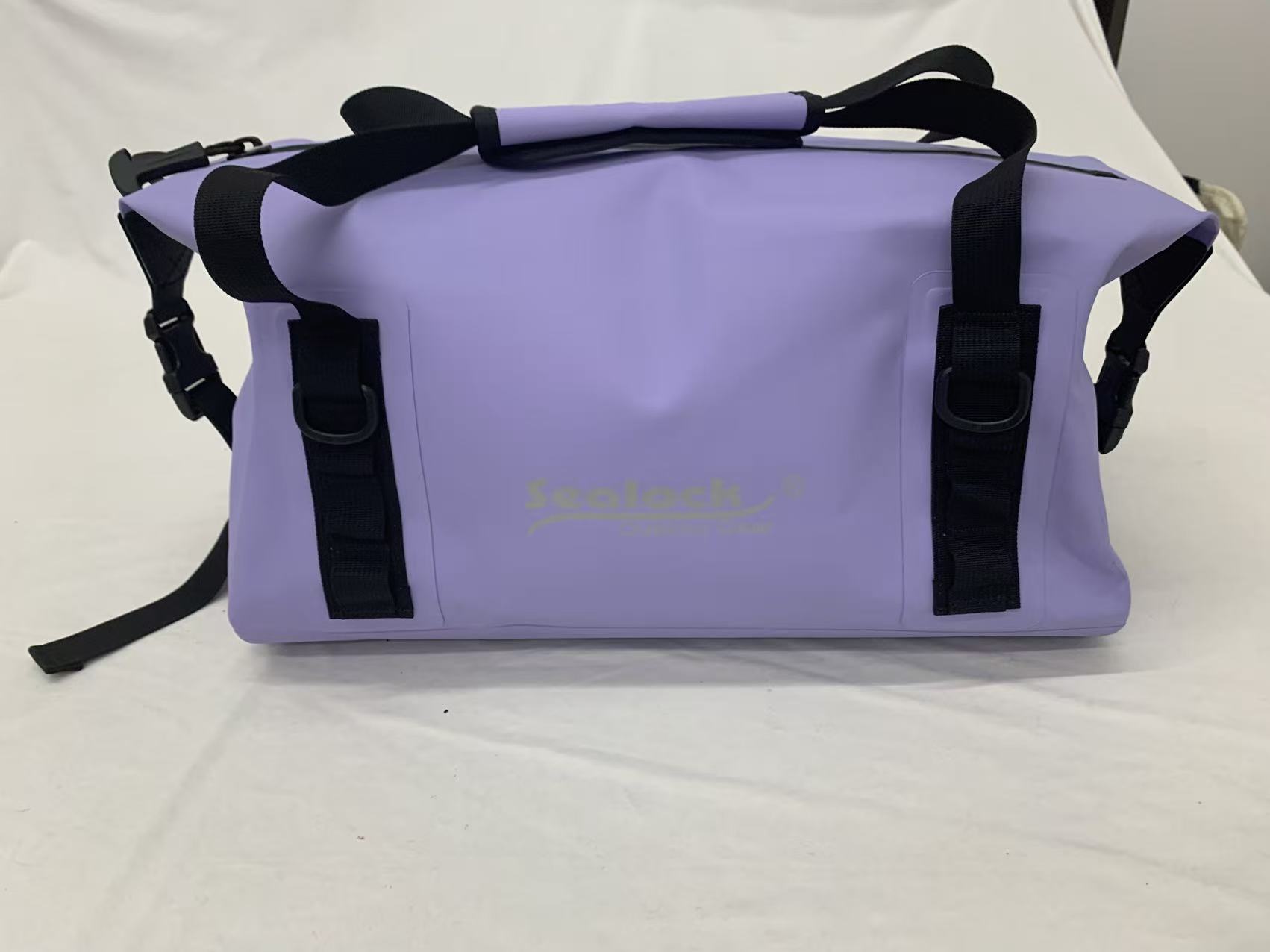
|
SL-C878 | Duffel, 20L | 840D TPU | IPX7 | View |

|
SL-E119 | Backpack, 20L | Cationic TPU composite | IPX8 | View |
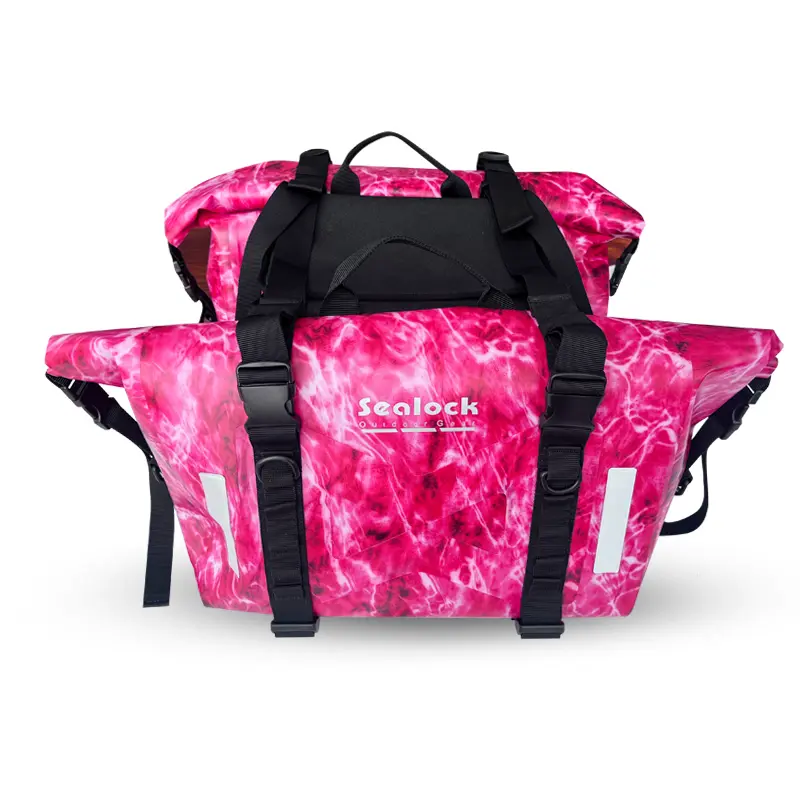
|
SL-C807 | Motorcycle luggage, 45L | 500D PVC / 420D TPU | IPX6 | View |
|
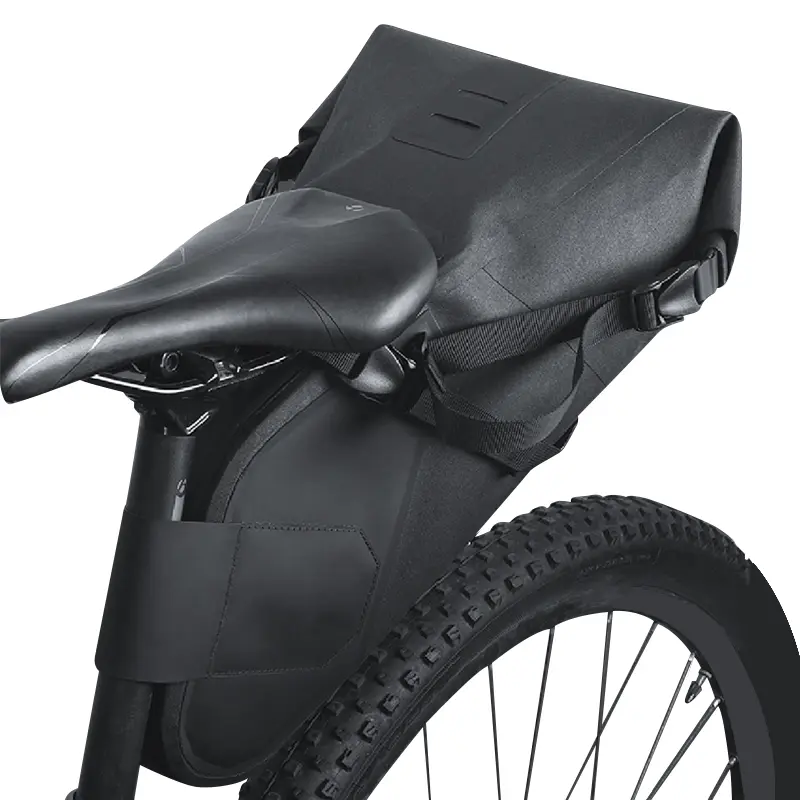
SL-K022 | Bike saddle bag, 10–14L | 420D / 600D TPU | IPX6–7 | View |
|
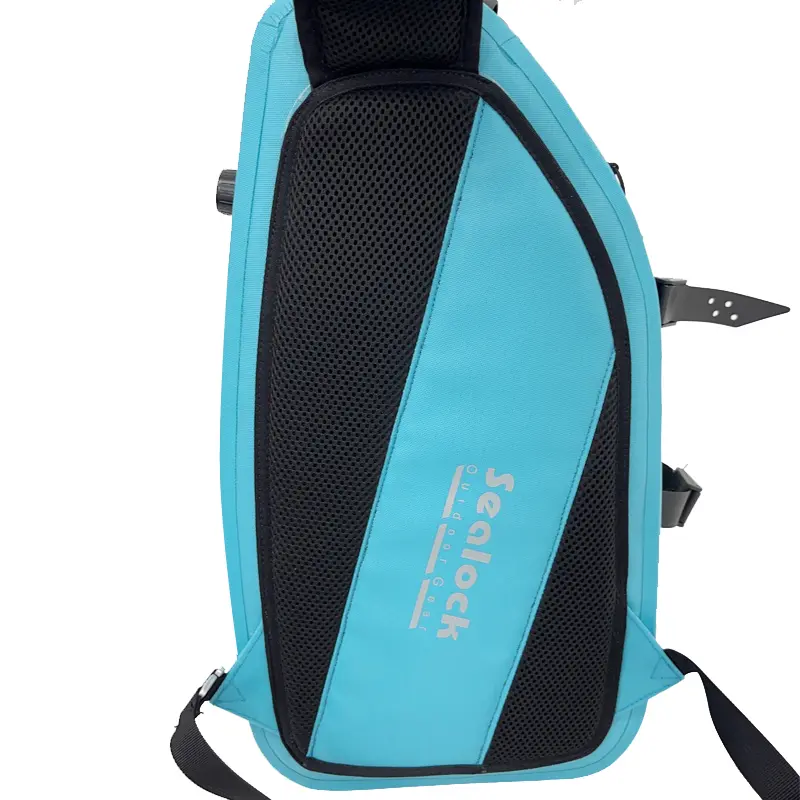
SL-E868A | Fishing sling, 12L | 840D TPU | IPX8 | View |
Full categories sit under waterproof bags, dry backpacks, and dry bags. Construction options are covered in the guide to sewn versus welded construction, and origin selection in the guide to choosing a manufacturing base.
9. Standard Terms
Sealock (YiFuLong Outdoor Gear Co., Ltd.) has built waterproof bags for over 20 years, producing for international outdoor brands including OSPREY, KAILAS, Helly Hansen, SIMMS, ORVIS, and West Marine.
- Samples: 7–15 days | MOQ: 300 pcs on most models | Bulk: 30–45 days
- Production: in-house 27.12 MHz high-frequency welding and industrial sewing, separate workshops on the same floor
- Facilities: Dongguan, China | Ho Chi Minh City, Vietnam — either origin on any model
- Terms: FOB Guangdong, T/T 30% deposit and 70% balance against inspection
- Certifications: ISO 9001, BSCI, SMETA, Sedex, HIGG, GRS, SCAN; factory audit available
10. Quality Control on Samples and Bulk
Samples are produced on the same lines and to the same standards as production. Every bulk batch then runs IQC on incoming fabric, zippers, and hardware; IPQC in process on both welding and sewing lines, including peel tests on sample welds at run start and stitch density and tension checks; and OQC with AQL sampling, batch testing to each model's stated rating, and signed gold-sample comparison. The full customer inspection procedure — unboxing, vacuum extraction, a 24-hour static rest, and air-leak determination — can be witnessed end to end, with SGS or QIMA inspection available. Standards are set out in the quality control standards for waterproof production.
11. FAQ
Q: How long does a waterproof bag sample take?
A: 7–15 days here depending on model complexity, plus international courier. A new welded geometry needs its own machined die built before sampling can start, so ground-up development runs longer than modifying an existing platform.
Q: Is the sample fee refundable?
A: Ask every supplier this explicitly, along with whether courier is included — it normally is not. Policies vary widely across factories, and so does the number of revisions included. Getting both in writing before starting is what prevents a development budget from drifting.
Q: How many revision rounds should we expect?
A: Budget for one to two. Reaching a third usually means the original brief had gaps rather than that the factory is underperforming — a vague zipper, denier, or hardware callout forces the floor to make a judgement call and keep moving.
Q: Can we skip sampling to hit a launch date?
A: It is the most expensive shortcut in this category. Skipping sampling to save two weeks is the most common reason bulk bag orders go wrong, because the approved sample is what the factory is contractually reproducing thousands of times.
Q: What do you need from us to start?
A: Bag type and use environment, capacity, reference photos or a sample, material or performance target, required IPX rating, vector logo with method and placement, Pantone references, packaging needs, target quantity, target FOB price, and launch date. A physical reference sample shortens development more than any written brief.
Q: Can we get a sample before committing to a custom project?
A: Yes — a stock sample from the existing range lets you judge welding, stitching, materials, and finish before any custom development starts. It is the sensible first step when comparing factories.
Request a Sample
Send your bag type, target rating and quantity, and whether you want a stock sample or a custom prototype — submit an inquiry. Sealock responds to procurement enquiries within 24 hours, with samples in 7–15 days and production from Dongguan, China or Ho Chi Minh City, Vietnam.