
- English
- Español
- Português
- русский
- Français
- 日本語
- Deutsch
- tiếng Việt
- Italiano
- Nederlands
- ภาษาไทย
- Polski
- 한국어
- Svenska
- magyar
- Malay
- বাংলা ভাষার
- Dansk
- Suomi
- हिन्दी
- Pilipino
- Türkçe
- Gaeilge
- العربية
- Indonesia
- Norsk
- تمل
- český
- ελληνικά
- український
- Javanese
- فارسی
- தமிழ்
- తెలుగు
- नेपाली
- Burmese
- български
- ລາວ
- Latine
- Қазақша
- Euskal
- Azərbaycan
- Slovenský jazyk
- Македонски
- Lietuvos
- Eesti Keel
- Română
- Slovenski
- मराठी
- Srpski језик

Waterproof Bag Factory Audit: What to Inspect and How to Arrange
Sealock welcomes factory audits at both its production sites, in Dongguan, China and Ho Chi Minh City, Vietnam, for OEM and wholesale buyers. Auditing a waterproof bag factory is not the same exercise as auditing a general textile plant: the equipment that determines whether the product works is specialised, the tests that verify it are specific, and a large share of the assurance a buyer needs cannot be seen in a sewing hall. This sets out what to look at, which audit type suits which order, and how to arrange one.
1. Pick the Right Audit Type First
"Factory audit" covers activities that differ by an order of magnitude in cost and coverage, and picking the wrong one for the deal size wastes either money or assurance:
| Type | Typical cost | Suits |
|---|---|---|
| Document verification | Around $200–500 | Confirming legal existence and registration before a first sample |
| Virtual walkthrough | Around $300–700 | Small or repeat orders; a fast look at real equipment |
| On-site technical audit | Around $400–1,000 per man-day | New supplier, significant order, technical product |
| Major third-party firm on-site | Around $600–2,500 | When a retail customer requires a recognised report |
| Social compliance audit (BSCI, SMETA) | Around $1,000–2,500 | Retail and marketplace onboarding requirements |
A practical rule: for a first order at MOQ from a supplier you have sampled, a virtual walkthrough plus document verification is usually proportionate. For a programme that will run for years, or one going into organised retail, an on-site technical audit earns its cost. Rates vary with location and man-days, and remote sites carry travel surcharges.
2. Announced, Semi-Announced, or Unannounced
Announced audits guarantee access but give the factory time to prepare. Unannounced audits show the real day-to-day state but risk being turned away. Semi-announced — a known window with an unknown exact day — is the common compromise, and unannounced inspections have become substantially more prevalent across social compliance auditing in recent years.
For a buyer, the more useful signal is how a supplier responds to the request. A factory confident in its operations agrees to a semi-announced window without negotiation; hesitation is itself an audit finding.
3. The Seven Areas a Credible Audit Covers
A complete audit addresses all of these. Reports covering only two or three of them are common and provide little qualification value:
- Legal and business legitimacy — business licence, registration, export permits, and scope of business that actually covers manufacturing.
- Quality management system — ISO 9001 implementation, documentation, defect tracking, and corrective action records.
- Production capacity and capability — equipment, output rates, and disclosure of what is subcontracted.
- Test instruments and calibration — the testing equipment on site and current calibration records.
- Raw material handling — incoming inspection procedures and storage.
- Workforce and training — key personnel, skills, and training records.
- Social and environmental compliance — working hours, wages, safety, and environmental controls.
Worth knowing what an audit does not do: it does not inspect your finished goods, certify product compliance to a market standard, or replace laboratory testing. Those are separate steps in a complete quality programme.
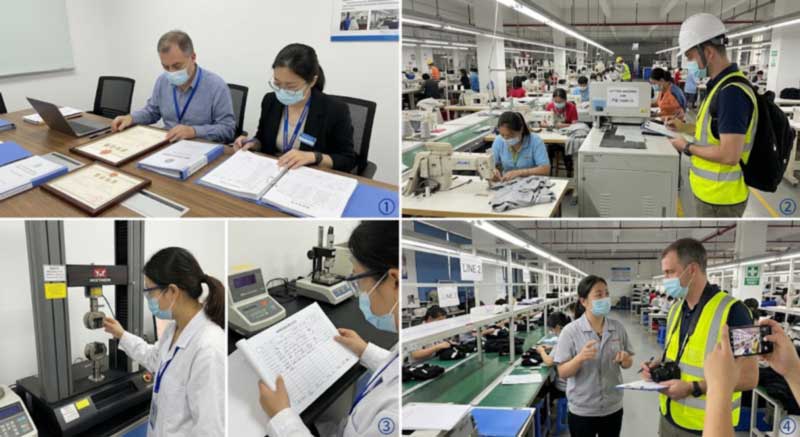
4. What to Inspect in a Waterproof Bag Factory Specifically
This is where a generic audit checklist under-serves the buyer. The things that determine whether a waterproof bag performs are not the things a general textile auditor looks for:
- High-frequency welding equipment. Ask to see the welders running, not idle. Confirm the operating frequency, count the lines, and ask which product categories run on which. A sewing factory taking waterproof orders will not have them.
- Die tooling and the tooling workshop. Custom copper or brass dies are what allow new geometries. A factory that can only refill existing moulds cannot develop a new shape, and the die store is quick to inspect.
- The sewing hall, as a separate capability. Waterproof bags need both processes — welding for the sealed body, sewing for harnesses, pockets, bartacked anchors, and reinforcement. Confirm both are in house rather than one being subcontracted, since a handoff sits exactly where fit and durability are decided.
- The testing station. Look for immersion tanks or pressure rigs, and ask to see a test performed rather than a report about one.
- Weld peel test records at run start. A correct weld tears the base fabric rather than parting at the interface. Ask to see the samples and the log.
- Gold sample storage. A room or cabinet of signed reference samples with specification sheets attached indicates a factory that controls repeat orders; its absence indicates one that does not.
- Incoming material control. Coating consistency, thickness, and shade checks on arriving fabric rolls, since a bad roll stopped at IQC never becomes a bad batch.
5. Ask to See a Live Test, Not a Certificate
The most efficient twenty minutes of a waterproof bag audit is watching the product be tested. Requests worth making:
- A full water immersion test on a filled, sealed unit — and for a submersible claim, left in rather than briefly dunked.
- A weld peel test pulled from the current run.
- The customer inspection procedure — at Sealock this runs as unboxing, vacuum extraction, a 24-hour static rest, and air-leak determination, and a buyer or their inspector can witness it end to end. A 24-hour vacuum hold surfaces slow leaks that a short dunk cannot.
- Load cycling at strap anchors and handles, which is where bags actually fail in service.
A factory that can run these on request during a visit is demonstrating a working system. One that offers certificates instead is demonstrating a filing cabinet.
6. Social Compliance Became Commercial in 2026
Two shifts changed the weight of this section. Major Western retailers and marketplaces increasingly require a valid SMETA or BSCI audit before onboarding a supplier at all, so a failed ethical audit can freeze a buyer relationship regardless of product quality. And the BSCI framework now assigns substantially more weight to environmental and governance criteria than it did previously — factories failing on wastewater or chemical storage can be disqualified regardless of labour scores.
On top of that, the 2026 Section 301 actions affecting both China and Vietnam were grounded in forced-labour enforcement, which gives documented labour standards direct customs relevance rather than purely ethical relevance. Sealock holds ISO 9001, BSCI, SMETA, Sedex, HIGG, GRS, and SCAN, and audit is available at either site. The tariff context is set out in the guide to choosing a manufacturing base in 2026.
7. How to Arrange One
- Decide the type and scope against your order size and channel requirements — technical, social compliance, or both.
- Choose who conducts it. A recognised third party such as SGS, QIMA, Bureau Veritas, or Intertek if a retail customer needs the report; a regional inspection firm at lower cost if it is for your own assurance; or your own staff if you have category expertise.
- Notify the supplier and agree the window. Semi-announced is the practical compromise. Sealock accepts audits at either site and can host buyer-appointed or third-party auditors.
- Send the checklist in advance — including the waterproof-specific items above, which a general auditor will not otherwise cover.
- Specify the live tests you want witnessed, so samples and equipment are ready rather than the visit being spent locating them.
- Review the report against a decision. Approved, conditionally approved with a corrective action plan, or rejected — with a re-check date if conditional. Reports from established firms typically arrive within a few business days of the visit.
8. Sealock Facilities and Terms
Sealock (YiFuLong Outdoor Gear Co., Ltd.) has built waterproof bags for over 20 years, producing for international outdoor brands including OSPREY, KAILAS, Helly Hansen, SIMMS, ORVIS, and West Marine.
- Sites: Dongguan, China | Ho Chi Minh City, Vietnam — audit available at either, either origin on any model
- Processes: in-house 27.12 MHz high-frequency welding and industrial sewing, run as separate workshops on the same production floor
- MOQ: 300 pcs on most models | Samples: 7–15 days | Bulk: 30–45 days
- Certifications: ISO 9001, BSCI, SMETA, Sedex, HIGG, GRS, SCAN
- Inspection: buyer-appointed or third-party pre-shipment inspection accepted; customer inspection procedure witnessable end to end
9. Products Made on the Audited Lines
Models organized by category rather than priority:
| Image | Model | Category | Material | Rating | Product Page |
|---|---|---|---|---|---|
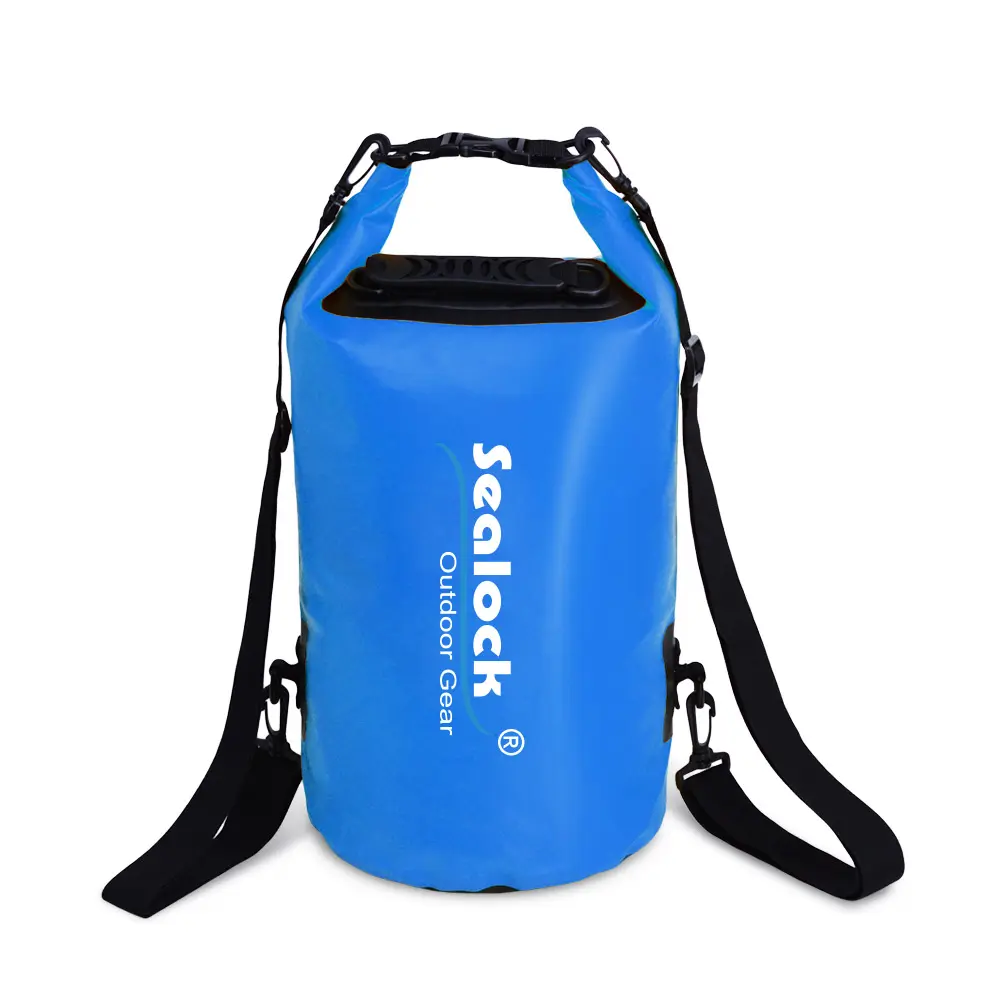
|
SL-D002 | Dry bag, 5–63L | 500D PVC | IPX7 | View |
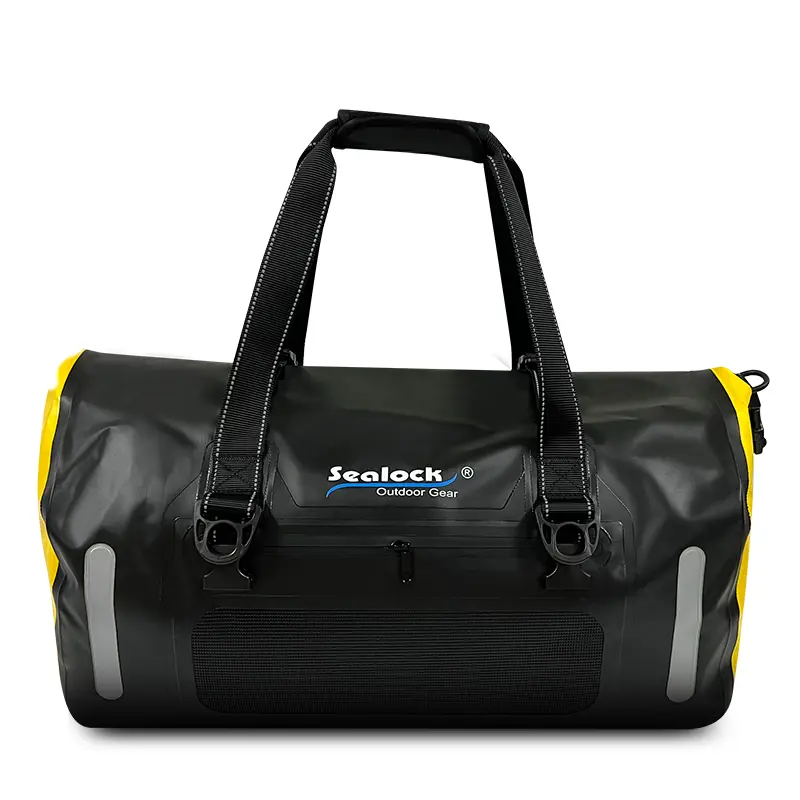
|
SL-K099 | Duffel, 40 / 60L | 840D TPU | IPX7 | View |

|
SL-E119 | Backpack, 20L | Cationic TPU composite | IPX8 | View |
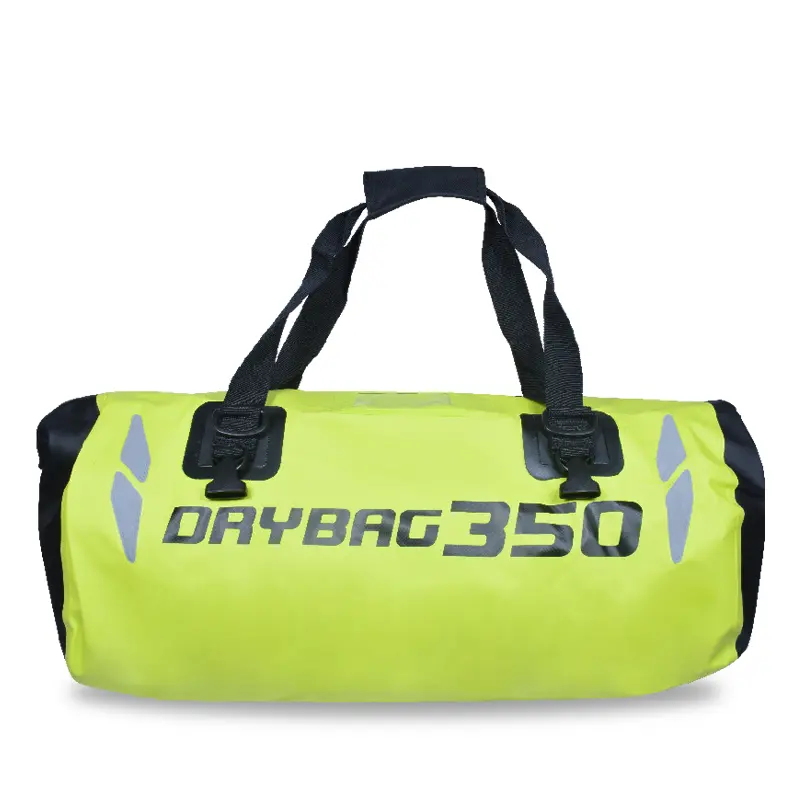
|
SL-C619 | Motorcycle, 35 / 50L | 500D PVC | IPX6 | View |
|
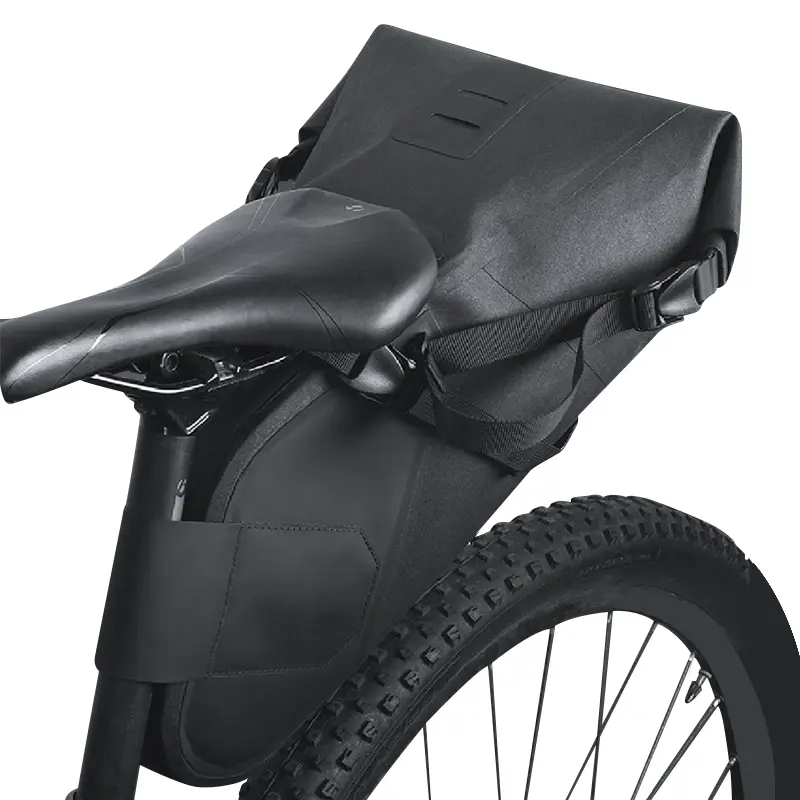
SL-K022 | Bike, 10–14L | 420D / 600D TPU | IPX6–7 | View |
|
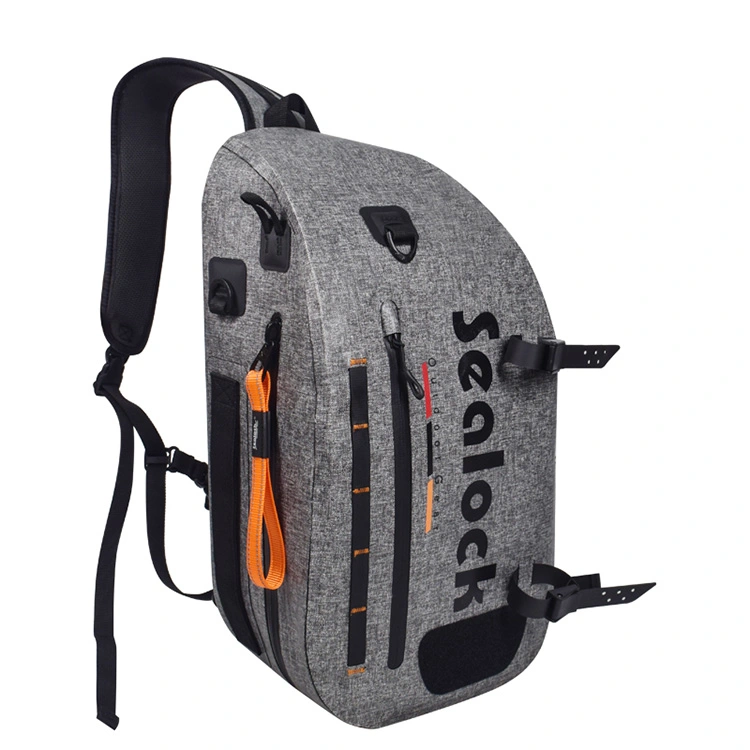
SL-E589 | Fishing sling, 15L | 840D TPU | IPX8 to 20 m | View |
Full categories sit under waterproof bags, dry backpacks, and dry bags. Construction options are covered in the guide to sewn versus welded construction, and the sampling stage in the guide to getting a waterproof bag sample.
10. What the Audit Does Not Replace
An audit qualifies the supplier; it does not qualify the shipment. Both are needed. Every batch here runs IQC on incoming fabric, zippers, and hardware; IPQC in process on both welding and sewing lines, including peel tests on sample welds at run start and stitch density and tension checks; and OQC with AQL sampling, batch testing to each model's stated rating, and signed gold-sample comparison. Pre-shipment inspection remains a separate step, and tying the balance payment to a passed report is what gives it commercial force. Standards are set out in the quality control standards for waterproof production.
11. FAQ
Q: Do we need a full audit for a first order at MOQ?
A: Often not. For a small first order from a supplier you have already sampled, document verification plus a virtual walkthrough is usually proportionate. Full on-site audits earn their cost on large orders, technical or safety-related products, and brand-new suppliers.
Q: What should a waterproof bag audit check that a general audit misses?
A: The welding equipment running rather than idle, the die tooling workshop, whether sewing is in house or subcontracted, the testing station, weld peel test records at run start, gold sample storage, and incoming fabric coating checks. A general textile auditor will not look for any of these unless you put them on the checklist.
Q: Announced or unannounced?
A: Semi-announced is the practical compromise — a known window without a fixed day. How a supplier reacts to the request tells you something regardless of which you choose.
Q: Can we witness the waterproof testing ourselves?
A: Yes. Immersion testing on filled units, weld peel tests from the current run, load cycling at anchors, and the full customer inspection procedure — unboxing, vacuum extraction, a 24-hour static rest, air-leak determination — can all be witnessed by a buyer or their appointed inspector.
Q: Does a passed audit mean our shipment will be correct?
A: No. An audit qualifies the factory; a pre-shipment inspection qualifies the goods. Keep both, and tie the balance payment to a passed inspection report so it carries commercial weight.
Q: Can you be audited in Vietnam as well as China?
A: Yes — both sites accept audits, and either origin is available on any model in the range. For buyers using origin to manage duty exposure, auditing the site that will actually produce the goods is the relevant one.
Arrange an Audit
Send your preferred audit type, window, and whether you are appointing a third party, and we can confirm access at either site and prepare the live tests you want to witness — submit an inquiry. Sealock responds to procurement enquiries within 24 hours.