
- English
- Español
- Português
- русский
- Français
- 日本語
- Deutsch
- tiếng Việt
- Italiano
- Nederlands
- ภาษาไทย
- Polski
- 한국어
- Svenska
- magyar
- Malay
- বাংলা ভাষার
- Dansk
- Suomi
- हिन्दी
- Pilipino
- Türkçe
- Gaeilge
- العربية
- Indonesia
- Norsk
- تمل
- český
- ελληνικά
- український
- Javanese
- فارسی
- தமிழ்
- తెలుగు
- नेपाली
- Burmese
- български
- ລາວ
- Latine
- Қазақша
- Euskal
- Azərbaycan
- Slovenský jazyk
- Македонски
- Lietuvos
- Eesti Keel
- Română
- Slovenski
- मराठी
- Srpski језик

Dry Bag MOQ Explained: Minimum Order Quantities for OEM Projects
Sealock is a dry bag manufacturer running OEM and wholesale projects at an MOQ of 300 pieces, and the minimum order quantity is the number that surprises the most first-time buyers. MOQ is not a barrier a factory invents to exclude small brands — it is a calculation tied to material sourcing and production economics, and understanding what drives it is exactly what lets a buyer negotiate it intelligently rather than just asking for a lower number. This explains why dry bag MOQs land where they do, what moves them, and how to work with them on an OEM project.
1. What MOQ Means and Why It Exists
MOQ (minimum order quantity) is the smallest quantity a factory will produce in one run. It exists because every production run carries fixed costs that must be recovered regardless of how many pieces are made — below a certain volume, the factory loses money on the order. For a dry bag, those fixed costs are incurred before a single finished bag exists: material purchasing, cutting die setup, weld tooling, color matching, and line calibration. MOQ is the point where those costs spread thin enough across the run for the order to be viable for both sides.
2. The Real Cost Drivers Behind a Dry Bag MOQ
MOQ is not a random figure from a sales manager. Three drivers set it, and the first is the one most buyers underestimate:
- Material minimums (the number one driver). Factories do not make their own fabric — they buy PVC or TPU tarpaulin from mills that have their own minimums, often a full roll. If a mill's minimum roll yields enough material for 800 bags and a buyer wants 100, the factory must either buy the full roll and eat the waste or decline the order. Custom Pantone-dyed fabric raises this further, because a custom color means a dedicated dye run.
- Setup and tooling. A new cutting die for a custom bag shape, weld electrode setup, and color matching are one-time costs that are identical whether the run is 100 bags or 10,000. Spread over more units, the per-bag setup cost falls sharply — which is the whole reason a factory pushes for a higher quantity.
- Line changeover and downtime. A production line runs efficiently in flow. Stopping to switch styles after a short run causes downtime the factory loses money on, so very small runs are penalized by the economics of the line itself.
3. What Moves a Dry Bag MOQ Up or Down
The same factory quotes different MOQs for different projects, based on how much setup and custom sourcing the order requires:
| Factor | Lower MOQ | Higher MOQ |
|---|---|---|
| Base model | Existing factory design | Ground-up custom development |
| Fabric | Standard stock material | Custom material or special denier |
| Color | Standard stock colors | Custom Pantone-matched dye run |
| Hardware | Standard buckles and fittings | Custom or molded hardware |
| Construction | Simple roll-top sack | Multi-compartment, backpack harness, complex build |
| Branding | Simple silkscreen | Multiple print methods or woven labels |
The practical implication: a buyer who wants to start below a custom MOQ can often do so by keeping the first order on standard material, a standard size, and a standard color, then upgrading to custom materials, sizes and branding once volume grows.
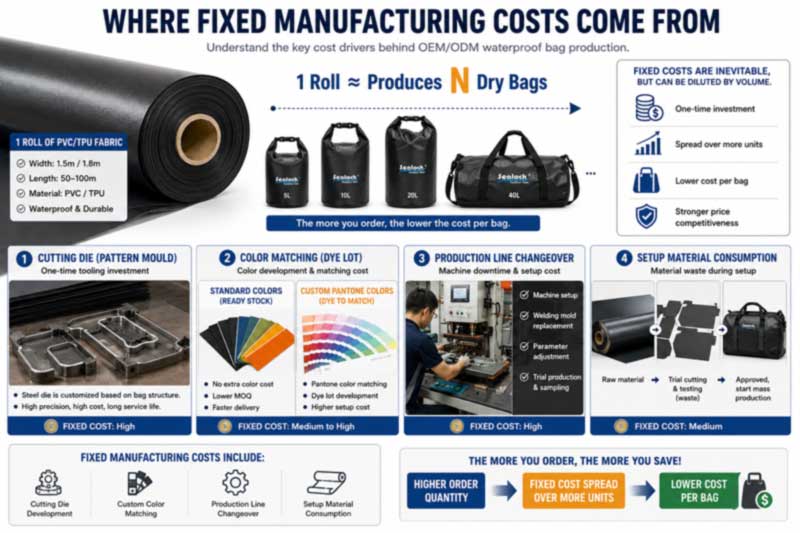
Figure 1: Causes of MOQ — fixed costs incurred from ordering full rolls of fabric, mold opening and line changeovers become economical only when allocated over a sufficient quantity.
4. Is the Listed MOQ the Real MOQ?
Not always. A public MOQ figure is frequently a filter, set high to screen out very small buyers, and the real number can be discussed privately once a supplier sees a serious enquiry. It is always worth asking — but with the reasoning above in hand, because a factory reduces MOQ for buyers who reduce its risk or its setup cost, not for buyers who simply push on the number. Sealock states its MOQ plainly at 300 pcs per model, which is a genuine production figure rather than a screening threshold.
5. Five Ways to Negotiate a Lower MOQ
Each of these works by removing a specific cost driver rather than asking the factory to absorb a loss:
- Use in-stock fabric and color. The single most effective lever — if the factory does not have to buy a fresh roll or run a custom dye lot, the material minimum that sets the MOQ largely disappears. Standard 500D PVC tarpaulin and 420D TPU laminate are both held as running stock, so a first order on either avoids a dedicated material buy.
- Pay tooling as a one-time cost. If a cutting die or setup is the dominant driver, offering to pay it upfront and separately from the per-unit price removes the fixed-cost burden from the run economics and can lower the per-run MOQ significantly — common in OEM arrangements.
- Commit to repeat orders. A binding commitment across the next several orders lets the factory buy material in advance with confidence, lowering its per-unit fixed cost. Reduced planning uncertainty is something factories reward.
- Accept a higher unit price. Calculate how much the price would need to rise to justify a 30–40% MOQ reduction, and present it as a packaged proposal. A modest per-unit premium can make a smaller run viable for the factory.
- Consolidate styles or colors onto one material. Ordering several SKUs that share the same base fabric lets one roll serve the whole order, spreading the material minimum across models.
6. The Hidden Cost of Chasing a Very Low MOQ
A low MOQ is not automatically the better deal. A lower minimum usually means a higher unit cost, because setup and overhead spread across fewer pieces. It can also point to a supplier structured for small runs rather than the consistent, welded, pressure-tested production a waterproof bag needs — and the "cheap" small order becomes expensive when quality is inconsistent. The right question is not "who has the lowest MOQ," but "what MOQ matches my stage while still coming from a factory that can build the bag correctly."
A supplier that can explain what is driving its MOQ, and whether there is flexibility, is a better sign than one that simply quotes the lowest number — the same technical depth that separates a factory from a reseller when selecting a manufacturing partner.
7. How MOQ Fits an OEM Dry Bag Project
On a Sealock OEM project, the MOQ sits inside a defined sequence: brief and tech pack, quotation with MOQ and terms stated, sampling with a signed gold sample, then bulk production at MOQ under three-stage QC — the full OEM development process from brief to bulk.
Standard terms: MOQ 300 pcs per model, samples in 7–15 days, bulk in 30–45 days, FOB Guangdong, with production from Dongguan, China or Ho Chi Minh City, Vietnam. Because the range spans categories, a buyer can also meet volume across a coordinated line — several models under one logo and colorway — rather than committing deeply to a single SKU. Full ranges sit under dry bags, dry backpacks, and duffels, and ground-up development from a sketch or sample is supported.
8. Representative Models and Their Order Basis
MOQ applies per model; models sharing a base material are easier to combine within one order. Representative range, organized by type rather than priority:
| Image | Model | Capacity | Material | MOQ | Product Page |
|---|---|---|---|---|---|
|
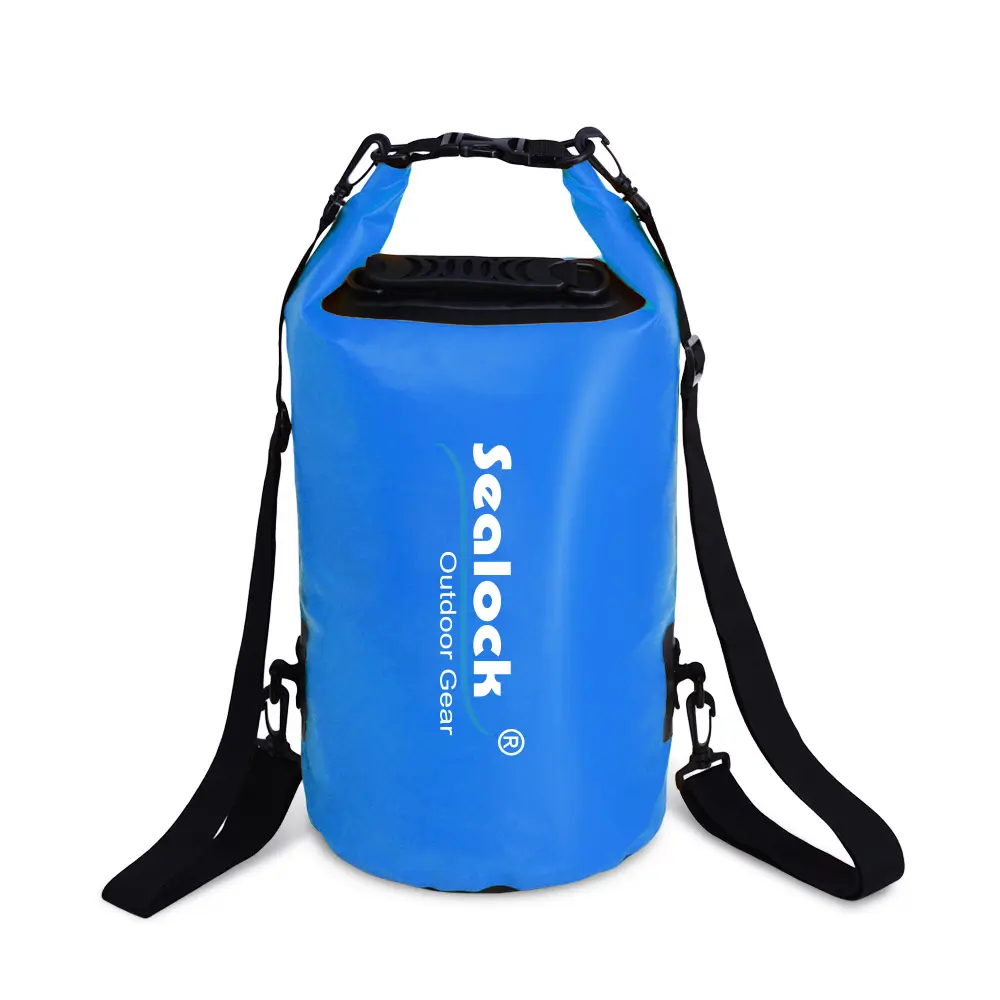
SL-D002 Dry Bag | 5–63L | 500D PVC | 300 pcs | View |
|
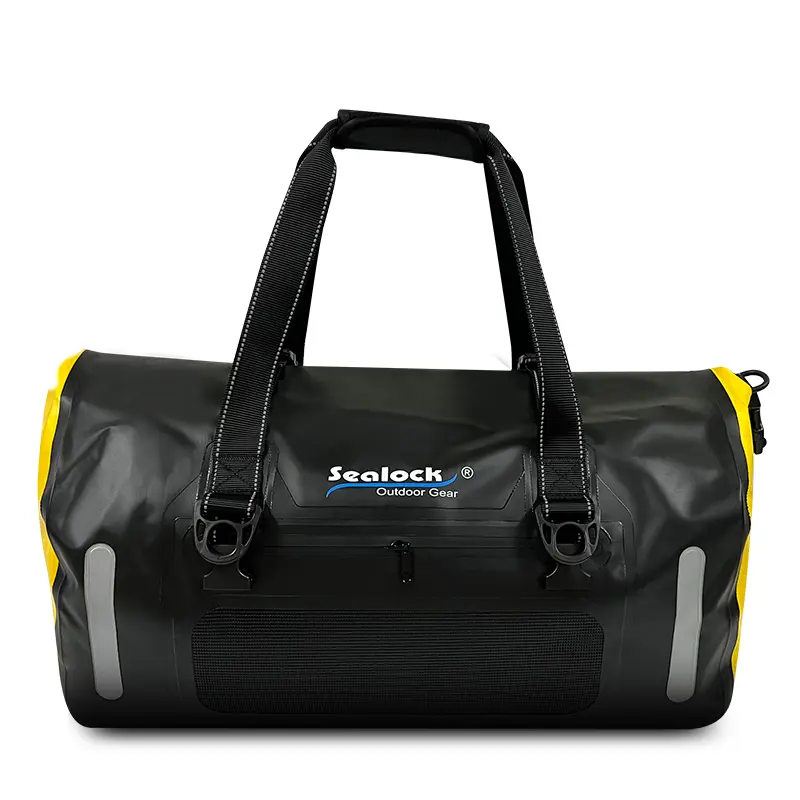
SL-K099 Duffel | 40 / 60L | 840D TPU | 300 pcs | View |
|
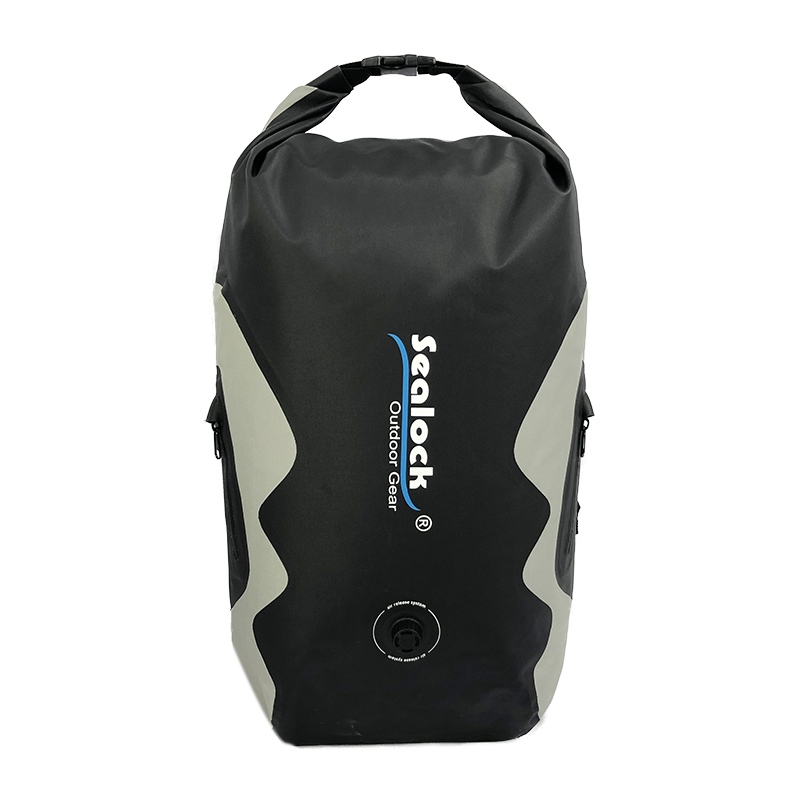
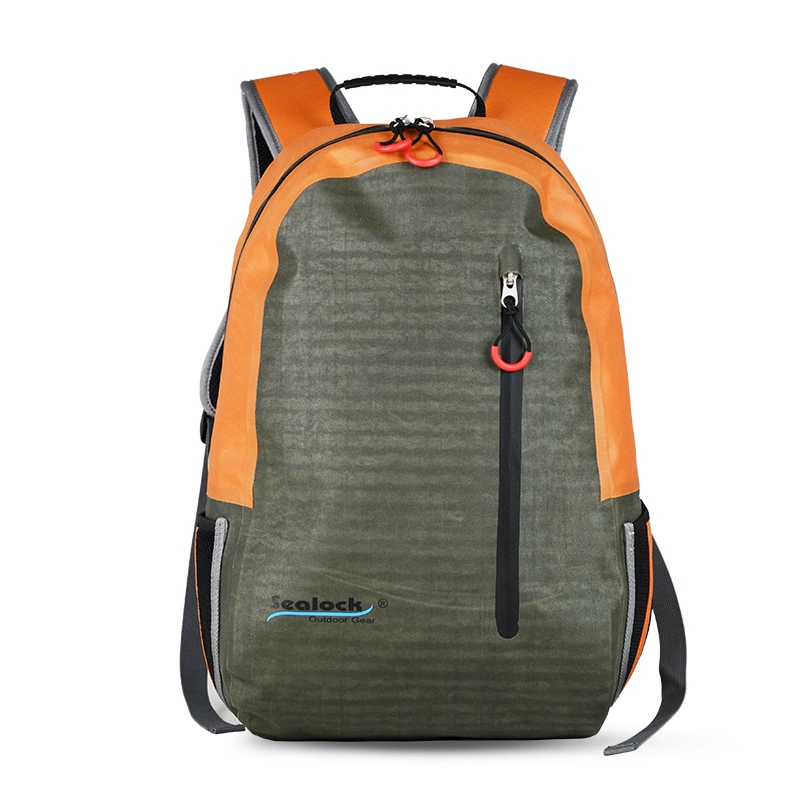
SL-E070 Dry Backpack | 25L | 420D TPU | 300 pcs | View |
|
SL-E071 Urban Backpack | 22L | 420D TPU | 300 pcs | View |
|
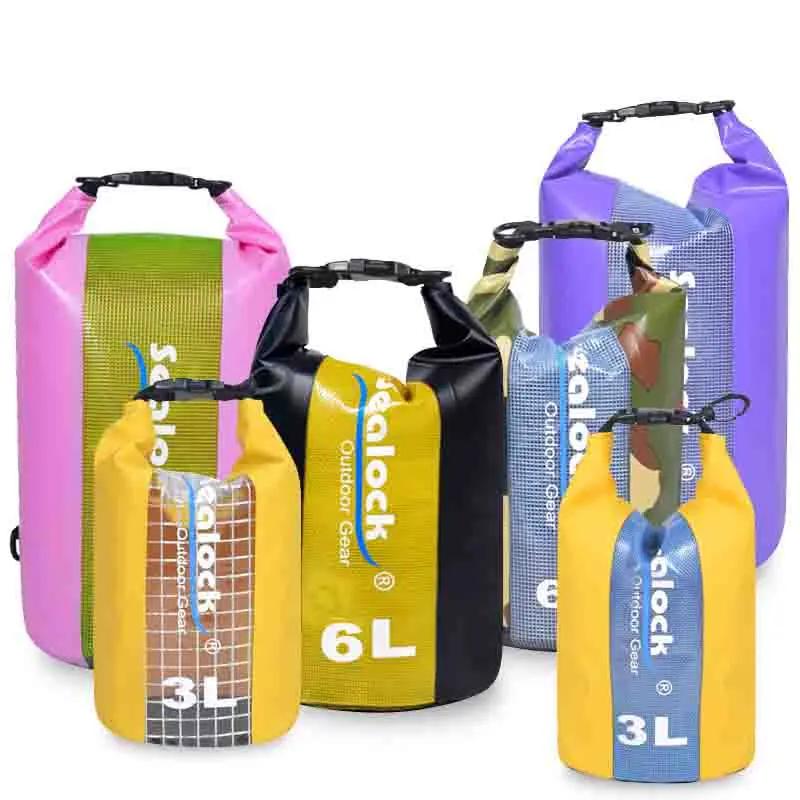
Clear Window Dry Bag | 3–10L | PVC | 300 pcs | View |
|
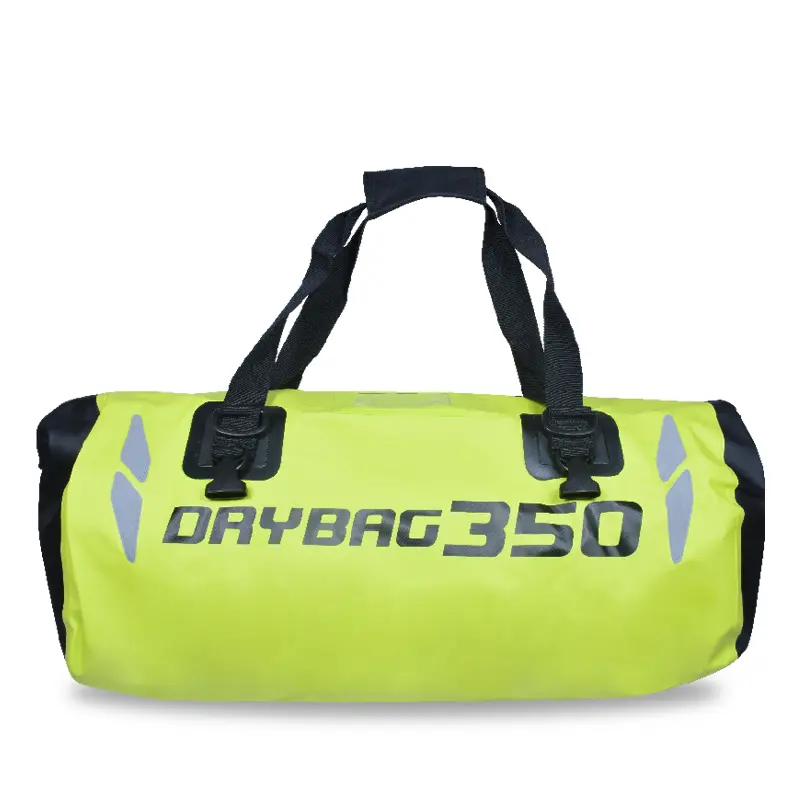
SL-C619 Motorcycle Bag | 35 / 50L | 500D PVC | 300 pcs | View |
9. Quality Doesn't Scale Down With Quantity
Whatever the order size, every batch runs the same three-stage control: IQC on incoming fabric and hardware, IPQC on welds in line, and OQC with AQL sampling, batch immersion testing, and signed gold-sample comparison, with SGS or QIMA inspection available — the same production capacity and quality standards that apply at full volume.
The laboratory suite — full immersion, 1,500+ cycle load testing, 3,000 sealed-zipper cycles, tensile and bonding strength, salt spray, friction resistance, color fastness and color difference — applies at MOQ as it does at volume. Compliance is backed by ISO 9001, BSCI, SMETA, HIGG, GRS, and SCAN.
10. FAQ
Q: Why is the dry bag MOQ 300 and not 50?
A: Mostly because of fabric. A factory buys tarpaulin from mills in full rolls, and one roll yields hundreds of bags; below a few hundred pieces, material waste and setup cost make the order uneconomic. 300 pcs is where those fixed costs spread thin enough to be viable while keeping quality consistent.
Q: Can the MOQ be negotiated?
A: Often, if you remove a cost driver rather than just asking. Use in-stock fabric and color, pay tooling as a one-time upfront cost, commit to repeat orders, accept a modest unit-price premium, or combine SKUs on one base material. Each of those addresses the real reason the MOQ exists.
Q: Why does customization raise the MOQ?
A: Custom fabric or a custom Pantone color means a dedicated roll or dye run with its own minimum, and custom hardware or shapes add tooling. All of it is fixed cost that has to spread across the run, so the more custom the bag, the higher the quantity needed to make it viable.
Q: The MOQ listed online was higher than what I was quoted — why?
A: Public MOQ figures are often set high to filter out very small buyers, with the real number discussed once a serious enquiry comes in. It is always worth asking. Sealock's 300 pcs is a genuine production figure, not a screening threshold.
Q: Is the lowest MOQ always the best deal?
A: No. A very low MOQ usually carries a higher unit cost and can indicate a supplier built for tiny runs rather than consistent welded, pressure-tested production. Match the MOQ to your stage, but from a factory that can build the bag correctly — inconsistent quality on a small order costs more than it saves.
Q: Can I hit the MOQ across several models instead of one?
A: MOQ generally applies per model, but models that share a base material are easier to combine, and a coordinated line under one logo helps reach volume without over-committing to a single SKU. Confirm whether the MOQ is per style, color, or logo method, and factor the full landed cost of a bulk order — not just unit price — when sizing the first run.
Request a Quote With MOQ and Terms
For MOQ, unit pricing at your target quantity, samples, or an OEM/ODM proposal, submit an inquiry. Sealock responds to procurement enquiries within 24 hours, with production available from Dongguan, China or Ho Chi Minh City, Vietnam.