- English
- Español
- Português
- русский
- Français
- 日本語
- Deutsch
- tiếng Việt
- Italiano
- Nederlands
- ภาษาไทย
- Polski
- 한국어
- Svenska
- magyar
- Malay
- বাংলা ভাষার
- Dansk
- Suomi
- हिन्दी
- Pilipino
- Türkçe
- Gaeilge
- العربية
- Indonesia
- Norsk
- تمل
- český
- ελληνικά
- український
- Javanese
- فارسی
- தமிழ்
- తెలుగు
- नेपाली
- Burmese
- български
- ລາວ
- Latine
- Қазақша
- Euskal
- Azərbaycan
- Slovenský jazyk
- Македонски
- Lietuvos
- Eesti Keel
- Română
- Slovenski
- मराठी
- Srpski језик

Dry Bag for Kayaking: How to Choose the Right Size, Material and Closure, and Six Kayak Dry Bags We Make
Dry Bag for Kayaking: How to Choose the Right Size, Material and Closure, and Six Kayak Dry Bags We Make
A dry bag for kayaking is a roll-top bag made from welded PVC or TPU that keeps gear dry on deck and in the hatch. The right one has welded seams, a roll-top closure with a buckle that holds, a D-ring so it can be tied to the boat, and a size matched to the job: 3 to 10 litres for a phone and keys on deck, 15 to 20 litres for a day of clothing and food, and 35 litres or more for overnight and multi-day kit. This guide explains how to choose each feature, what the ratings really mean, and the kayak dry bags we manufacture for paddle sports brands, outfitters and rental fleets.
A kayak is a wet place to carry gear. Water splashes over the deck, pools around the cockpit and drips off the paddle with every stroke, and a capsize is always possible. A kayak dry bag has to keep working through all of it, season after season. Every kayak dry bag is a set of answers to five questions: how big, what material, how it is sealed, how it closes, and how it attaches to the boat.
Kayak Dry Bag Sizes: How Many Litres Do You Need?
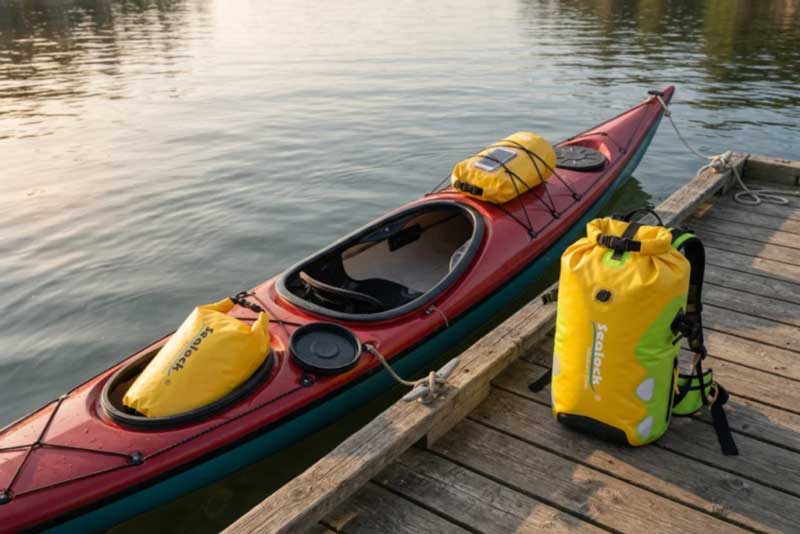
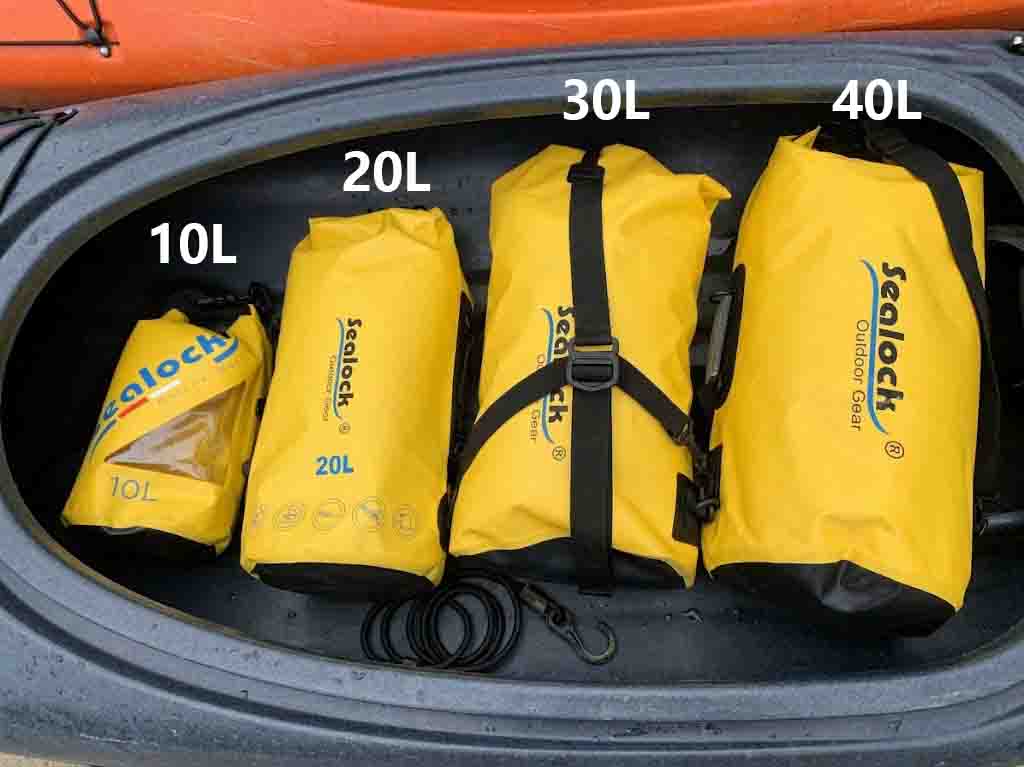
Dry bag capacity is measured in litres, and the useful way to choose is by where the bag goes in the kayak. Small bags stay within reach on deck; larger bags go in the hatch. Exact fit depends on how bulky the clothing is and how tightly it is packed.
| Size | Where it goes | Typical contents |
|---|---|---|
| 3L to 10L | On deck, clipped to bungees or worn | Phone, keys, wallet, snacks, sunscreen, a spare layer |
| 15L to 20L | Hatch or behind the seat | Change of clothes, towel, lunch, rain jacket |
| 28L to 35L | Hatch, or carried as a backpack to the put-in | Clothing and gear for an overnight trip |
| 40L and above | Large hatch or open deck | Camping kit for multi-day touring |
Several small and medium bags pack into a hull better than one large bag, make loading a hatch easier, and mean one failed bag does not soak everything. Different colours make contents easy to find. Rated capacity is measured with the bag open, so a roll-top holds less once it is rolled shut; allow for at least three folds at the top. Our dry bag size guide covers capacity in more detail.
PVC, TPU or Coated Nylon: Which Material Suits a Kayak?
The fabric decides how long a kayak dry bag lasts, because it is dragged over rocks, sand and hatch rims. The three common choices behave differently.
| Material | Strengths | Trade-offs | Best for |
|---|---|---|---|
| PVC tarpaulin (for example 0.5 mm 500D) | Tough against abrasion and rough handling; welds well; strong value | Heavier and stiffer in the cold | Rivers, rafting, rental fleets, high-wear use |
| TPU-laminated fabric (for example 420D TPU) | Lighter and more flexible; stays supple in the cold; PVC-free | Usually costs more than PVC | Touring packs, premium lines, markets that require PVC-free |
| Coated nylon | Very light and packable | Less abrasion resistance; sewn seams need taping | Ultralight, occasional use |
For paddling on rocky rivers or launching from gravel, welded 500D PVC is the dependable choice. For packs that are also carried on the back, or for brands that need a PVC-free material, 420D TPU is lighter and more flexible. We make both, and the same welding process runs across them. For the background on waterproof ratings, see our guide to IPX waterproof ratings.
Welded Seams: Why Stitching Is Not Enough
A stitched seam punches thousands of needle holes through waterproof fabric. Even taped, it can peel with repeated flexing. A welded seam fuses the material into one continuous wall, so there are no holes for water to find. We weld in-house with 27.12 MHz high-frequency welding, and every model is checked against our factory waterproof test standard. For a kayak bag that is rubbed, folded and soaked every trip, welded construction is the baseline.
Our waterproof test standard: Put a clean paper towel inside the waterproof bag, submerge it in 1.5 meters of water for a 2-hour test. After taking it out, the paper towel must have no water stains.
Roll-Top Closure: How It Seals and How to Close It
A roll-top has no moving parts to jam or corrode. The opening is folded over on itself and clipped, and the layered folds create a long path that water has to travel. The seal is only as good as the way you close it:
- Fill the bag, leaving enough empty space at the top to roll. Do not overpack.
- Flatten the opening and line up the edges so the stiffener runs straight across.
- Roll the top down at least three times. Three to four folds is the standard guideline.
- Clip the buckle and tighten any strap so the roll cannot spring open.
- Clip the bag to the boat through the D-ring rather than through the buckle.
Some of our bags add a second barrier behind the roll: a transparent PVC waterproof membrane inside the closure, so the seal does not depend on the roll alone. A roll-top is built to withstand rain, splashes and immersion; it is not a diving bag, and no roll-top is perfectly airtight. If a bag sits underwater for a long time, water can work past the closure. A sealed bag with air inside usually floats, unless it is packed heavier than the water it displaces. We explain this in do dry bags float? The roll-top remains the default for exactly these reasons.
Types of Kayak Dry Bags
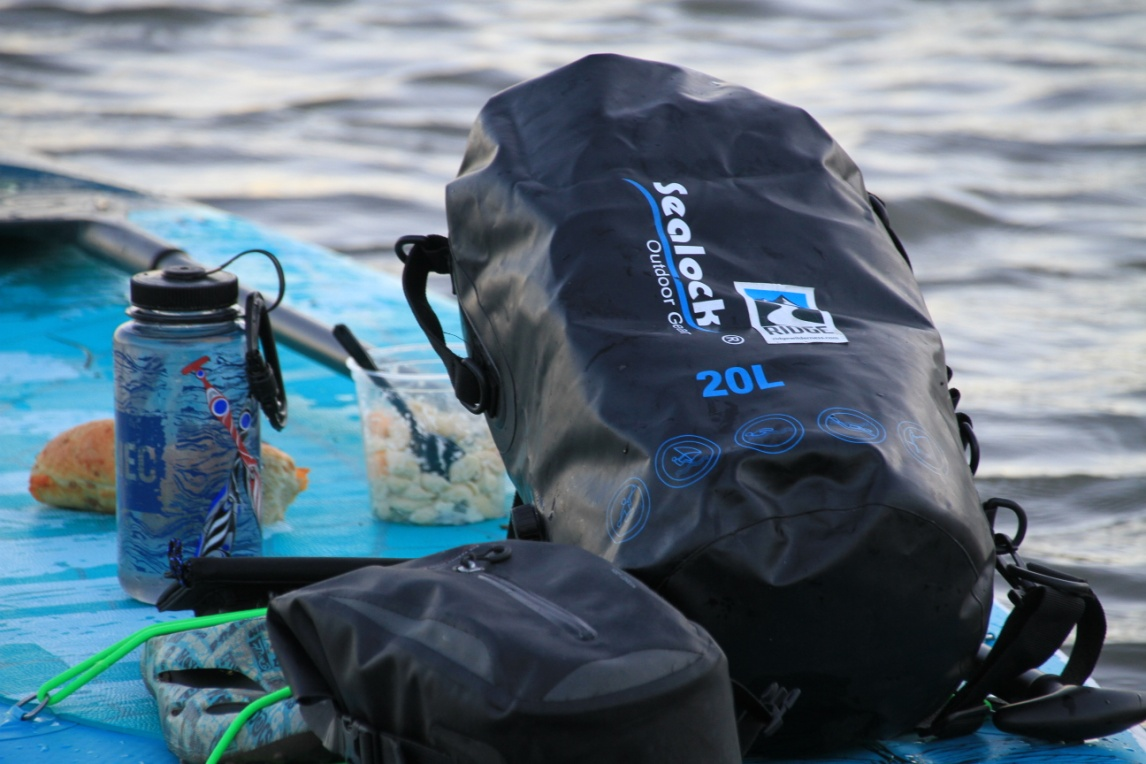
Standard roll-top dry bags are the workhorse, from a few litres up to 60 litres or more. They also work as a canoe dry bag and on a paddle board.
Clear-window dry bags let you see a phone, map or snacks without unrolling the top. The window should be welded into the shell, not glued on, or the edge lifts over a season.
Dry-wet separation bags add an inner pouch so a damp towel or swimsuit stays away from dry clothes. They suit paddlers who swim, snorkel or stop at beaches.
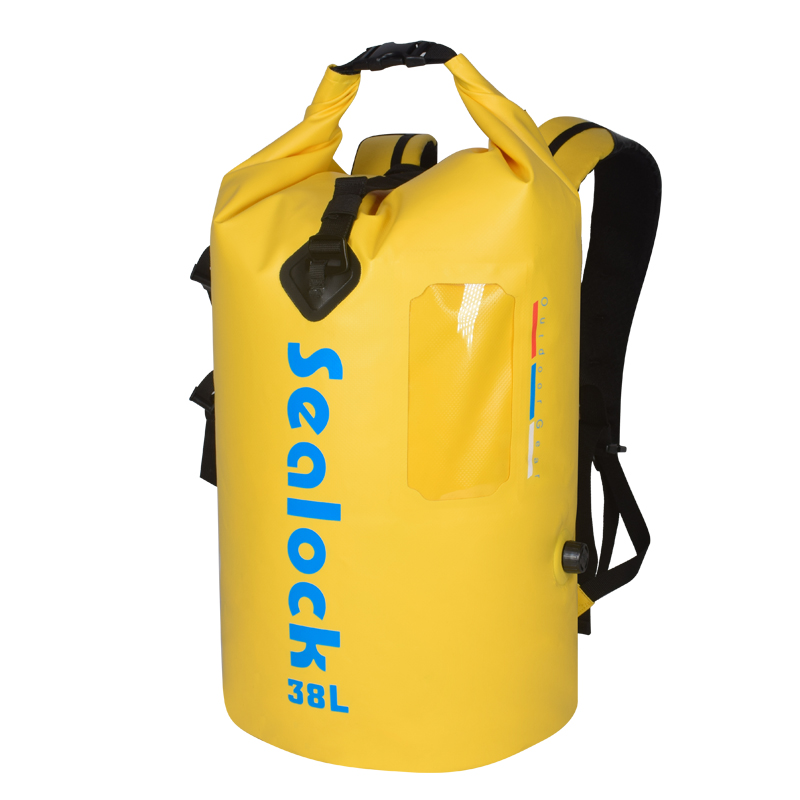
Backpack-style dry bags add padded straps for the walk from the car to the water. Larger roll-top packs add a sternum strap and waist belt for real loads, and some add an air-release valve so trapped air can be pressed out to fit a hatch. Browse our roll-top dry backpacks.
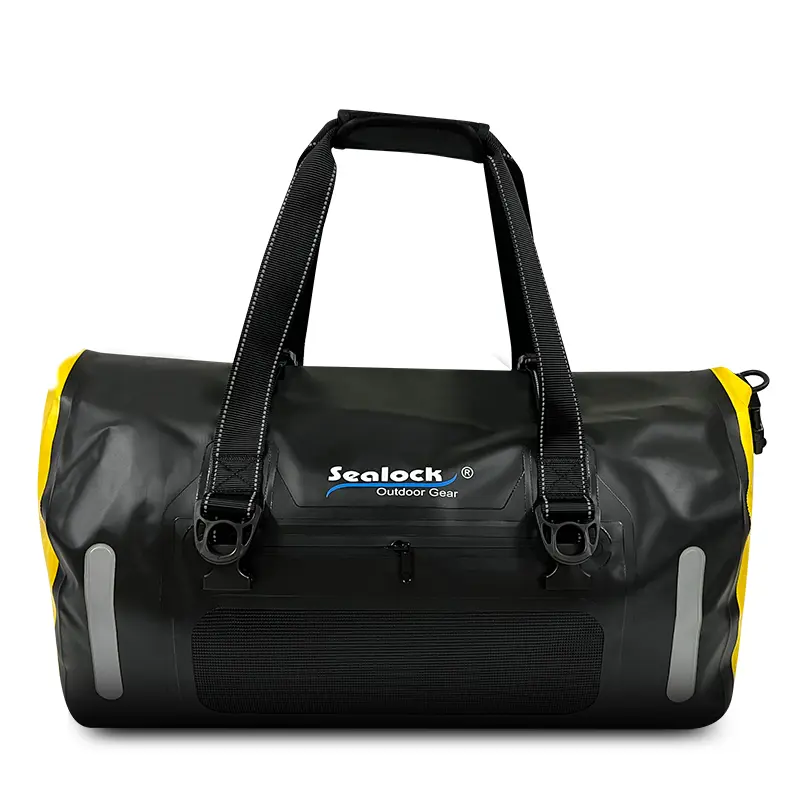
Duffels, phone pouches and compression bags round out a paddling range: see our waterproof duffle bags, waterproof phone pouches and compression bags.
Kayak Dry Bags We Manufacture
These six models are built in our own factories. Every one can be produced in your colours with your logo; click the model name for full specifications or use the inquiry link for pricing and samples.
| Image | Model | Capacity and size | Construction | Use | Inquiry |
|---|---|---|---|---|---|
|
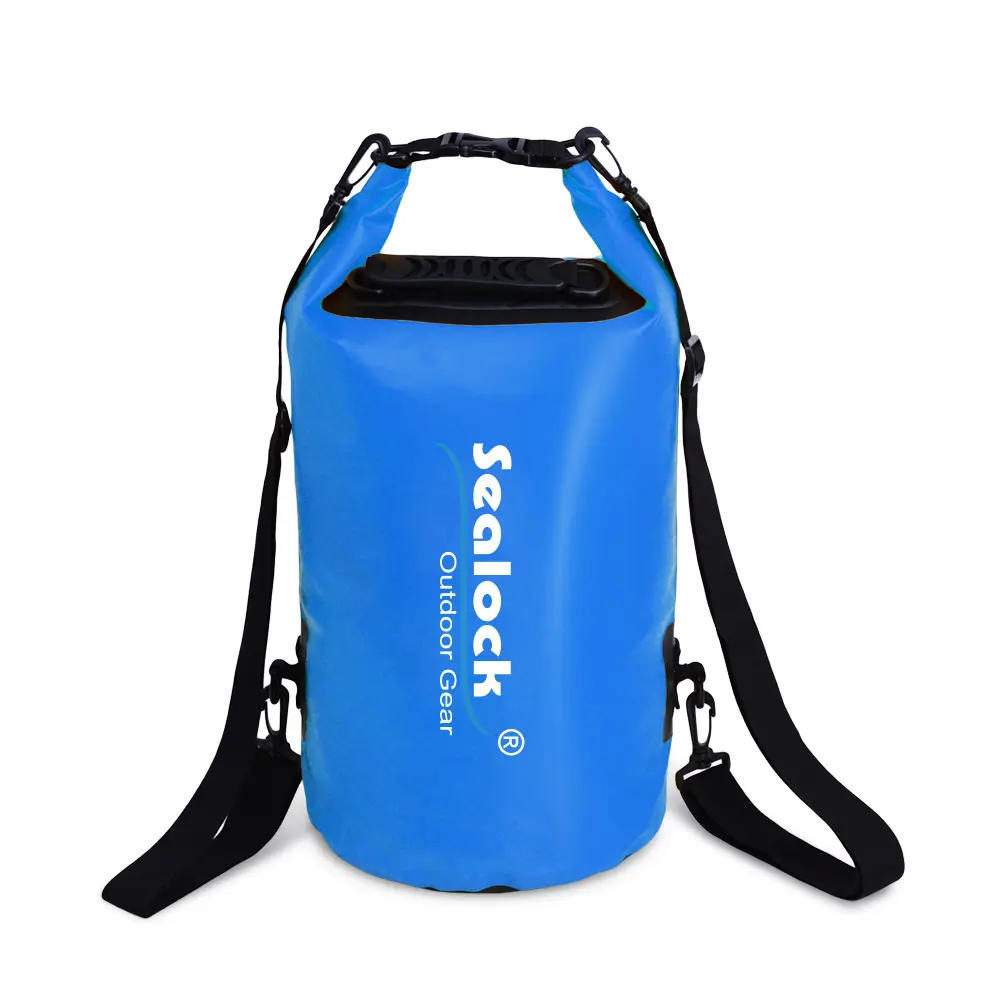
SL-D002 500D PVC Dry Bag with UTX Buckles |
5, 10, 15, 20 and 63 L 20 L: 43 cm tall, 24 cm base diameter |
Welded 0.5 mm 500D PVC, IPX7, roll-top plus inner PVC membrane, UTX buckles, D-ring, floats when sealed; 8 colours | Hatch bag for kayaking, rafting, boating and camping | Send inquiry |
|
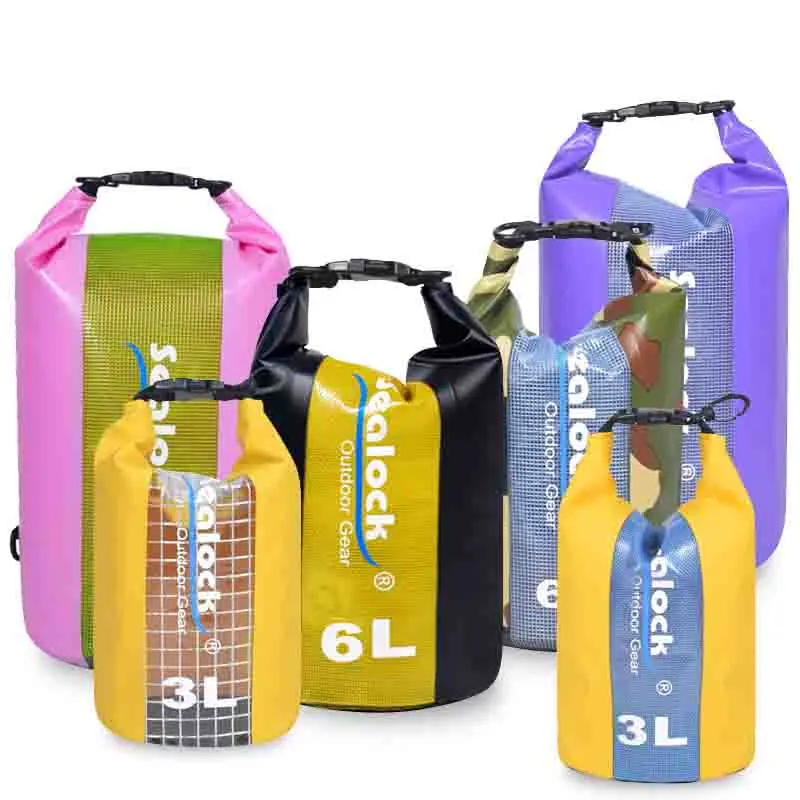
PVC Roll-Top Dry Bag with Clear Window and Quick-Release Strap |
3, 6 and 10 L 190 g, 240 g and 300 g |
HF-welded PVC, welded clear window, detachable quick-release strap, buckles tested past 20,000 cycles; 5 two-tone colours | On-deck bag for phone, keys and essentials | Send inquiry |

|
Waterproof Dry Bag for Kayaking with Window | Round tube bag; sizes on request | 500D PVC mesh, airtight round-tube body, transparent window | Kayaking, canoeing, rafting, boating and swimming | Send inquiry |
|
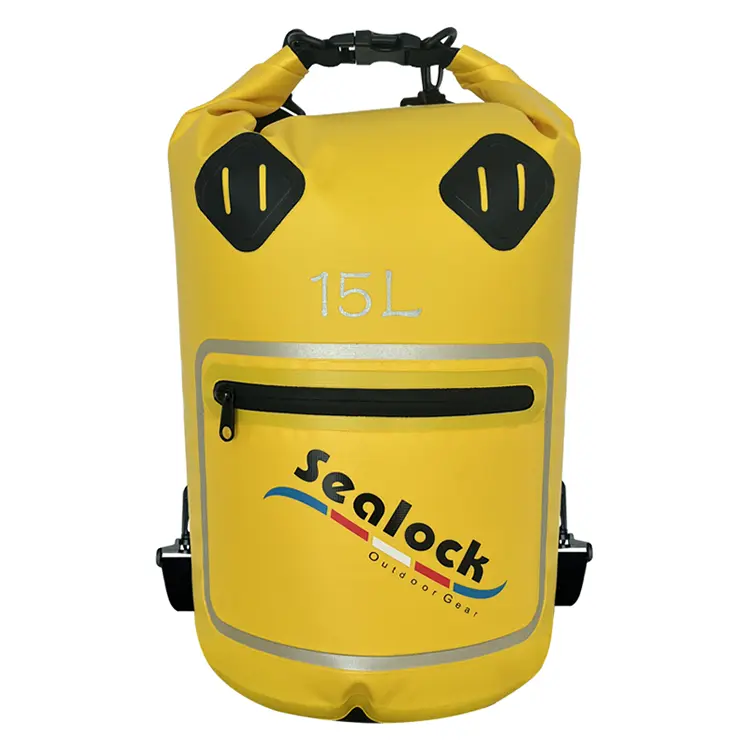
SL-D693 15L/20L IPX7 Dry Bag with Window and Dry-Wet Separation |
15 L: 53 × 36 cm 20 L: 57 × 38 cm |
500D PVC, IPX7, welded clear window, internal dry-wet split, removable reinforced strap, POM buckles; yellow and black | Paddling, paddle boarding, beach and hot-spring trips | Send inquiry |
|
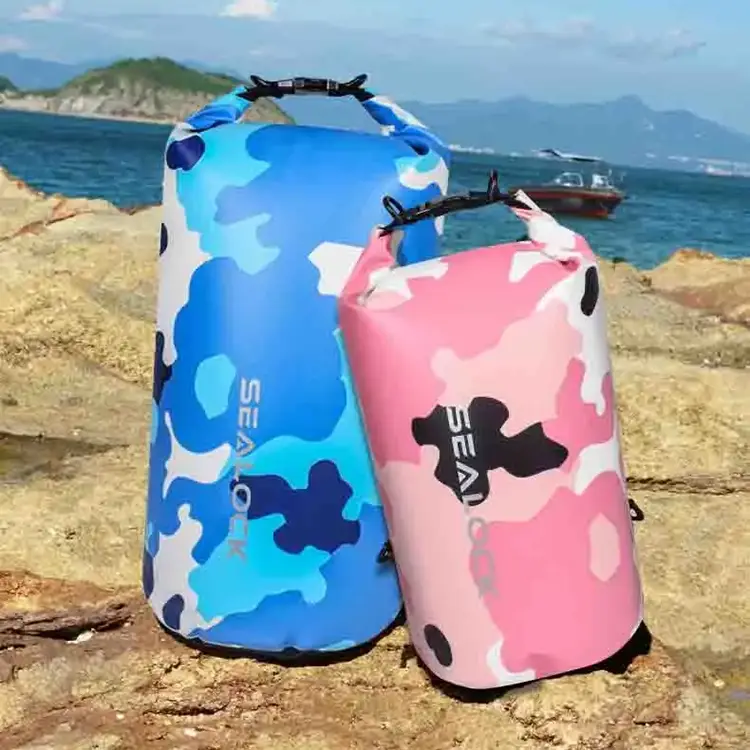
10L/20L Dry Bag with Dry-Wet Separation Pouch | 10 L and 20 L | IPX7 roll-top in eco-friendly PVC, double waterproof closure, removable inner pouch; carries by shoulder, backpack or hand | Swim, paddle and beach days where wet kit must stay apart | Send inquiry |
|
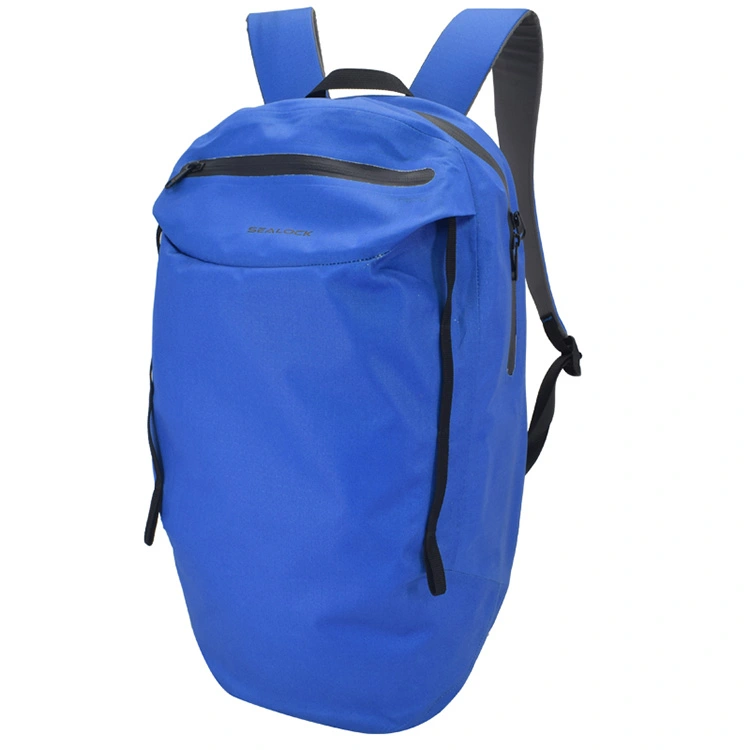
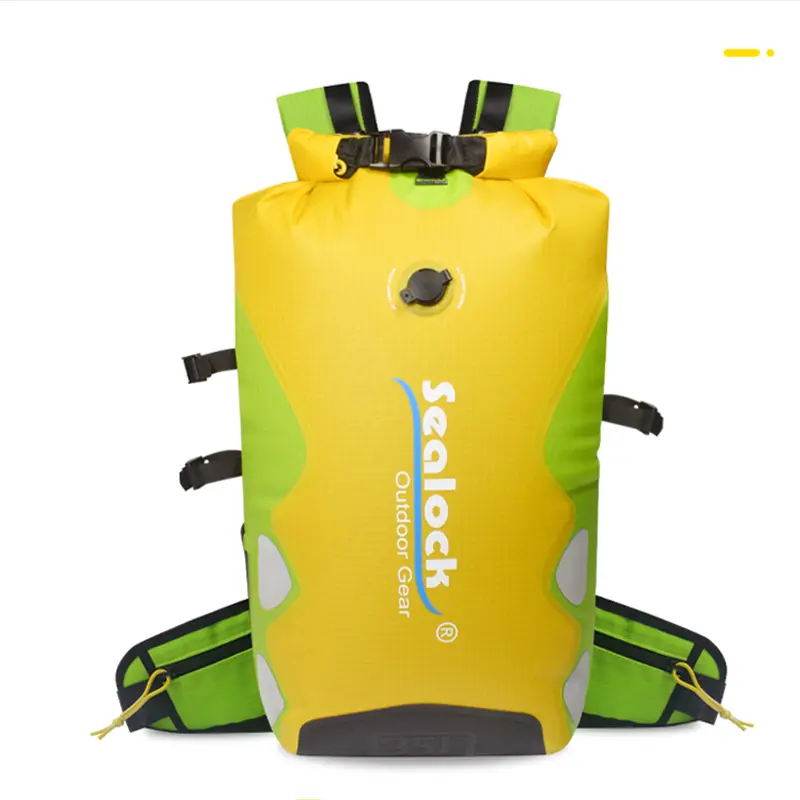
SL-E801 35L Roll-Top Waterproof Backpack | 35 L | RF-welded 420D TPU, IPX7, integrated air-release valve, padded straps, sternum strap, padded waist belt, ventilated back, reflective prints | Kayaking and rafting kit that also carries on the trail | Send inquiry |
Looking for a bigger kayak pack? Our 28 L waterproof backpack for kayaking with phone window uses 0.5 mm 500D PVC, a front phone window and an inflate and deflate valve. The full range is on our kayak dry bags page, and our general dry bags category covers swimming, camping and boating sizes.
Developing a Kayak Dry Bag Range for Your Brand
For paddle sports brands, outfitters and rental fleets, the details that decide reviews and returns are the buckles, the closure, the window weld, the valve and the strap anchors, not the colour. As the factory, we weld the shells in-house and can customise the fabric (500D PVC or TPU), the sizes (a single model or a full 5, 10, 20 and 35 litre set), the colours, a printed logo, window size and placement, buckle type, D-rings, straps and packaging. The MOQ is 300 pieces per design, and sizes of one model can usually be split within the order. Printed samples take 7 to 15 days and bulk production runs roughly 20 to 45 days depending on the model and quantity. We quote FOB Guangdong, with Vietnam origin available, and have over 20 years of experience making welded waterproof bags. For more on how we work with brands, see our OEM dry bag manufacturing guide and our wholesale dry bag buying guide.
Frequently Asked Questions
What size dry bag do I need for kayaking?
A 3 to 10 litre bag suits day essentials on deck. 15 to 20 litres suits clothing in the hatch, and 35 litres or more suits camping kit on multi-day trips. Use several smaller bags rather than one large one.
Will a kayak dry bag float if I capsize?
A sealed bag with air inside usually floats, unless it is packed heavier than the water its volume displaces. Never rely on a dry bag as a flotation device.
Can a kayak dry bag be submerged?
Yes. Our waterproof bags are tested with a clean paper towel inside, submerged in 1.5 meters of water for 2 hours, and the paper towel must come out with no water stains. As with any roll-top, the seal depends on rolling the top down at least three times and clipping the buckle, and a dry bag is not a diving bag.
Is PVC or TPU better for a kayak dry bag?
Welded 500D PVC is tough and good value, which suits rough, rocky or high-wear use. TPU is lighter, more flexible in the cold and PVC-free, which suits touring packs and premium lines. Both perform well when the seams are welded properly.
How many times should I roll a dry bag?
At least three times, then clip the buckle. Larger bags usually benefit from three to four folds.
What is the MOQ for custom kayak dry bags?
300 pieces per design, with sizes of one model usually splittable within the order. Samples take 7 to 15 days.
Which sizes should a retailer or brand stock?
Most buyers carry a spread: a 3 to 10 litre deck bag, a 15 to 20 litre hatch bag, and one larger bag or backpack for overnight trips. Tell us your market and we will recommend a range.
Request a Quote
Tell us the model, sizes, material, colours, logo and quantity you need, and we will reply within 24 hours with suitable base models, an FOB price and a sample timeline. Send an inquiry, or email info@sealock.com.hk.
Send Inquiry
Related Products



News Recommendations