

Drop a sealed dry bag in a lake and it bobs on the surface — which is exactly why paddlers love them and why a dangerous myth has grown up around them. Here's the physics of why a dry bag floats, how much it can hold up, and the one safety line you should never cross.
It's one of the most useful side-effects of a good dry bag: seal it properly and it won't sink, so a bag knocked off a kayak rides the surface instead of disappearing to the bottom. People notice this and naturally ask the next question — if it floats, could I hold onto it in the water? To answer that safely, you first have to understand why it floats at all.
Why a dry bag floats: it's the air, not the bag
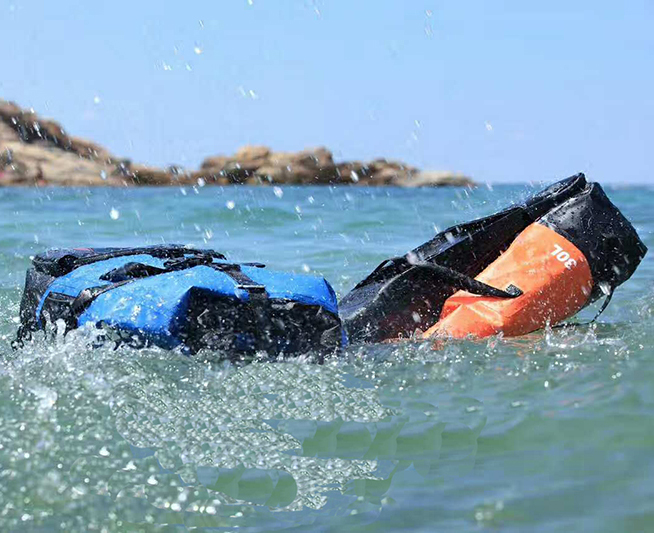
A dry bag floats for the same reason a sealed, empty bottle does: trapped air. When you roll and clip the top, you seal a pocket of air inside along with your gear. Whether an object floats comes down to its overall density — its total weight divided by the space it takes up. If that combined package (bag + gear + trapped air) is less dense than water, it floats; if it's denser, it sinks.
The trapped air is the key, because air is far lighter than water for the volume it occupies. So the bag itself isn't really what floats — the air you sealed in is doing the work, and the waterproof construction is simply what stops that air from escaping and water from getting in. (That sealing mechanism is the same one explained in What Is a Dry Bag & How Does It Work?.) This is also why the way you pack changes everything about how it floats.
How much can a dry bag float?
Because buoyancy depends on density, three things decide how well your bag floats and how much weight it will hold up:
- How much air you leave inside. A bag rolled with a generous air pocket floats high; one squeezed flat to save space has little buoyancy left and may barely float, or sink, once loaded.
- What you put in it. Light, bulky gear (a sleeping bag, clothes) floats easily. Dense items (tools, a metal flask, a heavy camera) can outweigh the trapped air and pull the bag under.
- The bag's size. A larger bag can trap more air, so it can support more weight before its overall density passes that of water.
There's a real tension here worth naming: the way you pack for maximum waterproofing — pressing air out before rolling — is the opposite of packing for maximum flotation. If float-ability matters for your trip, you deliberately leave some air in. That's a choice you make per outing, not a fixed property of the bag.
The line you must not cross: a dry bag is not a life jacket
This is the part that matters most. Because dry bags float, a myth has spread that you can clutch one as a flotation aid if you end up in the water. Treat that idea with great caution.
The honest framing: a floating dry bag is a convenience that keeps your gear on the surface so you can recover it. It is not life-safety equipment for keeping you on the surface. Those are different jobs, and the gap between them is where people get into trouble.
How to make the most of a dry bag's buoyancy
Used for what it's actually good at — keeping kit recoverable — a few habits make a floating dry bag far more useful:
Pack for float-and-find
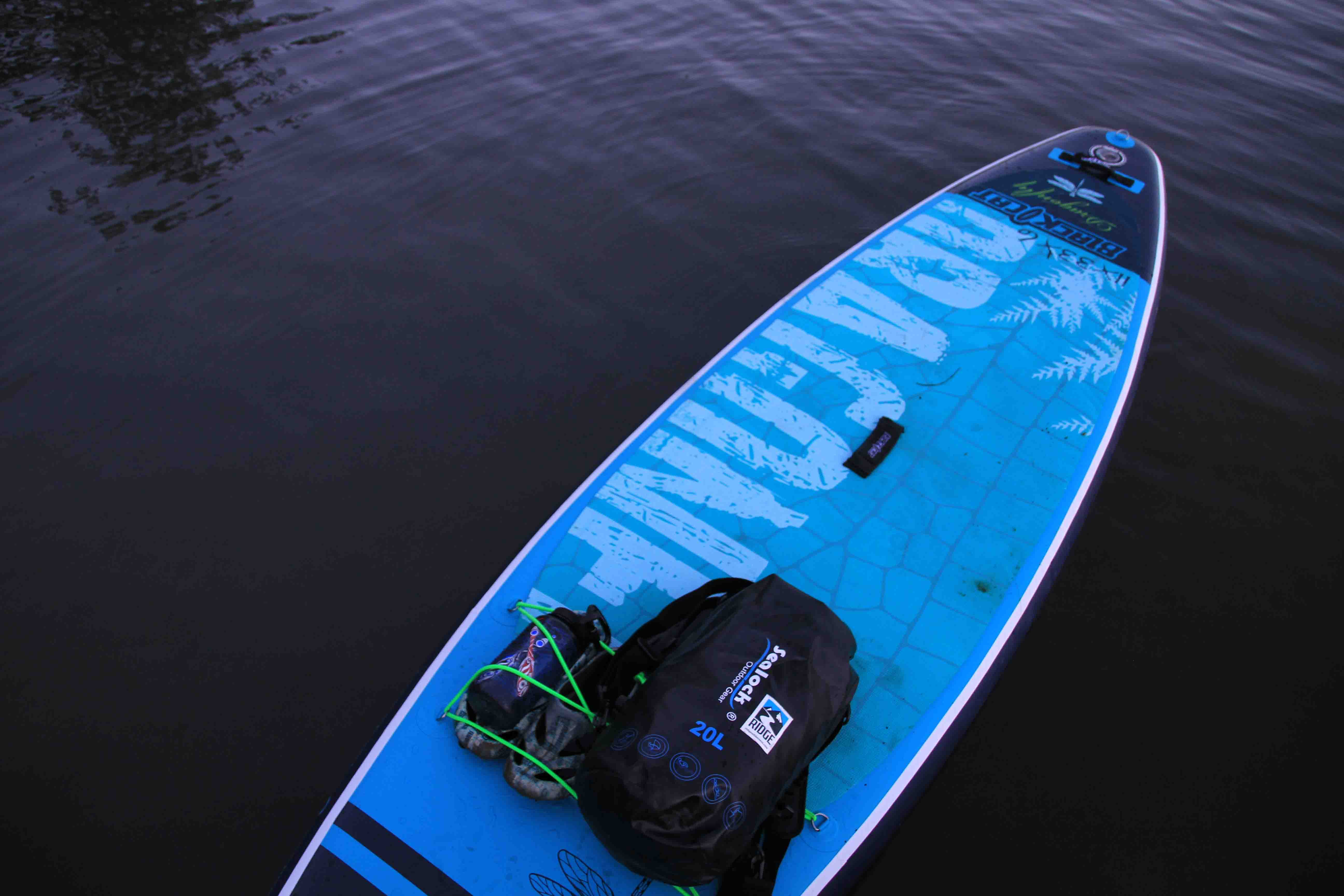
- Leave an air pocket. When recovery matters more than squeezing in every litre, roll the top with some air trapped so the bag rides high.
- Choose a bright colour. A high-visibility bag that floats is one you can actually spot and reach; a black one vanishes against dark water.
- Clip it to the boat. A D-ring and a short leash mean a floating bag stays with you instead of drifting off downstream.
- Balance the load. Keep dense items from all settling on one side, or the bag will float lopsided and sit lower.
Dry bags built to float and be found
Buoyancy comes free with any sealed dry bag, but colour, a secure roll-top, and a D-ring are what make that buoyancy useful. A few examples from our range, all welded at 27.12 MHz and pressure-tested to 1.0 bar:
| Product | Closure | Float-friendly features |
|---|---|---|
| Roll-Top Small Dry Bag | Roll-top | Submersible seal, D-ring for clipping, multiple colours |
| Outdoor Dry Bag (Boating/Rafting) | Roll-top + air valve | Welded seams, carry handles & D-rings, multiple sizes |
| Dry Bag with Phone Window | Roll-top | 10L / 20L, D-ring, window to spot contents |
Made by Sealock, a waterproof bag manufacturer with 21+ years' experience (ISO 9001 / BSCI / GRS certified). MOQ from 300 pcs, OEM/ODM available, custom colours for high-visibility programs.
Frequently asked questions
- Do dry bags float when full of gear?
- They can, as long as the sealed bag plus its contents and trapped air stay less dense than water. Light, bulky gear floats easily; pack dense, heavy items and leave little air, and the bag can ride low or sink. Leaving an air pocket before rolling helps it float.
- Can I use a dry bag as a flotation device to stay afloat?
- No. A dry bag is not a certified personal flotation device. Its buoyancy is incidental and can fail if the seal leaks, air escapes, or the load shifts. Never rely on a dry bag to keep a person afloat — always use a proper life jacket for in-water safety.
- Why did my dry bag sink?
- Usually because there was too little trapped air and the contents were dense, pushing the overall package denser than water — or the roll-top wasn't sealed well and air escaped. Leave more air inside and make sure the closure is rolled and clipped properly.
- How do I make my dry bag float better?
- Roll it with a deliberate air pocket inside rather than squeezing it flat, avoid loading it with dense items, and use a larger bag if you need more buoyancy. A bright colour and a D-ring leash also make a floating bag easier to spot and recover.
- Do all dry bags float the same?
- No. Floating depends on trapped air and contents, not brand, so the same bag floats differently depending on how you pack it. Larger bags can trap more air and support more weight before sinking.
Building a paddling or rescue-visibility line and want high-visibility, D-ring-equipped dry bags? Tell us your use case and we'll recommend size, colour, and closure.