
- English
- Español
- Português
- русский
- Français
- 日本語
- Deutsch
- tiếng Việt
- Italiano
- Nederlands
- ภาษาไทย
- Polski
- 한국어
- Svenska
- magyar
- Malay
- বাংলা ভাষার
- Dansk
- Suomi
- हिन्दी
- Pilipino
- Türkçe
- Gaeilge
- العربية
- Indonesia
- Norsk
- تمل
- český
- ελληνικά
- український
- Javanese
- فارسی
- தமிழ்
- తెలుగు
- नेपाली
- Burmese
- български
- ລາວ
- Latine
- Қазақша
- Euskal
- Azərbaycan
- Slovenský jazyk
- Македонски
- Lietuvos
- Eesti Keel
- Română
- Slovenski
- मराठी
- Srpski језик

Waterproof Bike Bag Manufacturer for Cycling Brands
Sealock manufactures waterproof bike bags for cycling brands, bikepacking labels, and OEM programmes from factories in China and Vietnam, with welded and stitched construction in house. Bicycle luggage is governed by a constraint no other vehicle category shares: every gram is felt by the rider, and a bag that moves changes how the bike handles. Where motorcycle luggage is engineered against heat and engine vibration, bike bags are engineered against sway, clearance, and weight placement — and those three decide whether a range succeeds.
1. Company and Terms
Sealock (YiFuLong Outdoor Gear Co., Ltd.) has built waterproof bags for over 20 years, producing for international outdoor and cycling brands including KAILAS, OSPREY, Helly Hansen, and CHUMS.
- Facilities: Dongguan, China | Ho Chi Minh City, Vietnam — either origin available on any model
- Production: 27.12 MHz high-frequency welding and industrial sewing as separate workshops on the same production floor
- MOQ: 300 pcs per model | Samples: 7–15 days | Bulk: 30–45 days
- Certifications: ISO 9001, BSCI, SMETA, HIGG, GRS, SCAN
2. Each Position Carries a Different Kind of Load
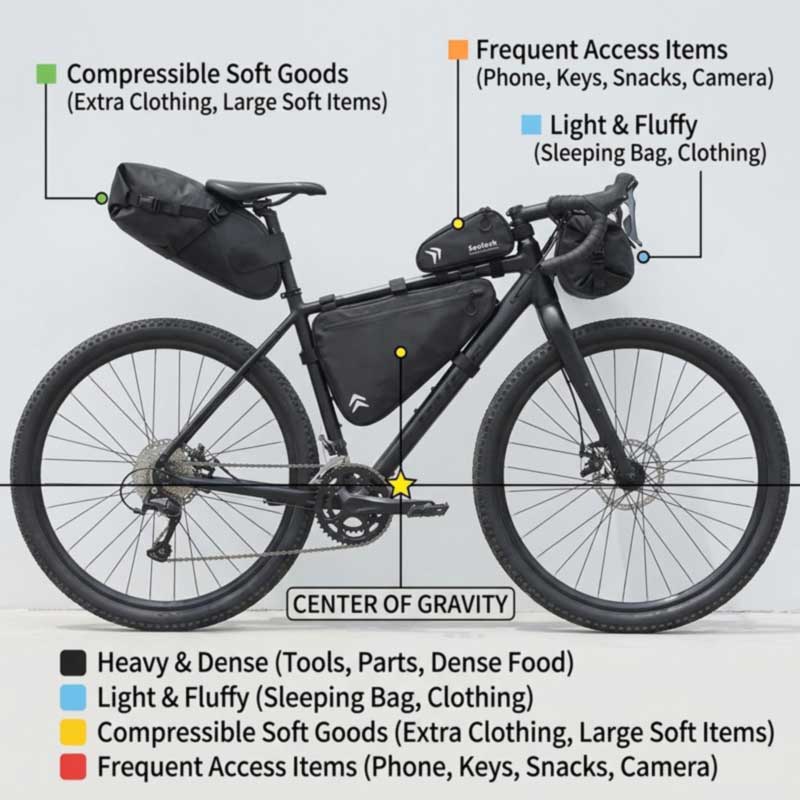
The defining principle of bikepacking bag design is that the positions on a bike are not interchangeable storage volumes — each suits a different type of cargo, and getting this wrong is what makes a loaded bike handle badly:
| Image | Model | Capacity | Material | Mounting / features | Product Page |
|---|---|---|---|---|---|
|
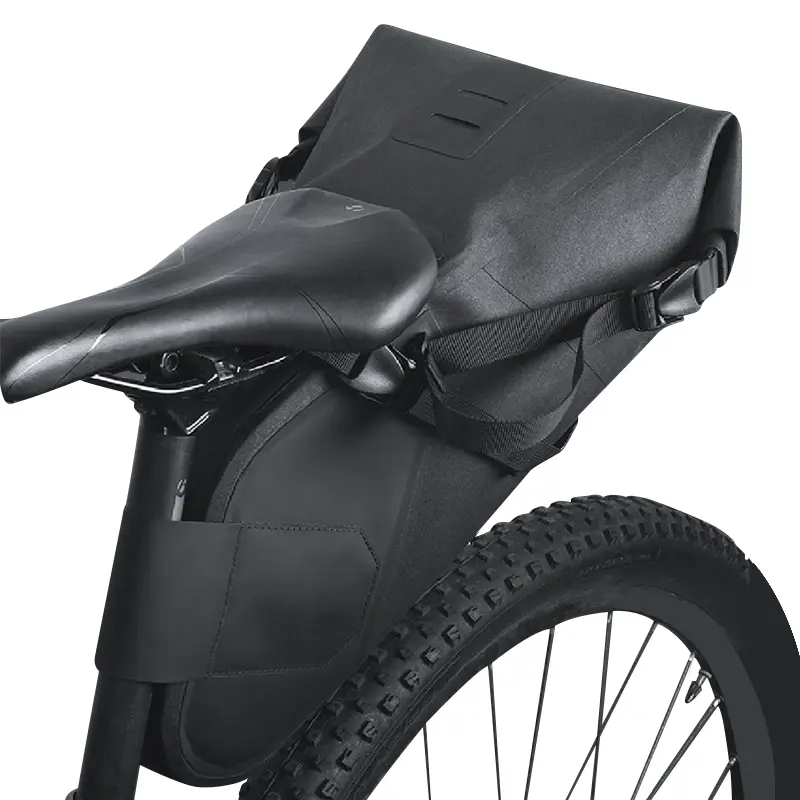
SL-K022 Saddle Bag | 10–14L | 420D TPU + 600D TPU reinforcement | Seat rails + seatpost · roll-top · IPX6–7 · UTX/Duraflex buckles · 50 × 18 × 16 cm at 12L | View |
|
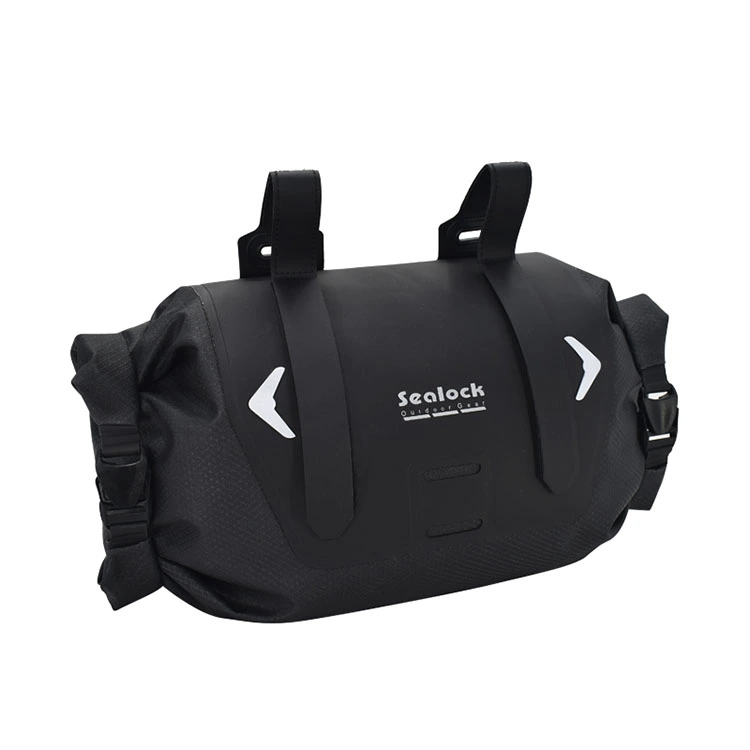
SL-K060B Handlebar Bag | 7L | TPU | Cockpit mount for mountain and road · black, grey | View |
|
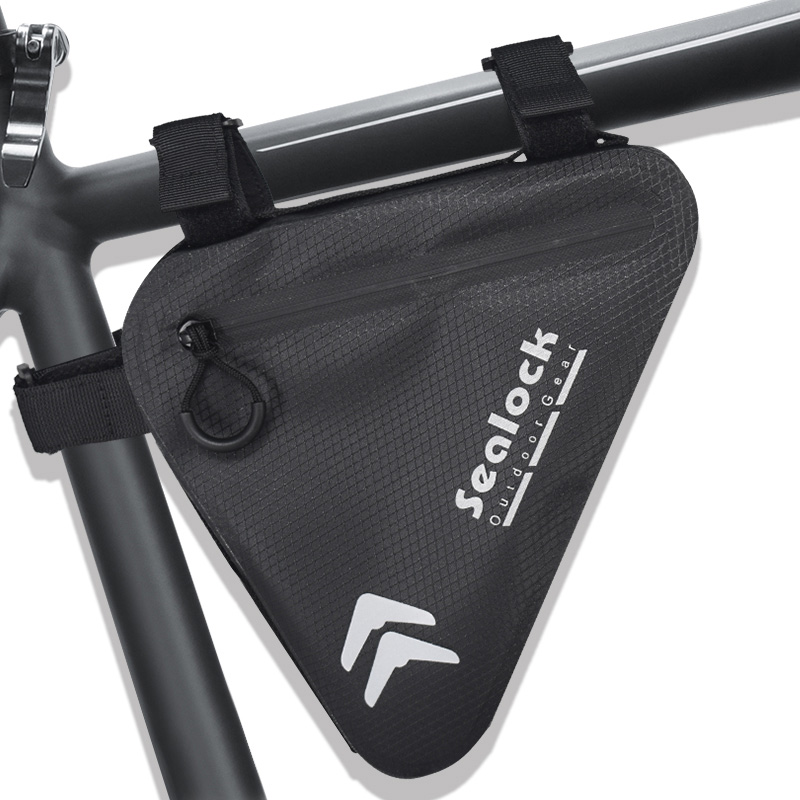
Top Tube Frame Bag | 0.8L · 80 g | 800D TPU | Three adjustable straps, two on top tube and one on head tube · waterproof zip · rain and spray protection | View |
|
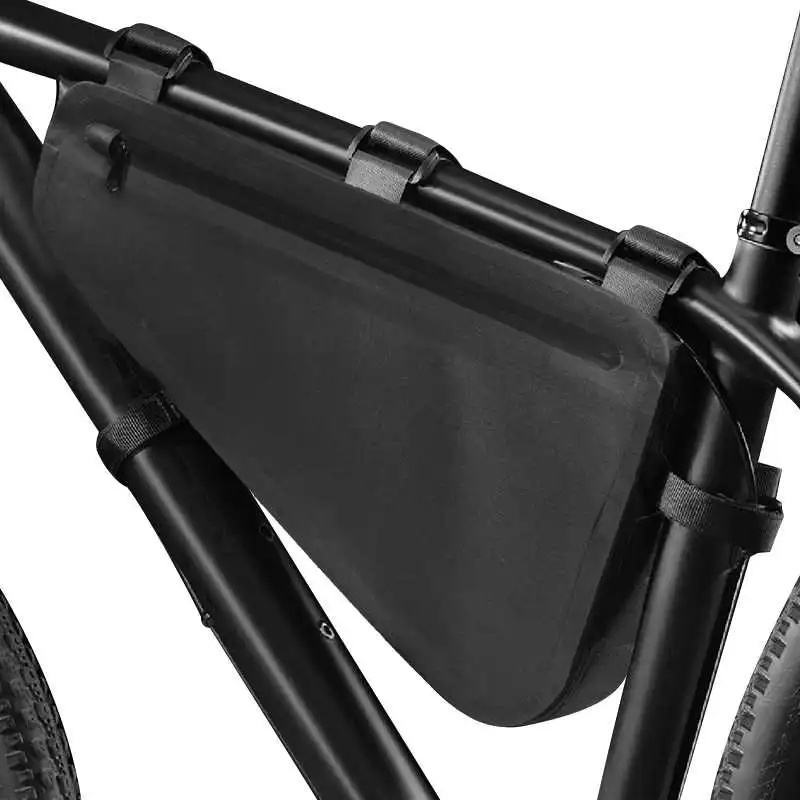
SL-K089-A Frame Bag | To specification | 600D TPU | Top tube mount · sizes cut to buyer spec · black, grey, army green, brown | View |

|
SL-K088-A Seat Bag | 20 × 9.5 × 5 cm | 600D TPU | Under-saddle carry for tube, tools, keys and wallet | View |
|
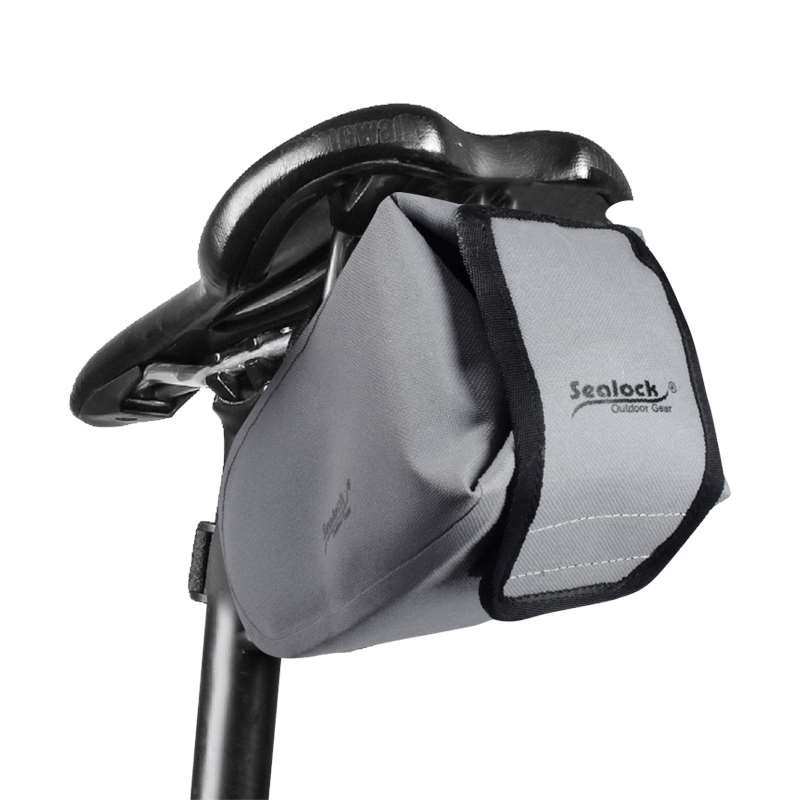
K055 Under-Seat Bag | 22.5 × 10.5 × 7 cm | 600D TPU | Under-saddle carry · black · BSCI / ISO | View |

|
SL-K1102-A Tail Bag | 30 × 17.5 × 56 cm | Coated waterproof fabric | Rear rack mount for commuting and touring · MOQ 500 pcs | View |
|
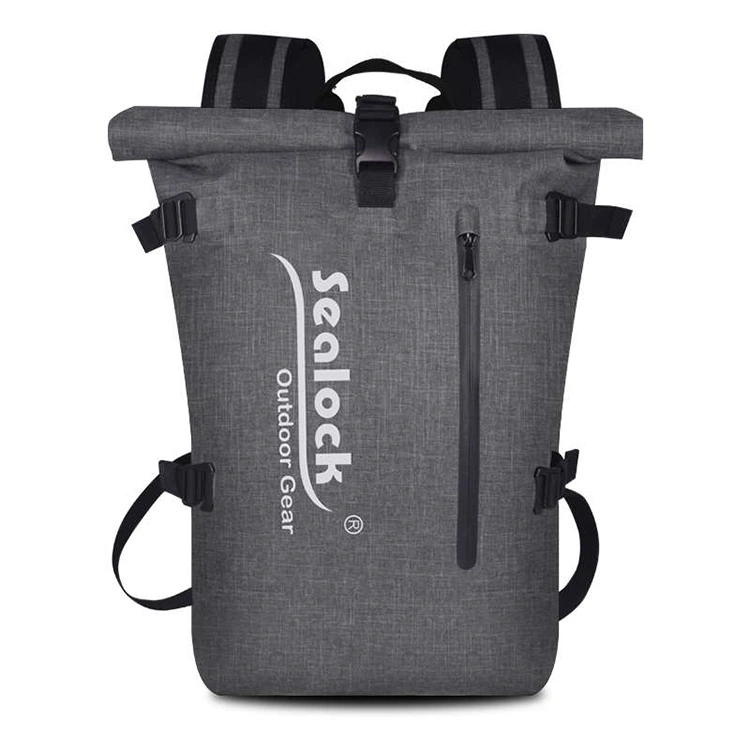
SL-E980 Commuter Backpack | 22L | 600D TPU laminate | Roll-top · IPX6 · detachable 15.6" laptop sleeve · 3D EVA airflow back · 48 × 30 × 15 cm · 0.95 kg | View |

|
SL-E144 Cycling Backpack | 15L | TPU | Floating ventilated back · IPX6 · 27 × 18 × 50 cm · 0.85 kg | View |
|
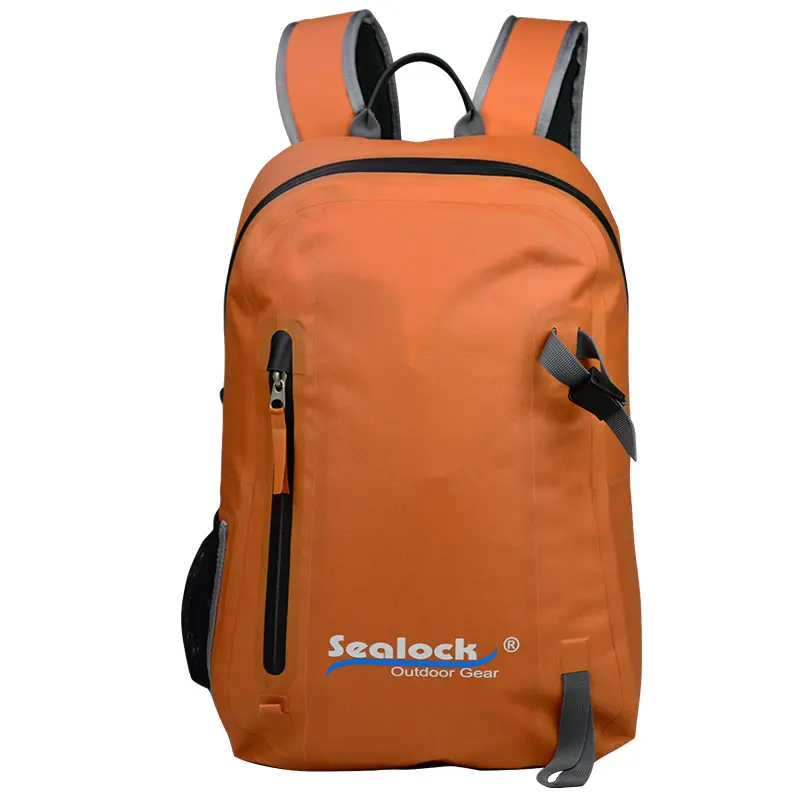
SL-E216 Commuter Backpack | 20L | 420D TPU laminate | IPX6 · waterproof front pocket · EVA air-mesh back · reflective · 0.8 kg | View |

|
Black & Grey TPU Backpack | 8L | TPU | HF-welded seams · waterproof inner pocket · 29 × 7 × 42 cm · MOQ 500 pcs | View |
For a brand this matters commercially: a range built around positions sells a system to one customer rather than competing SKUs, and the positions genuinely complement each other rather than substitute.
3. Sway Is the Category's Defining Failure
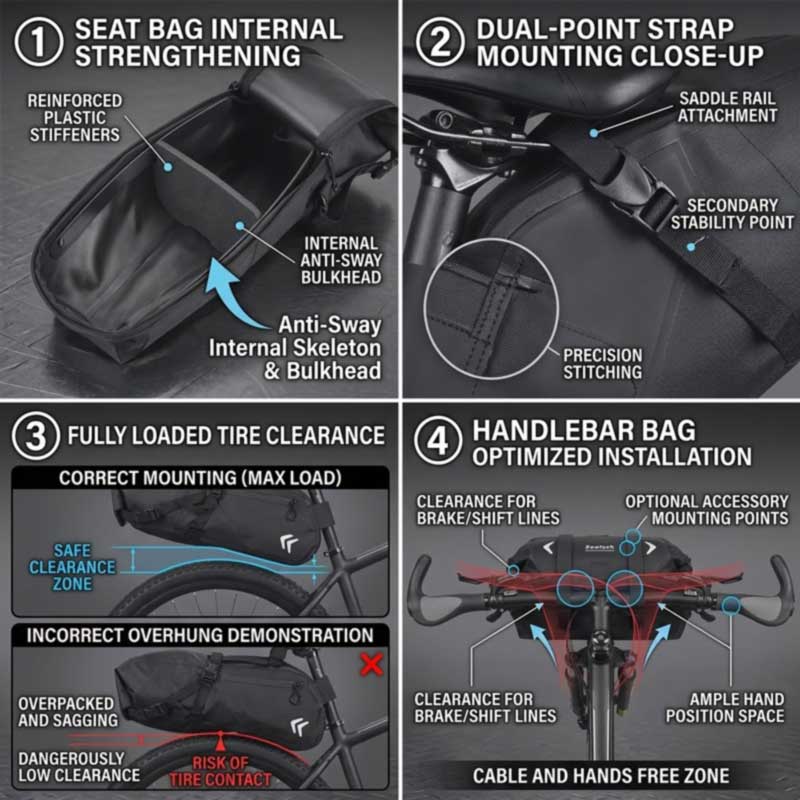
Poorly built seat packs sway side to side on rough terrain, which throws off the rider's balance and progressively wears the mounting points that are supposed to hold them. On technical terrain a bag that shifts is not merely annoying — it makes riding harder and less predictable, which is why mounting quality separates a serious product from a cheap one far more sharply here than in most bag categories.
The engineering answers are structural and mostly stitched rather than welded:
- Internal stiffeners or anti-sway baffles that stop the bag deforming and oscillating under load.
- Upper and lower stabilising elements at the seatpost and saddle rails, so the bag is located at two points rather than hanging from one.
- Multiple compression and stabiliser straps — the bags that test as sway-free typically use several straps rather than two, cinching the load into a rigid mass.
- Shape that limits overhang, keeping the load close to the seatpost rather than extending rearward.
The bikepacking saddle bag in the range is built to this logic — 10–14L with a 420D TPU laminated nylon body and a 600D TPU reinforcement panel, high-strength nylon webbing on UTX or Duraflex buckles, mounting at both the seat rails and the seatpost, with a roll-top closure that lets the load be compressed rather than left loose. At 12L it measures 50 × 18 × 16 cm, which keeps the overhang short enough to stay clear of the tire on most frames.
Roll-top construction earns its place here specifically because rolling more turns tightens the pack down as volume drops, which is set out in the guide to why roll-tops dominate waterproof storage.
4. A Good System Is Quiet
The most useful single test of bike luggage is whether it makes noise. A setup that squeaks, rubs, or swings gradually persuades the rider to carry less than they planned, which is a design failure even if nothing breaks. Three clearance problems cause most of it, and all three are specification issues rather than user errors:
- Tire rub. Seat packs must clear the rear tire under full compression, not just when the suspension is topped out — narrow tire clearance on road frames restricts what fits, so a range needs a slim option as well as a large one.
- Cable snag at the cockpit. Handlebar bags have to sit clear of brake and gear cables and leave room for hands on the hoods and drops.
- Frame rub zones. Straps crossing paintwork need protective backing, and frame bag panels need shaping to the main triangle rather than generic rectangles.
Because frame geometry varies so widely, this is also where custom development earns its keep: a frame bag cut to a brand's own frame sizes fits where a universal one gaps and rubs.
5. Access Cadence Decides the Small Bags
Endurance and gravel riders reach for food or a phone every fifteen to twenty-five minutes, and stopping each time is not acceptable. That single behavioural fact is why top tube and compact handlebar bags exist as a separate category rather than as small versions of larger ones. Their specification requirements are different: one-handed operation while moving, a lid that stays open or closes without looking, rigid enough sides that the bag does not collapse when reached into, and increasingly a cable port for charging a head unit from a power bank inside.
6. Match the System to the Discipline
Total carried weight varies enormously by use, and it determines whether a bikepacking system or a rack-and-pannier system is the right answer:
- Endurance road riding — roughly 1–2.5 kg total. Placement still matters because speeds are higher and steering corrections more frequent.
- Race-style bikepacking — frame, saddle, and a compact handlebar bag, often 4–8 kg total. Stability is the priority.
- Touring — 6–15 kg and up, where racks and panniers become the more predictable solution for bulk, with frame storage still holding the dense items.
A brand covering the first two with a bikepacking system and the third with pannier-style luggage serves the whole market without one line cannibalising the other.
7. Construction: Welded Body, Stitched Structure
Bike bags are a clear case for both production disciplines. High-frequency welding builds the sealed, needle-hole-free body that keeps rain and road spray out of a bag mounted inches above a wet tire. Industrial sewing builds everything that makes it stay put and behave: strap systems and Velcro closures, internal stiffeners and baffles, reinforced mounting anchors, protective backing panels where the bag contacts the frame, and the harness on cycling backpacks. Sealock runs both as separate workshops on the same production floor, so a bag moves between them inside one facility rather than being subcontracted.
Material choice runs to TPU-laminated fabrics for the balance of low weight, cold flexibility, and abrasion resistance that cycling demands, with heavier deniers where a bag contacts the frame or ground. The wider comparison is set out in the TPU material guide.
One distinction worth carrying into product copy: the small frame, top tube, and under-saddle bags in this range are built for rain and road spray rather than immersion — the 0.8L top tube bag in 800D TPU is scratch-resistant and sealed against weather, but should not be submerged. The larger saddle packs and cycling backpacks carry higher ratings. Marketing each at its actual level is what keeps returns down.
8. Bike Range
Models organized by type rather than priority:
| Image | Model | Capacity | Material | Mounting / features | Product Page |
|---|---|---|---|---|---|
|
|
SL-K022 Saddle Bag | 10–14L | 420D TPU + 600D TPU reinforcement | Seat rails + seatpost · roll-top · IPX6–7 · UTX/Duraflex buckles · 50 × 18 × 16 cm at 12L | View |
|
|
SL-K060B Handlebar Bag | 7L | TPU | Cockpit mount for mountain and road · black, grey | View |
|
|
Top Tube Frame Bag | 0.8L · 80 g | 800D TPU | Three adjustable straps, two on top tube and one on head tube · waterproof zip · rain and spray protection | View |
|
|
SL-K089-A Frame Bag | To specification | 600D TPU | Top tube mount · sizes cut to buyer spec · black, grey, army green, brown | View |
|
|
SL-K088-A Seat Bag | 20 × 9.5 × 5 cm | 600D TPU | Under-saddle carry for tube, tools, keys and wallet | View |
|
|
K055 Under-Seat Bag | 22.5 × 10.5 × 7 cm | 600D TPU | Under-saddle carry · black · BSCI / ISO | View |
|
|
SL-K1102-A Tail Bag | 30 × 17.5 × 56 cm | Coated waterproof fabric | Rear rack mount for commuting and touring · MOQ 500 pcs | View |
|
|
SL-E980 Commuter Backpack | 22L | 600D TPU laminate | Roll-top · IPX6 · detachable 15.6" laptop sleeve · 3D EVA airflow back · 48 × 30 × 15 cm · 0.95 kg | View |
|
|
SL-E144 Cycling Backpack | 15L | TPU | Floating ventilated back · IPX6 · 27 × 18 × 50 cm · 0.85 kg | View |
|
|
SL-E216 Commuter Backpack | 20L | 420D TPU laminate | IPX6 · waterproof front pocket · EVA air-mesh back · reflective · 0.8 kg | View |
|
|
Black & Grey TPU Backpack | 8L | TPU | HF-welded seams · waterproof inner pocket · 29 × 7 × 42 cm · MOQ 500 pcs | View |
Full categories sit under waterproof bags, dry backpacks, and dry bags. Customization scope is covered in the guide to custom dry bags, and harness engineering for cycling backpacks in the guide for waterproof backpack OEM projects.
9. OEM Scope
Beyond logo and colour, a cycling programme can specify capacity and shape cut to named frame sizes, mounting architecture including strap count and quick-release systems, internal stiffener and anti-sway construction, tire and cable clearance geometry, closure type from roll-top to sealed zipper, fabric and denier, frame-contact protection panels, cable ports, reflective placement, attachment matrix, and packaging. Ground-up development from a sketch, sample, or target spec is supported; new geometries need their own machined dies for welded components, quoted separately and built before sampling.
10. Quality Control
Every batch runs IQC on incoming fabric, zippers, buckles, and webbing; IPQC on welds, stitch density and tension, and mounting-point construction in process, including peel tests on sample welds at run start; and OQC with AQL sampling, batch immersion testing, and signed gold-sample comparison. Load cycling over 1,500 cycles targets mounting straps, anchors, and handles — the points that vibration and sway attack on a bicycle — alongside tensile and bonding strength, salt spray, friction resistance, colour fastness, and colour difference. The full customer inspection procedure — unboxing, vacuum extraction, a 24-hour static rest, and air-leak determination — can be witnessed end to end, with SGS or QIMA inspection available. Standards are set out in the quality control standards for waterproof production.
11. FAQ
Q: Why can't one bag design serve every position on the bike?
A: Because each position suits a different type of load. Frame bags take dense weight low and central, handlebar bags take light bulky items because mass there affects steering, and saddle packs take compressible soft goods because dense weight so far behind the centre causes sway. A range built around positions sells as a system.
Q: What causes seat pack sway and how is it engineered out?
A: Dense contents plus single-point mounting plus rearward overhang. The fixes are structural: internal stiffeners or anti-sway baffles, mounting at both the saddle rails and the seatpost, several compression straps rather than two, and a shape that keeps the load close rather than extending back.
Q: How much does clearance really matter?
A: Enough to decide whether a product is usable. Seat packs must clear the tire under full suspension compression, handlebar bags must clear cables and leave hand positions free, and straps crossing the frame need protective backing. Road frames with narrow tire clearance need a slim variant rather than the standard one.
Q: Why do small top tube and handlebar bags need separate development?
A: Because they answer access cadence, not capacity. Riders reach for food or a phone every fifteen to twenty-five minutes and will not stop each time, so these bags need one-handed operation while moving, sides rigid enough not to collapse, and often a cable port for charging.
Q: Are these welded or sewn?
A: Both, and the split is deliberate. Welding builds the sealed body that keeps out rain and tire spray; sewing builds strap systems, stiffeners, baffles, reinforced anchors, and frame-protection panels. Both run in house as separate workshops on the same production floor.
Q: Can frame bags be cut to our own frame geometry?
A: Yes, and it is where custom development pays off most in this category. Frame triangles vary widely, so a bag cut to a brand's own sizes fits where a universal one gaps and rubs — a genuine differentiator for a bike brand selling its own accessories.
Request a Cycling Range Proposal
For frame-specific development, mounting architecture, samples, or a full OEM proposal, submit an inquiry. Sealock responds to procurement enquiries within 24 hours, with production from Dongguan, China or Ho Chi Minh City, Vietnam.