
- English
- Español
- Português
- русский
- Français
- 日本語
- Deutsch
- tiếng Việt
- Italiano
- Nederlands
- ภาษาไทย
- Polski
- 한국어
- Svenska
- magyar
- Malay
- বাংলা ভাষার
- Dansk
- Suomi
- हिन्दी
- Pilipino
- Türkçe
- Gaeilge
- العربية
- Indonesia
- Norsk
- تمل
- český
- ελληνικά
- український
- Javanese
- فارسی
- தமிழ்
- తెలుగు
- नेपाली
- Burmese
- български
- ລາວ
- Latine
- Қазақша
- Euskal
- Azərbaycan
- Slovenský jazyk
- Македонски
- Lietuvos
- Eesti Keel
- Română
- Slovenski
- मराठी
- Srpski језик

Roll Top Dry Bags: Why They Dominate Waterproof Storage Products
Sealock manufactures roll top dry bags for outdoor brands and wholesale buyers, and the roll-top's dominance of waterproof storage is not habit — it is the only closure that seals, adjusts volume, and floats at once, with no moving parts to wear out. This is how the mechanism actually works, how to close one so it performs as designed, and where it beats the alternatives.
1. How a Roll-Top Actually Seals
The closure works by folding the fabric against itself. Each fold presses the two inner faces of the coated material together, and stacking three or more folds creates a labyrinth the water has to travel through rather than a single barrier it can push past. Buckling the fold locks that stack under tension. Two design elements make it reliable in the field: stiffening strips just below the opening keep the fabric flat so the fold seats evenly without wrinkles, and a welded, needle-hole-free body means the closure is sealing against a continuous waterproof skin rather than a stitched one.
What makes it dominant is what it does not have. There is no zipper track to wear out, no gasket to degrade, no slider to jam with sand or salt, and nothing that needs lubricant to keep working. The seal performs the same on the five-hundredth use as the first.
2. The Three Functions in One Closure
- Waterproof sealing. Folded correctly against a welded body, a roll-top holds against rain, spray, waves, and brief immersion.
- Adjustable volume. Rolling more turns reduces the internal volume, so a half-full bag compresses to a compact, stable shape instead of sagging — one bag covers a light load and a full one.
- Buoyancy. The fold traps a pocket of air, and that air is what floats a loaded bag if it goes overboard. This is a function of how the bag is closed, not a property of the material — squeeze out every last bit of air and the bag loses its float.
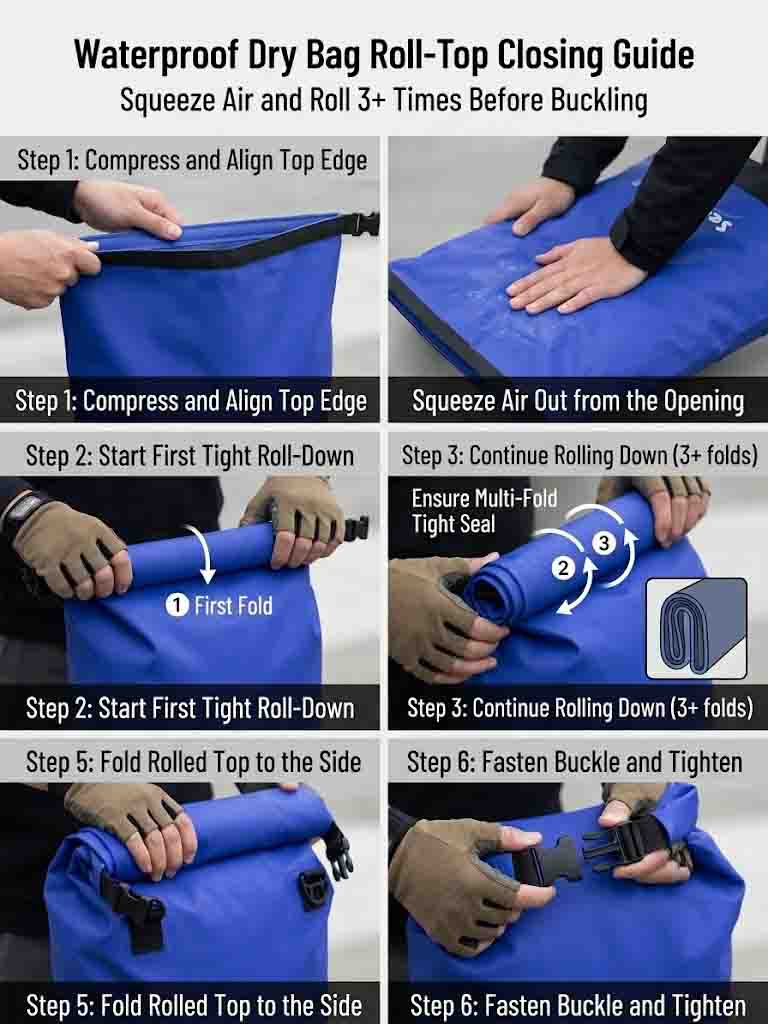
3. Closing It Correctly — the Part Most Users Get Wrong
Manufacturer guidance is consistent: a minimum of three folds, ideally three to four. The correct sequence:
- Pack to about two-thirds to three-quarters full. An overstuffed bag cannot be rolled enough times to seal — the single most common cause of leaks.
- Press out excess air, but not all of it. Burping the bag lets the fold seat tightly; leaving a pocket of air is what keeps it buoyant.
- Align the opening flat. The sealing strips should be pressed together and wrinkle-free — a crease in the fold is a channel for water.
- Fold at least three times, evenly and tightly, in the same direction each time.
- Clip the buckle against the direction of the roll, or along the sides where side buckles are fitted, so the fold is held under tension rather than allowed to unwind.
One consequence worth knowing for product listings: manufacturers state a roll-top's dimensions as sealed — rolled down three times and secured — so rated capacity is measured open and usable volume is lower once closed. A brand publishing the open figure as usable will collect "smaller than expected" returns.
4. Roll-Top Against the Alternatives
| Function | Roll-top | Waterproof zipper | Drawstring |
|---|---|---|---|
| Seal integrity over service life | No parts to wear; consistent for years | Sealed and reliable, but the gasket degrades and can seize with grit | Splash-level only |
| Adjustable volume | Yes — roll more or fewer turns | No — fixed opening | Limited |
| Buoyancy when sealed | Yes — traps air by design | Possible, but not inherent to the closure | No |
| Speed of access | Slower; needs unrolling | Fast, clean, one-handed | Fast |
| Tolerance of sand and salt | High | Lower — grit is the main enemy | High |
| Cost | Lower | Higher | Lowest |
The trade-off is honest: a zipper opens faster and looks tidier, which suits frequent-access products. A roll-top wins wherever protection has to hold up over years of rough handling, and that covers most waterproof storage. Sealock builds both, and a purge valve can be added to a roll-top so users can vent trapped air after sealing without breaking the closure.
5. Where the Roll-Top Format Fits Best
- Paddling and boating — sealed, floats, clips to a deck line, tolerates constant spray.
- Rafting and shoreline use — sand and grit are non-issues.
- Hiking and camping — volume flexes as food is eaten and layers come off.
- Motorcycle and cycling luggage — sealed against rain at speed and cinches down over an uneven load.
- Commuting — a sealed pack that adjusts between a light day and a full one.
6. Sealock Roll-Top Range
Roll-top models across formats and capacities, organized by type rather than priority:
| Image | Model | Capacity | Material | Rating / feature | Product Page |
|---|---|---|---|---|---|
|
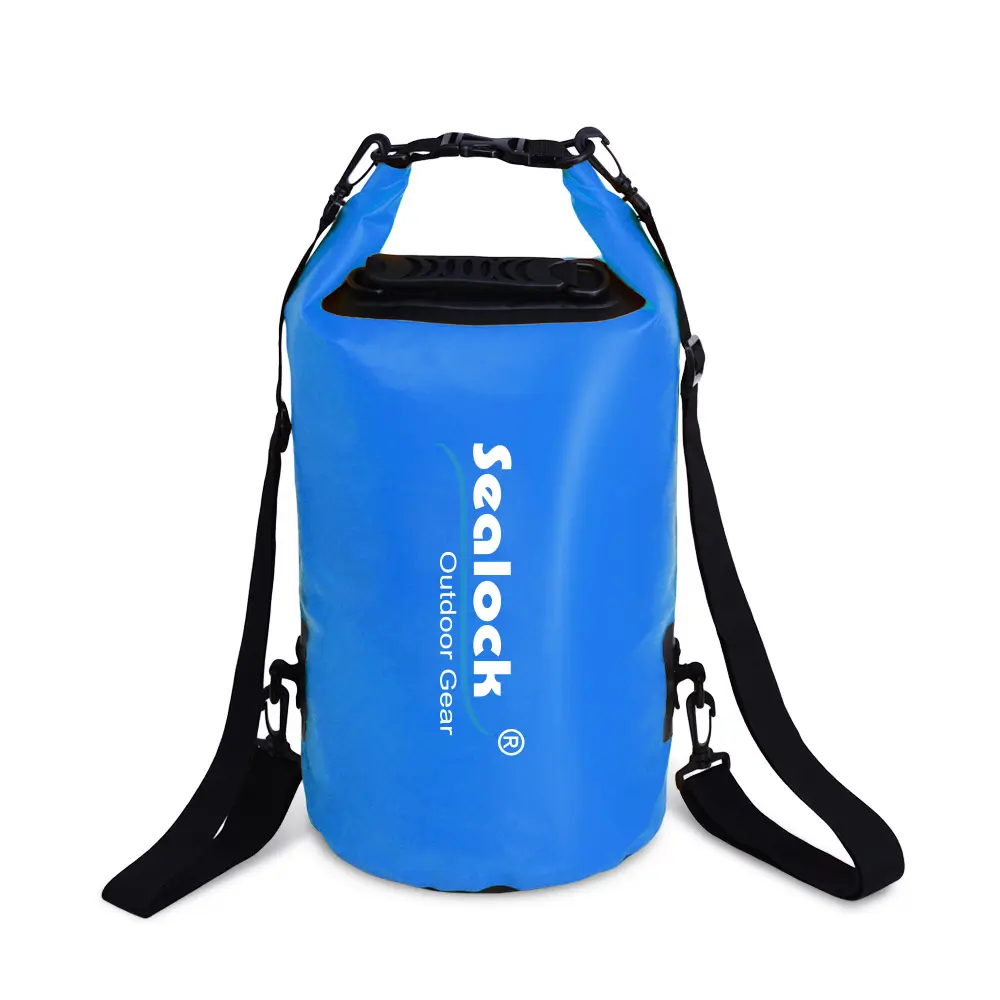
SL-D002 Dry Bag | 5–63L | 0.5 mm 500D PVC | IPX7, UTX buckles, floats | View |
|
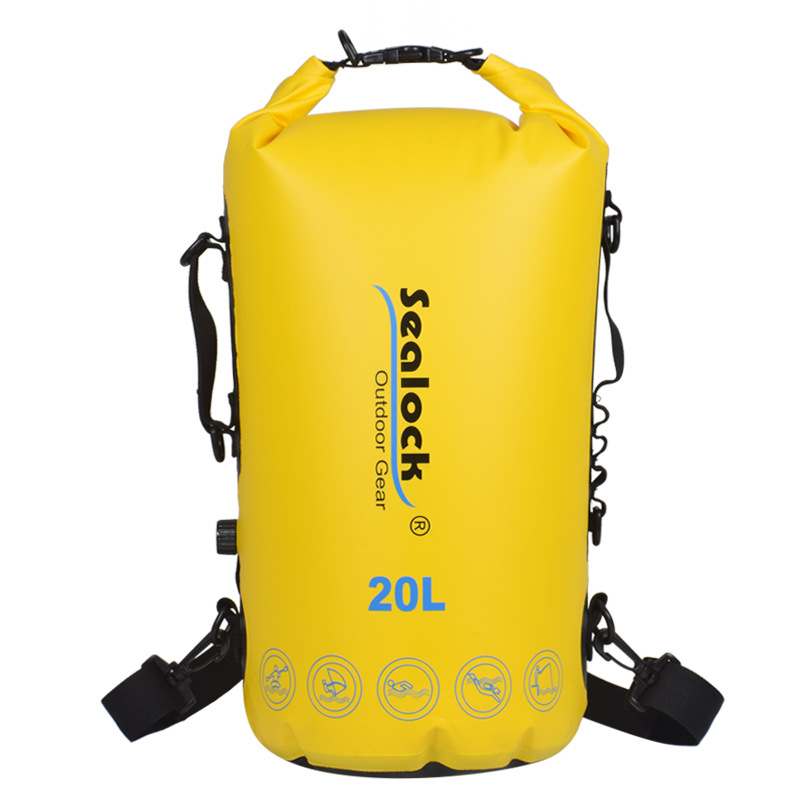
SL-E102 Backpack Dry Bag | 15 / 20L | 500D PVC, patented dual seal | IPX7, backpack straps | View |
|
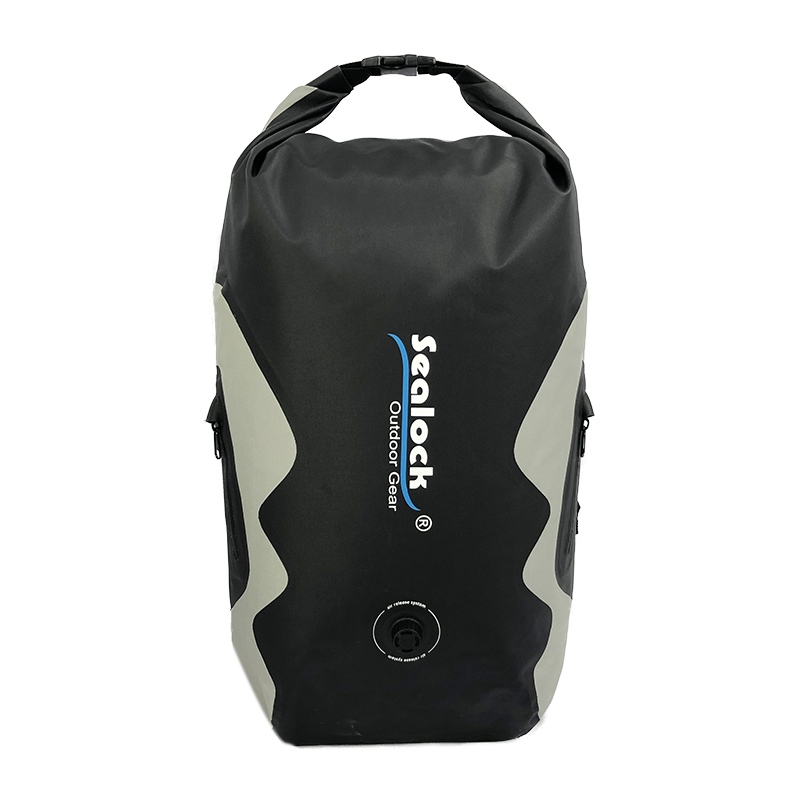
SL-E070 Dry Backpack | 25L | 420D TPU | IPX8, purge valve | View |
|
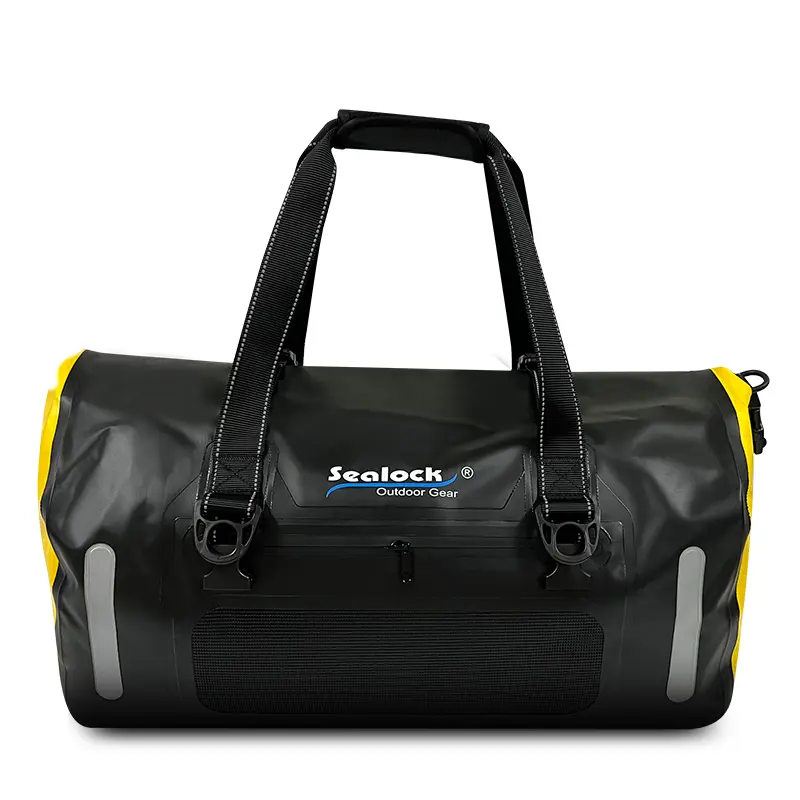
SL-K099 Duffel | 40 / 60L | 840D TPU | IPX7, removable strap | View |
|
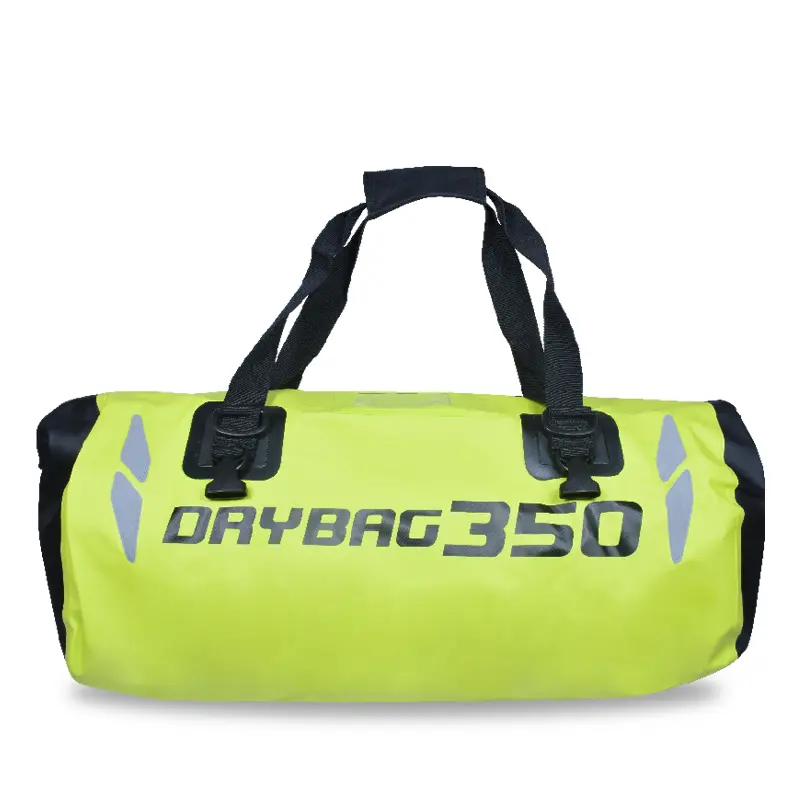
SL-C619 Motorcycle Bag | 35 / 50L | 500D PVC | IPX6, rack mount | View |
|
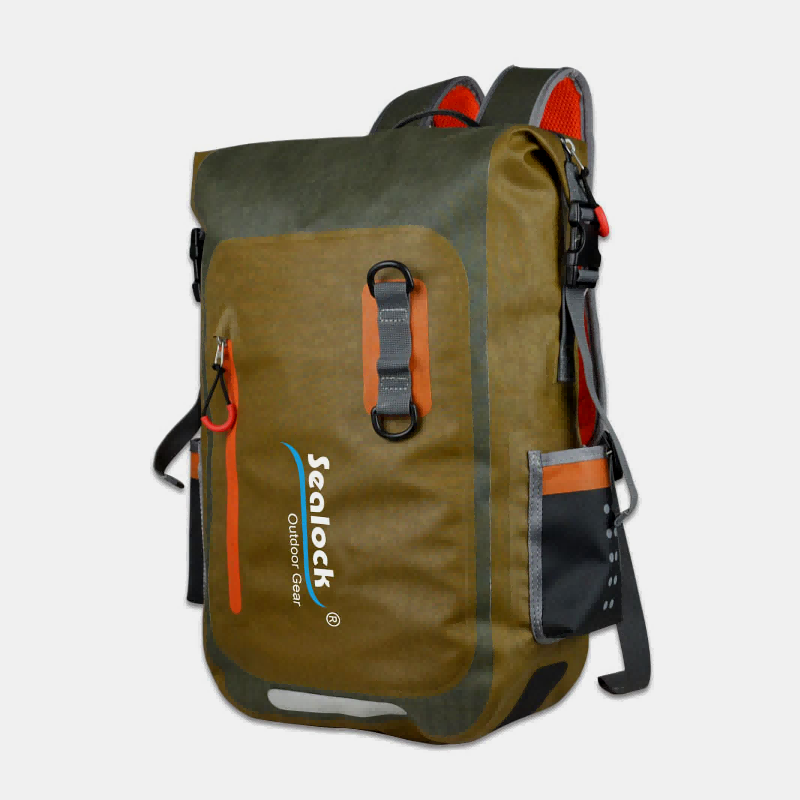
SL-E029 Commuter Backpack | 20L | 500D PVC | IPX6, side compression | View |
Full ranges sit under dry bags, dry backpacks, and duffels. Beyond the catalog, Sealock develops ground-up from a sketch, sample, or target spec — capacity, IPX rating, material, closure configuration, and hardware to the buyer's requirement.
7. What Makes One Roll-Top Better Than Another
The format is standard; the execution is not. Four things separate a roll-top that seals for years from one that disappoints:
- Welded body. High-frequency welded seams fuse the coated layers with no needle holes. A stitched-and-taped bag leaks regardless of how well it is rolled.
- The stiffening strip. A properly specified collar keeps the fold flat and makes a correct seal intuitive rather than a knack the user has to learn.
- Buckle and webbing grade. The closure is only held by its buckle — corrosion-resistant POM or UTX-grade hardware on reinforced webbing is what keeps it under tension.
- Verified performance. A stated IPX rating should come from a test. Sealock validates by full water immersion, and runs load testing over 1,500 cycles on handles and anchors, plus tensile and bonding strength, salt spray, friction resistance, and color fastness. Batches pass three-stage IQC / IPQC / OQC control with gold-sample comparison, with SGS or QIMA inspection available.
8. FAQ
Q: How many times do I need to roll it?
A: At least three, ideally three to four, folded tightly and evenly in the same direction, then buckled. Fewer than three does not build the layered seal, and this is the most common reason a dry bag leaks.
Q: My bag leaked even though I rolled it — why?
A: Usually one of three things: the bag was overpacked so there was not enough fabric left to roll, the fold had a wrinkle or the sealing strips were not pressed flat, or it was submerged for longer than a roll-top is designed for. Roll-tops handle rain, spray, and brief immersion; they are not built for prolonged underwater use.
Q: Should I squeeze all the air out?
A: No. Press out the excess so the fold seats tightly, but leave a pocket of air — that trapped air is what makes the sealed bag float. Pack it rock-hard with dense gear and it will sink. A purge valve lets you vent extra air after sealing without unrolling.
Q: Why does my 20L roll-top hold less than 20 litres?
A: Rated capacity is measured with the bag open; the stated sealed dimensions assume it has been rolled down three times. Ask for the size before closure, after three rolls, and the recommended usable volume, and list the usable figure to customers.
Q: Roll-top or waterproof zipper?
A: Roll-top for durability, sand and salt tolerance, adjustable volume, buoyancy, and cost. Zipper for fast, clean, one-handed access. For gear that has to stay dry over years of rough use, the roll-top is the safer specification; for frequently opened bags, a zipper earns its place.
Q: Will a roll-top dry bag protect a phone underwater?
A: For splashes, rain, and brief immersion when correctly sealed, yes. For anything more, double-bag electronics inside a second sealed pouch, or use a hard case — and keep in mind a floating dry bag is not a flotation device for a person.
Request Roll-Top Samples and Specs
For roll-top capacities, closure configurations, samples, or a full OEM/ODM proposal, submit an inquiry. Sealock responds to procurement enquiries within 24 hours, with production available from Dongguan, China or Ho Chi Minh City, Vietnam. MOQ 300 pcs, samples in 7–15 days, bulk in 30–45 days.
Related reading: material comparisons for PVC and TPU dry bags.