
1. Start With the Use Case, Not the Bag
Before material or size, a custom program should define what the bag protects and who carries it: clothing, electronics, tools, or first-aid kit; and a casual traveler, a paddler, a rental operator, or a promotional recipient. That definition lets the factory recommend a realistic structure rather than overbuilding the bag or cutting cost in the wrong place. It also fixes the honest waterproof claim — a splash-and-rain bag should not be marketed to the same standard as a submersible one, since overstating performance is a direct route to returns and warranty claims. Sealock builds the full range once that use case is set, from roll-top dry bags and dry backpacks to duffels.
2. Material Options
Material is the largest single driver of weight, cost, hand-feel, and cold-weather behavior. The mainstream choices for a custom dry bag:
| Material | Character | Best for |
|---|---|---|
| PVC tarpaulin (500D / 840D / 1000D) | Durable, weldable, cost-effective, rigid, holds shape | Cost-effective private label, heavy-duty and marine lines |
| TPU-laminated nylon (210D / 420D / 840D) | Lighter, softer hand-feel, flexible in cold, low odor, no plasticizers | Premium and technical positioning, cold-market lines |
| PU-coated nylon / coated polyester | Lighter, packable, rain-resistant rather than submersible | Lightweight, value, promotional |
| Transparent film / window panels | See-through, touch-through for phones | Phone-view and dry/wet-separation bags |
PVC remains common for cost-effective dry bags because it is durable and weldable; TPU is chosen when a brand wants a premium look, softer feel, lighter technical positioning, or better low-temperature flexibility. Two deniers can be combined in one bag — a lighter body with a heavier base and side panels where abrasion is worst. Whatever the face fabric, the seam method decides the waterproof claim: welded seams fuse the layers with no needle holes, which is what allows genuine immersion, where sewn-and-taped seams eventually seep.
3. Size and Capacity Options
Custom sizing is more than picking a liter number, because a roll-top's usable volume changes with how it closes. The details a brand should lock:
- Rated vs usable capacity: a roll-top loses volume with every fold, so a stated 10L packs smaller after three rolls than a 10L without a roll-top. For accurate retail listings, confirm three figures with the factory: size before closure, size after roll-top closure, and recommended usable volume.
- Capacity ladder: custom programs typically span a small carry (2–5L) for a phone and valuables, a day size (10–20L), a weekend size (30–40L), and an expedition size (60L+). Sealock produces across this full ladder, including a single platform offered in multiple liters.
- Dimensions to the use: a tall narrow profile rides better on a back; a low wide profile packs better in a hull or boot — the shape is specified to how the bag is carried, not just its volume.

4. Branding Options
Branding is where a private-label dry bag stops being generic. The logo method is matched to the material, order quantity, color count, and durability expectation — not chosen at random:
- Silkscreen printing: the common choice for PVC and simple, bold, single- or few-color logos; durable and long-lasting.
- Heat transfer: better for detailed or multi-color graphics.
- Welded emboss / deboss or rubber patch: a premium, texture-led look on suitable materials.
- Woven label: a stronger retail brand identity than print alone.
- Color: standard factory colors, or custom Pantone-matched fabric for exact brand alignment — color is the foundation of retail shelf presence and product photography.
- Packaging: matched to the channel — a simple polybag and carton mark for wholesale, or hangtags, barcode labels, insert cards, and color boxes for retail and e-commerce.
Two branding details buyers frequently miss: place the logo below the roll-top fold zone so it stays visible when the bag is rolled, and test logo adhesion on the final production material rather than a similar swatch, since sun, saltwater, folding, and abrasion all attack a print differently on the real fabric. A brand should supply vector artwork, Pantone references, and preferred logo size and placement up front. Sealock offers all of these methods; on OEM ambition specifically, the answer to "can this be done" is yes — from color and logo through to ground-up development of an original bag from a sketch, sample, or performance target, including bespoke hardware, versions, and structures.

5. Accessories and Reinforcement to Specify
Accessories look secondary but drive user experience and complaints, so a custom spec should name each: buckle type and webbing width, D-rings, shoulder and backpack straps, handles, air/purge valves, transparent windows, and reinforcement points. For larger bags, strap strength and anchor reinforcement matter most — a bag can be perfectly waterproof and still fail if a handle or strap tears under load. Sealock specifies UTX-Duraflex buckles, corrosion-resistant polymer hardware for saltwater lines, and welded-on D-rings and MOLLE anchors on reinforcement patches so load-bearing points never pierce the waterproof membrane.
6. From Spec Sheet to Bulk
A custom dry bag project runs cleanest when every detail is locked in a written specification before production: material and thickness, capacity before and after closure, color standard, logo method and placement, accessories, packaging, inspection points, and the exact waterproof claim to be tested. The sample is the first real test of whether the idea is manufacturable — it should confirm material, dimensions, weld line, closure function, strap comfort, logo quality, packaging, and waterproof performance in one object. One approved gold sample is then held by each side as the inspection reference. Sealock quotes standard MOQ at 300 pcs, samples in 7–15 days, and bulk in 30–45 days; complex ground-up development runs longer than modifying an existing model, so schedule against a launch date.
7. Custom-Ready Range Across Categories
A brand often needs several bag types under one logo, colorway, and packaging spec, built in the same workshops and shipped in one run. Representative categories and models, organized by type rather than priority:
| Image | Category | Representative model | Material | Product Page |
|---|---|---|---|---|
|
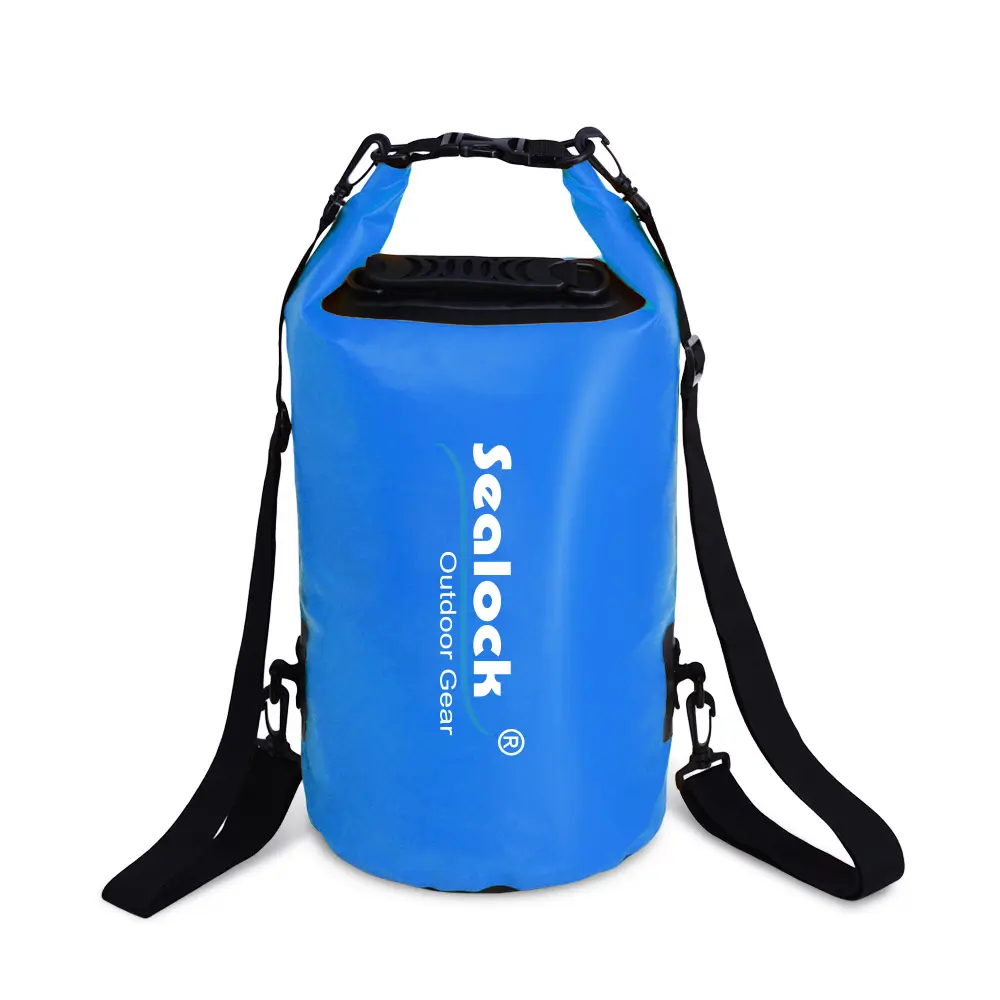
Roll-top dry bag (size ladder) | 500D PVC UTX Buckle Dry Bag (SL-D002), 5–63L | 500D PVC | View |
|
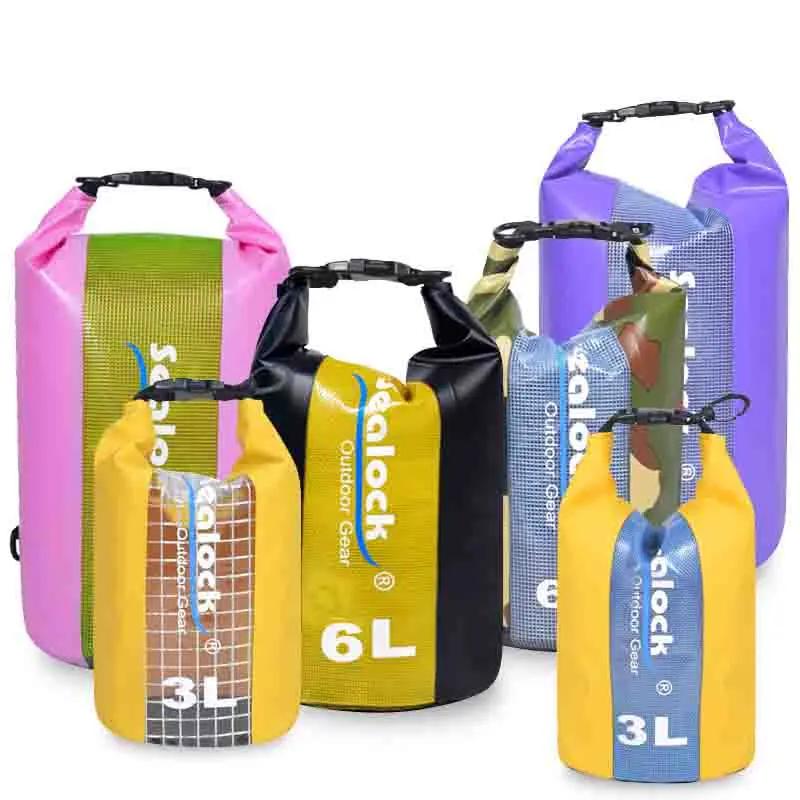
Window / phone-view | Clear Window Dry Bag, 3–10L | PVC + clear film | View |
|
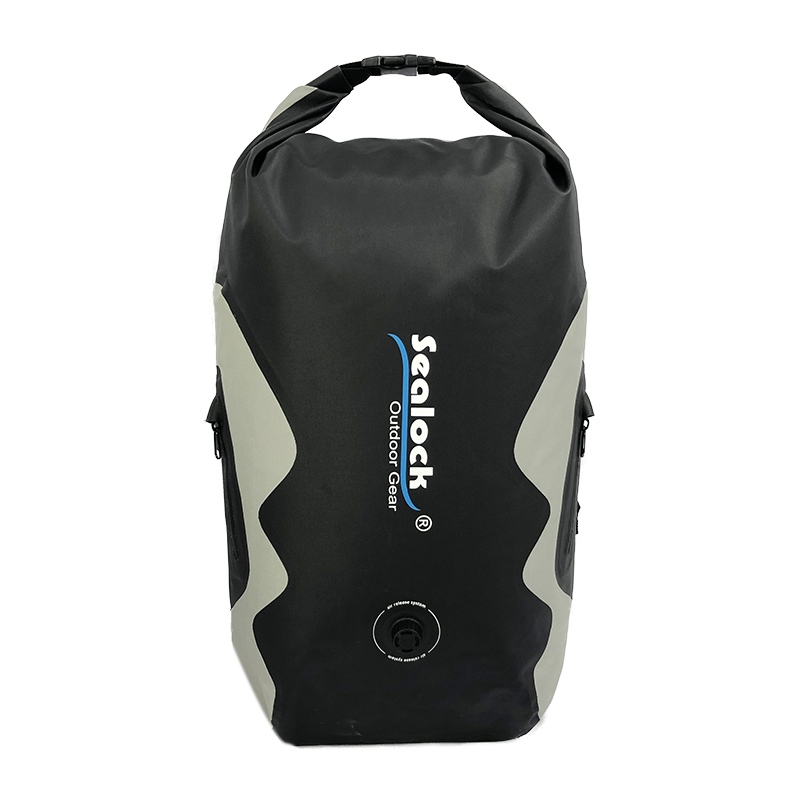
Dry backpack | 25L Roll-Top Dry Backpack, air valve (SL-E070) | 420D TPU | View |
|
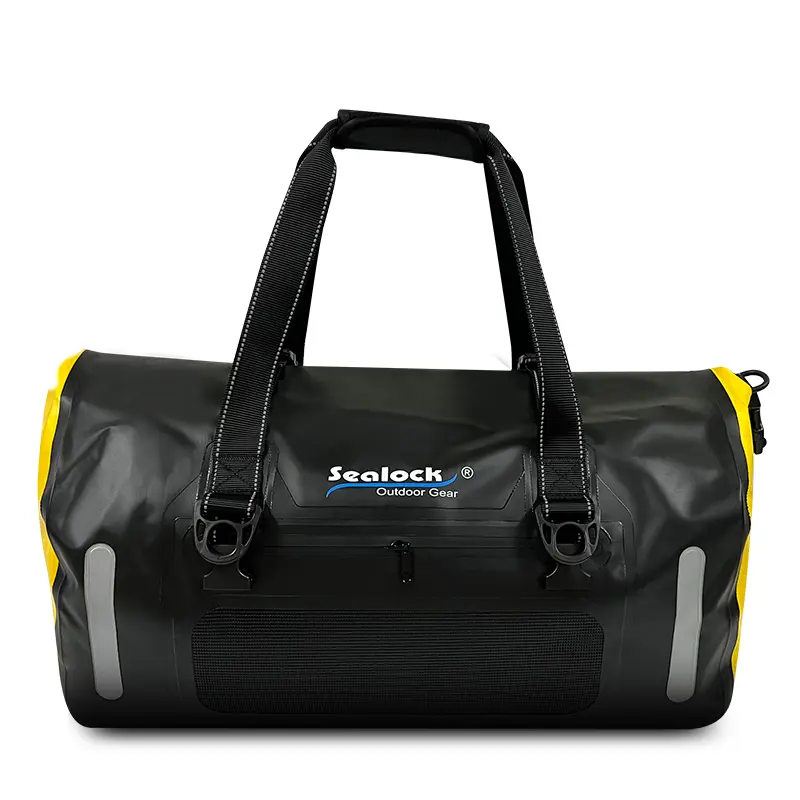
Waterproof duffel | 40L / 60L Roll-Top Duffel (SL-K099) | 840D TPU | View |
|
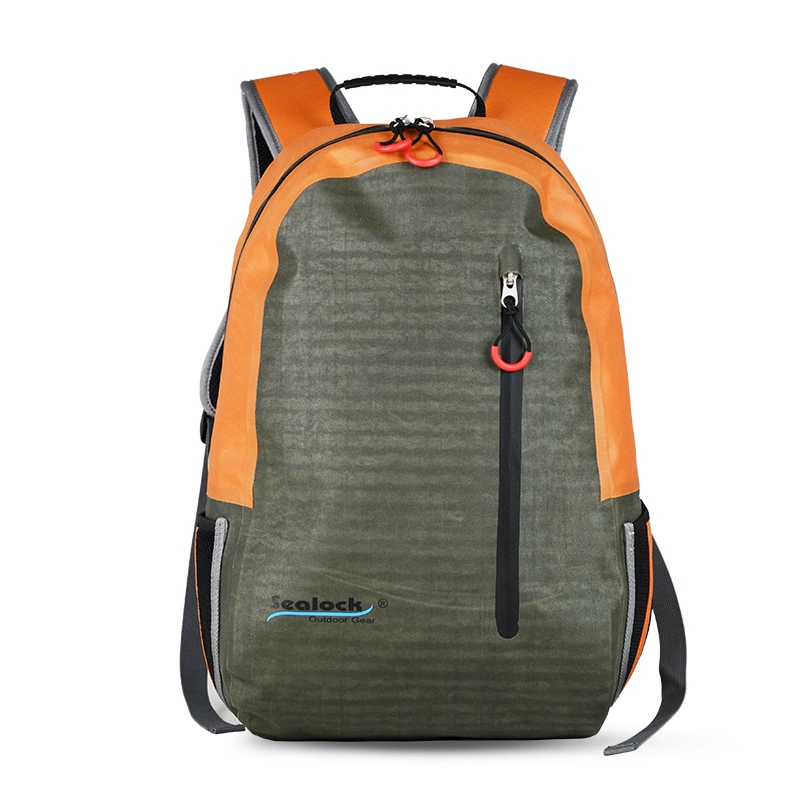
Urban / commuter | 22L Waterproof TPU Urban Backpack (SL-E071) | 420D TPU | View |
|
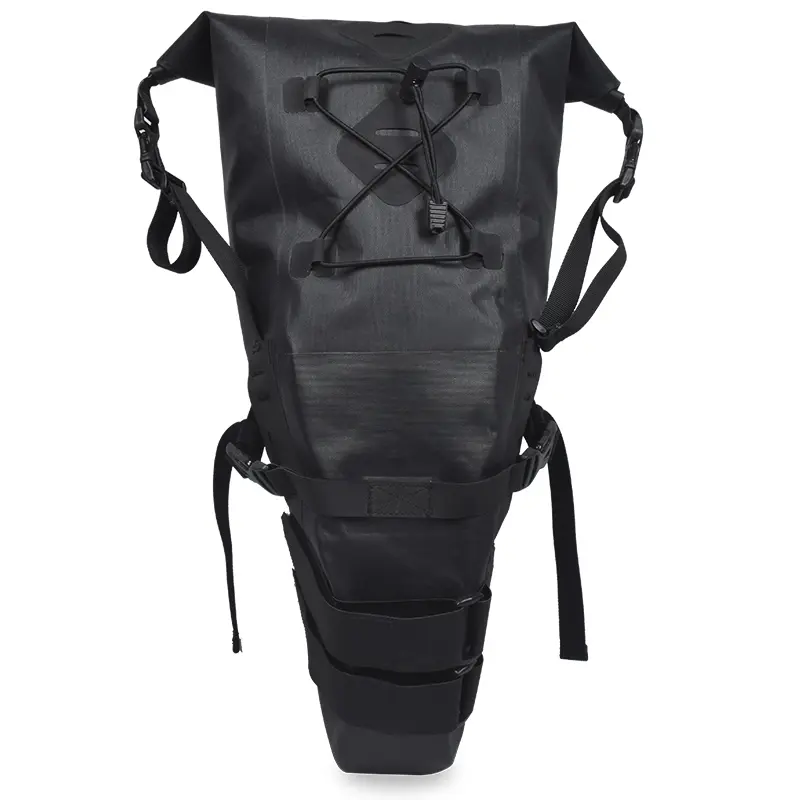
Bikepacking / cycling | Bikepacking Saddle Bag (SL-K022), 10–14L | 420D/600D TPU | View |
8. Quality Control and Compliance
Sealock applies a three-stage control to every batch before shipment. The laboratory test suite covers a load test of over 1,500 cycles, 3,000 sealed-zipper cycles for zippered models, tensile strength, bonding strength, salt spray, friction resistance, color fastness, and color difference, plus a full water immersion test to confirm the interior stays dry. Color fastness and color-difference testing directly protect a custom program from batch-to-batch color drift against the approved Pantone standard. Inspection runs as IQC on incoming fabric, film, and hardware; IPQC on welds and logo application in line; and OQC with AQL sampling, batch immersion testing, and signed gold-sample comparison, with optional SGS/QIMA third-party inspection. Compliance is backed by ISO 9001, BSCI, SMETA, HIGG, GRS, and SCAN, with production from Dongguan, China or Ho Chi Minh City, Vietnam to suit a brand's tariff position.
9. FAQ
Q: Why does my custom 20L bag hold less than 20 liters once it's rolled shut?
A: A roll-top loses volume with every fold, so rated capacity is measured open. For accurate listings, ask for three numbers — size before closure, size after three rolls, and recommended usable volume — and set your retail copy to the usable figure to avoid "smaller than expected" complaints.
Q: My logo cracked or peeled after a season — how is that avoided?
A: Print durability depends on the method matched to the material and on adhesion tested on the actual production fabric, not a lookalike swatch. Sun, saltwater, folding, and packing pressure all stress a print, so confirm the logo method against the final material and, for rolled bags, place the logo below the fold zone so it isn't creased.
Q: Can I get an exact brand color, not just standard factory colors?
A: Yes — custom Pantone-matched fabric aligns the bag to a brand standard, and color-fastness and color-difference testing keep repeat orders matched rather than drifting between batches. Provide the Pantone reference up front.
Q: The bag is waterproof but the strap tore under load — is that a material fault?
A: Usually it's an accessory-spec gap, not the fabric. Waterproofing and load-bearing are separate problems: for larger custom bags, specify strap width, buckle grade, and anchor reinforcement, and confirm they are load-tested, because a fully waterproof bag can still fail at an under-built strap.
Q: How much can actually be customized — just logo and color, or the whole bag?
A: The whole bag. Beyond logo and color, material and denier, capacity and dimensions, closure type, hardware, straps, windows, and reinforcement are all open, and a design can be built ground-up from a sketch, sample, or performance target. Full custom development runs longer than a logo-and-color change, so plan the timeline accordingly.
Q: What should I lock before production starts?
A: A written specification: material and thickness, capacity before and after closure, color standard, logo method and placement, accessories, packaging, inspection points, and the exact waterproof claim to be tested. Approve one gold sample against it, and avoid changing details mid-production.
Request a Custom Quote
For a custom dry bag quote, samples, or a full OEM/ODM proposal across any category in the range, submit an inquiry. Sealock responds to procurement enquiries within 24 hours and can route production through China or Vietnam to suit a brand's tariff position.