- English
- Español
- Português
- русский
- Français
- 日本語
- Deutsch
- tiếng Việt
- Italiano
- Nederlands
- ภาษาไทย
- Polski
- 한국어
- Svenska
- magyar
- Malay
- বাংলা ভাষার
- Dansk
- Suomi
- हिन्दी
- Pilipino
- Türkçe
- Gaeilge
- العربية
- Indonesia
- Norsk
- تمل
- český
- ελληνικά
- український
- Javanese
- فارسی
- தமிழ்
- తెలుగు
- नेपाली
- Burmese
- български
- ລາວ
- Latine
- Қазақша
- Euskal
- Azərbaycan
- Slovenský jazyk
- Македонски
- Lietuvos
- Eesti Keel
- Română
- Slovenski
- मराठी
- Srpski језик

Waterproof Bag Packaging and Retail Presentation for OEM Buyers
Sealock produces waterproof bags for OEM and wholesale buyers with packaging specified to the sales channel, from plain export cartons through to retail-ready and marketplace-compliant presentation. Packaging is the part of a specification buyers leave until last and then regret, because it determines whether goods can be sold on arrival — or whether they sit in a rejection queue while someone repacks them. This covers what to specify, what each channel requires, and what changed in 2026.
1. Packaging Is Specified to the Channel, Not to the Product
The same bag needs different packaging depending on where it ends up, and quoting the wrong one either wastes money or blocks the sale:
| Channel | What it needs |
|---|---|
| Pure wholesale / distributor warehouse | Individual polybag, export carton, shipping marks. Minimum cost, since the buyer repacks or ships bulk |
| Dealer and retail shelf | Hangtag, care label, barcode, and in some cases a colour box — the unit has to sell itself unattended |
| E-commerce and marketplace fulfilment | Compliant sealed polybag, scannable barcode, unit-level labelling, carton labels — non-compliance is rejected at the dock |
| Corporate gifting and kitting | Presentation packaging, and carton counts matched to how the fulfilment team will break it down |
Most programmes need more than one of these, which is worth stating at quotation rather than discovering later — a distributor selling both to dealers and on a marketplace usually needs two packing specifications from the same production run.
2. What Changed in 2026 for Marketplace Sellers
This is the shift that moved packaging from a shipping detail into a factory-stage requirement. From 1 January 2026, Amazon stopped prepping and labelling inbound US FBA units on sellers' behalf. Every polybag, barcode, warning, and carton label now has to be correct before the shipment leaves your hands — and if it is not, the inventory can be delayed, rejected, repacked at your cost, or marked unsellable.
For an importer that makes the factory the natural place to do the work. Applying compliant polybags and unit labels at production is dramatically cheaper than paying a prep service, or a marketplace fee, to redo it after the goods have crossed an ocean.
3. The Polybag Specification People Get Wrong
Polybags look trivial and generate a disproportionate share of rejected shipments. The requirements that matter for marketplace-bound goods:
- Transparent and adequately thick, commonly a minimum of 1.5 mil, so barcodes stay scannable through the film.
- Sealed, not open. Open polybags are rejected, and the bag should fit the product without excessive loose material.
- Suffocation warning where the bag opening measures five inches or more when laid flat, printed in a size proportionate to the bag. Missing warnings on soft goods are among the most frequent compliance failures, and the warning text and font sizing are prescribed rather than approximate.
- One unit per bag, with multi-piece sets requiring a master bag marked as a set so the components are not separated.
- FBA-grade versus standard. Suppliers typically offer both, with compliant stock costing modestly more — and removing an entire category of rejection risk.
Because marketplace rules are revised periodically, the specification should be confirmed against current published requirements at the time of ordering rather than carried over from a previous programme.
4. Barcodes and Labelling
Labelling is where failures are invisible at a glance — the label looks right and does not scan:
- Print on matte white stock. Glossy finishes cause glare that blocks scanners.
- Place on a flat surface, not on a curve, a seam, or carton tape, and keep it unobstructed by stretch wrap.
- One scannable code per unit. Where a marketplace-specific code is applied, any other barcode on the unit should be covered so the wrong one is not read.
- Separate codes per variation. Each size and colour is a distinct SKU and needs its own code — a point that interacts directly with how a range is specified.
- Carton labels applied clearly, one per carton, matching the shipment plan and remaining readable after palletising.
All of this can be applied at production here — barcode labels, marketplace unit labels, hangtags, care labels, shipping marks, and OEM carton printing.
5. Retail Presentation: What Makes a Bag Sell on a Shelf
For dealer and retail channels the packaging has a selling job rather than only a protective one. Four elements do most of the work:
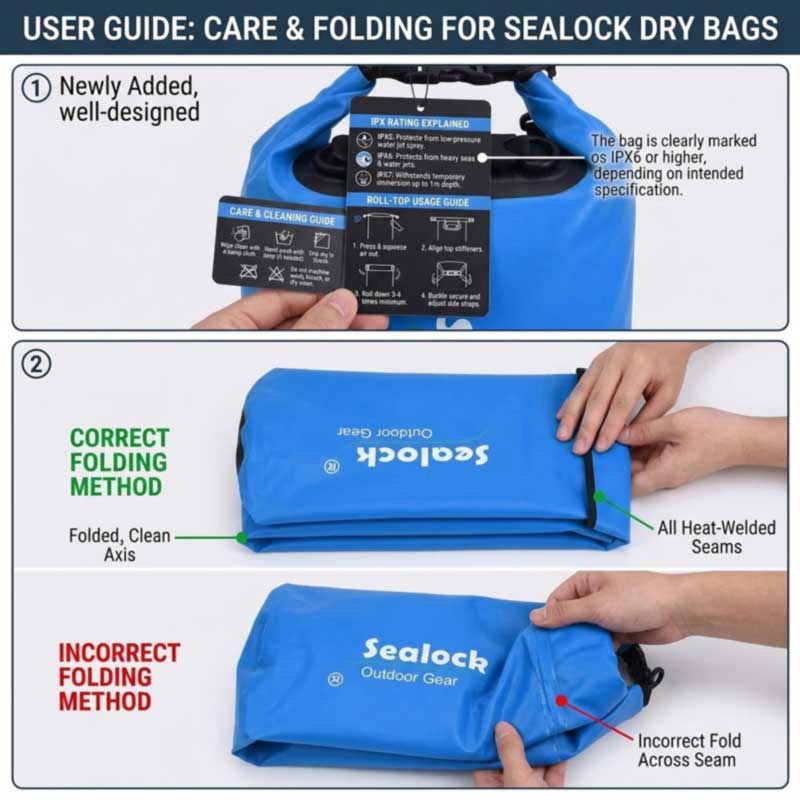
- The hangtag — the only place to state the waterproof rating in plain language. On this category that is worth more than any other claim, because the most common retail return is a customer who assumed a rain-rated bag was submersible. Print what IPX6, IPX7, or IPX8 actually means for that model.
- A care label covering rinsing, drying, and storage — particularly useful on coated products where folding wet or storing damp shortens service life.
- Fitting or closure instructions where the product needs them. Roll-tops leak when under-rolled, and vehicle-mounted bags generate support calls when fitted wrongly; both are solved by a card in the box rather than by customer service.
- Colour box or header card where the retailer shelves rather than hangs, sized so a stack presents cleanly.
6. Protecting Shape and Condition in Transit
Two issues specific to coated waterproof bags are worth building into the packing specification:
Fold placement. Bags should be folded along non-critical axes rather than across welded seams or roll-top collars, because a permanent crease set over weeks in a carton is visible on the shelf and, on PVC in cold conditions, can become a failure point.
Moisture at packing. A bag packed while still holding residual moisture — from water testing or a humid workshop — carries that moisture inside a sealed carton across hot maritime lanes, where trapped condensation can cause staining or mould by arrival. Goods here are fully dried and deflated before packing, with moisture-controlled staging on the finishing line. It is invisible at inspection and only surfaces when the container is opened, so it is worth asking any supplier how they handle it.
7. Carton Specification Affects Freight Cost
Bags are volumetric, so ocean freight is charged on cube rather than weight — which makes carton configuration a real cost line rather than an administrative detail. Confirm at quotation: units per carton, carton dimensions, gross weight, and carton grade. Five-layer export cartons are standard here, with pallet packing optional.
Two practical points. Marketplace-bound cartons carry their own size and weight limits, with heavier cartons requiring lift warnings, so check the current thresholds before fixing a packing plan. And a mixed container of bulky and dense items usually ships more efficiently than a container of one bulky SKU — relevant when a range spans duffels and smaller bags. The wider landed-cost method is covered in the guide to what drives the cost of a waterproof bag.
8. Packaging Options Available
| Element | Options |
|---|---|
| Individual packaging | PE or PP bag, sealed; compliant polybag with suffocation warning where required |
| Carton | Five-layer export carton; OEM carton printing; pallet packing optional |
| Unit labelling | Barcode labels, marketplace unit labels, shipping marks |
| Retail presentation | Custom hangtags, care labels, header cards, colour boxes |
| Documentation in box | Fitting instructions, care guidance, rated load labelling where applicable |
| Carton data confirmed at quotation | Units per carton, carton dimensions, gross weight |
9. Range and Terms
Sealock (YiFuLong Outdoor Gear Co., Ltd.) has built waterproof bags for over 20 years, producing for international outdoor brands including OSPREY, KAILAS, Helly Hansen, SIMMS, ORVIS, and West Marine.
- MOQ: 300 pcs on most models | Samples: 7–15 days | Bulk: 30–45 days
- Production: in-house 27.12 MHz high-frequency welding and industrial sewing, separate workshops on the same production floor
- Facilities: Dongguan, China | Ho Chi Minh City, Vietnam — either origin on any model
- Certifications: ISO 9001, BSCI, SMETA, Sedex, HIGG, GRS, SCAN
| Image | Model | Category | Standard packing | Product Page |
|---|---|---|---|---|
|
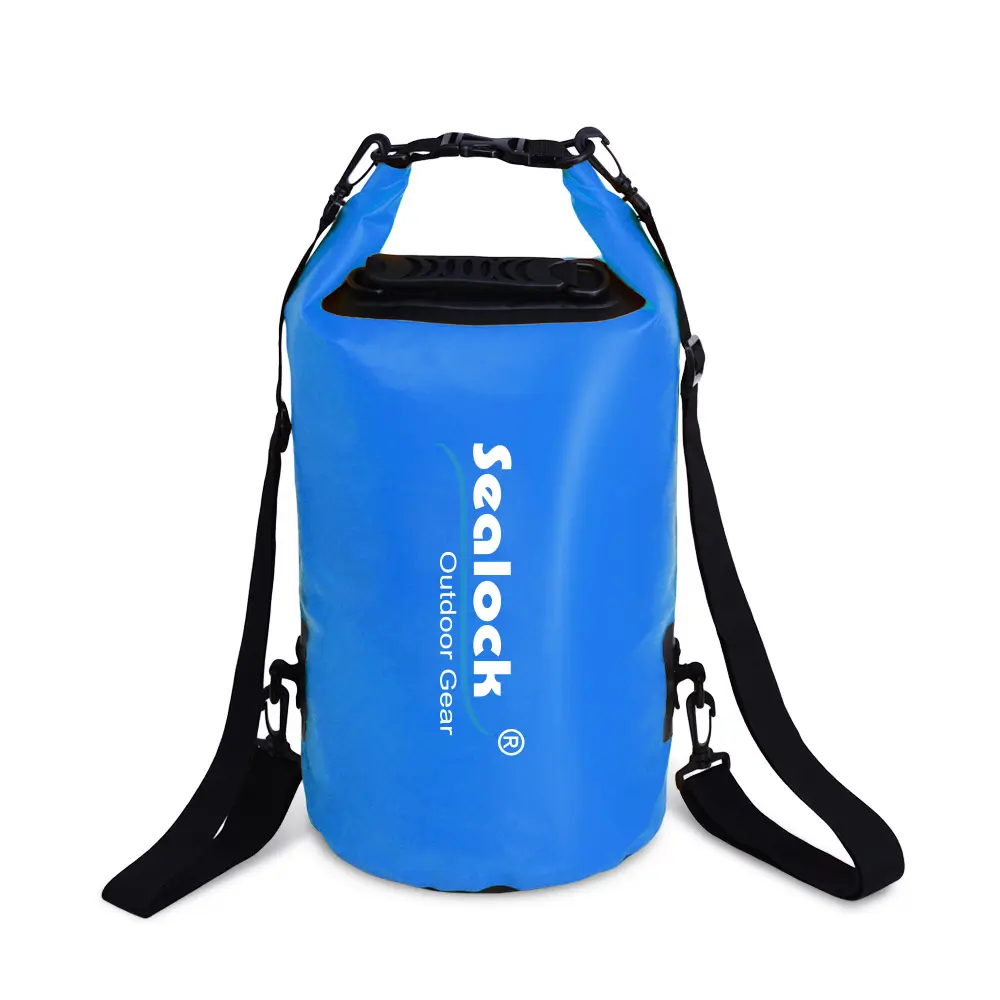
SL-D002 | Dry bag, 5–63L | Single piece per bag, export carton | View |
|
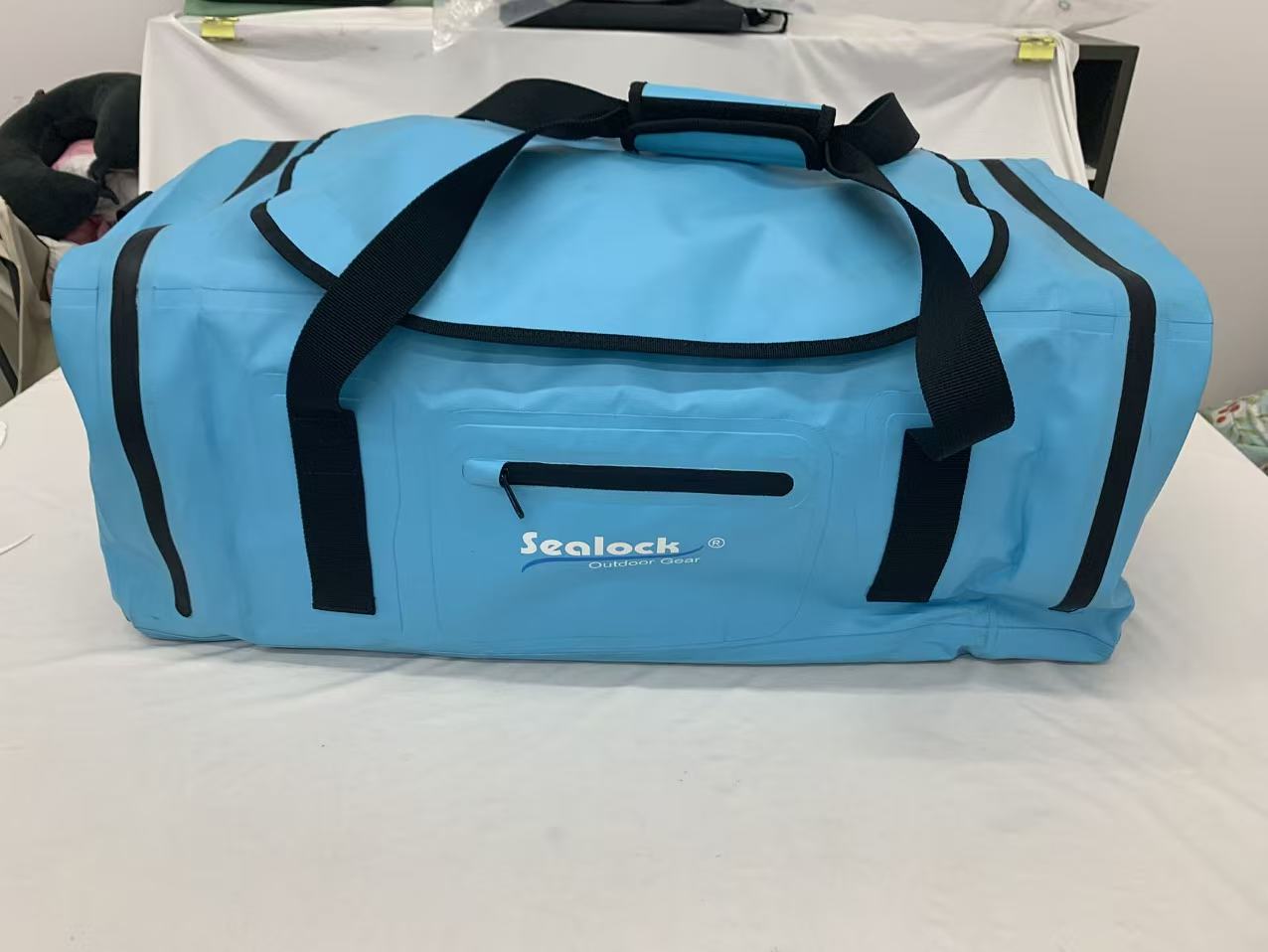
SL-C594 | Duffel, 55L | PE bag; carton approx. 66 × 38 × 36 cm, 5 pcs, approx. 7.5 kg gross | View |
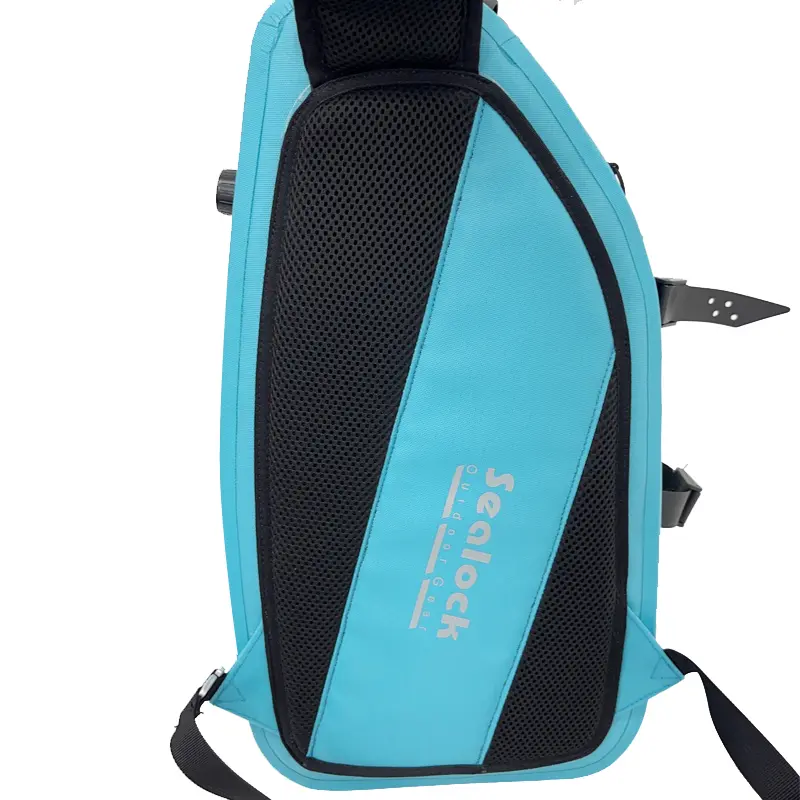
|
SL-E868A | Fishing sling, 12L | 1 pc per PP bag, 20 pcs per carton, five-layer export | View |
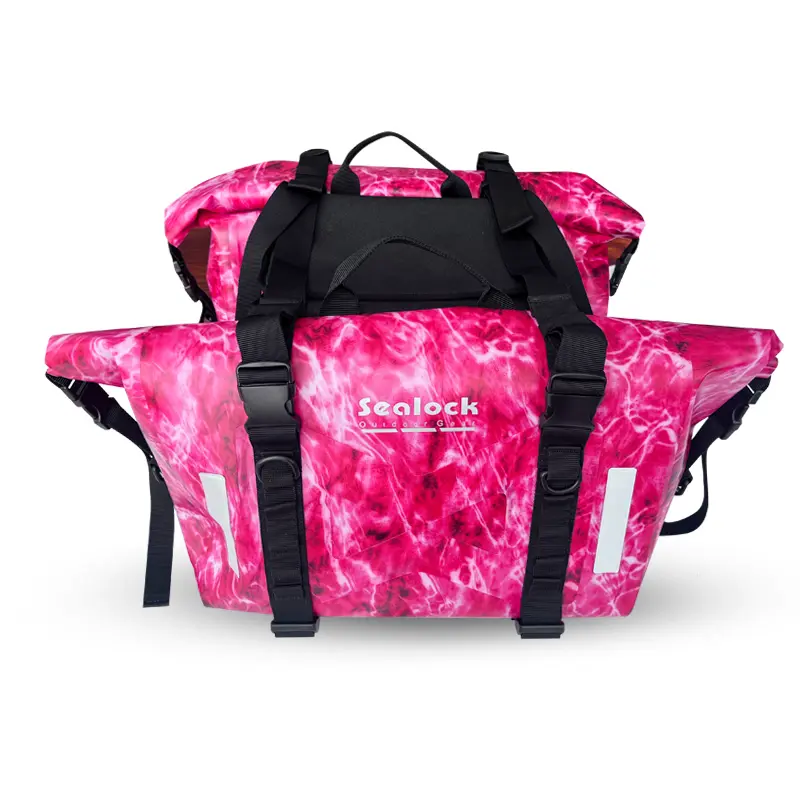
|
SL-C807 | Motorcycle, 45L | 1 pc per PP bag, 20 pcs per carton | View |
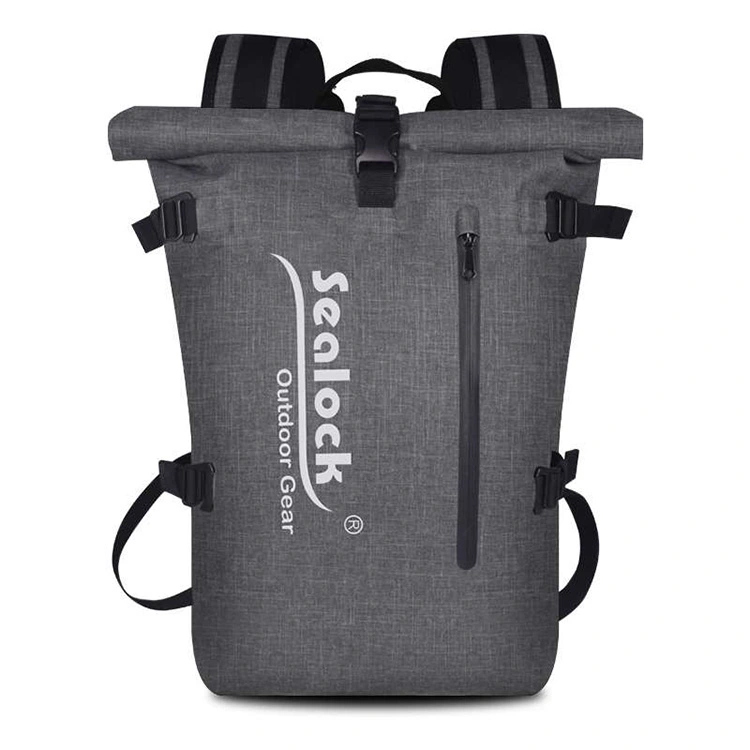
|
SL-E980 | Commuter backpack, 22L | PE or PP bag, export carton, retail packaging available | View |
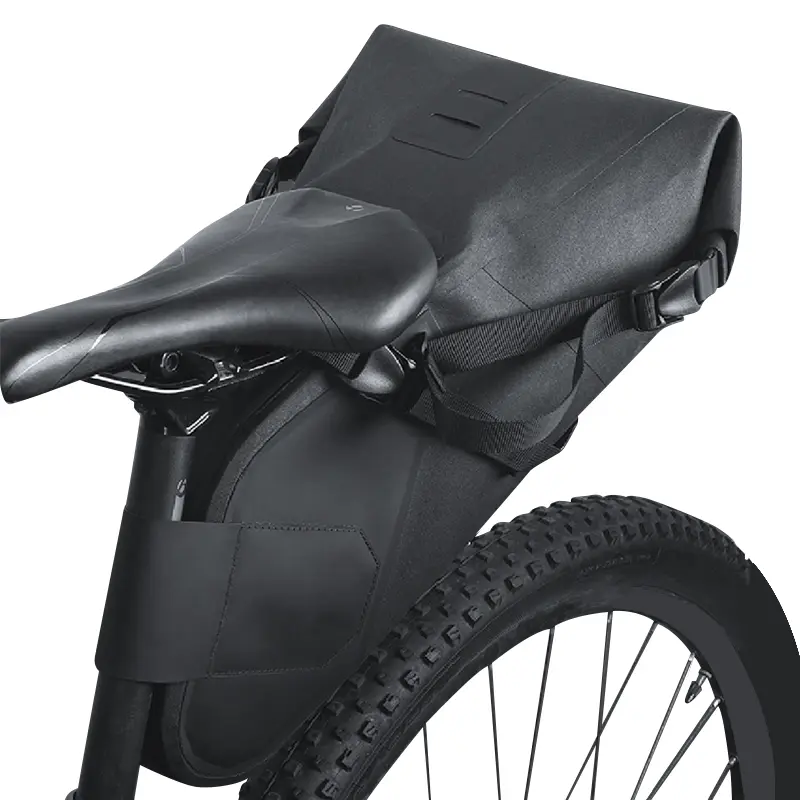
|
SL-K022 | Bike saddle bag, 10–14L | Single piece per bag, export carton | View |
Full categories sit under waterproof bags, dry backpacks, and dry bags. Branding methods across materials are covered in the guide to custom dry bags, and corporate programme packaging in the guide to branded bags for corporate gifting.
10. Quality Control Covers Packing
Carton inspection runs at 100% on the fishing and duffel lines alongside fabric, weld seam, closure, colour consistency, and appearance checks, with OQC verifying that packing matches the approved specification before release. Getting packing wrong is one of the few defects that is entirely preventable at inspection, so it is worth including in the pre-shipment brief given to your own or a third-party inspector. Standards are set out in the quality control standards for waterproof production.
11. FAQ
Q: Can you apply marketplace labels and compliant polybags at the factory?
A: Yes, and since January 2026 it is the sensible place to do it — marketplaces in the US no longer prep or label inbound units on sellers' behalf, so everything must be correct before the goods ship. Applying it at production costs far less than a prep service or a non-compliance fee after arrival.
Q: What gets shipments rejected most often?
A: Polybags without suffocation warnings on soft goods, barcodes that cannot be scanned because they are on a curve, under glossy tape, or under stretch wrap, and carton labels placed on seams. All of them look correct at a glance, which is why they are missed.
Q: Do we need retail packaging if we sell to distributors?
A: Not usually — a sealed individual bag with carton marks is enough where the distributor repacks or shelves in bulk. But if any part of the programme reaches a dealer shelf or a marketplace, specify that packing separately at quotation rather than adding it later.
Q: What should go on the hangtag for a waterproof bag?
A: The rating, stated in plain language. The most common return in this category is a customer who assumed a rain-rated bag was submersible, and a hangtag explaining what IPX6, IPX7, or IPX8 means for that specific model prevents more returns than any other single element.
Q: Why does carton configuration matter so much?
A: Because bags are volumetric and ocean freight is charged on cube. Units per carton and carton dimensions belong in the quotation, and a mixed container of bulky and dense SKUs usually ships more efficiently than one bulky SKU alone.
Q: Our last container arrived with creased or stained goods. Preventable?
A: Usually yes. Creasing comes from folding across welded seams or roll-top collars rather than along non-critical axes; staining and mould come from packing goods that still held moisture from testing or a humid workshop. Both are packing-stage controls — ask any supplier how they dry and fold before cartoning.
Request a Packing Specification
Tell us which channels the goods are going to — distributor, retail shelf, marketplace fulfilment, or gifting — and we can quote the packing for each and confirm carton data at the same time — submit an inquiry. Sealock responds to procurement enquiries within 24 hours, with production from Dongguan, China or Ho Chi Minh City, Vietnam.