
- English
- Español
- Português
- русский
- Français
- 日本語
- Deutsch
- tiếng Việt
- Italiano
- Nederlands
- ภาษาไทย
- Polski
- 한국어
- Svenska
- magyar
- Malay
- বাংলা ভাষার
- Dansk
- Suomi
- हिन्दी
- Pilipino
- Türkçe
- Gaeilge
- العربية
- Indonesia
- Norsk
- تمل
- český
- ελληνικά
- український
- Javanese
- فارسی
- தமிழ்
- తెలుగు
- नेपाली
- Burmese
- български
- ລາວ
- Latine
- Қазақша
- Euskal
- Azərbaycan
- Slovenský jazyk
- Македонски
- Lietuvos
- Eesti Keel
- Română
- Slovenski
- मराठी
- Srpski језик

GRS Recycled Waterproof Bags for Sustainable Outdoor Brands
Sealock is a GRS-certified waterproof bag manufacturer producing recycled-content OEM programmes for outdoor brands, retailers, and corporate buyers from factories in China and Vietnam. Recycled content moved from a marketing preference to a documentation requirement in 2026, and the practical consequence for buyers is specific: a sustainability claim now needs a certificate behind it, naming a percentage and a verifying body, or it cannot legally be made in several major markets. This covers what GRS actually certifies, what changed, and how to specify it on a bag programme.
1. What GRS Certifies — and What It Does Not
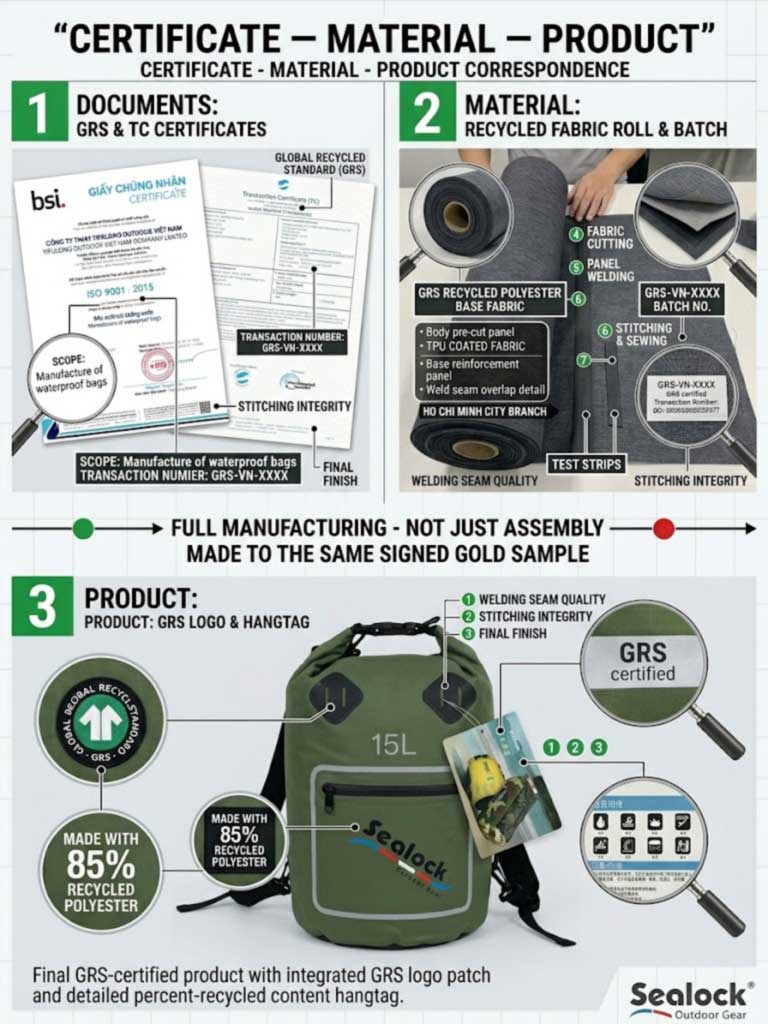
The Global Recycled Standard is a full-product standard covering more than recycled content alone. It sets third-party requirements across four areas: verified recycled content, chain of custody, social and environmental practices in processing, and chemical restrictions. It applies to products containing at least 20% recycled material, and every stage of production must be certified — from the recycling stage through to the last seller in the final business-to-business transaction.
Two points buyers commonly get wrong:
- Certification is a chain, not a badge. Transaction certificates follow the material through each step, which is what prevents substitution and protects the claim. A supplier holding a certificate that does not cover the specific product line you are ordering is a real and common problem.
- There are two thresholds. A product needs a minimum of 20% recycled content to be GRS certified, while product-specific GRS labelling generally requires content at or above 50%. Confirm which you need for your intended claim before specifying the material.
GRS also differs from the lighter Recycled Claim Standard, which requires a lower recycled minimum and carries no processing requirements — worth knowing when comparing supplier claims that sound similar.
2. Why This Became Urgent in 2026
Two regulatory developments changed the calculation for anyone selling into Europe:
- The Green Claims Directive, effective 2026, requires environmental claims to be substantiated by independent third-party verification. Claims about recycled content must state the percentage, the verification standard, and the certification body — vague wording such as "eco-friendly" or "green" without substantiation is prohibited. Reported penalties for non-compliance reach up to 4% of annual turnover.
- The Ecodesign for Sustainable Products Regulation introduces Digital Product Passport requirements for textiles, with products sold in the EU expected to carry verified data on recycled content, carbon footprint, and supply chain traceability.
The effect is that recycled content stops being something a brand mentions and becomes something it must be able to evidence at the SKU level. Documentation gaps that were previously a reputational risk are now a compliance and customs risk.
3. The Buying-Side Reality: Certification Also Wins Orders
Beyond regulation, recycled certification has become a procurement filter in its own right. Industry reporting on corporate buying indicates that roughly half of procurement managers now require sustainable options, with particular attention to GRS-certified recycled materials — meaning a programme without the documentation may not clear internal approval regardless of product quality or price.
The same pattern appears in retail vendor onboarding, where recycled-content evidence increasingly sits alongside social compliance audits in the approval pack rather than as an optional extra.
4. What Recycled Content Means on a Waterproof Bag Specifically
Waterproof bags are a composite product, and that shapes what is realistic to specify:
- The base fabric is the main opportunity. Recycled polyester and nylon substrates are the established route, and they carry the coating in the same way virgin substrates do.
- The coating and the substrate are separate questions. Specify clearly whether your recycled-content figure refers to the fabric, the whole bag, or a named component, because a claim stated loosely is exactly what the Green Claims Directive targets.
- Hardware matters to the percentage. Buckles, webbing, zippers, and foam all contribute mass, so a bag's whole-product recycled percentage is lower than its fabric percentage unless those components are specified too.
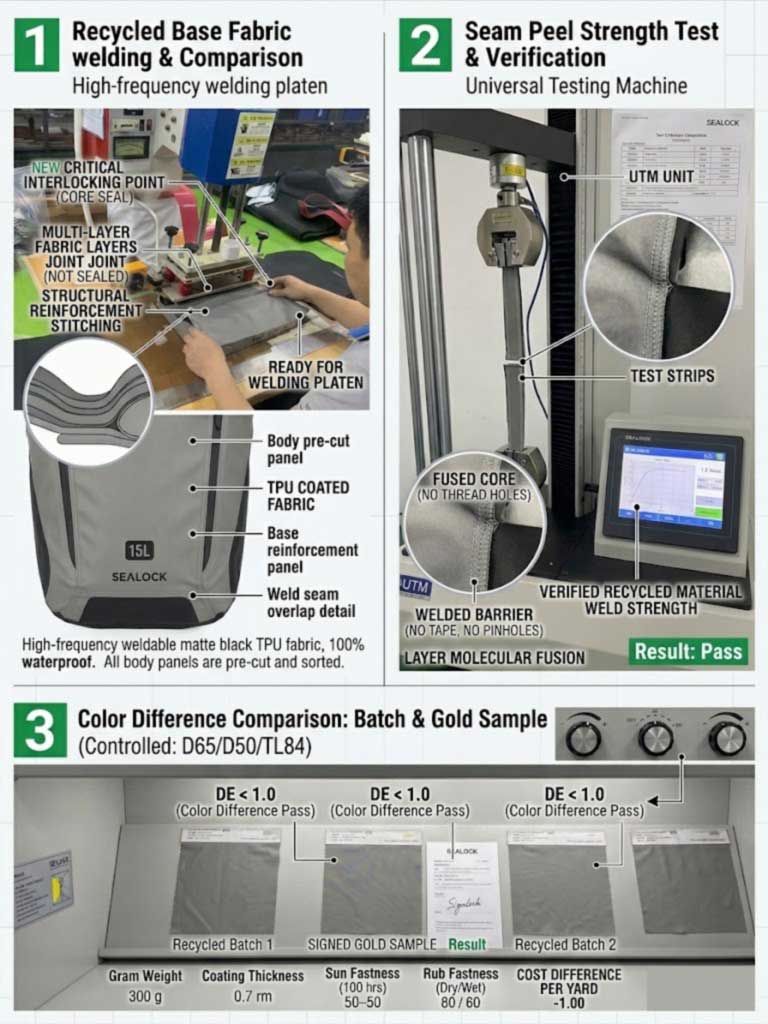
- Performance should be verified, not assumed. Recycled substrates behave differently batch to batch more than virgin ones, so weld quality and colour consistency are worth watching closely on a first run — testing at sampling rather than discovering it at bulk.
5. How to Specify a GRS Programme
- Decide the claim you want to make. Working backwards from the claim determines the content threshold and therefore the material — a product-specific label carries a higher bar than basic certification.
- State the percentage basis. Fabric-level or whole-product, and which components are included.
- Confirm the certificate scope covers your product. Ask to see the current certificate and check both its validity dates and whether the product category you are ordering is inside its scope.
- Request transaction certificates for your order, not only the supplier's facility certificate. This is the document that connects your specific goods to certified material.
- Match the packaging and labelling. Where a percentage is printed on a hangtag or a product page, it has to match the certified figure.
- Sample and test. Run the same weld peel, immersion, and colour-difference checks on the recycled specification that you would on a virgin one.
Sealock holds GRS alongside ISO 9001, BSCI, SMETA, Sedex, HIGG, and SCAN, and certification documentation is available for programmes specified on certified material.
6. A Transition Worth Tracking
Textile Exchange, which owns GRS, is consolidating its standards into a single Materials Matter Standard. The criteria were released in December 2025, with the standard becoming effective at the end of 2026 and mandatory from the end of 2027, after which certified organisations complete their next audit to the new standard to maintain certification.
For a buyer this is not a reason to delay — GRS certification remains valid and recognised — but it is worth asking a supplier how its existing documentation will map onto the transition, particularly for multi-year programmes where the certification will be renewed mid-contract.
7. Manufacturing and Terms
Sealock (YiFuLong Outdoor Gear Co., Ltd.) has built waterproof bags for over 20 years, producing for international outdoor brands including OSPREY, KAILAS, Helly Hansen, SIMMS, ORVIS, and West Marine.
- MOQ: 300 pcs on most models | Samples: 7–15 days | Bulk: 30–45 days
- Production: in-house 27.12 MHz high-frequency welding and industrial sewing, separate workshops on the same production floor
- Facilities: Dongguan, China | Ho Chi Minh City, Vietnam — either origin on any model
- Certifications: GRS, ISO 9001, BSCI, SMETA, Sedex, HIGG, SCAN; factory audit available at either site
The social and environmental audit position matters more than it used to for a second reason: the 2026 Section 301 actions affecting both China and Vietnam were grounded in forced-labour enforcement, which gives documented labour standards direct customs relevance. That context is set out in the guide to choosing a manufacturing base in 2026.
8. Models Suitable for a Recycled Programme
Models organized by category rather than priority. Recycled substrate specifications can be quoted across the range where the construction allows:
| Image | Model | Category | Material | Rating | Product Page |
|---|---|---|---|---|---|
|
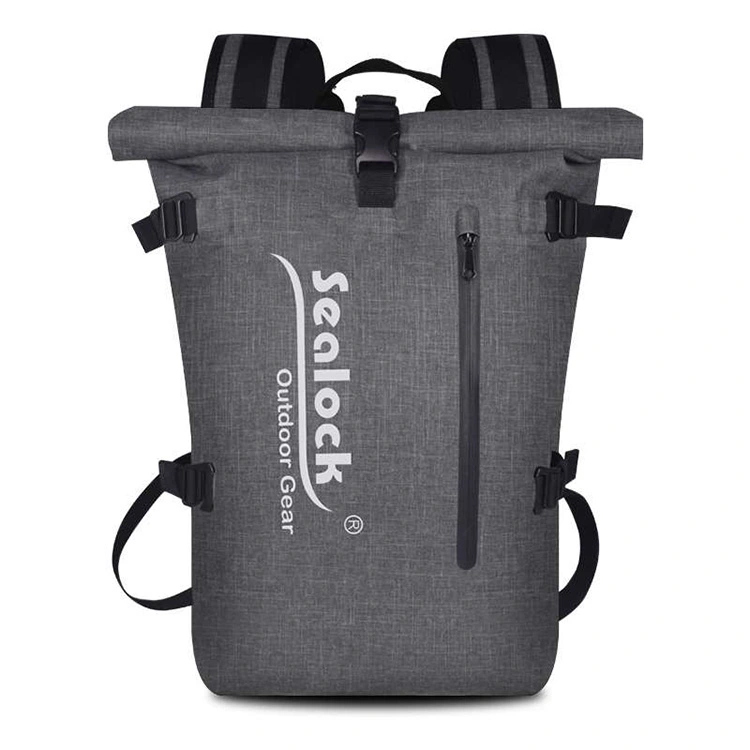
SL-E980 | Commuter backpack, 22L | 600D TPU laminate | IPX6 | View |
|
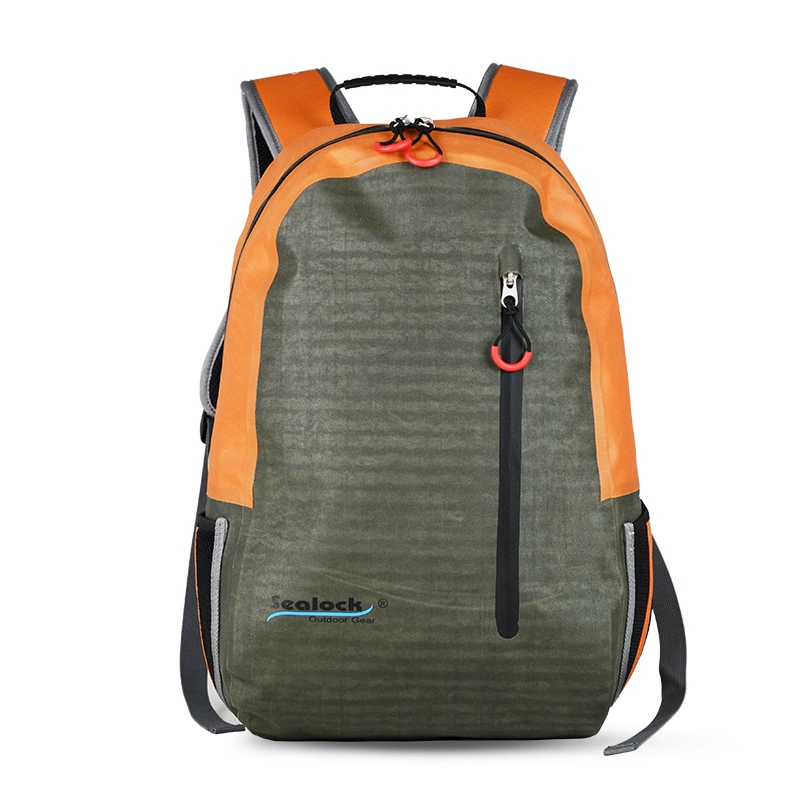
SL-E071 | Urban backpack, 22L | 420D TPU | IPX6 | View |
|
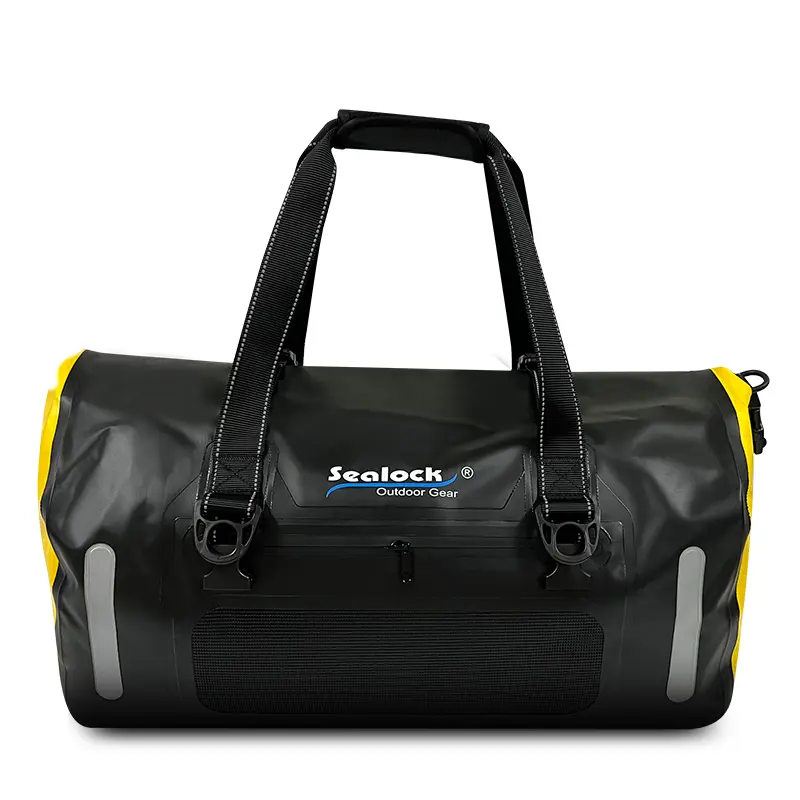
SL-K099 | Duffel, 40 / 60L | 840D TPU | IPX7 | View |
|
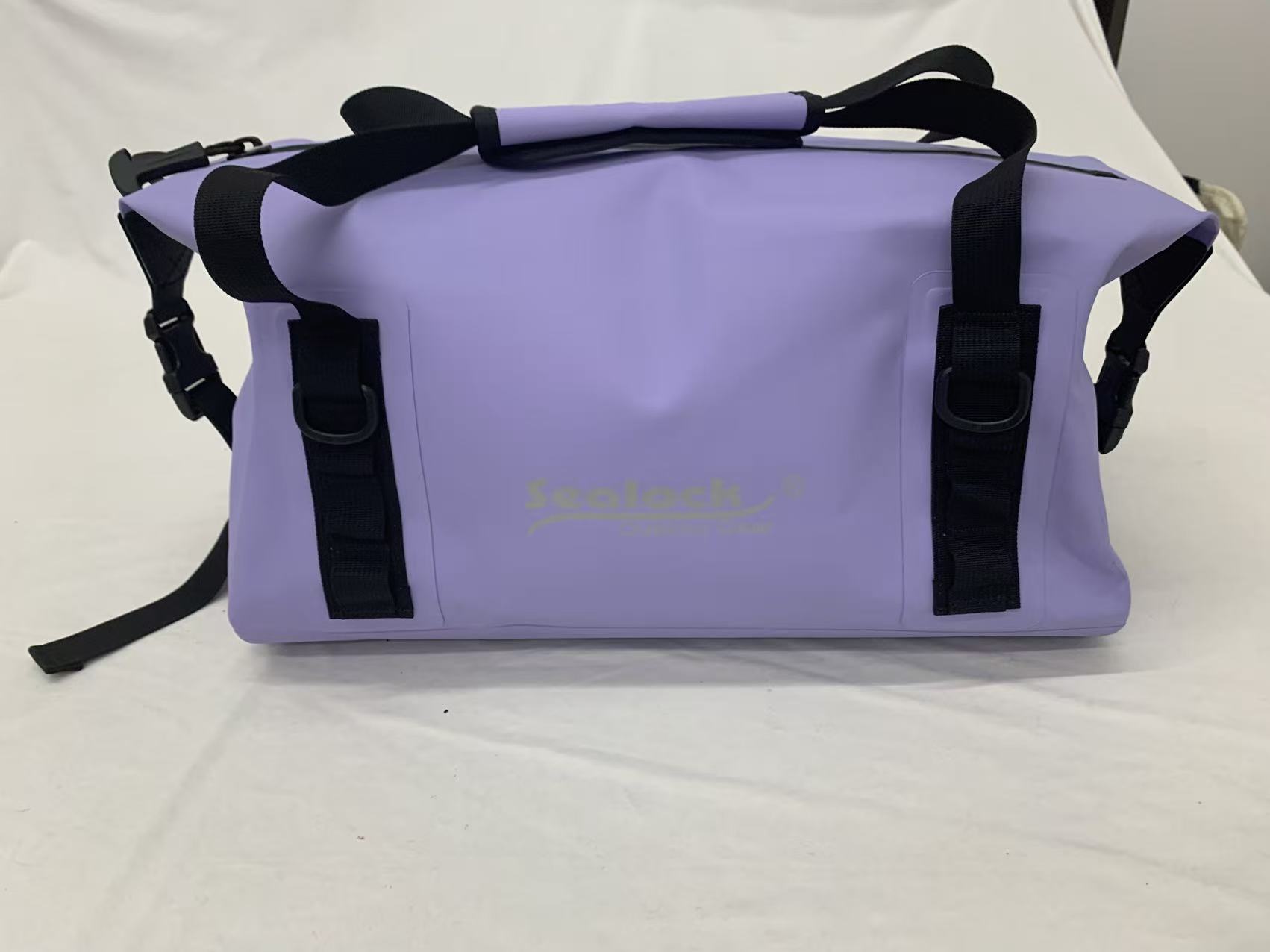
SL-C878 | Duffel, 20L | 840D TPU | IPX7 | View |
|
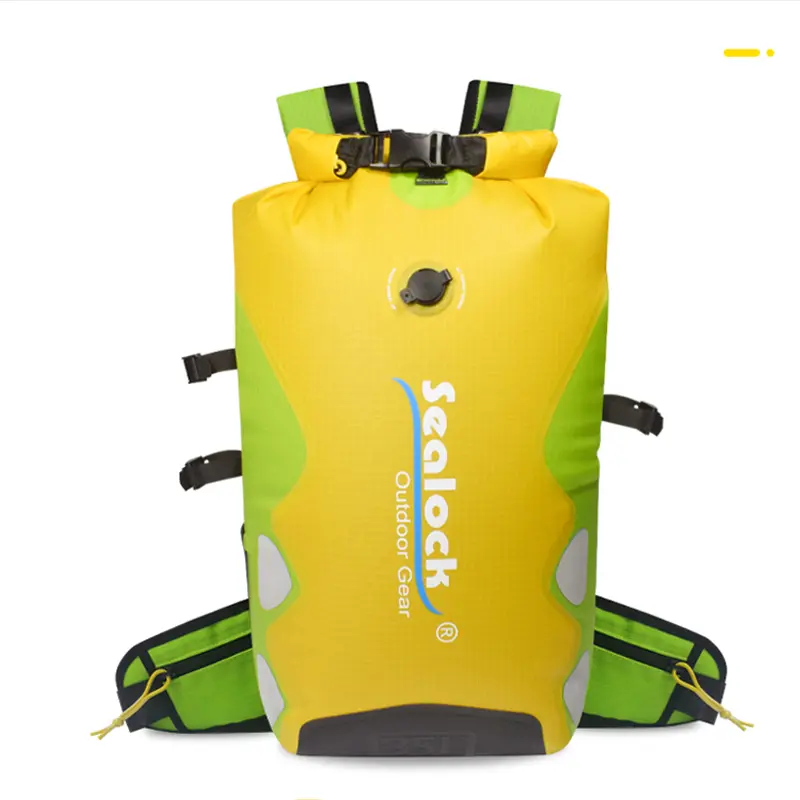
SL-E801 | Dry backpack, 35L | 420D TPU | IPX7 | View |
|
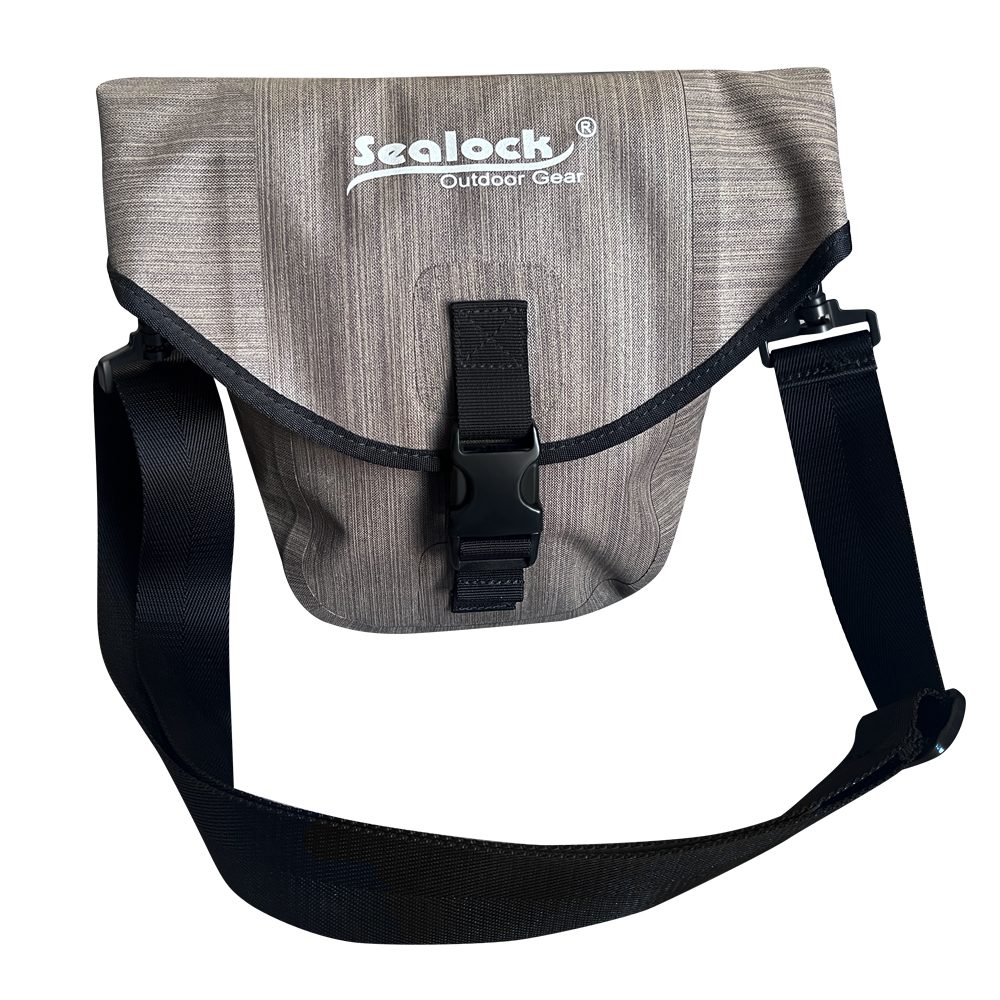
SL-H017C | Messenger, 8–10L | 600D TPU | IPX5–6 | View |
Full categories sit under waterproof bags, dry backpacks, and duffels. Material characteristics are covered in the TPU material guide, and corporate programme requirements in the guide to branded bags for corporate gifting.
9. Quality Control on Recycled Specifications
Every batch runs IQC on incoming fabric, zippers, and hardware; IPQC in process on both welding and sewing lines, including peel tests on sample welds at run start and stitch density and tension checks; and OQC with AQL sampling, batch testing to each model's stated rating, colour-difference testing against the approved standard, and signed gold-sample comparison. On recycled substrates the colour-difference and bonding-strength checks carry extra weight, since batch variation is a known characteristic of recycled inputs. The full customer inspection procedure — unboxing, vacuum extraction, a 24-hour static rest, and air-leak determination — can be witnessed end to end, with SGS or QIMA inspection available. Standards are set out in the quality control standards for waterproof production.
10. FAQ
Q: What recycled percentage do we need?
A: It depends on the claim. GRS certification applies to products with at least 20% recycled content, while product-specific GRS labelling generally requires 50% or above. Decide the claim first, then specify the material to meet it — working the other way round usually produces a percentage you cannot use on a label.
Q: Is a supplier's GRS certificate enough on its own?
A: No. Check that the certificate is current and that its scope covers the product category you are ordering — scope gaps are a frequent problem. Then request transaction certificates for your specific order, since those are what connect your goods to certified material rather than merely confirming the factory is certified.
Q: What changed in the EU in 2026?
A: Environmental claims now require independent third-party substantiation, and recycled content claims must state the percentage, the verification standard, and the certifying body — with vague terms like "eco-friendly" prohibited and penalties reported at up to 4% of annual turnover. Digital Product Passport requirements under ESPR add verified recycled-content data to products sold in the EU.
Q: Does recycled fabric perform differently in a waterproof bag?
A: It can vary more between batches than virgin material, which shows up as colour difference and occasionally in weld consistency. Both are manageable, but they should be verified at sampling with peel tests and colour comparison rather than assumed, and held with a signed gold sample through production.
Q: Can the whole bag be recycled content, not just the fabric?
A: Components including webbing, hardware, and foam contribute to the whole-product percentage, so a fabric-only specification produces a lower overall figure. If your claim is whole-product, specify the components explicitly — and state on your labelling which basis the percentage refers to.
Q: Should we wait for the Materials Matter transition?
A: No. GRS remains valid and recognised, with the new standard effective from the end of 2026 and mandatory from the end of 2027. For a multi-year programme, ask how the supplier's documentation will map across the transition so a mid-contract renewal does not interrupt your claim.
Request a Recycled Programme Quote
Tell us the claim you need to make and your target market, and we can specify the material, quote the programme, and supply the certification documentation — submit an inquiry. Sealock responds to procurement enquiries within 24 hours, with production from Dongguan, China or Ho Chi Minh City, Vietnam.