
- English
- Español
- Português
- русский
- Français
- 日本語
- Deutsch
- tiếng Việt
- Italiano
- Nederlands
- ภาษาไทย
- Polski
- 한국어
- Svenska
- magyar
- Malay
- বাংলা ভাষার
- Dansk
- Suomi
- हिन्दी
- Pilipino
- Türkçe
- Gaeilge
- العربية
- Indonesia
- Norsk
- تمل
- český
- ελληνικά
- український
- Javanese
- فارسی
- தமிழ்
- తెలుగు
- नेपाली
- Burmese
- български
- ລາວ
- Latine
- Қазақша
- Euskal
- Azərbaycan
- Slovenský jazyk
- Македонски
- Lietuvos
- Eesti Keel
- Română
- Slovenski
- मराठी
- Srpski језик

TPU Waterproof Backpacks: Material Selection Guide
Sealock manufactures TPU waterproof backpacks for OEM, wholesale, and private label buyers from factories in China and Vietnam. "TPU" on a specification sheet tells a supplier almost nothing — it names the coating, not the fabric. Two packs both described as TPU can differ in base material, denier, film thickness, coating structure, and weight, and perform completely differently in the field. This guide covers the parameters that actually define a TPU backpack fabric, and how to match them to a product.
1. What a TPU Backpack Fabric Actually Is
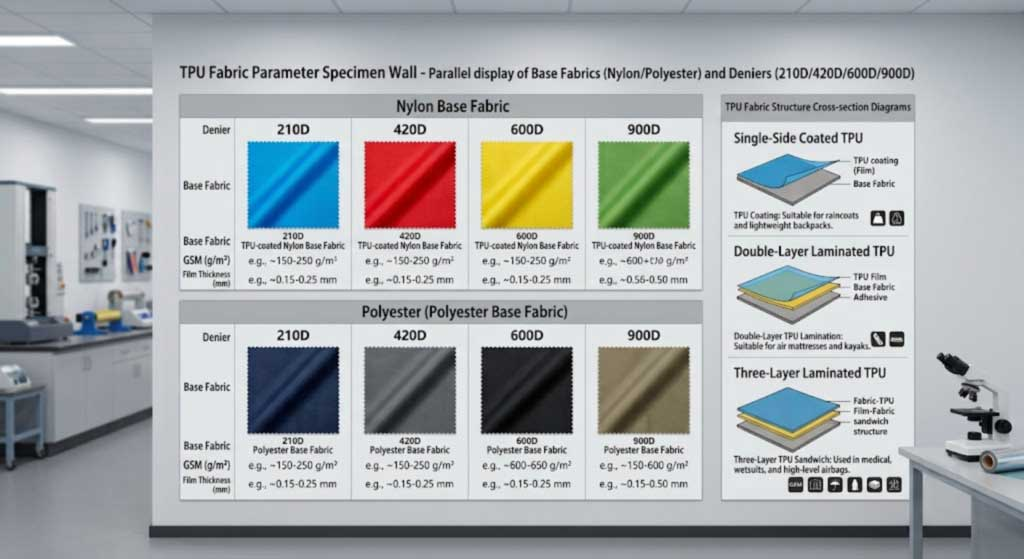
A TPU backpack fabric is a composite: a woven base of nylon or polyester bonded under heat and pressure to a thin thermoplastic polyurethane film. The base carries the strength; the film carries the waterproofing and the weldability. Typical construction uses a base in the 200–420D range with a film in the region of 50–150 microns, producing a fabric that resists heavy rain and temporary immersion while staying light enough to carry.
The properties that make it the default for technical packs come from that structure: abrasion performance well above most coated fabrics, tear strength in the 40–60 N region depending on construction, flexibility retained down to around −30 °C, UV-stable formulations that resist yellowing, and — critically for a welded pack — clean weldability at 27.12 MHz. Why TPU rather than PVC or PU in the first place is covered in the comparison of TPU material advantages; this guide assumes that decision is made.
2. The Five Parameters to Specify
A usable TPU specification states five things. Leaving any of them open means the factory chooses, and the choice may not match the intent.
2.1 Base fabric: nylon or polyester
Nylon offers higher flexibility and tear strength at a given weight, which suits lightweight and technical packs. Polyester offers better dimensional stability and lower cost, which suits structured, value, and high-volume programmes. For a backpack that will be flexed, stuffed, and compressed daily, nylon is usually the better base; for a pack that should hold its shape, polyester earns its place.
2.2 Denier: the strength-to-weight decision
| Denier | Character | Suits |
|---|---|---|
| 210D | Lightest; minimal dead weight | Ultralight and packable packs |
| 420D | The balance point — light enough to carry, tough enough for daily outdoor use | Commuter, cycling, hiking, day packs |
| 600D | More robust with manageable weight | Travel packs, messenger bags, heavier daily use |
| 840–900D | Heavy-duty abrasion resistance | Rugged daypacks, expedition, gear that gets dragged |
A caution worth knowing: denier alone is not a strength rating. Weight per square metre reflects denier, thread count, and coating together, so GSM is often a better comparison than denier between two quoted fabrics. Two "420D TPU" fabrics from different mills can differ meaningfully in both.
2.3 Film thickness and coating structure
How the TPU is applied changes both performance and cost:
- Single-side coating — TPU applied to one face. Lighter and cheaper, and sufficient for most waterproof backpacks where the barrier only needs to work in one direction.
- Two-layer lamination — a pre-cast TPU film bonded to the fabric, giving a better surface finish and more consistent film thickness. The usual choice where appearance and weld consistency both matter.
- Double-side or three-layer — fabric encapsulated between films for maximum barrier performance and air retention. Specified for air-holding constructions and the most demanding sealing applications; heavier and more expensive than a backpack normally requires.
Film thickness is expressed in microns or decimal millimetres and is rarely advertised, so ask for it. A thicker film adds barrier margin and weld tolerance; a thinner one saves weight.
2.4 Weight target (GSM)
TPU-laminated fabrics for bags typically land in the 250–350 gsm region, against roughly 180–250 gsm for PU-coated alternatives. State the target fabric weight alongside the denier, because it is the number that most directly predicts the finished pack's weight — and on a carried product, weight is a purchase decision.
2.5 Finish and colour system
Surface finish (matte, gloss, textured), colour to a Pantone standard, and specialised systems such as cationic-dyed TPU composite for a refined premium appearance. Finish affects perceived quality as much as function, and it should be confirmed on a physical swatch rather than a screen.
3. Matching the Spec to the Pack
The right TPU specification follows from what the pack is for:
| Pack type | Typical TPU spec | Reasoning |
|---|---|---|
| Ultralight / packable | 210D nylon, single-side, thin film | Every gram is scrutinised; abrasion exposure is low |
| Commuter and cycling | 420D nylon laminate, two-layer | Daily flexing, moderate abrasion, needs a clean finish |
| Hiking and day packs | 420D, or 420D body with heavier base panel | Weight matters, but the base contacts ground and rock |
| Rugged daypacks | 900D TPU | Constant abrasion; weight secondary to survival |
| Premium / deep-immersion | Cationic-dyed TPU composite | Refined finish plus the barrier integrity for an IPX8 rating |
| Messenger and urban | 600D TPU | Structure and durability with a considered appearance |
Mixed-denier construction is often the smartest answer: a lighter body with a heavier base and side panels puts material weight only where abrasion demands it. The relationship between fabric choice and finished pack weight is covered in more detail in the guide to material choices and weight considerations.
4. What TPU Does Not Solve
Specifying good fabric is necessary but not sufficient, and three points are worth stating plainly:
- The seam decides the waterproofing, not the fabric. A premium TPU laminate with stitched-and-taped seams still leaks once the tape lifts. Genuine waterproofing requires welded seams, and the pack's rating comes from the construction as a whole.
- TPU does not breathe. A sealed shell traps heat against the back regardless of how good the fabric is, so a ventilated or channelled back panel has to be engineered in.
- Load-bearing is a separate problem. Strap anchors, foam density, and hardware grade determine whether a pack survives being carried loaded. A fully waterproof pack can still fail at a strap.
5. Compliance and Care
TPU carries a strong compliance profile for a technical fabric: halogen- and phthalate-free, plasticizer-free, and recyclable, which suits REACH-sensitive markets and sustainability-positioned retail. Where a channel requires specific documentation — OEKO-TEX, Bluesign, or GRS among them — confirm it before production, since it affects the material selection and its sourcing. Sealock holds ISO 9001, BSCI, SMETA, HIGG, GRS, and SCAN certification and can arrange testing to a buyer's target standard.
Two care points worth putting on a hangtag: avoid high-heat drying, and use neutral-pH detergent. Any water-repellent surface treatment degrades over time with UV, flexing, and detergent residue, so a DWR topcoat is a maintenance item rather than a permanent property — which is one more reason the waterproofing should come from the welded TPU structure rather than a surface finish.
6. Sealock TPU Backpack Range
TPU models across deniers, closures, and capacities, organized by type rather than priority:
| Image | Model | Capacity | TPU spec | Closure / rating | Product Page |
|---|---|---|---|---|---|

|
SL-E144 | 15L | TPU laminate | Zipper · IPX6 · floating vented back | View |
|
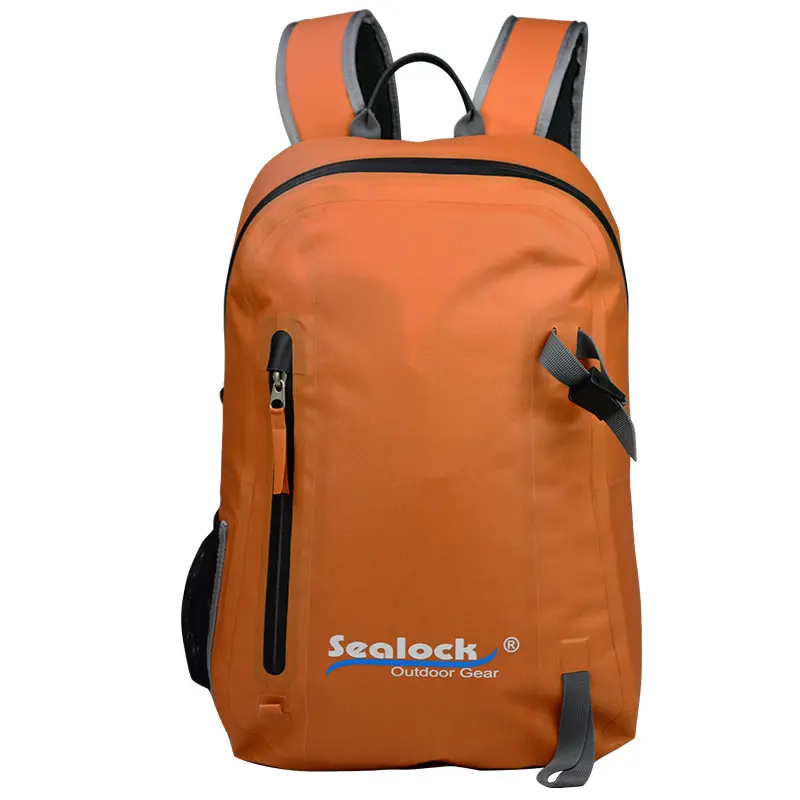
SL-E216 | 20L | 420D TPU nylon + TPU film lining | Zipper · IPX6 | View |
|
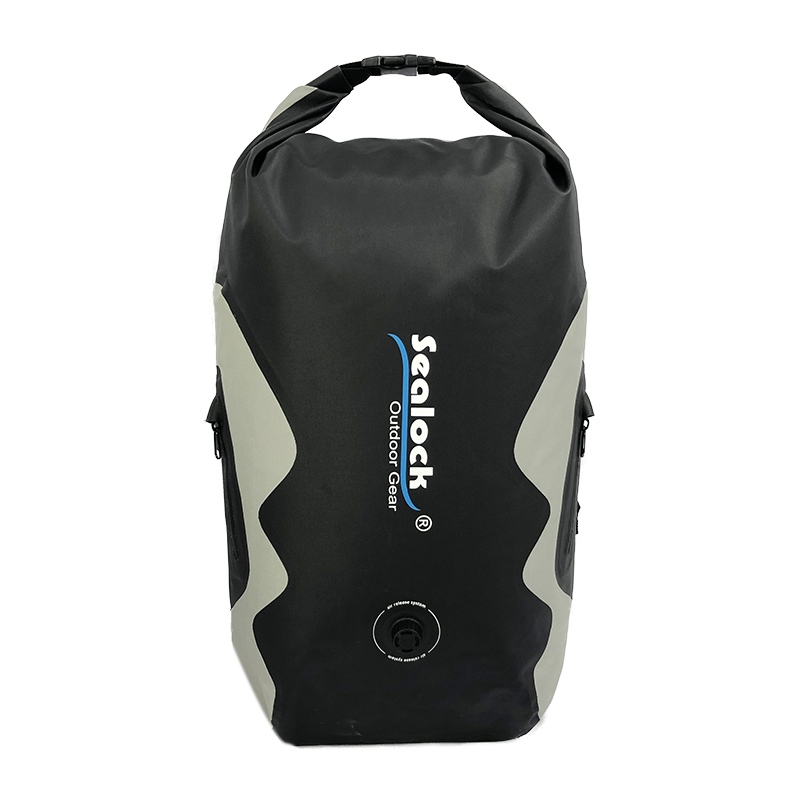
SL-E070 | 25L | 420D TPU laminated nylon | Roll-top · IPX8 · purge valve | View |
|
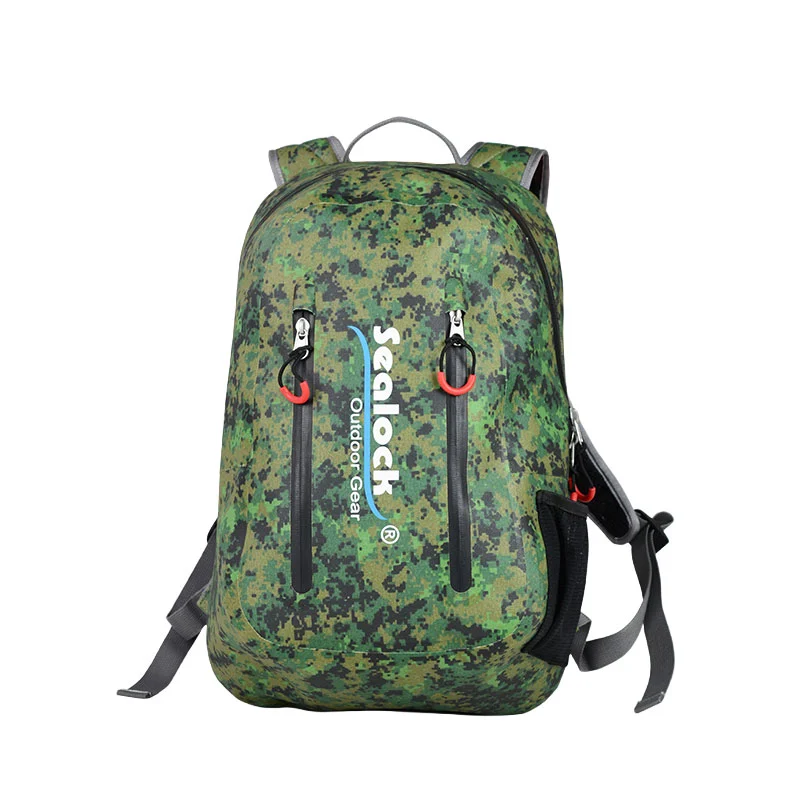
SL-E127 | 15L | 900D TPU | Zipper · IPX6 · air-flow back | View |

|
SL-E119 | 20L | Cationic-dyed TPU composite | Airtight zipper · IPX8 · laptop | View |
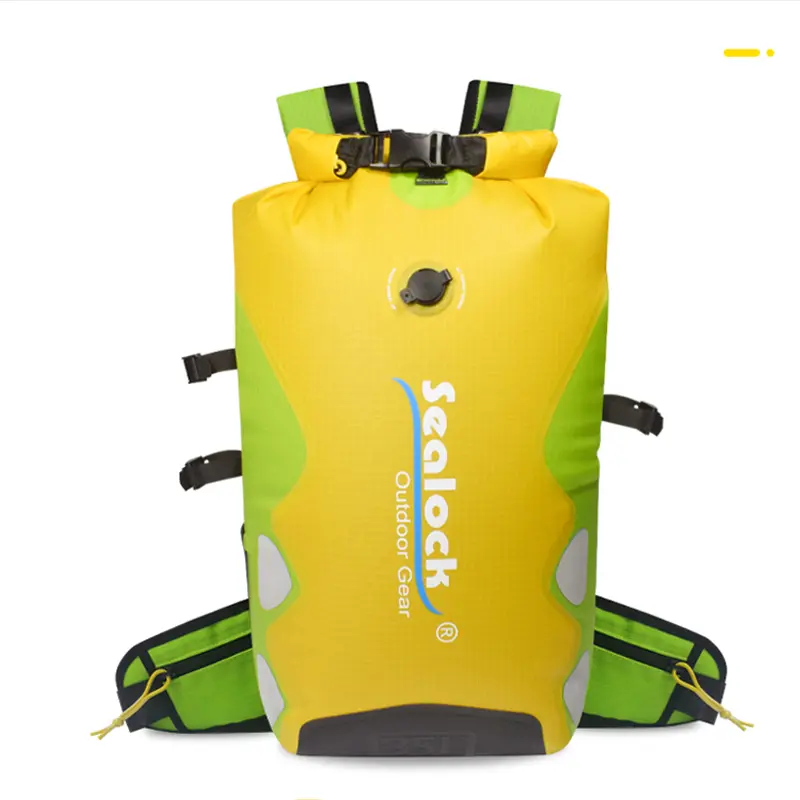
|
SL-E801 | 35L | 420D TPU | Roll-top · IPX7 · air valve | View |
Base fabric, denier, film thickness, coating structure, GSM, hardness, finish, and colour are all specifiable on an OEM programme, with ground-up development from a sketch, sample, or target spec — see the guide to OEM waterproof backpack manufacturing. Full categories sit under dry backpacks, dry bags, and duffels.
7. Verification and Terms
Material specification is verified rather than assumed. IQC checks incoming TPU-laminated fabric for coating consistency, thickness, weight, and shade against the approved standard before it reaches the welder; IPQC pulls peel tests on sample welds at run start, since lamination quality shows up first at the weld; and OQC runs AQL sampling, batch immersion testing, and gold-sample comparison. For airtight verification, a full customer inspection procedure can be witnessed end to end — unboxing, vacuum extraction, a 24-hour static rest, and air-leak determination — which surfaces slow leaks a brief dunk test cannot detect. The wider framework is set out in the quality control standards for waterproof production.
Terms: MOQ 300 pcs per model (a small number at 500), samples 7–15 days, bulk 30–45 days, FOB Guangdong, with production from Dongguan, China or Ho Chi Minh City, Vietnam on any model.
8. FAQ
Q: I asked for "TPU fabric" and got two very different quotes. Why?
A: Because TPU names the coating, not the fabric. Base material, denier, film thickness, coating structure, and GSM all vary, and each moves the price. Specify all five and quotes become comparable.
Q: Is a higher denier always better?
A: No. Higher denier adds abrasion resistance and weight together, and on a carried product weight is a purchase decision. Match denier to real abrasion exposure — 420D covers most commuter and hiking use, 900D suits packs that get dragged — or use a lighter body with a heavier base panel.
Q: Denier or GSM — which should I compare between suppliers?
A: GSM is usually the better comparison, because fabric weight reflects denier, thread count, and coating together. Two fabrics both labelled 420D TPU can differ in thread count and film thickness, and GSM captures that where denier alone does not.
Q: Do I need double-sided TPU coating on a backpack?
A: Usually not. Single-side coating or two-layer lamination is sufficient for a waterproof pack, where the barrier only needs to work in one direction. Double-side and three-layer constructions are for air-holding and the most demanding sealing applications, and they add weight and cost a backpack rarely needs.
Q: My TPU pack still got wet inside — is the fabric at fault?
A: Rarely. Water almost always enters at a seam, a closure, or an unsealed pocket rather than through TPU film. Check whether the seams are welded or stitched-and-taped, whether the zipper is rated, and whether external pockets are separately sealed.
Q: Does TPU meet EU and eco-positioned retail requirements?
A: It is well suited — halogen-free, phthalate-free, plasticizer-free, and recyclable. Confirm the specific documentation your channel requires, such as OEKO-TEX, Bluesign, or GRS, before production, since it affects material sourcing.
Request TPU Specs and Swatches
For TPU base fabric and denier options, film thickness, material data, physical swatches, or a full OEM proposal, submit an inquiry. Sealock responds to procurement enquiries within 24 hours.