- English
- Español
- Português
- русский
- Français
- 日本語
- Deutsch
- tiếng Việt
- Italiano
- Nederlands
- ภาษาไทย
- Polski
- 한국어
- Svenska
- magyar
- Malay
- বাংলা ভাষার
- Dansk
- Suomi
- हिन्दी
- Pilipino
- Türkçe
- Gaeilge
- العربية
- Indonesia
- Norsk
- تمل
- český
- ελληνικά
- український
- Javanese
- فارسی
- தமிழ்
- తెలుగు
- नेपाली
- Burmese
- български
- ລາວ
- Latine
- Қазақша
- Euskal
- Azərbaycan
- Slovenský jazyk
- Македонски
- Lietuvos
- Eesti Keel
- Română
- Slovenski
- मराठी
- Srpski језик

Storing Camera Gear: Humidity, Lens Fungus, Condensation, and Why Your Camera Bag Is the Wrong Place to Keep It
Camera gear should be stored clean, dry and capped, at a stable room temperature of roughly 10 to 25 °C and a relative humidity of about 40 to 50 percent. Above that, fungus can grow inside lenses; well below it, lens lubricants can dry out. The safest long-term storage is an electronic dry cabinet or an airtight box with silica gel and a hygrometer. A closed camera bag on a shelf is one of the worst places to leave gear for weeks, because it traps humidity without removing it. A waterproof bag does a different job: it protects gear in the field, and sealed, it is the best tool for stopping condensation when you move from cold to warm. This guide covers both.
Lens fungus and condensation are two of the most common ways good camera gear is ruined, and both come down to water in the air rather than water from the sky. Understanding the difference explains why the right bag matters in the field and the wrong one does damage at home.
What Causes Lens Fungus?
Fungal spores are everywhere. They settle on lens elements and stay dormant until the conditions suit them: humid, still air, darkness and something to feed on, such as dust, skin oils or the coatings themselves. Once they grow, the threads etch into lens coatings and can permanently mark the glass. Photographers in the tropics deal with it constantly, but it happens in temperate climates too, in basements, cupboards and closed bags.
The defence is controlling humidity. Most guidance aims for around 40 to 50 percent relative humidity in storage, which is low enough to keep fungus dormant without drying out the grease inside focusing helicoids. A cheap digital hygrometer tells you where you are, and that number is worth more than any rule of thumb.
Why Is a Camera Bag Bad for Long-Term Storage?
A camera bag is built to protect gear while you carry it, not to control the air around it. Closed on a shelf for weeks, it holds whatever humidity the room had, often 50 to 75 percent depending on the season, against the lenses in the dark: exactly the conditions fungus likes. If the bag was packed after a shoot in rain or fog, the moisture is sealed in with the gear. A bag left on a concrete floor can also draw ground moisture upwards.
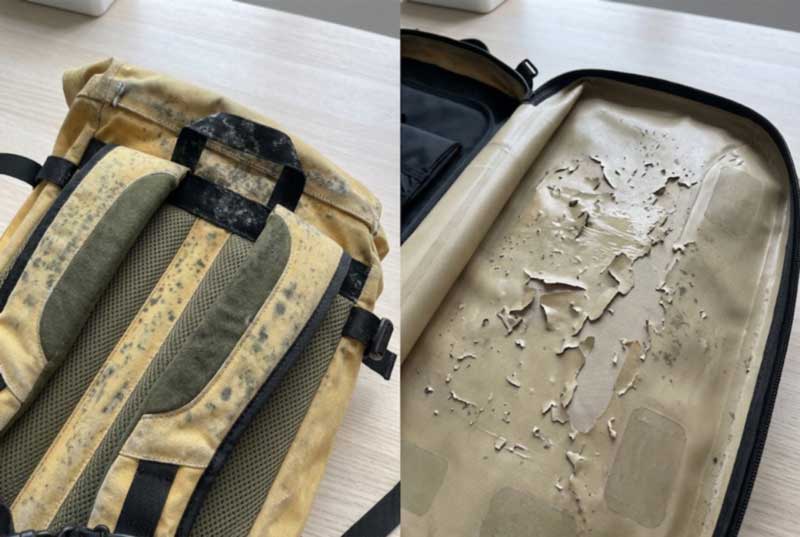
Waterproof bags make this worse in one way, because they let no damp air out at all. A welded, airtight bag that is closed with a damp lens inside becomes a small humid chamber, the same mechanism we described in our article on mold on waterproof backpacks. The rule is the same: never seal a bag with anything damp inside, and empty camera bags between trips.
How Should You Store Camera Gear at Home?
For a few lenses, an airtight food container or a purpose-made dry box with indicating silica gel and a small hygrometer works well. Indicating silica gel changes colour when it is saturated and can be dried in an oven and reused, but it saturates faster than most people expect in a humid house, so check it every few weeks. For a larger kit, an electronic dry cabinet holds a set humidity automatically. Cap the lenses front and back, store them upright, keep bodies with their caps on, and keep everything out of basements, lofts, car boots and direct sun.
How Do You Stop Condensation When Moving From Cold to Warm?
Condensation forms when cold glass and metal meet warmer, humid air: a camera brought indoors after a winter shoot, or carried out of an air-conditioned car or hotel into tropical heat. Moisture beads on every surface, including inside the lens and on the sensor, and repeated condensation is one of the routes by which fungus gets started.
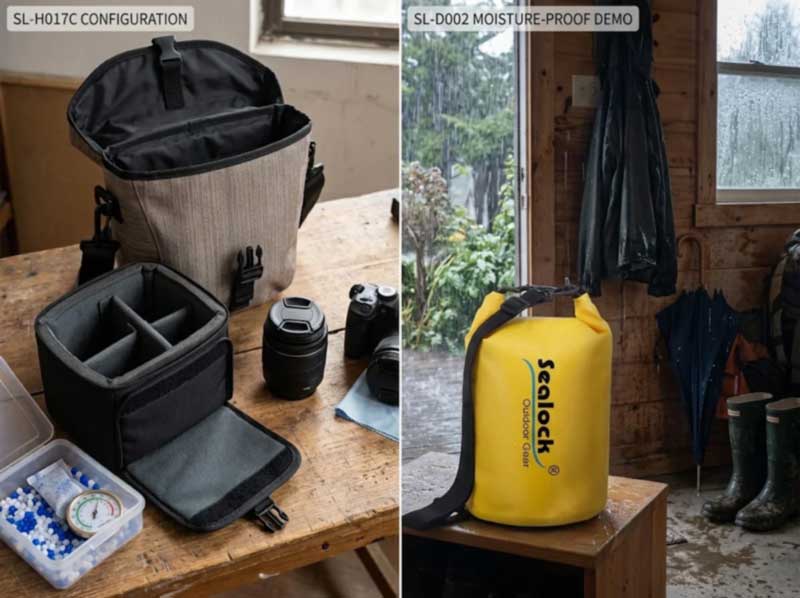
The fix is to let the gear change temperature inside a sealed bag. Before going from cold to warm, close the camera and lenses inside an airtight bag, ideally with a silica gel packet, and leave it closed until it reaches the new temperature, often 30 to 60 minutes. The condensation then forms on the outside of the bag, not on the camera. A waterproof roll-top or airtight-zipper bag is ideal for this, because it is genuinely airtight, which is the opposite of what you want for storage and exactly what you want for acclimation.
When Does a Waterproof Camera Bag Make Sense?
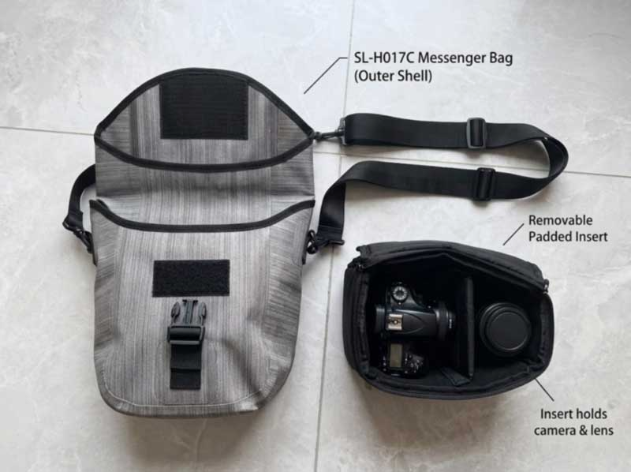
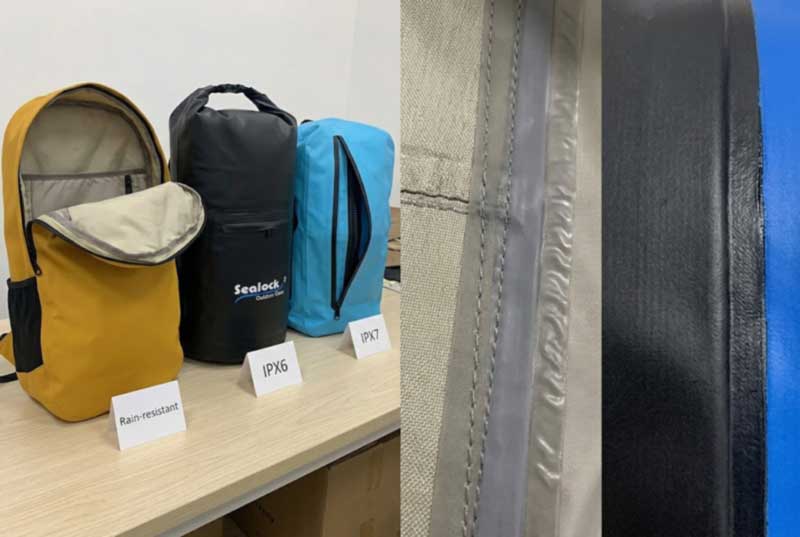
In the field, whenever water is a real risk: on boats and kayaks, at the coast, in heavy rain, at waterfalls, in tropical downpours and on motorbikes. A welded waterproof shell with a padded insert gives both impact protection and water protection. A removable insert is the key feature, because it can be lifted out at the end of the day so the shell and the padding dry separately and the gear goes into proper storage. On boats and in surf, an airtight-zipper bag or a roll-top dry bag around a padded camera cube survives a dunking that would flood any ordinary camera bag. Our guide to waterproof ratings for bags explains which rating means what.
Air pressure is a lesser-known issue. A fully airtight bag taken over a mountain pass or on a flight can puff up or crush as the outside pressure changes. A pressure-relief valve, as on our SL-E1313, lets trapped air out without letting water in.
Waterproof Bags We Make for Camera Gear
| Image | Model | Capacity | Dimensions (H × W × D) | Weight | Construction | Use |
|---|---|---|---|---|---|---|

|
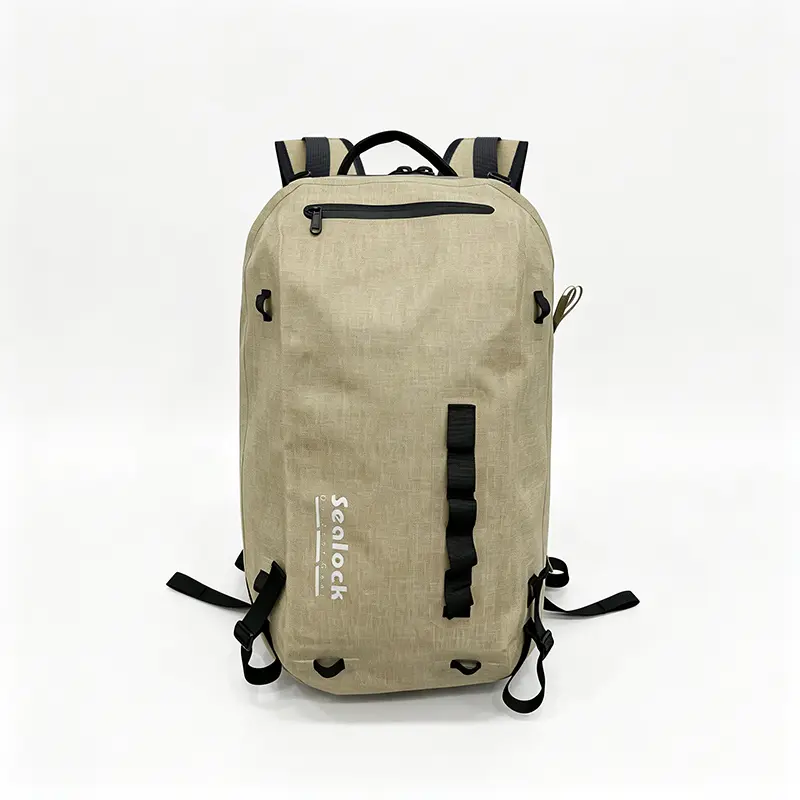
SL-H017C | 8–10 L |
24 × 28 × 10 cm 9.4 × 11 × 3.9 in |
0.7 kg | Welded TPU shell, flap with side-release buckle, removable sewn padded insert with movable dividers, IPX5–6 | Mirrorless kit; insert lifts out for drying and storage |
|
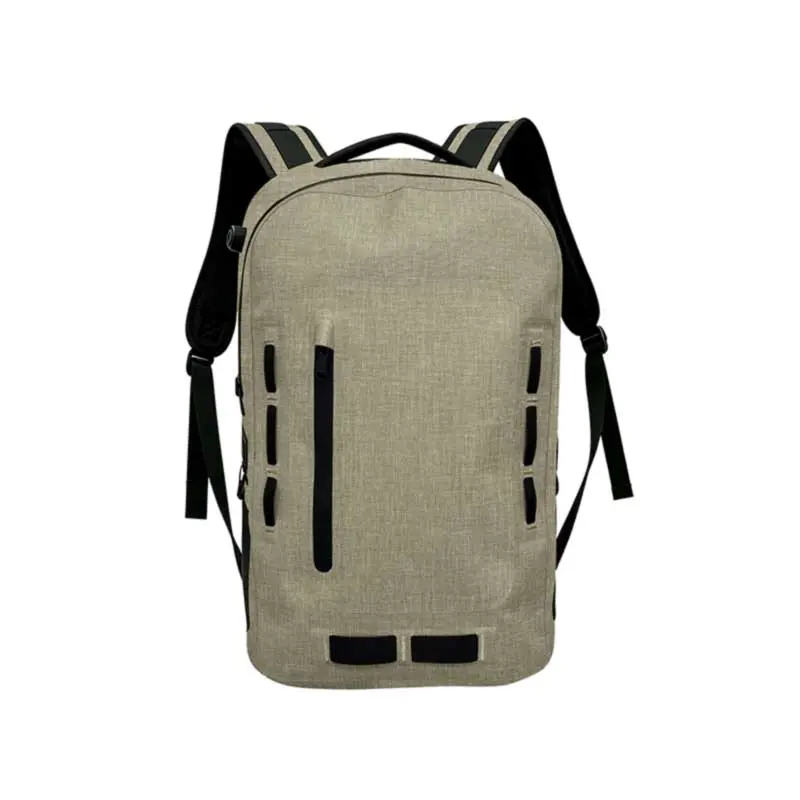
SL-E724 | 30 L |
52 × 27 × 22 cm 20.5 × 10.6 × 8.7 in |
1.0 kg | Welded TPU ripstop, 180° clamshell YKK waterproof zipper, Velcro anchors for a camera insert, IPX6 | Camera insert plus laptop for travel shoots |
|
SL-E1313 | 22 L |
50 × 30.5 × 14.5 cm 19.7 × 12 × 5.7 in |
0.85 kg | Welded 500D TPU, waterproof zipper, pressure-relief valve, IPX6 | Altitude and temperature changes; valve releases trapped air |

|
SL-E641 | 24 L |
54 × 27.5 × 16.5 cm 21.3 × 10.8 × 6.5 in |
1.0 kg | Welded TPU, airtight zipper, IPX7 | Boat, kayak and surf shoots; sealed for acclimation |
|
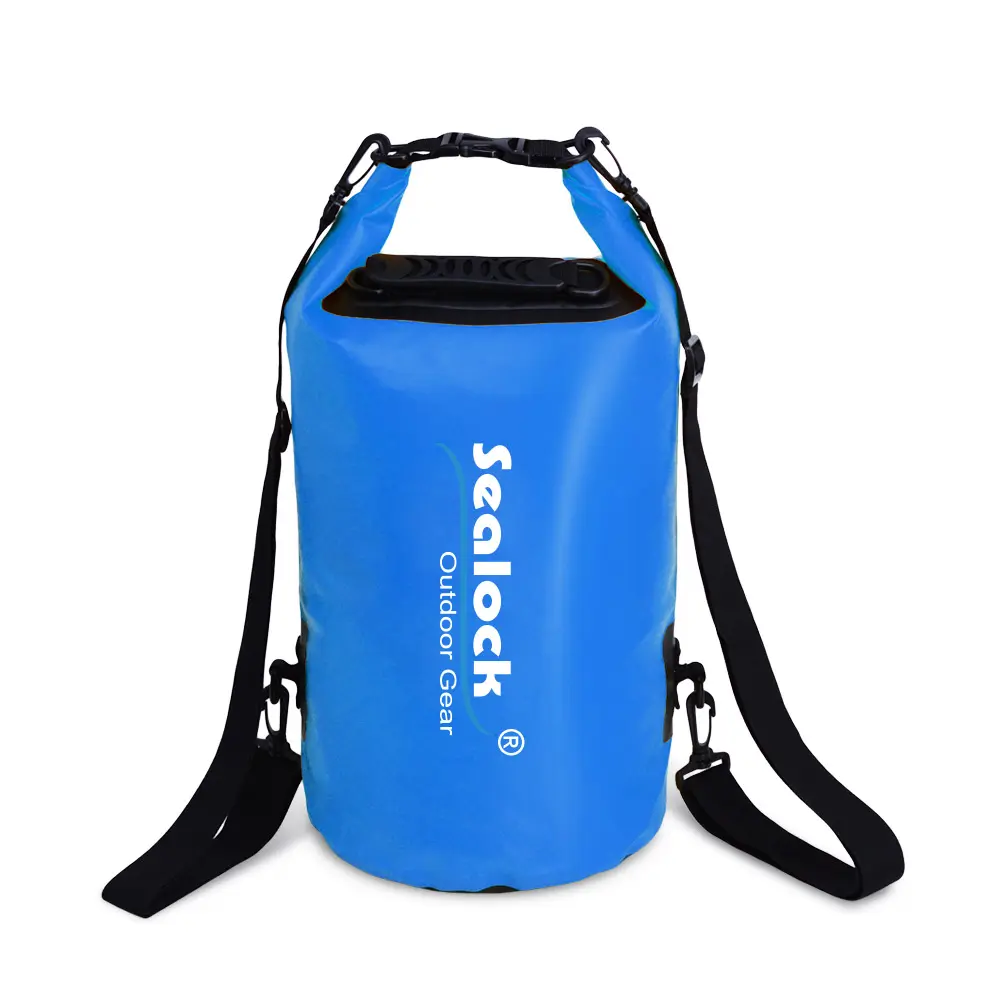
SL-D002 | 5 / 10 / 20 L |
47 × 26 cm 18.5 × 10.2 in |
0.25–0.55 kg | Welded 500D PVC tarpaulin, roll-top, IPX7 | Outer layer for a padded camera cube on the water (10 L shown flat) |
|
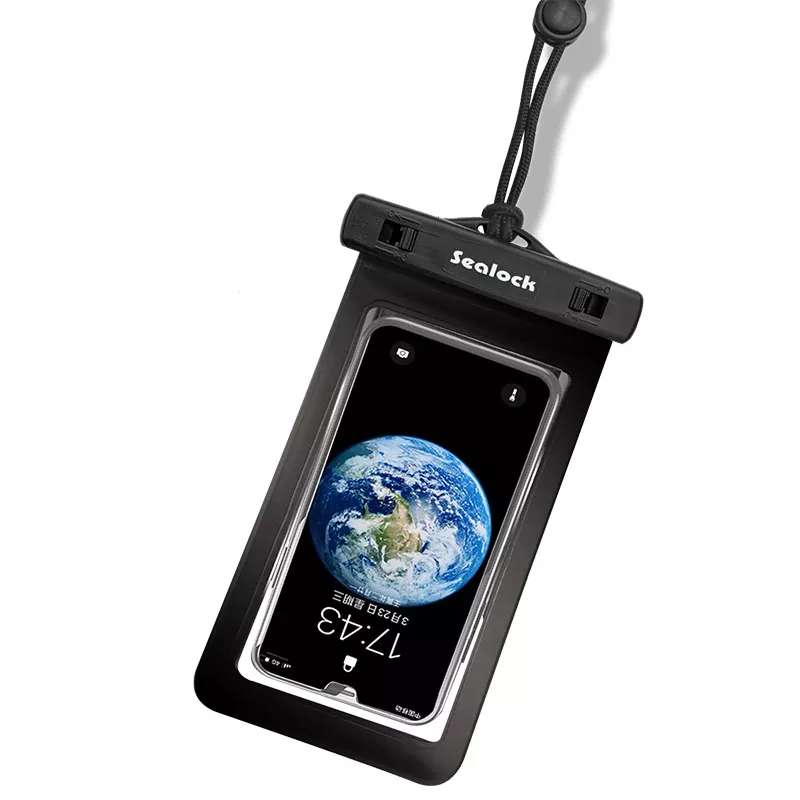
SL-A064 | Phones up to 7.0 in |
22 × 11.5 cm 8.7 × 4.5 in |
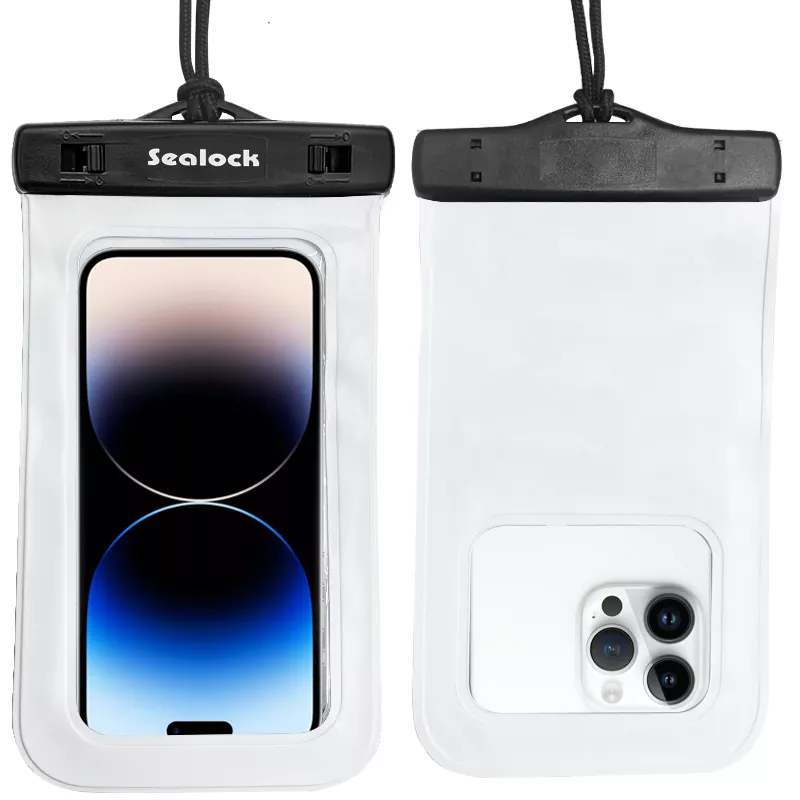
60–70 g | PVC, double slide lock, front touch window and rear camera window, IPX8 to 30 m | Phone camera in and under the water |
For camera bag development and OEM options, see our article on waterproof camera bag manufacturing. Our iPhone waterproofing guide covers phone cameras in the water.
For Photo Brands and Retailers
Camera bags that are both waterproof and easy to dry sell well and return less. The details worth specifying are a removable, washable padded insert; a welded shell with a waterproof or airtight zipper; a small mesh pocket for a silica gel pack; a pressure-relief valve on fully sealed designs; and a light-coloured interior so lens caps and filters are easy to find. We build welded shells and sewn padded inserts in the same factory, so the two are designed to fit each other. The MOQ is 300 pieces per design, samples take 7 to 15 days and bulk production 30 to 45 days, quoted FOB Guangdong with Vietnam origin available. Sealock has over 20 years of experience making waterproof bags.
Frequently Asked Questions
What humidity should I store my camera at?
Around 40 to 50 percent relative humidity. Above about 60 to 70 percent for long periods, fungus becomes a risk; much below 40 percent, lens lubricants can dry out.
Can I store my camera in its camera bag?
For a few days, yes. For weeks or months, no: a closed bag traps humidity. Use a dry box with silica gel or a dry cabinet.
How do I stop my lens fogging up?
Seal the camera in an airtight bag before moving from cold to warm, or from air conditioning into humid heat, and wait until it reaches the new temperature before opening it.
Does silica gel really work?
Yes, in a sealed container. It saturates within weeks in a humid house, so use indicating gel and dry or replace it regularly. In an open bag it does very little.
Is a waterproof camera bag good for storage?
Only if the gear is completely dry and there is desiccant inside. Its real job is protection in the field and acclimation between temperatures.
Can lens fungus be removed?
Early growth can sometimes be cleaned by a professional, but it can etch coatings permanently. Prevention through dry storage is far cheaper.
Request a Quote
Tell us the camera kit the bag must hold, the closure and rating you need, colours and quantity, and we will reply within 24 hours with suitable base models, an FOB price and a sample timeline. Contact Sealock, or email info@sealock.com.hk.
Send Inquiry
Related Products
News Recommendations