
- English
- Español
- Português
- русский
- Français
- 日本語
- Deutsch
- tiếng Việt
- Italiano
- Nederlands
- ภาษาไทย
- Polski
- 한국어
- Svenska
- magyar
- Malay
- বাংলা ভাষার
- Dansk
- Suomi
- हिन्दी
- Pilipino
- Türkçe
- Gaeilge
- العربية
- Indonesia
- Norsk
- تمل
- český
- ελληνικά
- український
- Javanese
- فارسی
- தமிழ்
- తెలుగు
- नेपाली
- Burmese
- български
- ລາວ
- Latine
- Қазақша
- Euskal
- Azərbaycan
- Slovenský jazyk
- Македонски
- Lietuvos
- Eesti Keel
- Română
- Slovenski
- मराठी
- Srpski језик

Mold on a Waterproof Backpack: Why Sealed Bags Grow It, How to Clean It, and How to Stop It Arriving in the Carton
Mold on a backpack is a fungal growth that appears as black, green or white spots, usually with a musty smell, on fabric, foam padding and seams that have stayed damp in a warm place. Waterproof backpacks and dry bags are more prone to it than ordinary packs, because the same shell that keeps rain out also keeps moisture in. This guide explains where mold starts on a waterproof bag, how to clean it without damaging the coating or the welds, how to store a bag so it does not come back, and how brands and importers can stop a shipment arriving with mold already in the cartons.
For a retailer, a moldy bag is one of the worst returns there is. The customer does not see a material problem, they see a dirty product, and the photo goes straight into the review. Most of these cases are preventable, and the prevention starts long before the customer opens the box.
Why Do Waterproof Backpacks Get Moldy?
Mold needs three things: spores, which are everywhere, food, which can be dirt, sweat, sunscreen, food residue or the fabric itself, and moisture. Most mold species grow quickly once the relative humidity around them stays above about 70 percent for a few days, and faster still when it is warm.
An ordinary nylon backpack breathes. If it goes into a cupboard slightly damp, some of the water escapes through the fabric and the seams. A welded waterproof backpack is sealed, and a roll-top or airtight zipper bag that is closed while damp is effectively a small humid chamber. A wet towel, a damp swimsuit or a sweaty shirt left inside overnight can raise the humidity inside a closed dry bag close to 100 percent, and on a warm day that is enough for spots to appear within days.
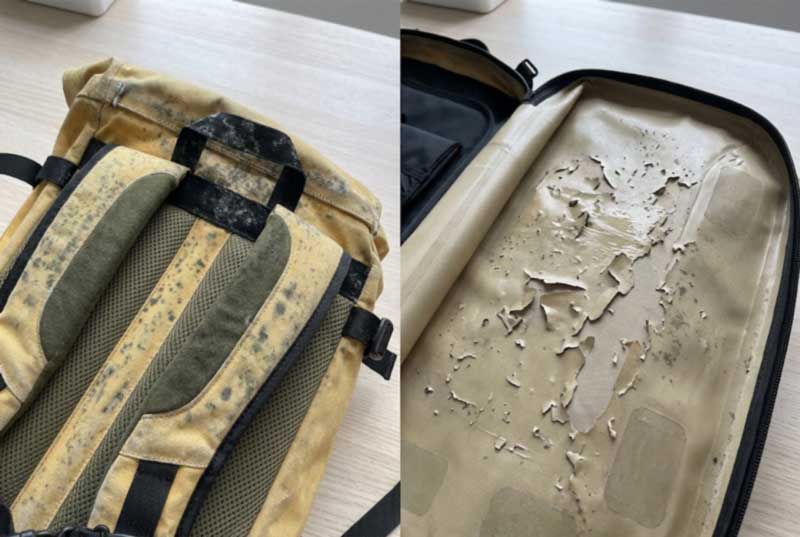
The fabric shell is rarely where mold starts. A PVC tarpaulin or TPU-laminated surface gives mold very little to feed on. The problem areas are the parts that hold water and dirt: the foam in shoulder straps and back panels, mesh pockets, webbing, the fabric side of laminated panels, seam allowances on sewn bags and the fold of a roll-top where sand and salt collect. A laptop sleeve with polyester padding is another classic spot, because it stays damp longest.
Mold is also often confused with a different problem. Polyurethane coatings on cheaper fabrics break down over time in heat and humidity through hydrolysis. The inside of the bag turns sticky, flakes and smells sour. That is not mold and cannot be cleaned away, because the coating itself has failed. TPU laminates and PVC tarpaulins are far more resistant to hydrolysis, which is one reason we use them for waterproof bags that may be stored damp in hot climates.
How Do You Clean Mold Off a Waterproof Backpack?
Empty the bag completely, open every pocket and brush off loose mold outdoors with a soft brush, so the spores do not spread around the house. Wear a mask if there is a lot of it.
Wash the bag by hand in lukewarm water with a mild, non-detergent soap, scrubbing the affected areas with a soft brush. For stubborn spots, a solution of one part white vinegar to four parts water, left on for 15 to 30 minutes before rinsing, kills most surface mold without attacking PVC, TPU or the welds. Rinse thoroughly until the water runs clear, because soap and vinegar residue left in foam will attract dirt and smell.
Avoid chlorine bleach, solvents, and pressure washers. Bleach can discolour printed logos and coloured fabric, weaken webbing and thread, and may void a manufacturer's warranty. Solvents can soften coatings and laminates. A pressure washer forced against a weld or a zipper tape can lift it. Never put a waterproof backpack in a washing machine or a tumble dryer: the agitation and heat can crease or delaminate the panels, and a dryer can deform the welds.
Drying matters as much as cleaning. Turn the bag inside out if the design allows, open the roll-top fully or unzip every zipper, and hang it upside down in a warm, airy place out of direct sun until the foam padding is completely dry, which can take a full day or more. A short spell in the sun helps kill remaining spores and fade stains, but long exposure to strong UV will age any fabric. If the smell is still there once the bag is dry, the foam is still damp inside or the mold has gone deep into it, and a second wash usually sorts it out.
Some stains will fade without disappearing completely, particularly on light colours and on the fabric side of laminated panels. The bag is still safe and fully waterproof, but this is why prevention is worth far more than cleaning.
How Do You Store a Waterproof Bag So Mold Does Not Come Back?
The single rule is never to close a damp bag. After every trip, empty it, rinse off salt and sand, and dry it open before putting it away. Store it unrolled and unzipped, not sealed, in a dry, ventilated place rather than a garage, a car boot or a cellar. Wet gear such as swimwear and towels should travel in a separate compartment or a separate bag, which is exactly why wet-dry separation bags sell so well to swimmers and gym users. In humid climates, a sachet of silica gel inside a stored bag helps.
A good roll-top habit also helps. Sand and salt left in the fold hold moisture and stop the closure from sealing properly. Our guide to closing a roll-top dry bag includes the care points that are worth printing on the instruction card.
Design can remove a lot of the risk before the bag reaches a customer. A smooth welded TPU interior can be wiped dry in seconds and gives mold nothing to grip. A removable laptop sleeve or a clamshell opening lets the padding and the inside of the pack dry properly. Ventilated back panels with channels or suspended mesh let the foam dry out between uses. Separate compartments keep wet kit away from dry clothes. Closed-cell foam absorbs far less water than open-cell foam in straps and back panels. Antimicrobial treatments on lining fabrics are available as an option for brands that want them, provided they meet the chemical rules of the destination market.
| Image | Model | Feature that helps | Construction and Rating |
|---|---|---|---|
|
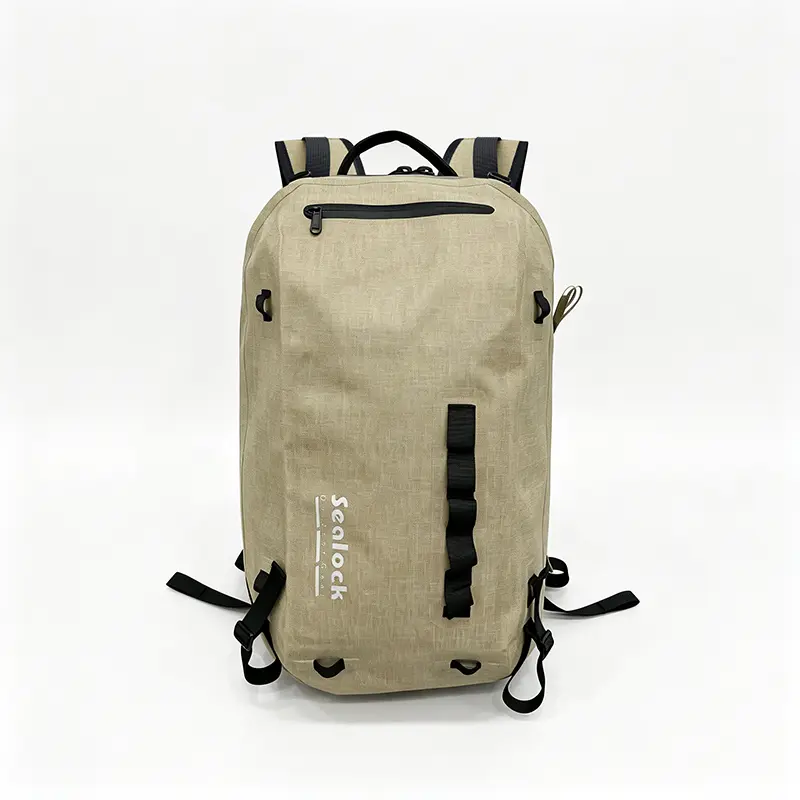
SL-E724 | Clamshell opening folds flat to 180 degrees, so the whole interior airs out after use | TPU-laminated ripstop, welded, YKK waterproof zipper, IPX6 |
|
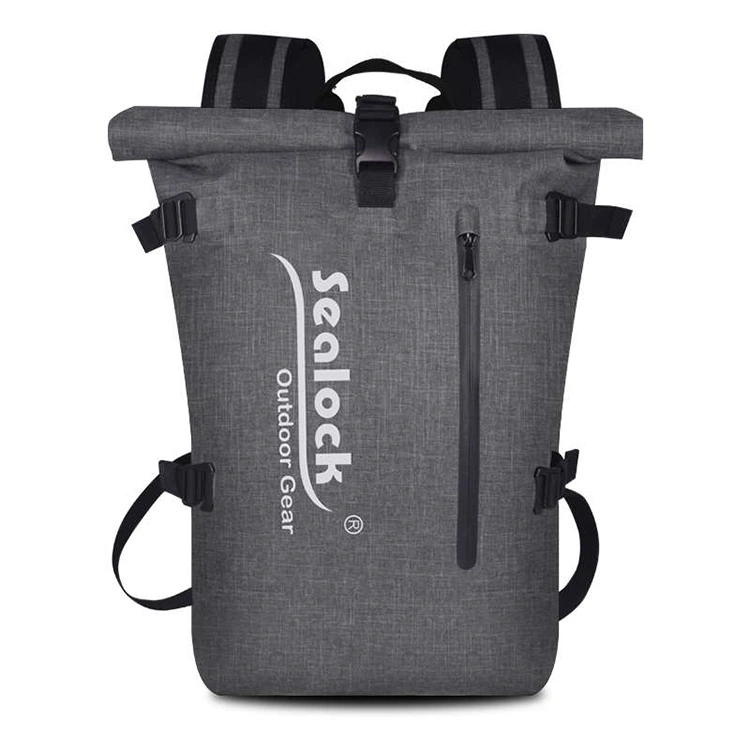
SL-E980 | Removable padded laptop sleeve comes out to dry separately, 3D moulded EVA airflow back panel | 600D TPU, welded roll-top, IPX6 |

|
SL-E144 | Floating ventilated back system keeps the padding off the wearer's back so it dries between rides | TPU, welded, waterproof zippers, IPX6 |

|
SL-E328 | Grooved ventilated back panel and wide curved top opening for drying the inside | Coated PVC laminate, welded, waterproof zipper, IPX6 |
|
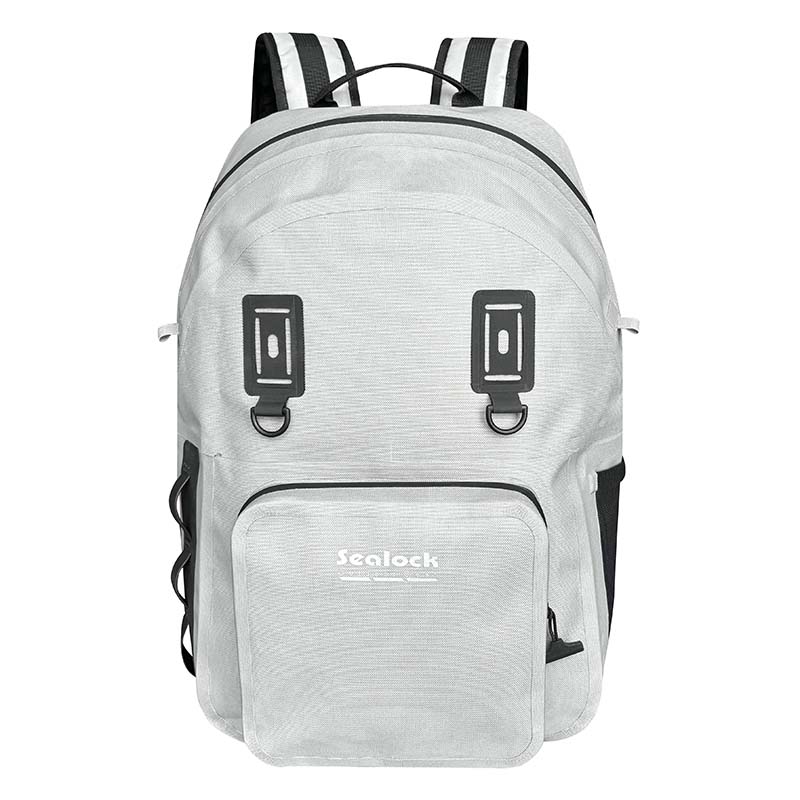
SL-E1144 | Moulded EVA back panel absorbs very little water, wipe-clean welded panels for bait and salt | Melange TPU, welded panels, PU-laminated zipper |
How Do You Stop Mold Arriving in the Shipment?
This is the part most buyers never see, and it causes some of the most expensive claims. During a sea voyage the temperature inside a steel container can swing by 15 to 20 degrees between day and night. Warm, humid air trapped at loading cools against the walls and roof, condenses and drips onto the cargo. This is known as container rain. Cartons absorb the water, the humidity inside each polybag rises, and four or five weeks later the goods arrive with mold on straps and padding that were perfectly clean at the factory. The risk is highest when goods are loaded during rainy or typhoon seasons in South China and Vietnam.
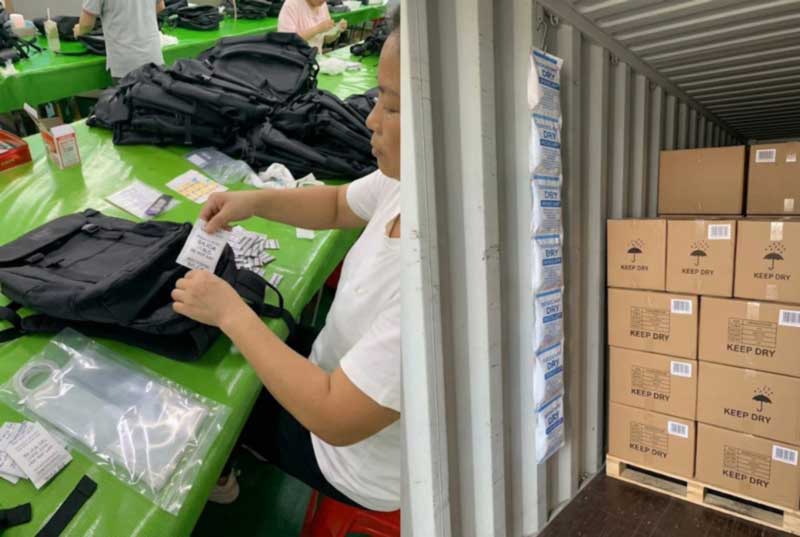
Prevention is a chain of small steps. Bags must be completely dry before they are packed, which matters most after any water test. Each bag goes into its polybag with a silica gel sachet, and cartons are stored off the floor in a dry warehouse before loading. Container desiccants, usually calcium chloride strips or bags hung along the walls, absorb the moisture that would otherwise condense, and for textile cargo the quantity is normally increased above the standard dose. Containers should be checked for leaks and dryness before loading, and loading should not take place in the rain. For high-value or long-voyage orders, a humidity indicator card in sample cartons gives the buyer a record of what the goods went through.
At Sealock, every bag that goes through a water-immersion or water-jet test is dried before packing, and silica gel sachets and container desiccants can be specified on any order. We ship from Guangdong and from our factory in Ho Chi Minh City, and we plan packing around the rainy seasons in both. Sealock has over 20 years of experience exporting sewn and welded bags to North America, Europe and Australia.
What Should a Brand Put on the Care Label?
Three short lines prevent most mold complaints: empty and dry the bag after every use, never store it closed or damp, and hand wash with mild soap only, no bleach and no machine. For bags sold for water sports, adding "rinse off salt water and sand" is worth the extra space. We can print care instructions on hang tags, instruction cards, woven labels or directly inside the bag. The standard MOQ is 300 pieces per design, samples take 7 to 15 days and bulk production 30 to 45 days, with prices quoted FOB Guangdong and Vietnam origin available. Our waterproof backpack range is in the waterproof backpack category, and the article on waterproof ratings for bags explains how each bag is tested before it is dried and packed.
Frequently Asked Questions
Why does my new backpack smell musty straight out of the box?
Usually because moisture got into the carton during shipping and the bag sat sealed in its polybag for weeks. Air it open for a day or two. If there are visible spots, clean them as described above and tell the seller, because it points to a packing or shipping problem.
Can I put a moldy waterproof backpack in the washing machine?
No. The drum can crease or delaminate the panels and damage the welds and zipper tapes. Hand wash with mild soap and a soft brush instead.
Will vinegar damage my dry bag?
Diluted white vinegar, around one part to four parts water, is safe on PVC, TPU and welded seams. Rinse it off thoroughly afterwards.
Is bleach safe for removing mold from a backpack?
It is best avoided. It can fade printed logos and coloured fabric, weaken webbing and thread, and may void the warranty.
The inside of my old bag is sticky and flaking. Is that mold?
No, that is a polyurethane coating breaking down through hydrolysis. It cannot be cleaned away. TPU-laminated and PVC tarpaulin bags do not suffer from this in the same way.
Is it safe to use a backpack after mold has been removed?
Yes, once it has been washed, rinsed and dried completely, and the musty smell has gone. If the smell keeps coming back, the foam padding is still holding moisture or spores and needs another wash and a longer dry.
Request a Quote
Tell us the bag type, the quantity, your destination market and any packing requirements such as desiccants, care labels or humidity indicators, and we will reply within 24 hours with an FOB price and a sample timeline. Contact Sealock, or email info@sealock.com.hk.