- English
- Español
- Português
- русский
- Français
- 日本語
- Deutsch
- tiếng Việt
- Italiano
- Nederlands
- ภาษาไทย
- Polski
- 한국어
- Svenska
- magyar
- Malay
- বাংলা ভাষার
- Dansk
- Suomi
- हिन्दी
- Pilipino
- Türkçe
- Gaeilge
- العربية
- Indonesia
- Norsk
- تمل
- český
- ελληνικά
- український
- Javanese
- فارسی
- தமிழ்
- తెలుగు
- नेपाली
- Burmese
- български
- ລາວ
- Latine
- Қазақша
- Euskal
- Azərbaycan
- Slovenský jazyk
- Македонски
- Lietuvos
- Eesti Keel
- Română
- Slovenski
- मराठी
- Srpski језик

OEM Dry Bags: Custom Manufacturing for Outdoor Brands
Sealock is an OEM dry bag manufacturer producing custom and private-label waterproof bags for outdoor brands, importers, and retailers. For a brand, an OEM program is a controlled development project with real cost and IP consequences, not a catalog order — the difference between owning a distinct product and shipping a generic one comes down to how the tech pack, sampling, tooling, and contract are handled. This is how OEM dry bag production actually runs, from brief to bulk, with the numbers a brand should model before committing.
1. OEM vs ODM: Which Model a Brand Is Actually Buying
The first decision sets cost, speed, and ownership. The two models are distinct, and mixing them up is where budgets slip:
- OEM (Original Equipment Manufacturing): the brand supplies the design and tech pack, and the factory builds to that exact spec. The brand owns the design and any tooling it paid for, gets full differentiation, and accepts a higher upfront investment and longer lead time.
- ODM (Original Design Manufacturing): the brand starts from the factory's existing design and customizes color, material, hardware, and logo around it. It is faster and lower-MOQ, but the base design is shared and can appear under other labels.
Industry practice puts OEM MOQs higher — commonly 300–500 pcs and up per style, since pattern development and custom material sourcing must amortize across the run — while ODM can start lower because the factory reuses existing cutting dies and material buys. A common strategy is ODM for trend or filler items to move fast, and OEM for a hero product that carries brand identity. Sealock supports both, from logo-and-color private label through to full ground-up development of an original bag.
2. What a Brand Can Customize on an OEM Dry Bag
OEM means the specification is open at every layer, not just the logo. The customizable dimensions on a waterproof bag:
- Material and denier: 500D/840D/1000D PVC tarpaulin, or 210D/420D/840D TPU-laminated nylon, chosen against target weight, cold-weather flexibility, and REACH/RoHS market rules; two deniers can be combined — lighter body, heavier base.
- Closure: roll-top, rated waterproof zipper (IPX7 immersion / IPX8 continuous), or drawstring/dry-wet-split, selected by access pattern and exposure.
- Zipper brand: YKK AquaSeal or TIZIP MasterSeal where a sealed zipper is specified, sized to load and open frequency.
- Hardware: UTX-Duraflex buckles, corrosion-resistant polymer fittings for saltwater lines, welded-on D-rings and MOLLE anchors on reinforcement patches, and an optional purge/air valve.
- Carry and reinforcement: handles, shoulder straps, convertible or full ergonomic harness with hip belt, ventilated back panel, and Hypalon patches at stress points.
- Branding: logo by silkscreen, heat transfer, welded emboss, or woven label; Pantone-matched color; reflective print; and custom retail or bulk packaging.

3. The OEM Development Process, Step by Step
A dry bag OEM project runs as a structured sequence. Skipping steps is where launches slip:
- 1. Brief and tech pack: drawings, reference sample, target capacity and dimensions, material, hardware, logo, colorway, packaging, destination market, and a target FOB price. The tech pack quality decides everything downstream.
- 2. Quotation: unit price, sample cost, any tooling/mold cost, MOQ, lead time, and Incoterms — compared across suppliers under the same terms (EXW vs FOB change the number).
- 3. Sampling: the factory turns the brief into a working sample; expect roughly two counter-sample rounds on a well-specified style. One approved gold sample is held by each side as the inspection reference.
- 4. Pre-production approval: final material, color, and hardware sign-off before the line starts.
- 5. Bulk production under QC: IQC on incoming materials and hardware, IPQC on welds and processes in line, OQC with AQL sampling and immersion testing.
- 6. Pre-shipment inspection: inspection photos or third-party SGS/QIMA audit before balance payment.
Sealock quotes standard MOQ at 300 pcs, samples in 7–15 days, and bulk in 30–45 days; full ground-up development runs longer than modifying an existing model, so a brand should schedule against its launch date. For a category primer before briefing, see the dry bag range and related dry backpacks and duffels.

4. The Costs a Brand Must Model Before Committing
The factory quote is only part of the landed cost. The real model a brand should build:
- Sample and tooling: a standard sample runs a modest fee; the cost jumps the moment custom hardware, custom zippers, or molded components are introduced, since those need tooling before a single sample exists. Confirm whether the sample fee is deducted from bulk.
- MOQ economics: a low MOQ spreads setup cost across fewer pieces, raising unit cost. Check whether the MOQ applies per style, per color, or per logo method.
- Import duty: for the US market, waterproof bags and backpacks generally fall under HTS heading 4202, and duty is charged on FOB value — build the applicable rate into the landed-cost model before locking a price point, since it can move a thin margin materially.
- Compliance: major retail and EU/US channels may require fabric certifications such as OEKO-TEX or REACH conformity; confirm early, as it affects material choice and cost.
- Revision rounds: budget for two to three counter-sample rounds; a brand that hits round three has usually approved an incomplete tech pack, not hired a bad factory.
5. Protecting the Design: IP and Contract Terms
In a properly structured OEM contract, the brand owns the design, the tech pack, and any tooling it paid for. The contract should state explicitly that the factory cannot produce the design for third parties, cannot reuse the brand's tooling for other clients, and must return or destroy patterns if the relationship ends. This is the core difference from ODM, where the base design belongs to the factory and can be sold to others. A brand investing in a distinct OEM product should confirm these terms in writing before sampling, not after reorder.
6. Production Range: One Factory Across Categories
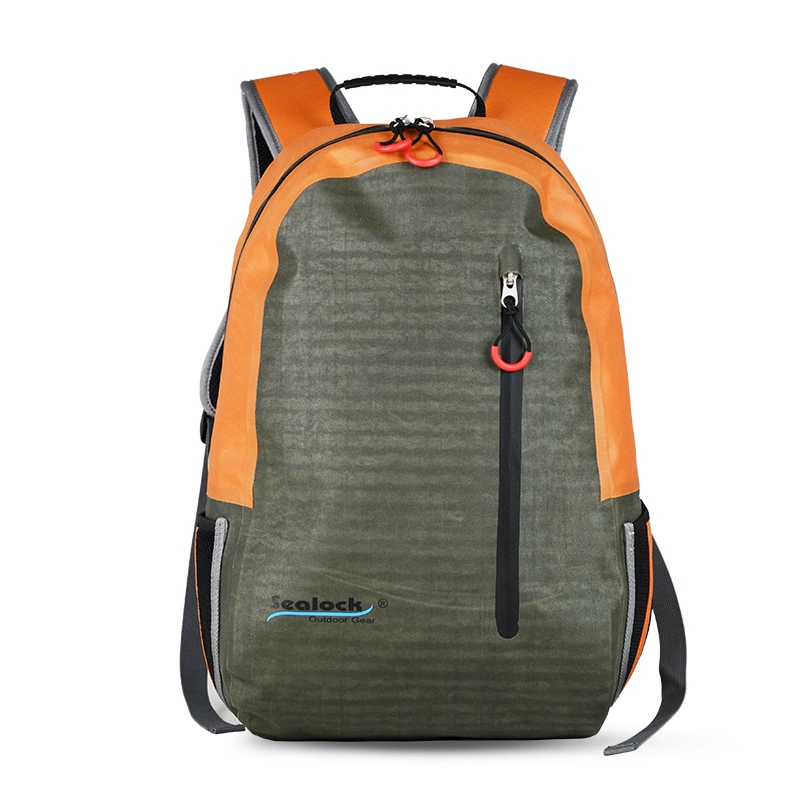
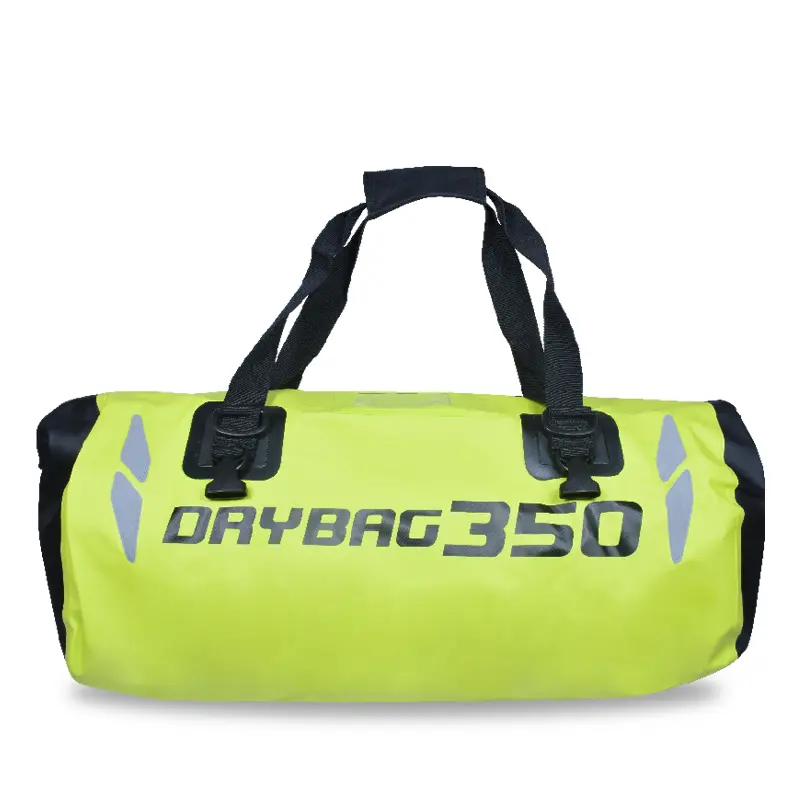
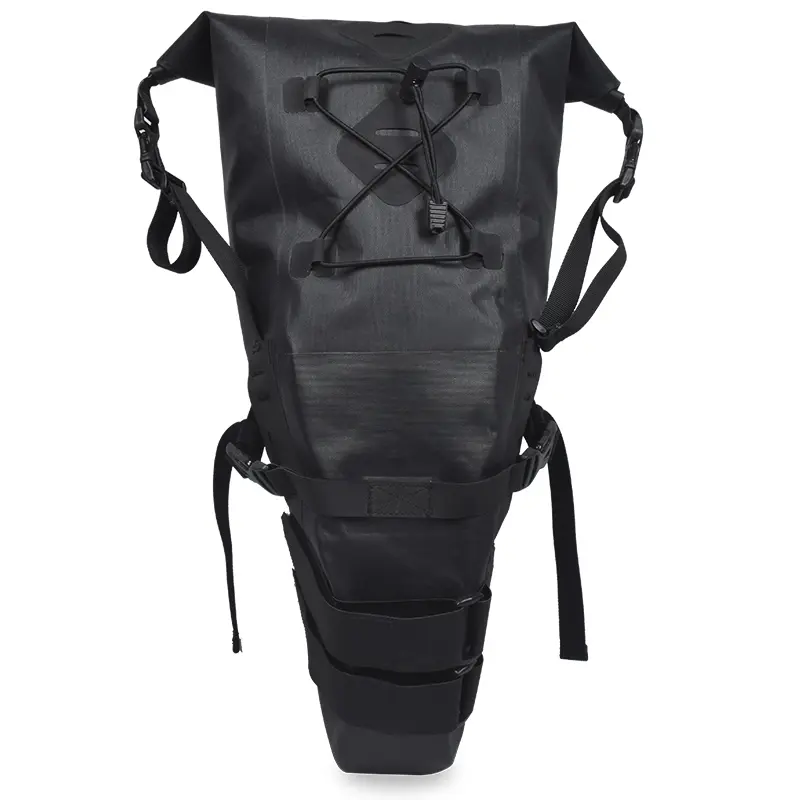
An outdoor brand building a line often needs several bag types under one logo, colorway, and packaging spec, built in the same workshops and shipped in one run. Representative categories and models, organized by type rather than priority:
| Image | Category | Representative model | Material | Product Page |
|---|---|---|---|---|
|
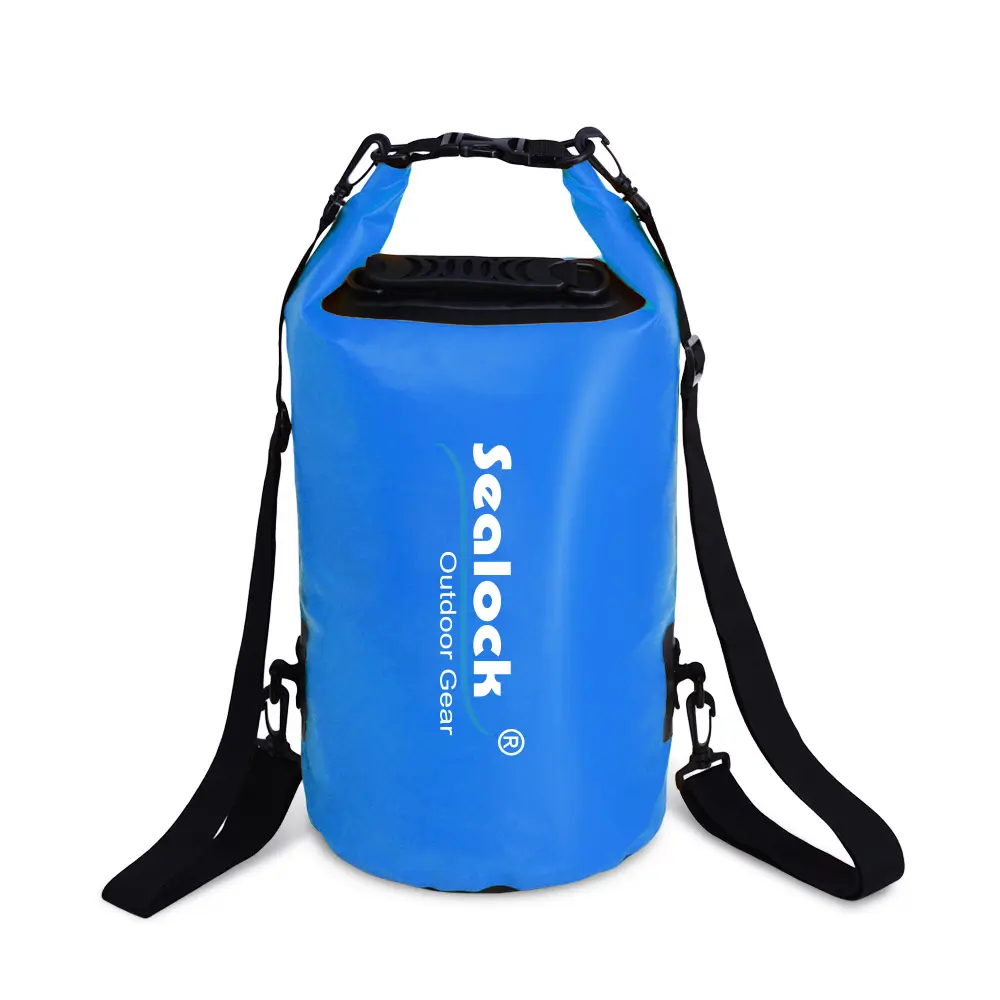
Roll-top dry bag | 500D PVC UTX Buckle Dry Bag (SL-D002), 5–63L | 500D PVC | View |
|
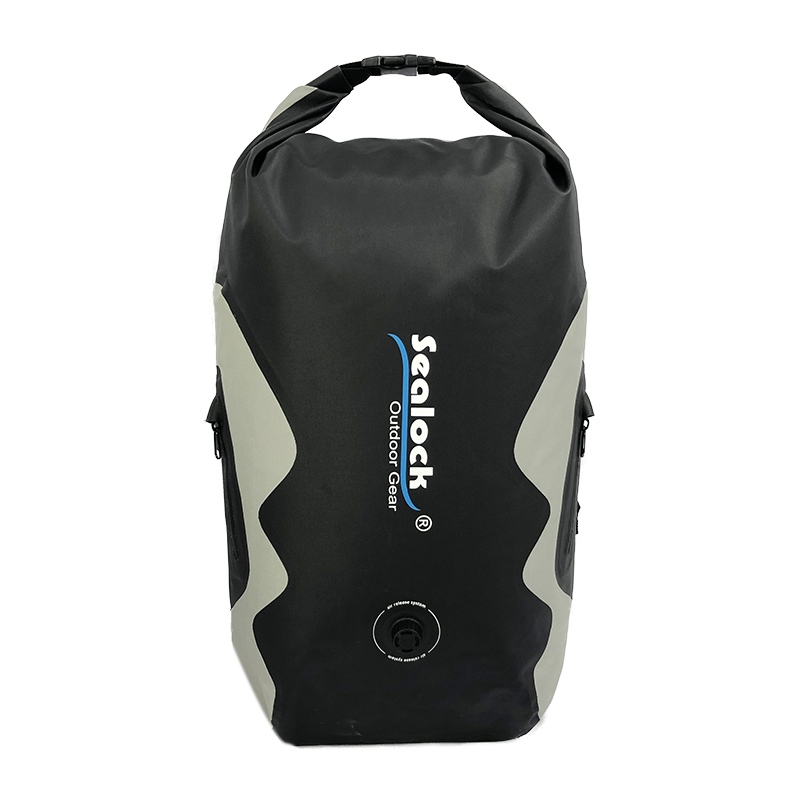
Dry backpack | 25L Roll-Top Dry Backpack, air valve (SL-E070) | 420D TPU | View |
|
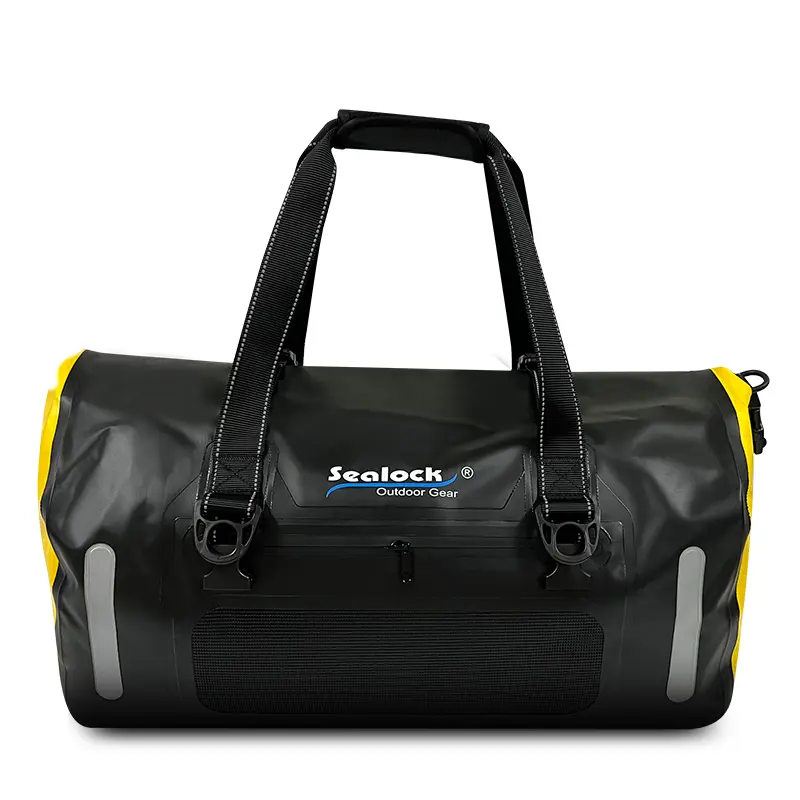
Waterproof duffel | 40L / 60L Roll-Top Duffel (SL-K099) | 840D TPU | View |
|
Urban / commuter | 22L Waterproof TPU Urban Backpack (SL-E071) | 420D TPU | View |
|
Motorcycle luggage | 50L Motorcycle Luggage Bag (SL-C619), 35/50L | 500D PVC | View |
|
Bikepacking / cycling | Bikepacking Saddle Bag (SL-K022), 10–14L | 420D/600D TPU | View |
7. Quality Control and Compliance
Sealock applies a three-stage control to every batch before shipment. The laboratory test suite covers a load test of over 1,500 cycles, 3,000 sealed-zipper cycles for zippered models, tensile strength, bonding strength, salt spray, friction resistance, color fastness, and color difference, plus a full water immersion test to confirm the interior stays dry. Inspection runs as IQC on incoming fabric, zippers, and hardware; IPQC on welds and processes in line; and OQC with AQL sampling, batch immersion testing, and signed gold-sample comparison, with optional SGS/QIMA third-party inspection. Color fastness and color-difference testing address batch-to-batch color drift, and compliance is backed by ISO 9001, BSCI, SMETA, HIGG, GRS, and SCAN, with production available from Dongguan, China or Ho Chi Minh City, Vietnam to suit a brand's tariff position.
8. FAQ
Q: Why is the OEM MOQ higher than the ODM one for the same bag?
A: OEM uses the brand's own pattern, custom materials, and sometimes custom hardware, so setup and tooling must amortize across the run — commonly 300–500 pcs and up. ODM reuses the factory's existing dies and shared material buys, so it can start lower. The MOQ is set by the customization depth, not by the factory being difficult.
Q: Why did my project need three sample rounds when two were quoted?
A: Extra rounds usually trace to gaps in the tech pack, not a bad factory. A vague zipper or lining callout forces the floor to make a judgment call and keep moving. Closing spec gaps before submitting — exact zipper, denier, hardware, color standard — typically saves a full sample round and the weeks it costs.
Q: Does the factory own my design if I use OEM?
A: No, in a properly written OEM contract. The brand owns the design, tech pack, and paid tooling, and the contract should bar the factory from producing the design for others, reusing the tooling, and should require patterns be returned or destroyed if the relationship ends.
Q: What hidden costs get left off the factory quote?
A: Import duty is the big one — US bags generally fall under HTS 4202, charged on FOB value — plus tooling for custom hardware, fabric compliance certifications for retail channels, and revision rounds. Model landed cost, not unit price, before locking a price point.
Q: Can I start with ODM and move to OEM later?
A: Yes, but it is a full redevelopment, not an upgrade on the same style — a new tech pack, a fresh sample round, added lead time, and development cost. Plan the transition before a reorder cycle rather than during one.
Q: How do I compare quotes fairly across suppliers?
A: Align on the same Incoterms (EXW vs FOB change the figure), send one complete RFQ with size, capacity, material, color, logo method, packaging, MOQ target, market, and launch date, and confirm whether the quote includes tooling, samples, packaging, and inspection. Compare on total project risk and reorder consistency, not the lowest unit price alone.
Request an OEM Proposal
For a quote, samples, or a full OEM/ODM proposal across any category in the range, submit an inquiry. Sealock responds to procurement enquiries within 24 hours and can route production through China or Vietnam to suit a brand's tariff position.