
- English
- Español
- Português
- русский
- Français
- 日本語
- Deutsch
- tiếng Việt
- Italiano
- Nederlands
- ภาษาไทย
- Polski
- 한국어
- Svenska
- magyar
- Malay
- বাংলা ভাষার
- Dansk
- Suomi
- हिन्दी
- Pilipino
- Türkçe
- Gaeilge
- العربية
- Indonesia
- Norsk
- تمل
- český
- ελληνικά
- український
- Javanese
- فارسی
- தமிழ்
- తెలుగు
- नेपाली
- Burmese
- български
- ລາວ
- Latine
- Қазақша
- Euskal
- Azərbaycan
- Slovenský jazyk
- Македонски
- Lietuvos
- Eesti Keel
- Română
- Slovenski
- मराठी
- Srpski језик

Heavy Duty Dry Bags for Industrial and Outdoor Applications
Sealock manufactures heavy duty dry bags for industrial buyers, marine operators, and outdoor brands sourcing gear that has to survive commercial use rather than a weekend. "Heavy duty" is the most abused phrase in the category — it appears on bags built from the same light fabric as everything else. For a procurement team the useful question is what specifications actually earn the label, and which of them your application genuinely needs. This is how to read a heavy duty spec and match it to industrial or outdoor service.
1. What Actually Makes a Dry Bag Heavy Duty
Two bags can both claim "waterproof tarpaulin" and one comes back in returns after a season. The difference is in four specifications, not in the marketing:
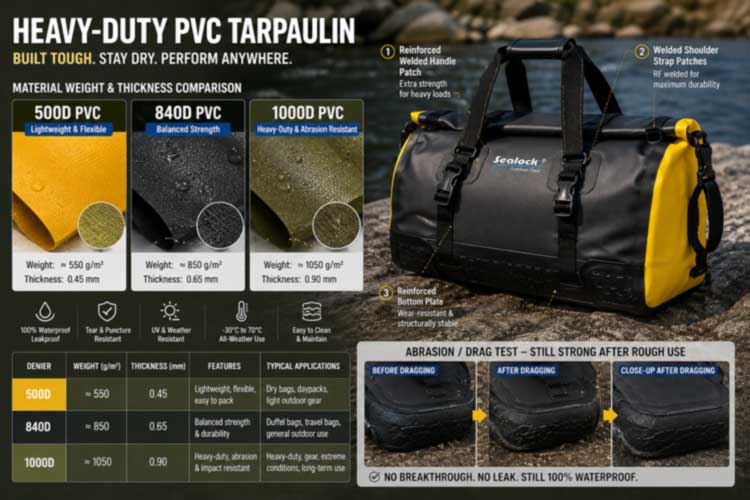
- Base fabric denier. The polyester scrim is the structural backbone — it determines load capacity and tear resistance. Heavy duty starts around 840D and runs to 1000D and above; 500D is a general-duty specification.
- Coating thickness and consistency. The coating carries waterproofing and abrasion depth. Thicker means more material to lose before failure — which is exactly what matters in high-abrasion environments.
- Welded seams. Stitched seams put thousands of micro-perforations through the fabric that behave like a sieve under hydrostatic pressure or heavy spray. True waterproof integrity requires heat-welded seams — this is non-negotiable at commercial grade.
- Reinforcement where load concentrates. A reinforced bottom panel and welded strap patches are what let heavier fabric actually deliver its strength; without them the bag fails at the anchor points long before the fabric wears.
The honest trade-off: heavier tarpaulin is heavier to carry, bulkier, and more rigid when rolled closed, and it costs more. Upgrading to 840D or 1000D is worth it where abrasion and load are real, and wasteful where they are not.
2. Industrial Requirements vs Outdoor Requirements
The two use classes stress a bag differently, and specifying for the wrong one is a common sourcing error:
| Factor | Industrial / commercial | Outdoor / recreational heavy duty |
|---|---|---|
| Primary stress | Constant abrasion, heavy static loads, daily handling cycles | Impact, immersion, dragging over rock and ramps |
| Denier | 1000D and above where load-bearing is critical | 840D typical; 500D for lighter recreational use |
| Hardware priority | Load rating and anchor strength | Corrosion resistance and one-handed operation |
| Surface treatment | UV coating, textured finish for grip in handling | UV coating, wipe-clean surface |
| Service life expectation | Thousands of stress cycles over the life of the asset | Multiple seasons of intermittent use |
Marine service sits across both. Commercial crews, offshore operators, and workboat fleets need materials that resist continuous UV exposure and fuel and oil contact without breaking down, plus marine-grade fasteners that will not seize with salt crusting — a failure mode that only shows up after months on the water.
3. Where Heavy Duty Dry Bags Are Deployed
- Commercial marine and offshore — crew gear, tools, and safety equipment stowed on deck under salt spray and UV.
- Fleet and transport — motorcycle and vehicle luggage exposed to road spray, grit, and highway wind loading.
- Construction, mining, and site work — equipment protection where high-abrasion contact is constant and replacement downtime is expensive.
- Rafting, expedition, and outfitter operations — rental and guide fleets where one bag is used by many customers and abused daily.
- Emergency services and field teams — kit that must stay dry and functional after being dropped, dragged, and stacked.
- Fishing and aquaculture — constant water contact plus exposure to fuel, oil, and cleaning chemicals.
4. Specifications to Request in an RFQ
A heavy duty enquiry gets a meaningful quote when it states the following, rather than asking for "your strongest bag":
- Base fabric and denier — 840D or 1000D PVC tarpaulin, or 840D TPU where cold flexibility and weight matter.
- Coating thickness and any UV, anti-mildew, or flame-retardant grade the market requires.
- Load rating — the weight the bag must carry, so handles, straps, and anchors are specified to it rather than assumed.
- Reinforcement — bottom panel, welded strap and D-ring patches, corner protection.
- Closure — roll-top for maximum tolerance of grit and salt, or a rated waterproof zipper where fast access matters.
- Hardware grade — corrosion-resistant buckles and fittings for marine or chemical exposure.
- Waterproof standard and test method — the IPX level tied to an actual test, not a claim.
Sealock quotes against exactly these inputs, and can develop ground-up from a sketch, sample, or target spec where the catalog does not cover an industrial requirement — capacity, denier, coating, hardware, mounting, and structure to the buyer's specification.
5. Sealock Heavy Duty Range
Models suited to demanding service, organized by type rather than priority:
| Image | Model | Capacity | Material | Rating / feature | Product Page |
|---|---|---|---|---|---|
|
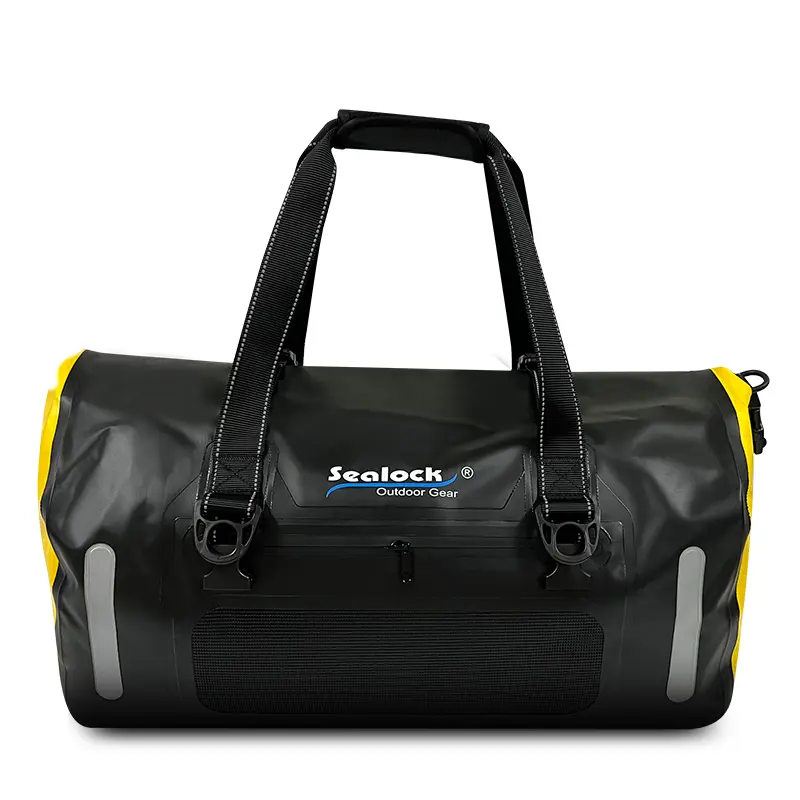
SL-K099 Duffel | 40 / 60L | 840D TPU | IPX7, seamless welded, removable strap | View |
|
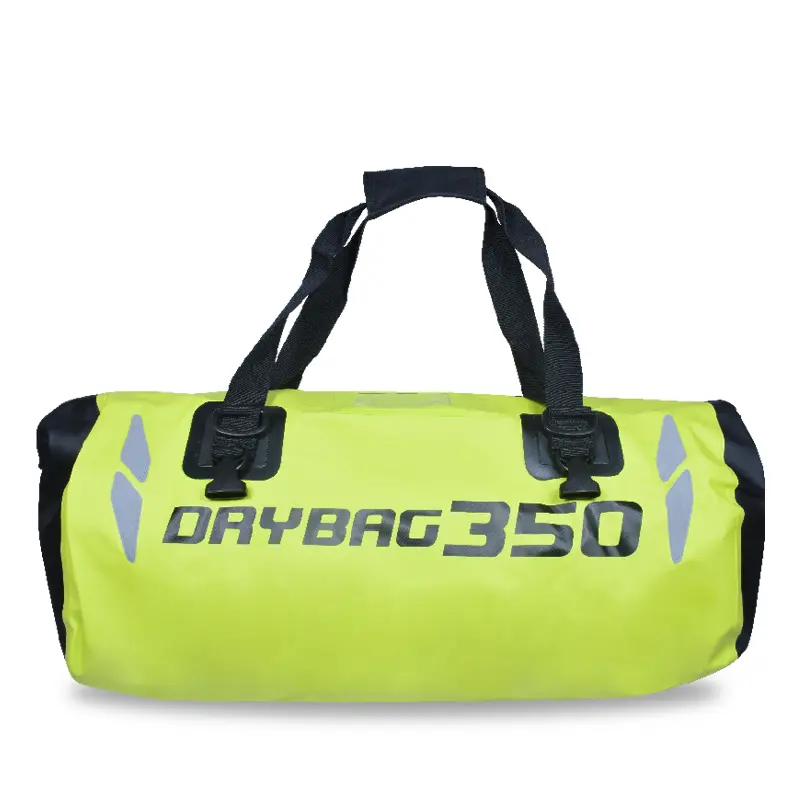
SL-C619 Motorcycle Bag | 35 / 50L | 500D PVC tarpaulin | IPX6, rack mount, reflective, heavy-duty D-rings | View |
|
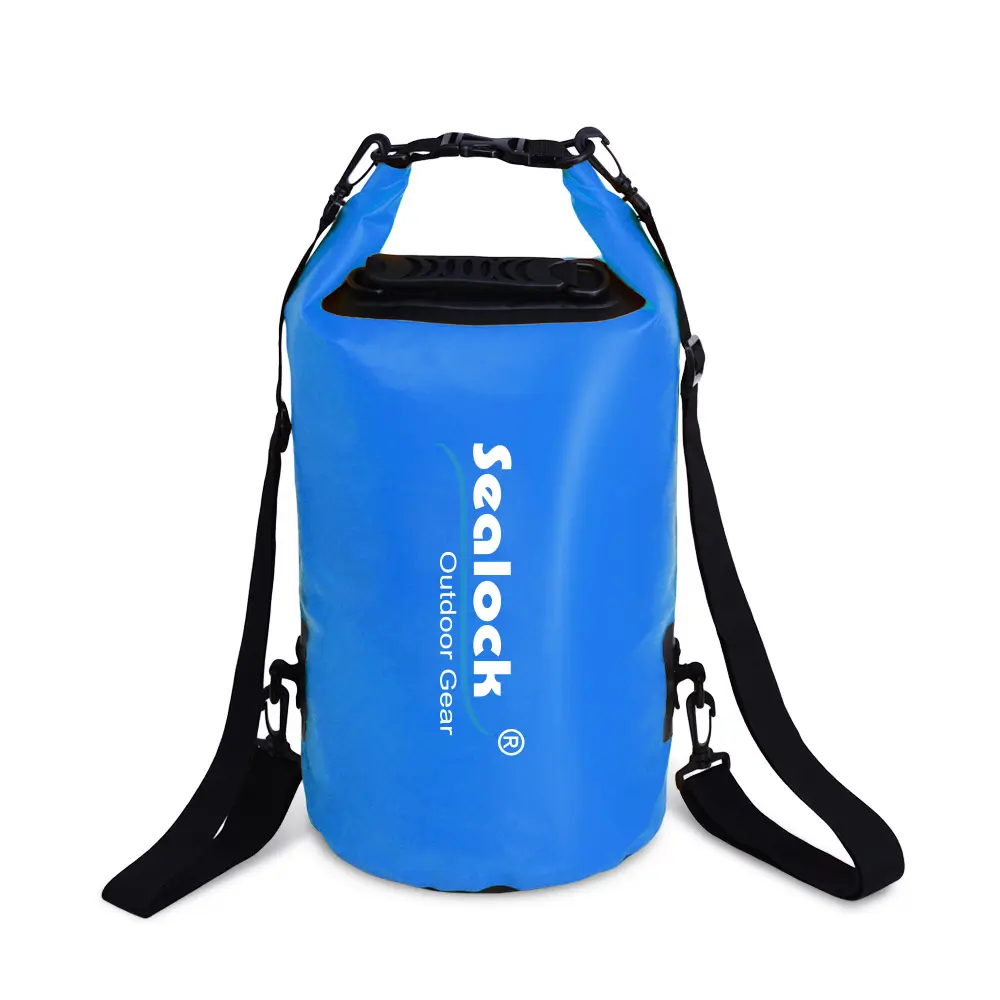
SL-D002 Dry Bag | 5–63L | 0.5 mm 500D PVC | IPX7, UTX buckles, floats | View |
|
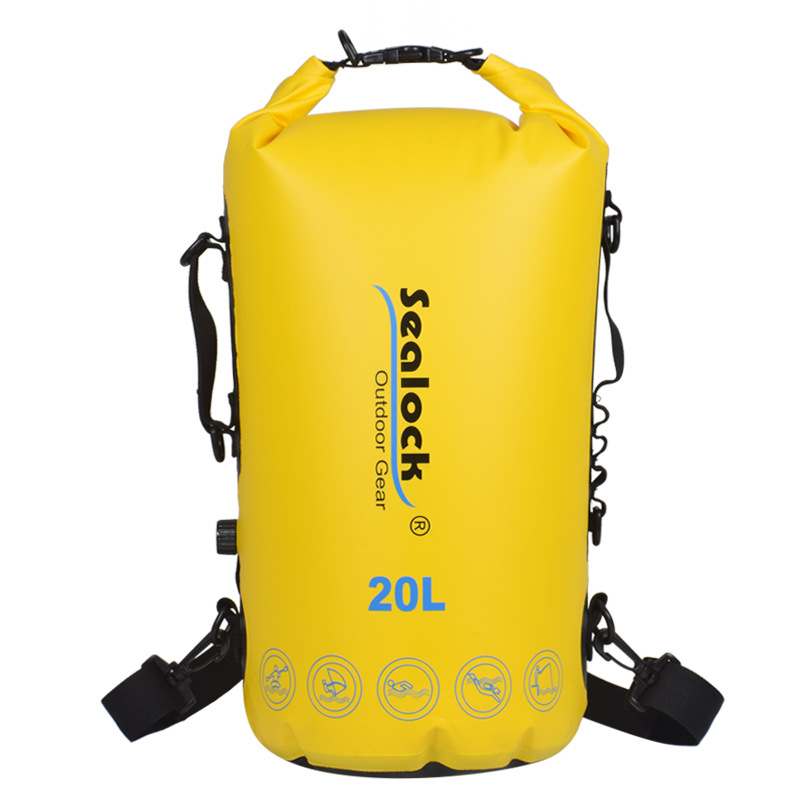
SL-E102 Backpack Dry Bag | 15 / 20L | 500D PVC, patented dual seal | IPX7, POM buckles, compression straps | View |

|
Kayaking Duffle | Multiple | TPU composite | IPX8 zipper, foldable | View |
|
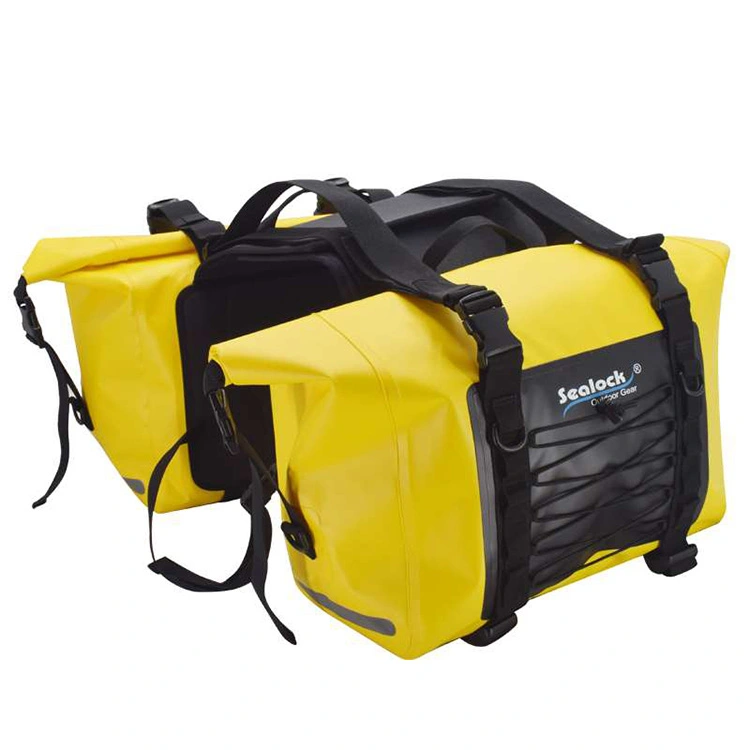
80L Saddlebags | 80L (40L × 2) | HF-welded tarpaulin | Detachable both sides, touring duty | View |
Higher deniers — 840D and 1000D PVC or TPU — are available as a specified upgrade across these formats. Full ranges sit under dry bags, dry backpacks, and duffels.
6. Verifying a Heavy Duty Claim
Because "heavy duty" is unregulated, it should be verified rather than accepted. Sealock's testing addresses the failure modes that matter in commercial service: full water immersion against the stated rating; a load test of over 1,500 cycles on handles, straps, and anchors, since attachment failure — not fabric failure — is what usually ends a heavy bag's life; friction resistance for abrasion; salt spray for marine hardware corrosion; tensile and bonding strength for the fabric and the weld; plus 3,000 sealed-zipper cycles on zippered models, and color fastness for UV exposure. Every batch runs three-stage control — IQC on incoming tarpaulin and hardware, IPQC on welds in line including peel tests at run start, and OQC with AQL sampling, immersion testing, and gold-sample comparison — with SGS or QIMA inspection available. A buyer specifying for industrial service should ask for these results rather than a datasheet adjective.
7. Commercial Terms
MOQ 300 pcs per model, samples in 7–15 days, bulk in 30–45 days, FOB Guangdong, with production available from Dongguan, China or Ho Chi Minh City, Vietnam to suit a buyer's tariff position. Compliance is backed by ISO 9001, BSCI, SMETA, HIGG, GRS, and SCAN, with test documentation available for tender and vendor-approval submissions.
8. FAQ
Q: What denier counts as genuinely heavy duty?
A: Heavy duty starts around 840D and runs to 1000D and above for load-critical industrial use; 500D is a solid general-duty specification, not a heavy duty one. Ask for the base denier and the coating thickness together — a high denier with a thin coating still wears through quickly.
Q: Is a heavier bag always the better buy?
A: No. Heavier tarpaulin adds weight, bulk, and rigidity when rolled, and it costs more. Specify the upgrade where abrasion, load, or service life genuinely demand it, and stay at general duty where they do not — over-specifying is as much a sourcing error as under-specifying.
Q: My heavy duty bags keep failing at the straps, not the fabric — why?
A: Because load concentrates at the anchor points. Heavy fabric alone does not help if straps and D-rings are sewn through the membrane or backed with nothing. Specify welded strap patches, a reinforced bottom panel, and a load-cycle test on the anchors, and confirm the bag's rated load.
Q: What matters most for commercial marine use?
A: Welded seams, UV- and fuel-resistant material, and corrosion-resistant hardware. Stitched seams behave like a sieve under hydrostatic pressure, and standard fasteners seize with salt crusting after months offshore — both are failure modes that only surface in sustained service.
Q: Can heavy duty bags be built to an industrial spec that isn't in the catalog?
A: Yes — denier, coating, capacity, mounting system, hardware grade, and structure can all be developed to a buyer's specification from a sketch, sample, or target requirement. Full ground-up development takes longer than a catalog modification, so share the deployment date early.
Q: What documentation is available for tenders and vendor approval?
A: Test results across immersion, load cycling, salt spray, tensile and bonding strength, plus certification paperwork (ISO 9001, BSCI, SMETA, HIGG, GRS, SCAN), and third-party pre-shipment inspection through SGS or QIMA on request.
Request Heavy Duty Specs and Samples
For denier and coating options, load ratings, test documentation, or a full OEM/ODM proposal for an industrial application, submit an inquiry. Sealock responds to procurement enquiries within 24 hours.