
- English
- Español
- Português
- русский
- Français
- 日本語
- Deutsch
- tiếng Việt
- Italiano
- Nederlands
- ภาษาไทย
- Polski
- 한국어
- Svenska
- magyar
- Malay
- বাংলা ভাষার
- Dansk
- Suomi
- हिन्दी
- Pilipino
- Türkçe
- Gaeilge
- العربية
- Indonesia
- Norsk
- تمل
- český
- ελληνικά
- український
- Javanese
- فارسی
- தமிழ்
- తెలుగు
- नेपाली
- Burmese
- български
- ລາວ
- Latine
- Қазақша
- Euskal
- Azərbaycan
- Slovenský jazyk
- Македонски
- Lietuvos
- Eesti Keel
- Română
- Slovenski
- मराठी
- Srpski језик

Broken Backpack Zipper: How to Fix It, Why Waterproof Zippers Fail, and How to Stop It Happening Again
Most broken backpack zippers are not broken at all. When a zipper splits open behind the slider, the slider has usually worn and spread so it no longer presses the teeth together, and it can often be fixed in two minutes with a pair of pliers. When the slider is stuck, it is usually dirt, salt or fabric caught in it. Only a torn tape, missing teeth or a damaged end stop needs a new zipper. This guide explains how to diagnose and fix each problem, why waterproof and airtight zippers fail differently from ordinary ones, how to care for them, and what brands should specify so their customers never need this article.
The zipper is the part of a backpack that moves most, takes the most strain and gets the most complaints. In product reviews of backpacks of every price, "zipper broke" is one of the most common reasons for a one-star rating, often within the first months. For a waterproof bag the stakes are higher, because a failed zipper is also a failed seal.
Why Does a Backpack Zipper Split Open Behind the Slider?
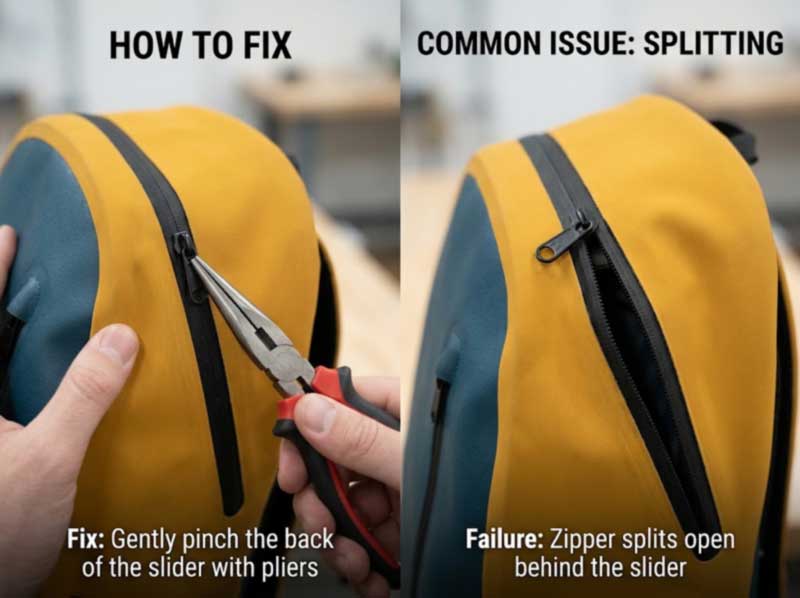
A zipper works by the slider forcing the two rows of teeth or coil together as it moves. The inside of the slider is a Y-shaped channel, and its walls must be close enough to push each tooth firmly into its neighbour. Every time the zipper is pulled under load, particularly on an overfilled bag or when it is yanked around a corner, the two plates of the slider are prised apart a fraction. After enough cycles the channel is too wide, the teeth no longer lock, and the zipper opens again behind the slider as soon as you close it.
On a coil zipper, the type used on most backpack main compartments, this is by far the most common failure. The coil itself is very tough and rarely damaged. The slider is the wear part, which is why manufacturers fit metal sliders on better bags and why a worn slider is the first thing to check.
How Do You Fix a Broken Zipper on a Backpack?
If the zipper splits behind the slider, move the slider to the fully open end. Then, with a pair of pliers, squeeze the top and bottom plates of the slider together very gently at the back end, the end the teeth come out of when closing, a little on each side. Test the zipper, and squeeze a little more if it still splits. Go in small steps: too much pressure will lock the slider solid or crack a plastic one. On many bags this restores the zipper for months or years.
If the slider is stuck, do not force it. Look for fabric caught in the teeth and ease it out backwards. Brush out sand, grit and dried salt with an old toothbrush and warm soapy water, then rub a little zipper lubricant, paraffin wax or a candle along the teeth and work the slider back and forth. On boats and beaches, salt crystals are the usual cause, and a rinse in fresh water is often all it takes.
If the slider has come off one side or is cracked, it needs replacing. Replacement sliders are sold by size, printed on the back of most branded sliders, for example a number 5 or number 8 coil. The old slider is removed at the open end, past the top stop, and the new one fed on so both sides of the coil enter evenly. On a backpack this usually means unpicking a few stitches at the stop or taking it to a repair shop.
If the tape is torn, teeth are missing or the box and pin at the bottom of a separating zipper are broken, the zipper needs to be replaced. On a sewn backpack that is a straightforward job for a repair shop. On a welded waterproof backpack it is not, as the next section explains.
Why Do Waterproof and Airtight Zippers Fail Differently?
Waterproof backpacks use two kinds of zipper. A laminated waterproof zipper is a coil zipper with a polyurethane film bonded over the tape, so the closed coil is hidden behind a smooth, water-shedding surface. It keeps out heavy rain, but the film adds friction, so these zippers feel stiffer and the slider works harder. If they are pulled hard around a tight curve, or the film is cracked by repeated folding, they start to leak and wear faster. Our SL-E1313 and SL-E724 use this type, rated IPX6.
An airtight zipper is a different design altogether, the same family of closures used on drysuits. Interlocking teeth press two sealing lips together along the whole length, and the slider docks into a sealed end stop when it is fully closed. It makes a bag submersible, which is how our SL-E641, SL-E698 and SL-E119 reach IPX7 and IPX8. It is also far less forgiving. Dirt between the teeth, a dry seal, pulling at an angle or folding the zipper sharply can all deform the sealing lips. The most common user mistake is not pulling the slider all the way home into the end stop, which leaves a small gap that looks closed and lets water in.
Waterproof zippers are welded into the bag rather than sewn, because stitching would put holes in the seal. That is what makes them reliable, and it is also why they cannot simply be swapped at a local repair shop. A worn slider on a laminated zipper can sometimes be replaced, but a damaged airtight zipper usually means a factory repair or a replacement bag. For that reason the care routine matters more than on any other part of a waterproof bag, and some designs protect the weakest point mechanically: our SL-E589 fishing sling has moulded end caps over the zipper ends, where airtight zippers most often fail.
How Do You Care for an Airtight Zipper?
Keep it clean: rinse off sand, mud and salt water with fresh water after use and brush the teeth gently with mild soapy water, never solvents. Keep it lubricated: apply the zipper lubricant supplied with the bag, usually silicone-based, to the teeth and the end stops every few weeks of use, and wipe off the excess. Close it straight: pull the slider in line with the zipper rather than at an angle, slowly at the end, until it seats fully in the end stop. Do not fold or crush the zipper when packing or storing the bag. Store the bag clean and dry, and do not leave it in a hot car, because high temperatures can deform the seal.
These steps fit on a single care card, and brands that include one with every airtight bag see noticeably fewer zipper complaints. Our article on mold on waterproof backpacks covers the drying and storage side of the same card.
Zipper Types on Our Waterproof Backpacks
The table below shows the main zipper constructions we build into backpacks, from sewn water-resistant packs to fully submersible ones.
| Image | Model | Capacity | Dimensions (H × W × D) | Weight | Construction | Use |
|---|---|---|---|---|---|---|
|
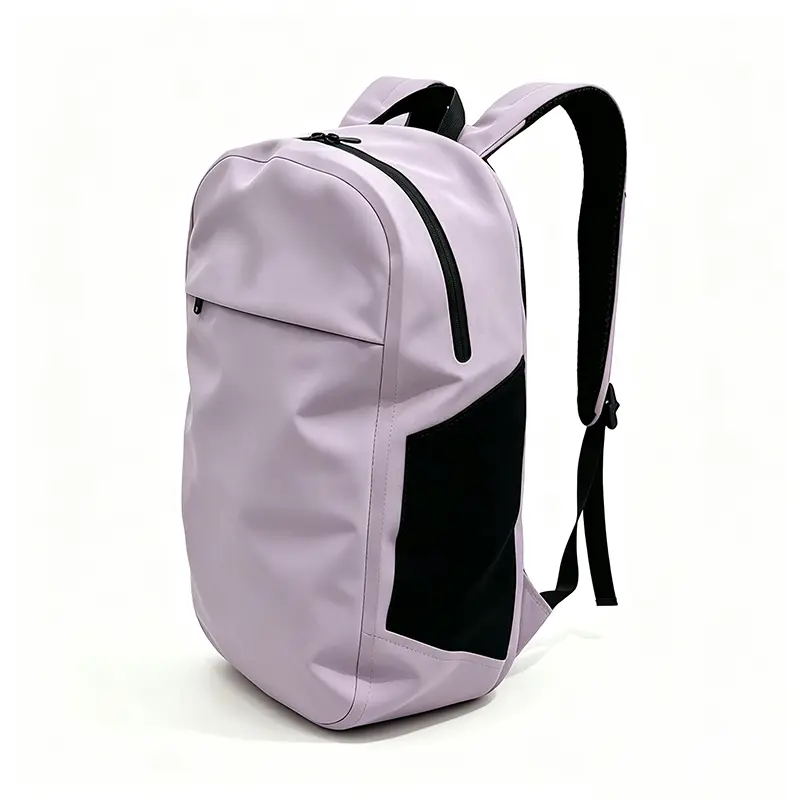
SL-E1176 | 16 L |
47 × 28 × 12 cm 18.5 × 11 × 4.7 in |
0.65 kg | Sewn, laminated YKK dual-slider zipper, rain and splash resistant | Slim commuter |
|
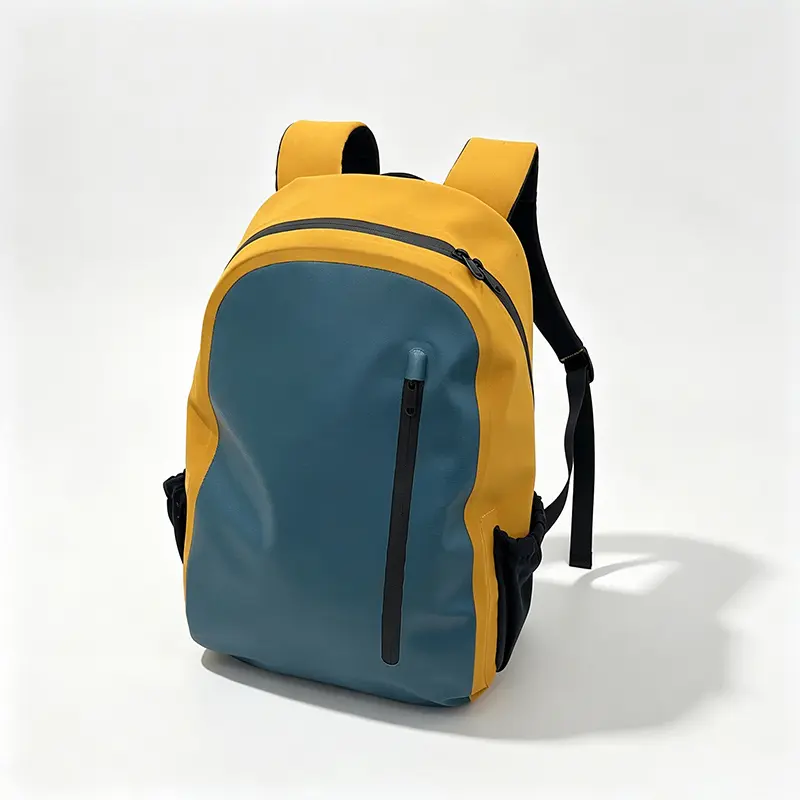
SL-E071 | 22 L |
48 × 34 × 13.5 cm 18.9 × 13.4 × 5.3 in |
0.78 kg | Sewn, laminated waterproof zippers, rain and splash resistant | Everyday commuter |
|
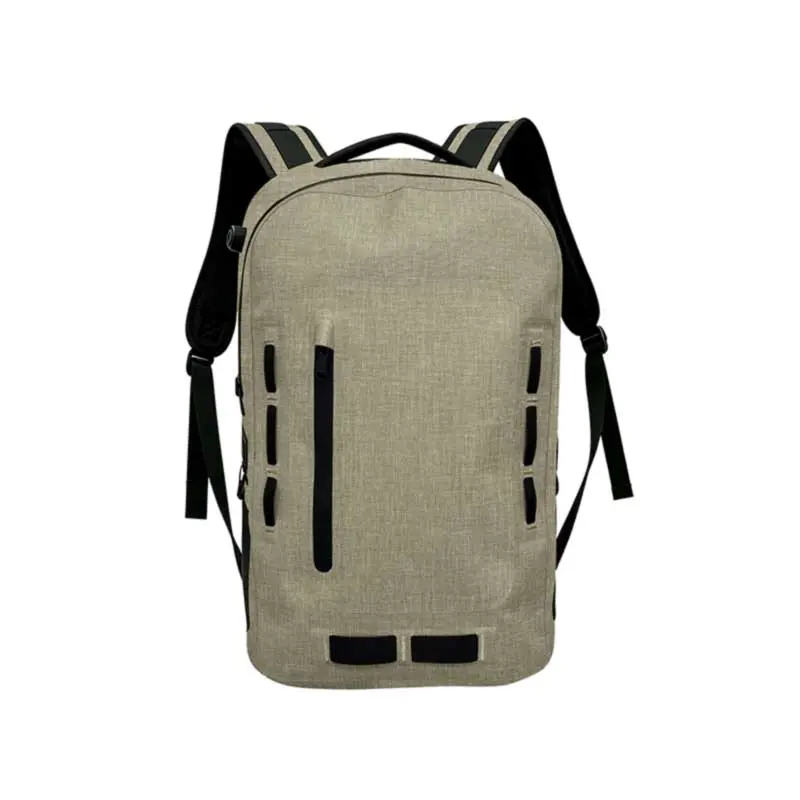
SL-E1313 | 22 L |
50 × 30.5 × 14.5 cm 19.7 × 12 × 5.7 in |
0.85 kg | Welded, curved waterproof zipper, IPX6 | Laptop backpack |
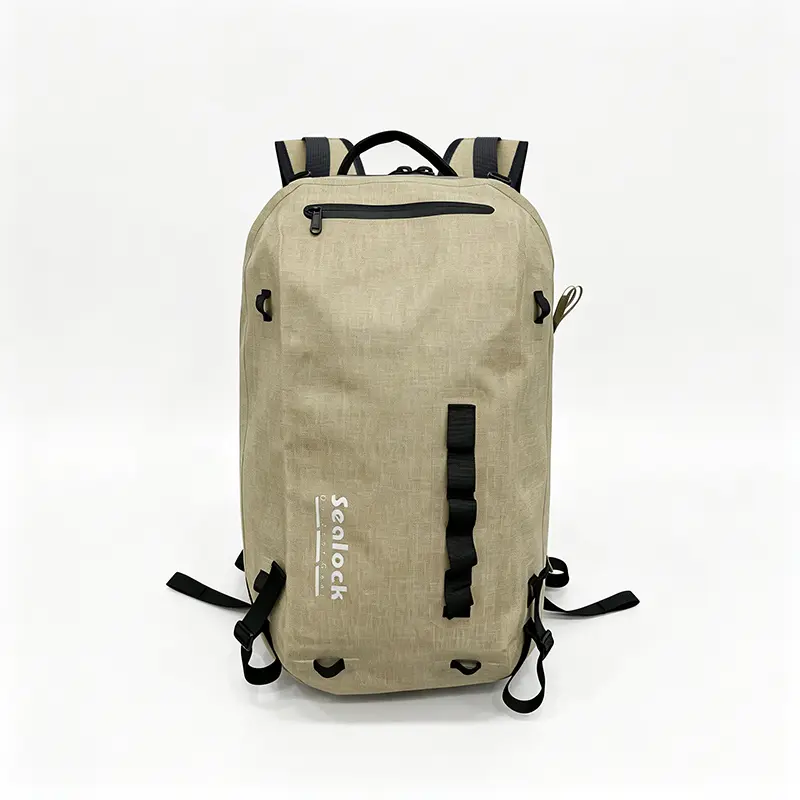
|
SL-E724 | 30 L |
52 × 27 × 22 cm 20.5 × 10.6 × 8.7 in |
1.0 kg | Welded, full-wrap YKK waterproof zipper, IPX6 | Travel, clamshell |

|
SL-E641 | 24 L |
54 × 27.5 × 16.5 cm 21.3 × 10.8 × 6.5 in |
1.0 kg | Welded, single-slider airtight zipper, IPX7 | Urban, submersible |

|
SL-E698 | 25 L |
54 × 27.5 × 16.5 cm 21.3 × 10.8 × 6.5 in |
1.05 kg | Welded, dual-slider airtight zipper, IPX7 | Hunting and outdoor |

|
SL-E119 | 20 L |
47 × 31.5 × 14.5 cm 18.5 × 12.4 × 5.7 in |
0.86 kg | Welded, airtight zipper, IPX8 to 20 m | Submersible laptop pack |
What Should a Brand Specify to Avoid Zipper Failures?
Choose the zipper for the closure, not the other way round. A sewn commuter pack does well with a laminated coil zipper and a two-way slider. A welded pack that must survive rain needs a waterproof laminated zipper. A pack that must survive a capsize needs an airtight zipper, and a care card. Specify the zipper brand and size, the slider material and the pull. Metal sliders outlast plastic ones on main compartments. A large moulded T-pull or a cord pull lets customers use the zipper with cold hands or gloves, which matters on water sports and hunting packs, and our SL-E698 has a dual-slider airtight zipper with a glove-friendly pull for exactly that reason.
Design also decides how hard the zipper has to work. A curved zipper path is easier on the slider than a tight corner. Compression straps that take load off the zipper on a full bag reduce slider spread. And a zipper that sits under a rain flap is protected from grit as well as water.
Every zipper we fit is tested for fatigue to 3,000 open-and-close cycles, and finished bags go through load testing to more than 1,500 cycles along with water tests matched to their rating. We make both sewn and welded backpacks, with an MOQ of 300 pieces per design, samples in 7 to 15 days and bulk production in 30 to 45 days, quoted FOB Guangdong with Vietnam origin available. Sealock has over 20 years of experience building waterproof bags. Browse the range in our waterproof backpack category, or read about waterproof ratings for bags and standard backpack sizes.
Frequently Asked Questions
Why does my backpack zipper keep coming apart?
The slider has worn and spread, so it no longer presses the teeth together. Gently squeezing the slider with pliers usually fixes it. If that does not hold, replace the slider.
Can a broken zipper on a backpack be fixed without replacing it?
Often, yes. A spread slider can be squeezed, a stuck slider cleaned and lubricated, and a lost slider replaced. Only a torn tape or missing teeth needs a whole new zipper.
Why is my waterproof zipper so hard to pull?
Laminated and airtight zippers have more friction than ordinary zippers by design. Keep them clean and lubricated, and pull in a straight line. If one suddenly becomes much stiffer, look for sand or salt in the teeth.
My airtight bag let water in, but the zipper looked closed. Why?
The slider was probably not pushed fully into the end stop. Close the last few centimetres slowly until the slider seats completely.
Can I use WD-40 or Vaseline on a waterproof zipper?
Use the lubricant supplied with the bag or a silicone-based zipper lubricant. Petroleum products and solvents can attack the seal and the coating.
Can an airtight zipper be replaced at a repair shop?
Rarely, because it is welded into the bag. Contact the seller or manufacturer. Good care is the best protection.
Request a Quote
Tell us the bag type, the closure and rating you need, the quantity and your logo, and we will reply within 24 hours with a zipper recommendation, an FOB price and a sample timeline. Contact Sealock, or email info@sealock.com.hk.