- English
- Español
- Português
- русский
- Français
- 日本語
- Deutsch
- tiếng Việt
- Italiano
- Nederlands
- ภาษาไทย
- Polski
- 한국어
- Svenska
- magyar
- Malay
- বাংলা ভাষার
- Dansk
- Suomi
- हिन्दी
- Pilipino
- Türkçe
- Gaeilge
- العربية
- Indonesia
- Norsk
- تمل
- český
- ελληνικά
- український
- Javanese
- فارسی
- தமிழ்
- తెలుగు
- नेपाली
- Burmese
- български
- ລາວ
- Latine
- Қазақша
- Euskal
- Azərbaycan
- Slovenský jazyk
- Македонски
- Lietuvos
- Eesti Keel
- Română
- Slovenski
- मराठी
- Srpski језик

Carry-On Travel Backpack: 30L or 40L, Clamshell or Top-Loader, and Why the New Airport Scanners Favour Soft Bags
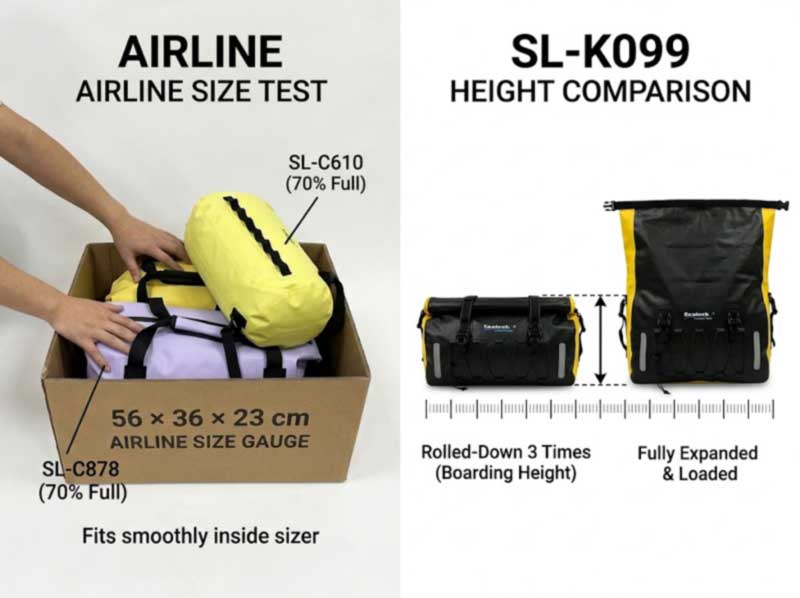
A carry-on travel backpack is a pack sized to meet airline cabin limits, typically 30 to 40 litres, that replaces a wheeled case for short trips. The largest US carry-on limit, 22 × 14 × 9 inches (56 × 36 × 23 cm), works out at about 45 litres, so a 40 litre pack is the practical maximum and 30 litres suits most people for three to five days. The best travel backpacks open like a suitcase, keep the laptop in its own sleeve and stay within the limit when they are packed, not just when they are empty. This guide covers how to choose the size and layout, why airport CT scanners are changing what fits, and the travel packs we manufacture.
Travel backpacks have grown into one of the busiest categories in luggage, driven by budget airlines charging for wheeled cases and by travellers who simply want both hands free. The choice comes down to a handful of decisions that are worth getting right before the first trip.
30L or 40L: What Size Carry-On Backpack Do You Need?
Thirty litres is enough for three to five days for most people who pack light, and it usually also fits the stricter cabin limits of European and Asian airlines, which are around 55 × 40 × 20 cm. Forty litres is the most a pack can be and still fit the 22 × 14 × 9 inch US limit, and it suits a week or more, or travellers who carry a camera or work kit. Anything above 40 litres will be too deep when it is full.
Below 30 litres, a pack is usually a personal item rather than a carry-on, and the personal item is where the rules vary most. United allows 17 × 10 × 9 inches, American 18 × 14 × 8 inches, and Ryanair's free under-seat allowance is 40 × 30 × 20 cm. A slim 16 to 18 litre laptop pack is often the most useful bag for airlines that charge for overhead space. Our article Can a Duffel Bag Be a Carry-On? lists the current limits for the major airlines.
Why Are Airport Scanners Changing What Fits?
The US Transportation Security Administration has been replacing its checkpoint X-ray machines with computed tomography (CT) scanners, which build a 3D image of each bag. By mid-2026 there were more than 1,150 CT units at nearly 300 US airports, and similar machines are in use at airports such as Amsterdam Schiphol and Rome Fiumicino. At a CT lane, laptops and travel-sized liquids can usually stay in the bag, which is good news for anyone with a well-organised backpack.
The catch is that the CT tunnel is slightly narrower than the old X-ray machines, and every item goes through in a bin. TSA has said that not all larger carry-on bags will fit and recommends checking them. A rigid roller that bulges at the limit can be turned back at security, even though the airline would accept it. A soft backpack that is packed to a sensible depth compresses to fit the bin, which is one more practical reason travel backpacks have taken off.
Clamshell or Top-Loader?
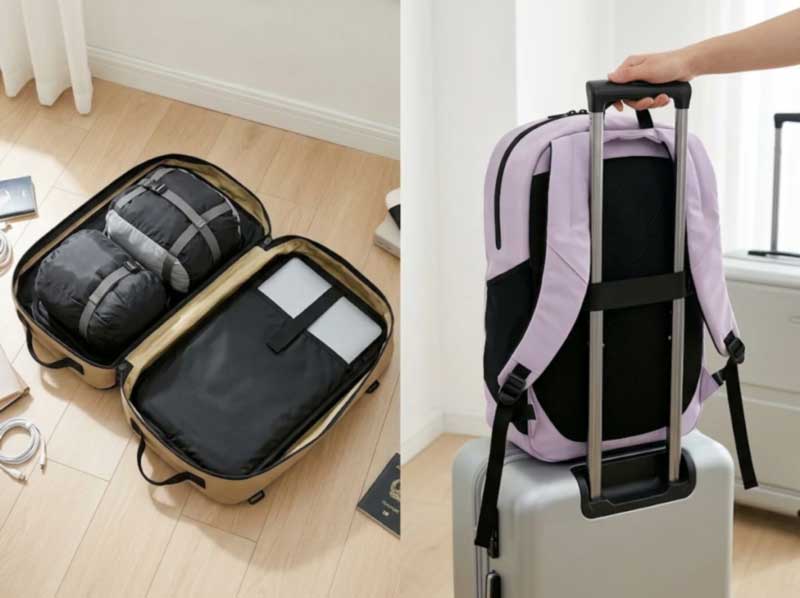
A clamshell pack unzips around three sides and opens flat like a suitcase. It is far easier to pack neatly, with packing cubes or compression bags, and to find things in a hotel room or at a security tray. That is why most purpose-built travel backpacks use it. A top-loader, opening only at the top, is simpler, lighter and more weatherproof, but everything has to come out to reach the bottom. Roll-top packs are a variant of the top-loader and are the most waterproof of all.
Whichever layout you choose, look for a dedicated laptop sleeve that opens separately, a luggage pass-through so the pack can slide over a rolling case's handle, a quick-access pocket for passport and phone, and stowable or tidy straps so nothing snags in an overhead bin or a scanner.
Does a Travel Backpack Need to Be Waterproof?
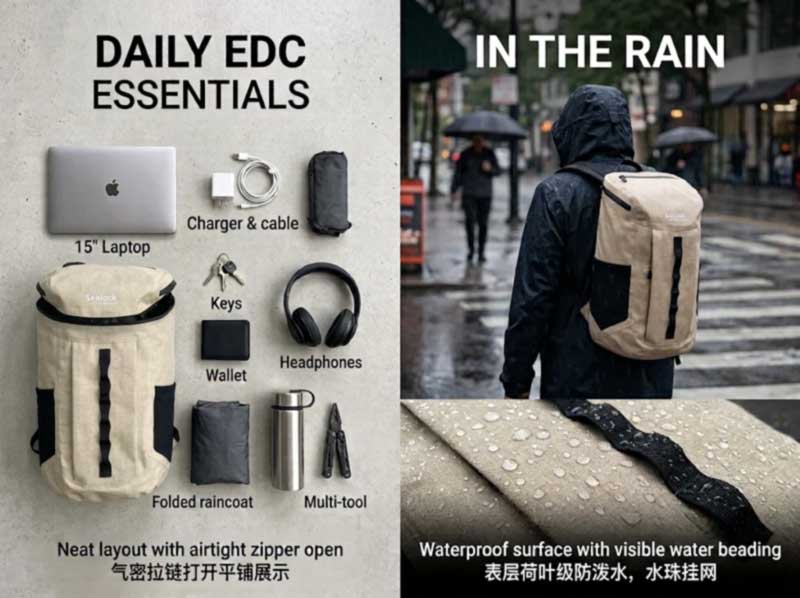
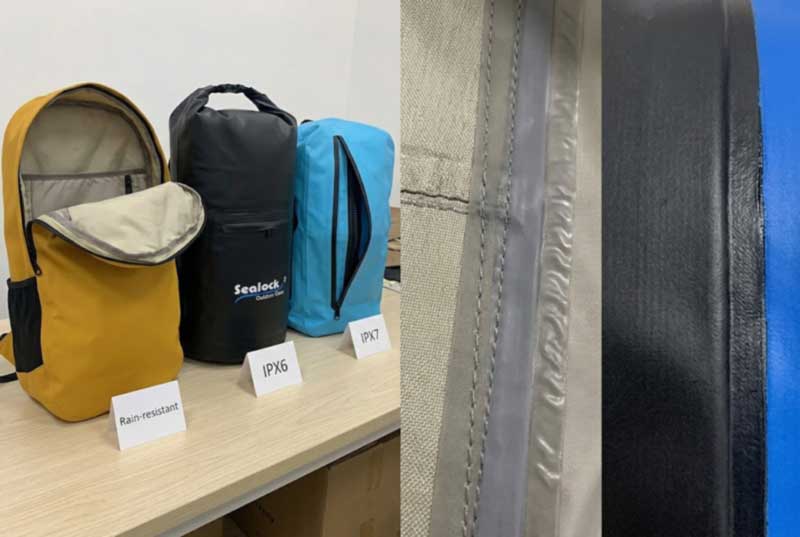
Not for the cabin, but travel is mostly what happens either side of the flight: walking from a station in the rain, waiting on an open tarmac, sitting on a ferry deck, riding a scooter taxi or a boat transfer. A sewn pack with coated fabric handles a shower; a welded pack with waterproof zippers keeps a laptop dry through a tropical downpour, rated IPX6; and an airtight-zipper pack survives being dropped off a jetty, rated IPX7. For trips to islands, rivers and monsoon climates the difference is real. The ratings are explained in our guide to waterproof ratings for bags.
Travel Backpacks We Manufacture
| Image | Model | Capacity | Dimensions (H × W × D) | Weight | Construction | Use |
|---|---|---|---|---|---|---|
|
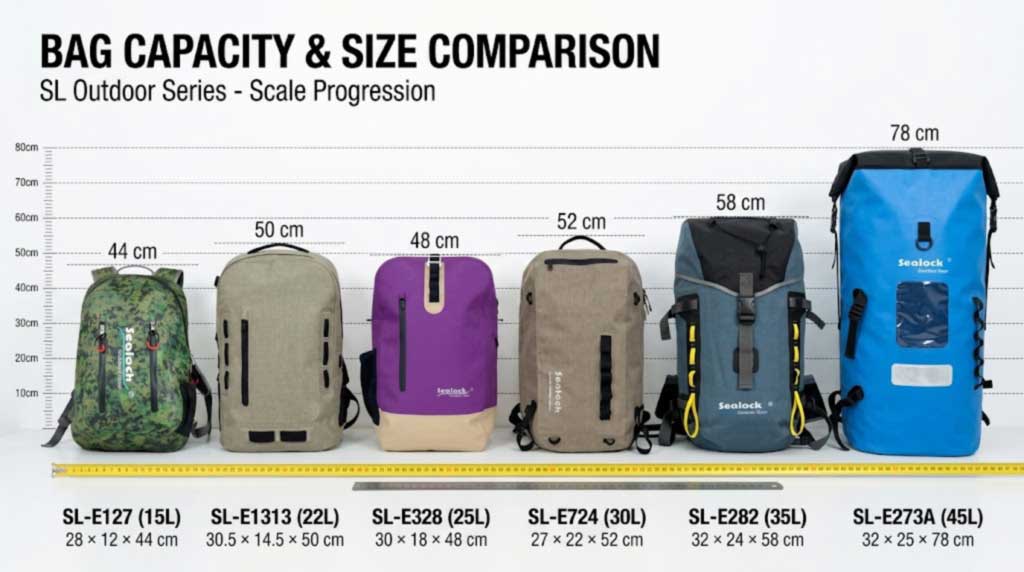
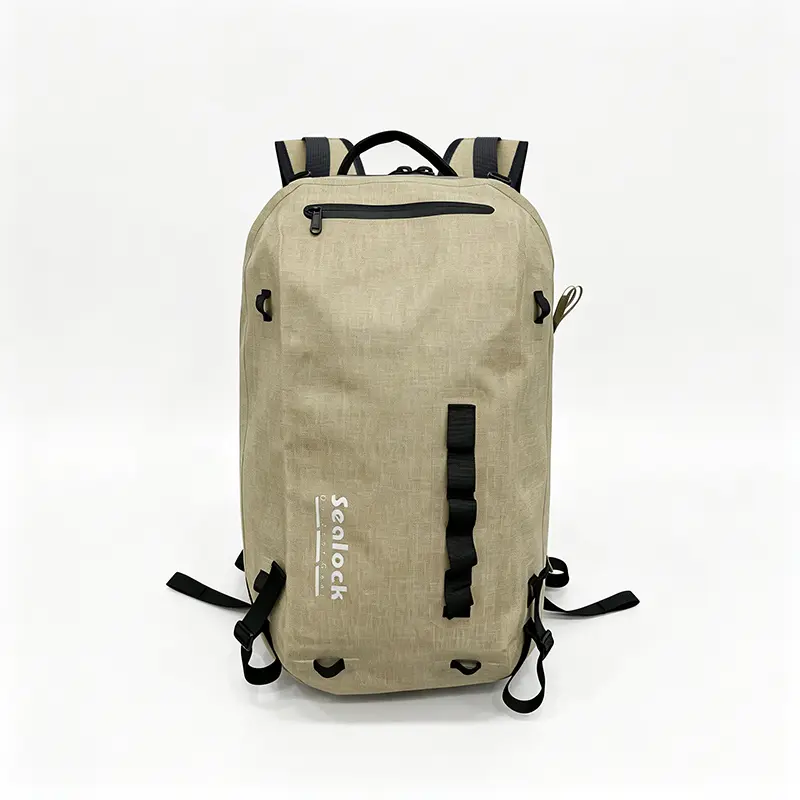
SL-E724 | 30 L |
52 × 27 × 22 cm 20.5 × 10.6 × 8.7 in |
1.0 kg | Welded TPU ripstop, 180° clamshell YKK waterproof zipper, laptop and tablet sleeve, Velcro module anchors, IPX6 | One-bag carry-on for short trips |
|
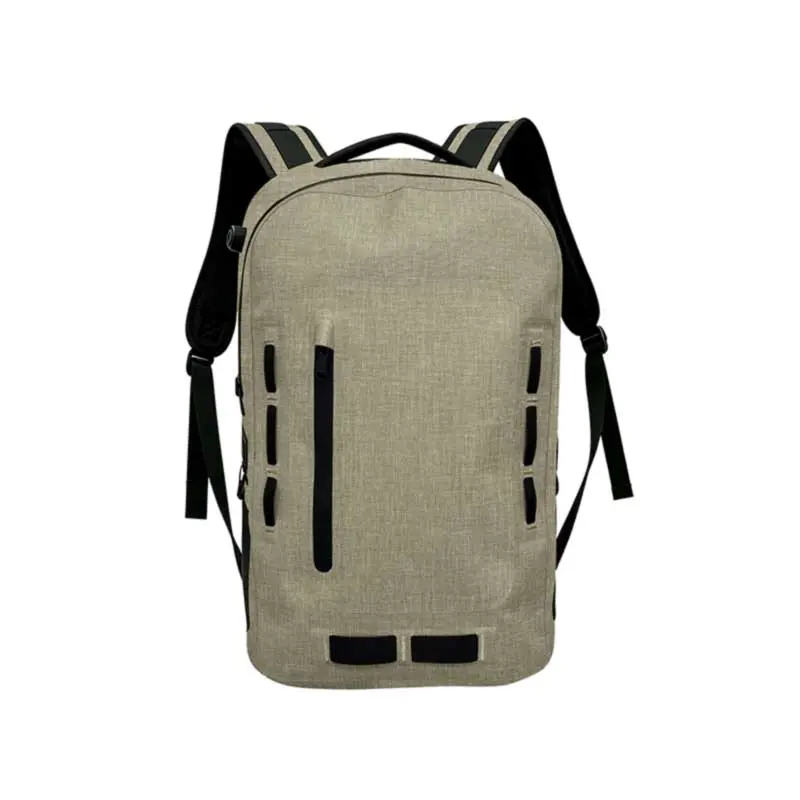
SL-E1313 | 22 L |
50 × 30.5 × 14.5 cm 19.7 × 12 × 5.7 in |
0.85 kg | Welded 500D TPU, clamshell waterproof zipper, pressure-relief valve, 16 in laptop, IPX6 | Business trips, laptop-first carry |
|
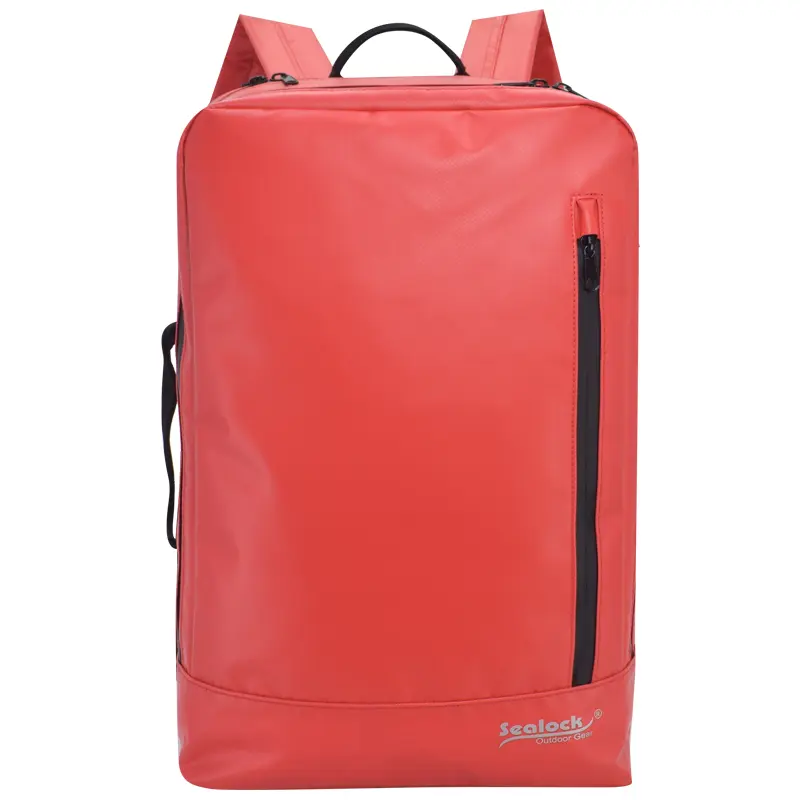
SL-E965 | 18 L |
45 × 30 × 14 cm 17.7 × 11.8 × 5.5 in |
0.89 kg | PVC-coated fabric, two-way zipper under rain flap, trolley sleeve, removable organiser, 15.6 in laptop, IPX6 | Personal item that rides on a rolling case |

|
SL-E641 | 24 L |
54 × 27.5 × 16.5 cm 21.3 × 10.8 × 6.5 in |
1.0 kg | Welded TPU, airtight zipper, IPX7 | Travel to wet climates, boat and island trips |
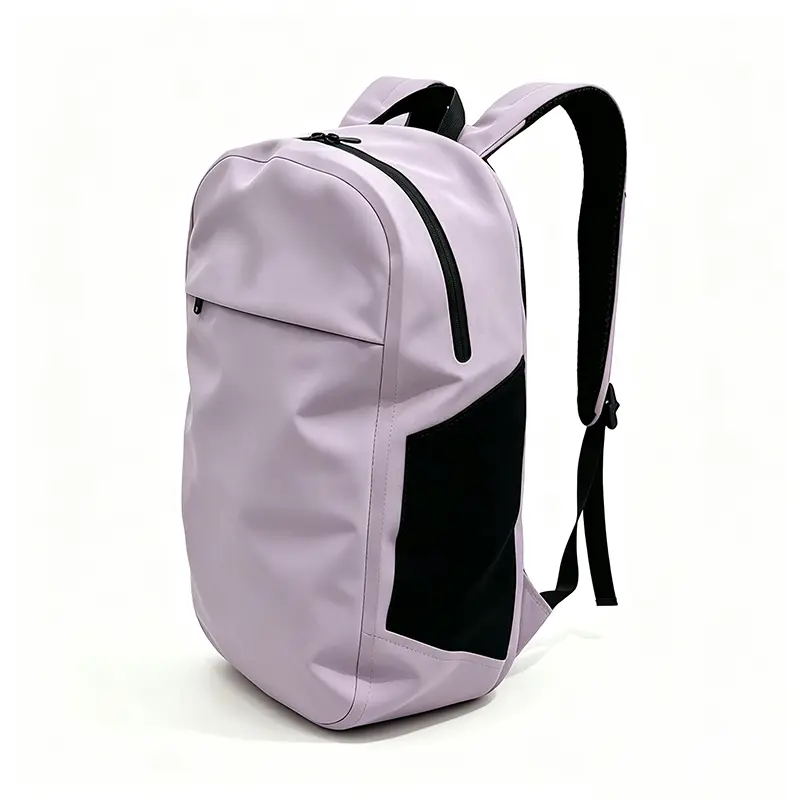
|
SL-E1176 | 16 L |
47 × 28 × 12 cm 18.5 × 11 × 4.7 in |
0.65 kg | Sewn PU-coated polyester, laminated YKK dual-slider zipper, 15.6 in laptop, rain and splash resistant | Slim personal item for strict airlines |
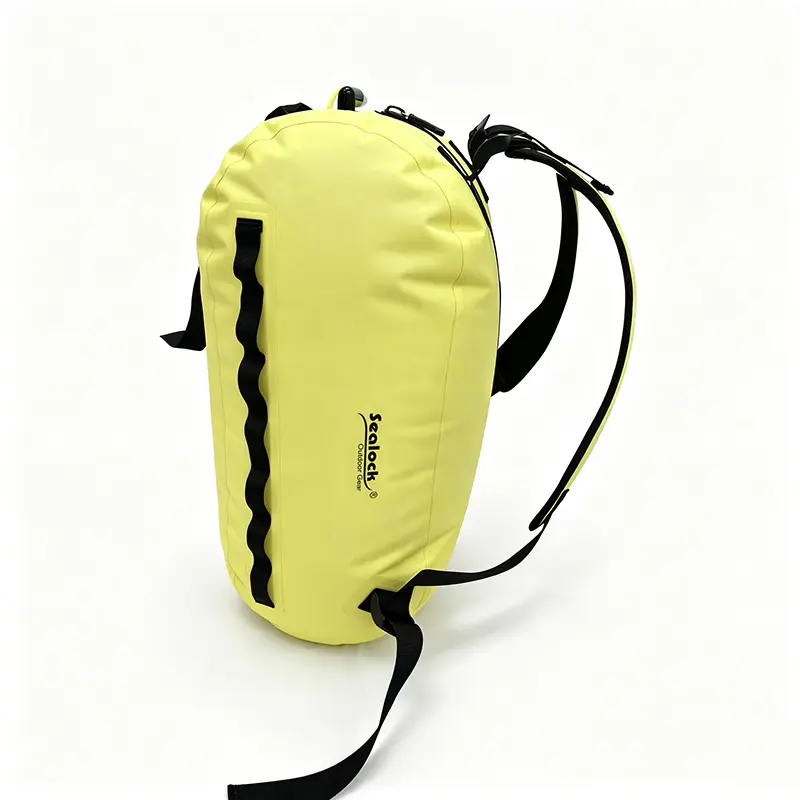
|
SL-C610 | 50 L |
53 × 34 × 29 cm 20.9 × 13.4 × 11.4 in |
0.8 kg | Welded TPU-coated polyester, airtight zipper, detachable backpack straps, floats, IPX7 | Duffel-backpack for longer trips; pack below full for cabin depth |
The SL-C610 is a duffel with backpack straps and is measured lying flat. For packing more into the same space, our SL-P1133 compression bag takes 25 to 30 litres of clothing down to about 14 litres. More packs are in our waterproof backpack category, and our article on EDC backpacks covers the everyday version of the same design problem.
What Should Brands Specify for a Travel Backpack?
Design to the packed size. Set the height and width a little under the target airline limit and control the depth with compression straps, because a pack that measures 23 cm deep empty will not stay there when it is full. Decide early whether the pack is a carry-on or a personal item, since that fixes the size more than the litre figure does. Keep the weight down, because many airlines outside North America have a 7 or 8 kg cabin limit. And give the laptop sleeve its own opening, sized for the largest common laptop with a little room for a case.
Our travel pack platforms scale: the SL-E724 clamshell from 22 to 40 litres, the SL-E1313 from 18 to 30 litres, so a brand can offer a personal-item size and a carry-on size from one tooled design. We build both sewn and welded constructions, with options including recycled fabrics, custom colours, luggage pass-throughs, lockable zipper pulls and branded hardware. The MOQ is 300 pieces per design, samples take 7 to 15 days and bulk production 30 to 45 days, quoted FOB Guangdong with Vietnam origin available. Sealock has over 20 years of experience making bags for travel and outdoor brands.
Frequently Asked Questions
Is a 40L backpack too big for carry-on?
Not for most US airlines, if it is packed so that it stays within 22 × 14 × 9 inches. It can be too big for stricter European and Asian limits, and for budget airlines' free allowances.
Is a 30L backpack a carry-on or a personal item?
Usually a carry-on. Personal items are generally under 20 litres and must fit under the seat in front of you.
Can I keep my laptop in my backpack at security?
At checkpoints with CT scanners, usually yes. At older X-ray lanes you will still be asked to take it out, so a laptop sleeve with its own zip makes either case quick.
Why was my carry-on rejected at the security scanner?
Some new CT scanners have a narrower tunnel than older machines, and an overstuffed bag may not fit. Pack to a sensible depth, or check larger bags with the airline.
Is a clamshell backpack better for travel?
For most travellers, yes. It opens like a suitcase, so packing, unpacking and finding things is much easier than in a top-loader.
Do I need a waterproof travel backpack?
If your trips involve rain, boats, beaches or motorbike taxis, a waterproof pack protects your laptop and documents where a water-resistant one may not.
Request a Quote
Tell us the capacity, the airline limit you are designing to, the laptop size, the construction and the quantity, and we will reply within 24 hours with suitable base models, an FOB price and a sample timeline. Contact Sealock, or email info@sealock.com.hk.
Send Inquiry
Related Products
News Recommendations