
- English
- Español
- Português
- русский
- Français
- 日本語
- Deutsch
- tiếng Việt
- Italiano
- Nederlands
- ภาษาไทย
- Polski
- 한국어
- Svenska
- magyar
- Malay
- বাংলা ভাষার
- Dansk
- Suomi
- हिन्दी
- Pilipino
- Türkçe
- Gaeilge
- العربية
- Indonesia
- Norsk
- تمل
- český
- ελληνικά
- український
- Javanese
- فارسی
- தமிழ்
- తెలుగు
- नेपाली
- Burmese
- български
- ລາວ
- Latine
- Қазақша
- Euskal
- Azərbaycan
- Slovenský jazyk
- Македонски
- Lietuvos
- Eesti Keel
- Română
- Slovenski
- मराठी
- Srpski језик

Wet-Dry Separation Bags OEM: Swim, Gym and Beach Bags That Keep Damp Kit Apart
Listen to this article
Sealock manufactures wet-dry separation bags for swim, gym, beach, travel and nursery brands, with OEM production from 300 pieces, welded waterproof compartments and removable wet pouches, and factories in Dongguan, China and Ho Chi Minh City, Vietnam. This guide explains the design problem every wet-dry bag has to solve, the construction options that solve it, and what MOQ, price, compliance and testing to expect when you develop your own range.
A wet-dry bag has one job that sounds simple and is not: keep a wet swimsuit, towel or training kit away from dry clothes, a phone and a wallet, then survive being carried home and left in a car or a hallway. Reviews of swim and gym bags show where it goes wrong. Fabric that soaks through when the lining fails, a wet pocket too small for a towel, separation that only works in one compartment, zippers corroded by chlorine and salt, and the smell and mildew that come from damp kit sealed away for a day. Each of these is a design and material choice, and each can be specified correctly at the factory.
What Is the Real Design Problem in a Wet-Dry Bag?
There is a built-in conflict. To keep wet things from leaking onto dry things, the wet side needs to be sealed. But a sealed compartment holding damp fabric is the perfect place for odour and mildew to grow. Mesh bags solve the smell by letting air through, but they protect nothing. A good wet-dry bag is designed around this conflict rather than ignoring it.
Our approach is to seal the wet compartment completely with high-frequency welded seams, so that water stays in, and to make that compartment easy to open, empty, rinse and dry, so that damp kit does not sit there for days. A welded compartment has no needle holes, so there is no seam for water to wick through in either direction. A smooth TPU or PVC interior wipes clean and dries quickly, unlike woven linings that hold moisture and sand. And the dry side is kept separate, with its own closure, so a phone or a change of clothes never shares air with a wet towel.
Which Wet-Dry Constructions Can Be Built?
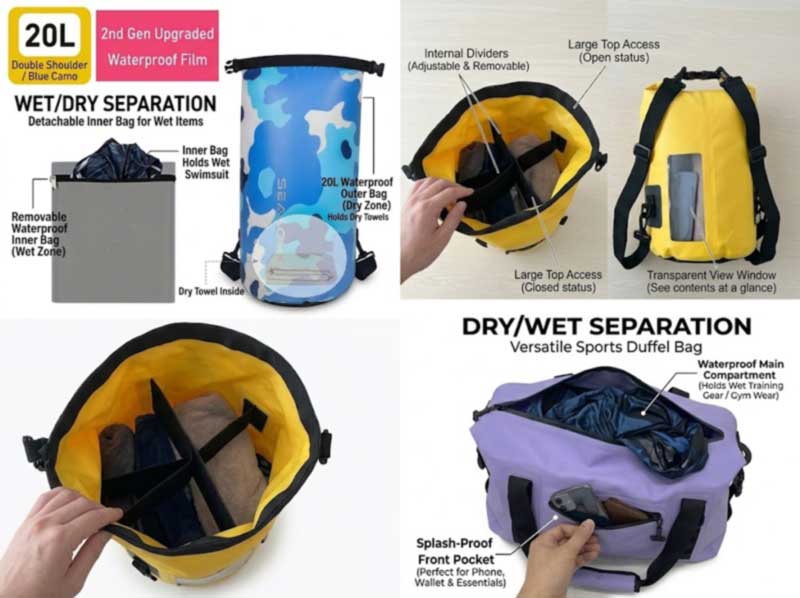
The first is the removable wet pouch. A roll-top dry bag carries a separate inner pouch that holds wet items. At the end of the day the pouch comes out, is emptied and rinsed, and dries on its own while the outer bag stays clean. Our 10 and 20 litre dry-wet separation dry bag uses this design, with a removable 23 by 27 centimetre inner pouch inside an IPX7 roll-top. It is the most hygienic design, because the part that gets wet can be cleaned separately.
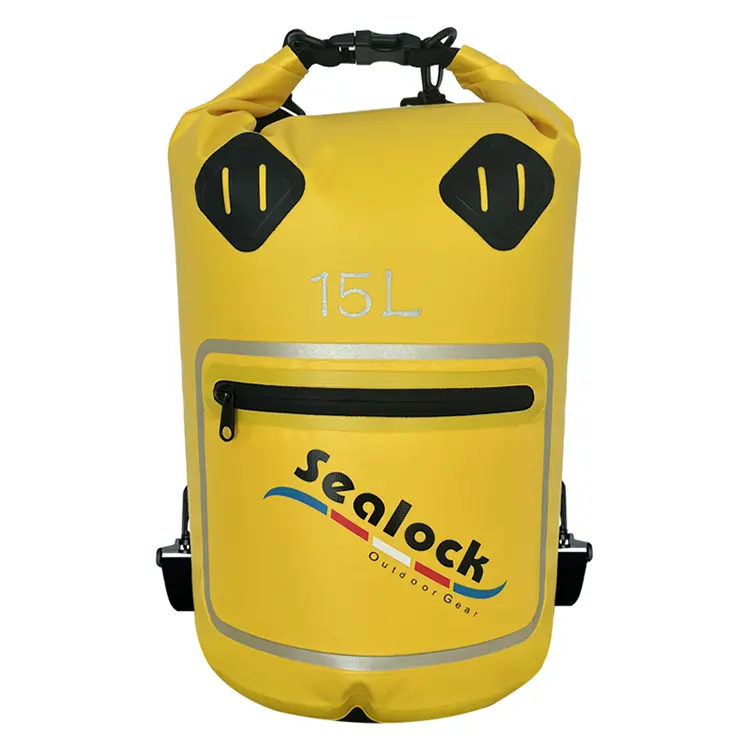
The second is the fixed welded divider. The bag is split by a welded internal panel into a wet zone and a dry zone, each with its own access. Our SL-D693 combines dry-wet separation with a transparent viewing window in a 15 or 20 litre 500D PVC roll-top rated IPX7, with a detachable shoulder strap and POM buckles. A fixed divider cannot be forgotten at home, and it suits swim clubs and schools.
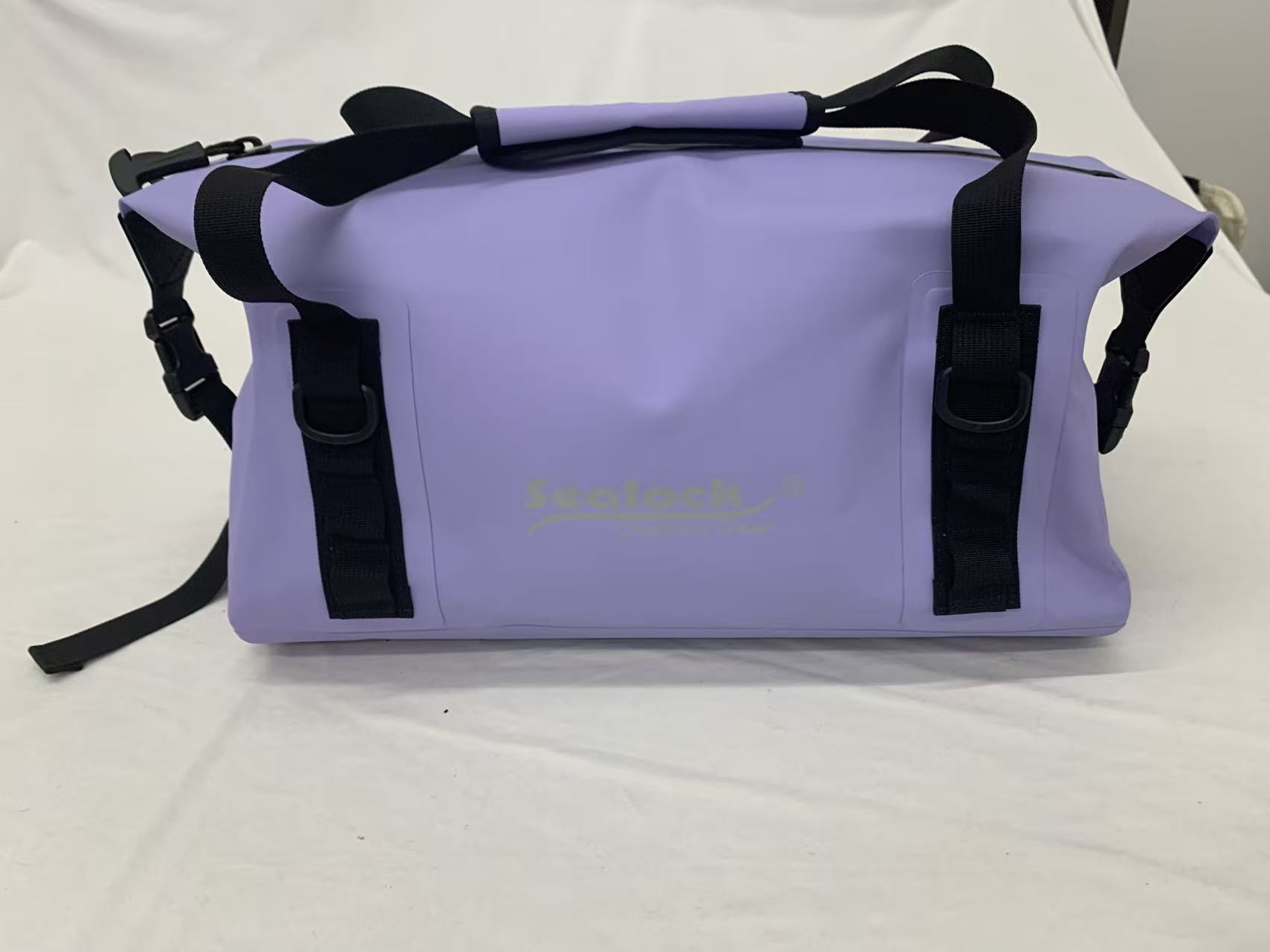
The third is the sealed duffel with dry-side pockets. A gym or travel duffel keeps wet training kit in a fully sealed main compartment while dry items go in external pockets. Our SL-C878 20 litre duffel is fully welded in 840D TPU with an airtight zipper rated IPX7, a smooth welded TPU lining that wipes out after a swim, a front welded waterproof pocket and a reinforced base that stands up on a changing room floor.
Sealock also runs an industrial sewing line in its own room on the same production floor as the welding line, so lifestyle wet-dry totes and swim bags with sewn outer fabrics can carry a welded waterproof wet compartment inside. That hybrid is how many swim brands combine a soft, colourful look with real separation.
Which Materials and Hardware Survive Chlorine and Salt?
Pool chlorine and sea salt are hard on hardware. Standard metal zippers and sliders corrode quickly in regular pool use, and corroded sliders jam or break, which is one of the earliest failure points on budget swim bags. Roll-top closures avoid zipper corrosion altogether. Where a zipper is needed, we use coated waterproof or airtight zippers, and plastic acetal buckles and fittings that do not rust. On metal parts that remain, salt spray testing is part of our standard checks.
For the body, PVC tarpaulin is the economical choice for swim schools and promotional programmes, and TPU is lighter, more flexible in cold water and preferred where PVC is not wanted. Both wipe clean, resist wicking and dry quickly. Antimicrobial treatments for linings are available on request for brands that want an extra line of defence against odour, but we still recommend the design approach of a cleanable, removable or easily opened wet compartment, because no treatment replaces letting damp kit dry.
What About Wet Bags for Baby and Nursery Brands?
Many searches for wet-dry bags come from parents looking for bags for cloth nappies, swim nappies and breast pump parts. Nursery brands can use the same welded wet compartment approach, but materials and compliance change. For products intended for babies and young children, we recommend TPU or phthalate-free materials. In the European Union, the REACH restriction limits the phthalates DEHP, DBP, BBP and DIBP to a combined 0.1 percent of plasticised material, and childcare articles face the strictest scrutiny. In the United States, children's products are subject to the Consumer Product Safety Improvement Act, which requires third-party testing and a Children's Product Certificate. We work with accredited laboratories to support these programmes.
What Is the MOQ and Price for Custom Wet-Dry Bags?
The standard MOQ is 300 pieces per design, including your logo. Sizes of the same model, such as 10 and 20 litres or 15 and 20 litres, can usually share one order, and standard colours can be split. Printed patterns, including camouflage and custom artwork, and custom Pantone colours need their own material run. A new size or a new divider layout needs a new welding die, quoted separately.
On price, a PVC roll-top with a removable inner pouch is the most economical wet-dry design, a fixed welded divider with a window sits close to it, and a fully welded TPU duffel with an airtight zipper sits at the top because the airtight zipper and heavier TPU make up much of the cost. Printed artwork, multiple welded pockets, branded hardware and retail packaging move the price within each tier. We send a firm FOB quote within 24 hours once we have your design or reference model, sizes, quantity, colours and logo. Our guides to custom waterproof phone pouches and waterproof fanny packs for swim brands cover two items that often sit in the same swim range.
How Can Wet-Dry Bags Be Branded?
Swim and gym bags are seen on pool decks, beaches and changing rooms, so the logo matters. Screen printing suits one or two colour logos on PVC and TPU, full-colour printed fabrics carry patterns and club artwork, and a welded TPU logo patch adds a premium finish without a single needle hole. Logos should sit on the flat body panel, below the roll-top fold zone, so they do not crack. Inner pouches can be printed with a simple "wet" mark, and a care card explaining how to empty, rinse and air dry the wet side helps end users get a product that stays fresh.
How Are Wet-Dry Bags Tested?
A wet-dry bag has to hold water in as well as keep it out, so we test both directions. IPX7 roll-tops and airtight duffels go through a full water-immersion test of two hours or more on sampled units from every batch. Wet compartments and inner pouches are also filled with water and hung over a dry surface to confirm nothing seeps through the welds into the dry side. Weld peel tests run at the start of each production run, zippers are cycled 3,000 times on our fatigue tester, straps and handles go through more than 1,500 load cycles, and hardware goes through salt spray testing. Fabric is checked for abrasion, colour fastness and colour difference. Incoming materials, in-line production and finished goods are inspected in turn, with SGS or QIMA inspection available. When buyers inspect shipments themselves, we follow the full leak procedure: unboxing, vacuum extraction, a 24-hour static rest, and then the air-leak determination.
Origin in 2026
Goods of both Chinese and Vietnamese origin have carried the 12.5 percent Section 301 baseline in the United States since 24 July 2026, and Chinese origin additionally carries the existing China-specific Section 301 duties. Every Sealock design can be produced at either factory, so United States buyers can compare both origins at the same specification.
Wet-Dry Separation Models for OEM
The models below are organised by construction rather than priority. Each can be produced with your branding, colours and packaging.
| Image | Model | Separation Design | Sizes | Construction and Rating | MOQ |
|---|---|---|---|---|---|
|
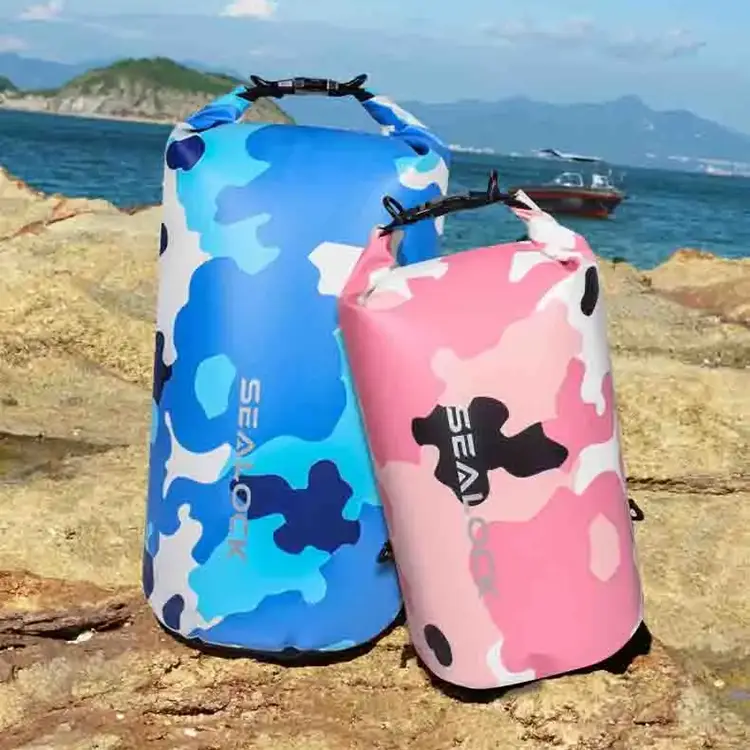
Dry-Wet Separation Dry Bag | Removable inner wet pouch, 23 by 27 cm | 10 and 20 litres | Eco-friendly PVC roll-top with inner sealing film, IPX7, shoulder, backpack or hand carry, camouflage prints | 300 pcs |
|
SL-D693 | Fixed dry-wet separation with transparent window | 15 and 20 litres, 53 by 36 and 57 by 38 cm | 500D PVC tarpaulin roll-top, IPX7, detachable strap, POM buckle, yellow or black | 300 pcs |
|
SL-C878 | Sealed main compartment for wet kit, welded front pocket for dry items | 20 litres, 41.5 by 25 by 19 cm, 0.75 kg | Welded 840D TPU, airtight zipper, smooth welded TPU lining, reinforced standing base, IPX7 | 300 pcs |
Standard Terms
Samples take 7 to 15 days on existing models with your logo. Bulk production typically takes 30 to 45 days after sample approval. Prices are quoted FOB Guangdong for China origin, with Vietnam origin quoted on request. Sealock has over 20 years of manufacturing experience in welded and sewn waterproof bags, and ground-up development from a sketch, sample or target specification is fully supported, with the longer timeline stated at quotation. For related designs, see our article on floating dry bags and buoyancy design.
Frequently Asked Questions
Why does my swim bag smell?
Damp fabric sealed in a closed compartment grows odour and mildew. Empty the wet side after every use, rinse it and leave it open to dry. A removable wet pouch makes this much easier.
Will the wet side leak into the dry side?
Not on a welded compartment, which has no stitch holes for water to wick through. Sewn bags with a lining can leak when the lining fails.
Why did the zipper on my pool bag stop working?
Chlorine and salt corrode standard metal zippers. Roll-top closures, coated waterproof zippers and plastic hardware last much longer around pools.
Is the wet pouch big enough for a towel?
Our standard inner pouch is 23 by 27 centimetres, sized for swimwear, goggles and a small towel. Larger pouches can be made to order.
Can it be used for cloth nappies?
The construction works well for nursery wet bags. For baby products we recommend TPU or phthalate-free materials and children's product testing for your market.
How should I clean a wet-dry bag?
Rinse with fresh water, wash with mild soap if needed, and air dry fully open in the shade. Do not machine wash or tumble dry.
Request a Quote for Wet-Dry Separation Bags
Send us your design or reference model, sizes, quantity, colours, logo file and target market, and tell us whether the bags are for swim, gym, beach, travel or nursery use. We will reply within 24 hours with a construction recommendation, an FOB price and a sample timeline. Contact Sealock about wet-dry bags, or email info@sealock.com.hk.