
- English
- Español
- Português
- русский
- Français
- 日本語
- Deutsch
- tiếng Việt
- Italiano
- Nederlands
- ภาษาไทย
- Polski
- 한국어
- Svenska
- magyar
- Malay
- বাংলা ভাষার
- Dansk
- Suomi
- हिन्दी
- Pilipino
- Türkçe
- Gaeilge
- العربية
- Indonesia
- Norsk
- تمل
- český
- ελληνικά
- український
- Javanese
- فارسی
- தமிழ்
- తెలుగు
- नेपाली
- Burmese
- български
- ລາວ
- Latine
- Қазақша
- Euskal
- Azərbaycan
- Slovenský jazyk
- Македонски
- Lietuvos
- Eesti Keel
- Română
- Slovenski
- मराठी
- Srpski језик

Dry Bag Manufacturing Process: From Material Cutting to RF Welding
Sealock manufactures dry bags for OEM and wholesale buyers using 27.12 MHz radio frequency welding, and the process is worth understanding because it explains why two bags built from identical fabric perform completely differently. A dry bag's waterproofing is not bought with the material — it is created on the production line, at the moment the seams are welded. This walks the full manufacturing sequence, with the technical detail that decides whether the seam holds.
1. Stage One: Material Staging and Cutting
Production starts with rolls of coated fabric — PVC tarpaulin or TPU-laminated nylon — staged and checked before anything is cut. Incoming inspection matters here because coating inconsistency, moisture in the material, and variation between dye lots all affect what happens later at the welding station.
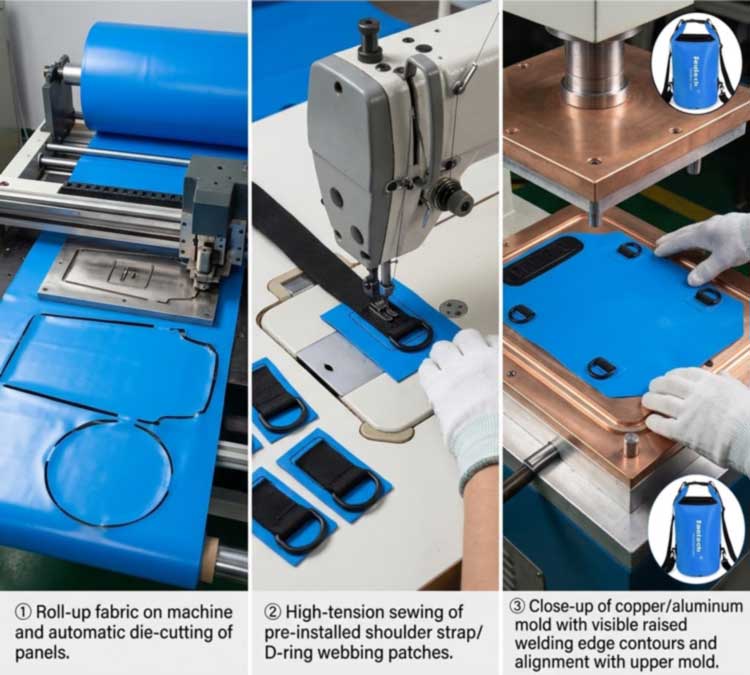
Panels are then stamped from the roll by an automated cutting press to the exact design dimensions. Cutting precision is what keeps a bulk run uniform: a panel cut a few millimetres off spec will not seat correctly under the welding die, and the weld line drifts with it. This is also where material efficiency is set, since panel nesting determines how much of each roll becomes product rather than offcut.
2. Stage Two: Pre-Assembly of Load-Bearing Parts
Before anything is sealed, high-tension industrial sewing attaches the load-bearing elements — shoulder harnesses, D-ring webbing patches, external pockets, and reinforcement panels — onto the flat panels.
The sequence here is deliberate and it is one of the details that separates a properly engineered bag from a cheap one: stitching happens before the waterproof seal is formed, so no needle ever penetrates the finished waterproof membrane. Anything that must attach to the sealed body afterwards — D-rings, MOLLE anchors, valves — is welded onto reinforcement patches instead of sewn through the skin.
3. Stage Three: Die Setup
Each bag geometry requires its own tooling. The weld pattern is translated into a custom die — typically machined brass or aluminium — with raised edges that define the exact shape of the welded seam. The die is set on the platen and aligned to the panel.
Die design does more than shape the seam. Raised edge profiles can be machined to produce a tear-seal, where the weld and the trim edge form in the same operation, and die condition directly affects results: a die that has lost flatness or picked up contamination gives uneven pressure and energy distribution, which shows up as a weak spot in an otherwise good seam. Tooling capability is also what allows a factory to build a new shape rather than only refill existing moulds — the basis for custom capacities and structures.
4. Stage Four: RF Welding — How the Seam Is Actually Formed
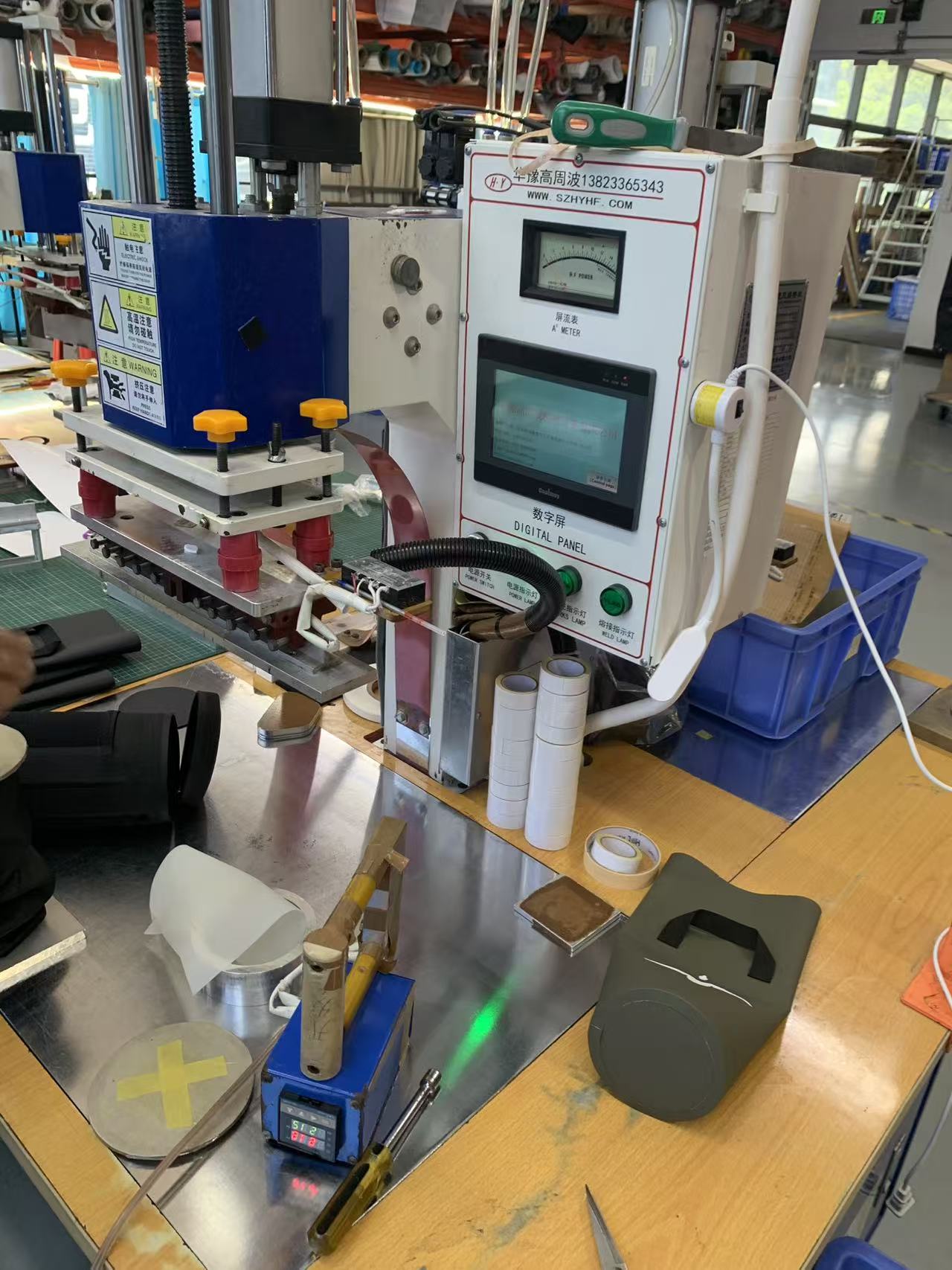
This is the core of the process. Radio frequency welding — also called high-frequency or dielectric welding — joins thermoplastics using an electromagnetic field rather than an external heat source. The sequence has four phases:
- Loading. The panels are placed between the upper die and the lower platen, with the die defining the weld shape.
- Pressure. A clamping force brings the layers into intimate contact — without it, the molten polymer cannot fuse into a single mass.
- RF activation. A generator applies high-frequency energy at 27.12 MHz across the electrodes. The alternating field makes the polar molecules in the material oscillate rapidly, and that internal molecular friction generates heat inside the material rather than conducting it in from the surface.
- Cooling under pressure. Power stops but clamping continues while the seam solidifies. Releasing pressure too early is one of the most common causes of a weak weld.
Because the heat originates within the material, both layers reach fusion temperature simultaneously and bond into one continuous mass with no adhesives, solvents, or thread. A correctly executed RF weld is typically as strong as the parent material — and it is why the seam is not the weak point in a properly built dry bag.
5. Why RF Welding, and What It Cannot Weld
RF welding only works on polar thermoplastics — materials whose molecules respond to an electromagnetic field. That includes PVC, PU and TPU, TPU-coated fabrics, EVA, and certain grades of PET and nylon. Non-polar polyolefins such as polyethylene and polypropylene absorb RF energy poorly and cannot be RF welded without RF-reactive coatings or tie layers; they need hot-air, hot-wedge, or impulse methods instead.
That material dependency is a specification issue, not a trivia point: it is one reason PVC and TPU dominate the dry bag category. For these materials, RF produces a stronger seam than hot air, hot wedge, or impulse welding, which is why it is the standard for airtight and liquid-tight products across industries — from truck covers and inflatables to medical fluid bags, where a hermetic seal is not optional.
6. The Parameters That Decide Weld Quality
A weld is the product of four settings, validated for each material and thickness rather than set once and forgotten:
| Parameter | What it controls | Failure mode if wrong |
|---|---|---|
| RF power | Rate of internal heating across the seal area | Too low: incomplete fusion. Too high: burn-through, thinning |
| Dwell time | How long energy is applied | Short: cold weld. Long: material degradation |
| Pressure | Intimacy of contact between layers | Low: voids and channels. Excessive: squeeze-out and a thin, brittle seam |
| Cooling time | Solidification under clamp | Released early: the seam pulls apart before it sets |
As a reference point for scale, sealing thin PVC film with a few seconds of weld and cooling time draws on the order of a few hundred watts over the seal area — heavier tarpaulins and multi-layer laminates need substantially more. Several material variables shift these settings: plasticizer level in PVC, moisture content, pigments and fillers, fabric weave, and film thickness all change how the material absorbs energy. This is why a colour change or a new fabric batch is not automatically neutral to the process, and why welds are re-qualified rather than assumed.
7. Stage Five: Cooling, Trimming, and Final Assembly
Welded panels move to a dedicated cooling zone so the bond sets without distortion, then the bag is trimmed of flash and turned. Final assembly fits the components that complete the product: roll-top closures and buckles, zippers where specified, straps, handles, purge valves, and transparent window panels — which are themselves welded into the body as part of the same continuous skin. Hardware that carries load is attached at welded reinforcement patches, keeping the waterproof membrane unpierced.
8. Stage Six: Testing Before It Ships
The welded seam is verified rather than assumed. At run start, peel tests are pulled on sample welds to confirm the parameter set is producing full fusion — the failure mode itself is diagnostic, since a seam that peels cleanly at the interface indicates insufficient bonding, while one that tears through the base material shows the weld is stronger than the fabric around it.
Finished bags then go through full water immersion testing against the stated IPX rating, alongside a laboratory suite covering load testing over 1,500 cycles on handles and anchors, 3,000 sealed-zipper cycles on zippered models, tensile and bonding strength, salt spray, friction resistance, colour fastness, and colour difference. Every batch runs three-stage control — IQC on incoming fabric and hardware, IPQC on welds and processes in line, OQC with AQL sampling, batch immersion testing, and signed gold-sample comparison — with SGS or QIMA inspection available, under the quality standards applied across every production run.
9. Why Welded Beats Sewn-and-Taped
A sewn seam pushes a needle through the waterproof layer thousands of times, then relies on tape to cover the holes. Tape lifts with flexing, age, heat, and abrasion, and once it does, every needle hole is an entry point. A welded seam has no holes to cover — the coated layers are fused into one material. For any bag that must survive immersion rather than light rain, this is the deciding difference, and it is why welded construction is the baseline for genuine waterproof products regardless of how good the face fabric is.
10. Products Built on This Process
Models produced on the same welded process, organized by type rather than priority:
| Image | Model | Capacity | Material | Rating | Product Page |
|---|---|---|---|---|---|
|
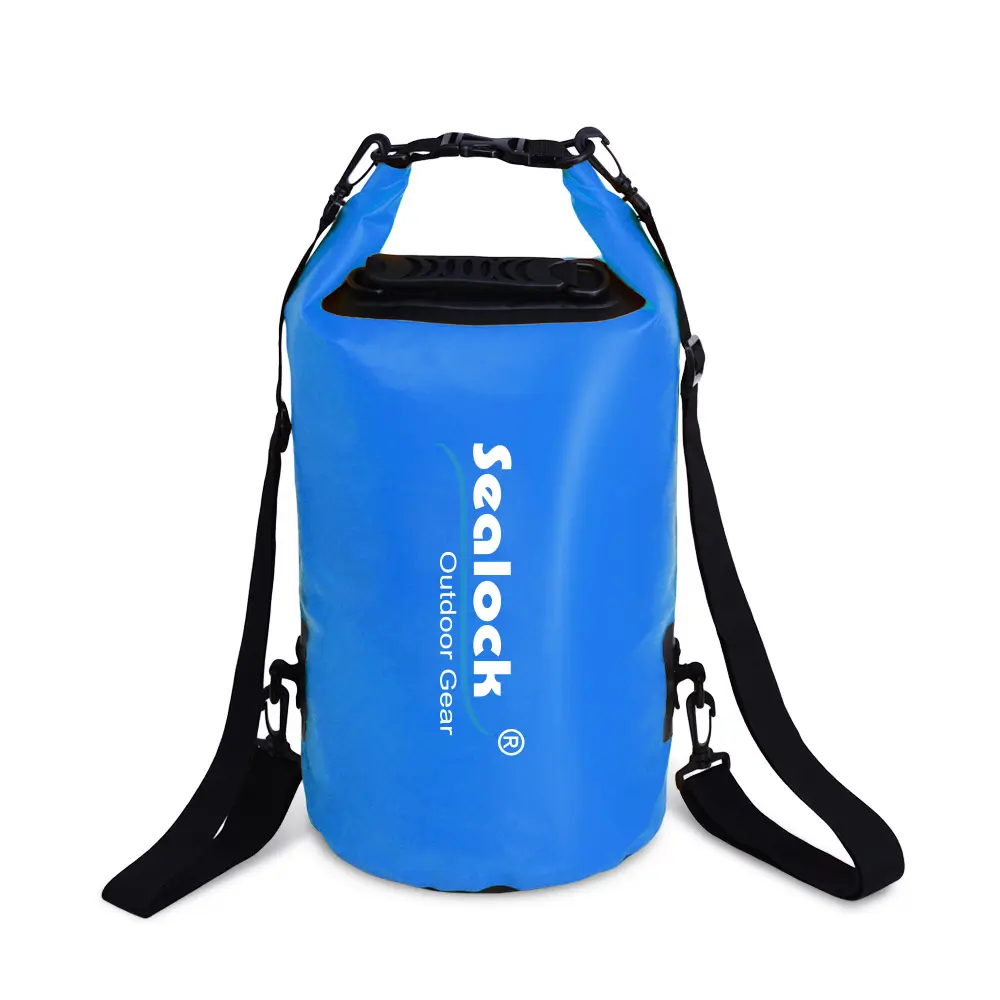
SL-D002 Dry Bag | 5–63L | 0.5 mm 500D PVC | IPX7 | View |
|
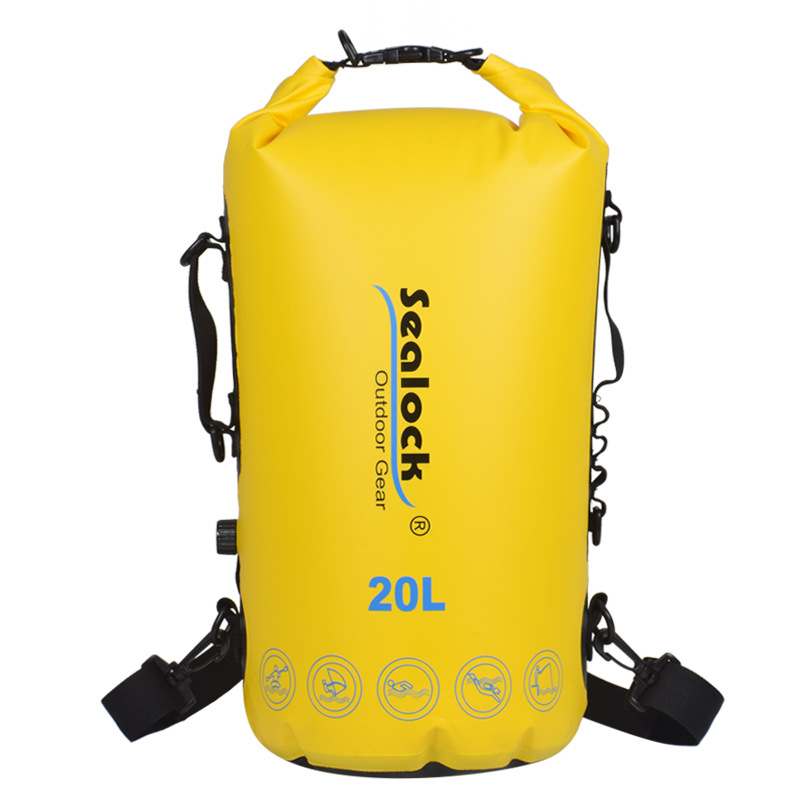
SL-E102 Backpack Dry Bag | 15 / 20L | 500D PVC, dual seal | IPX7 | View |
|
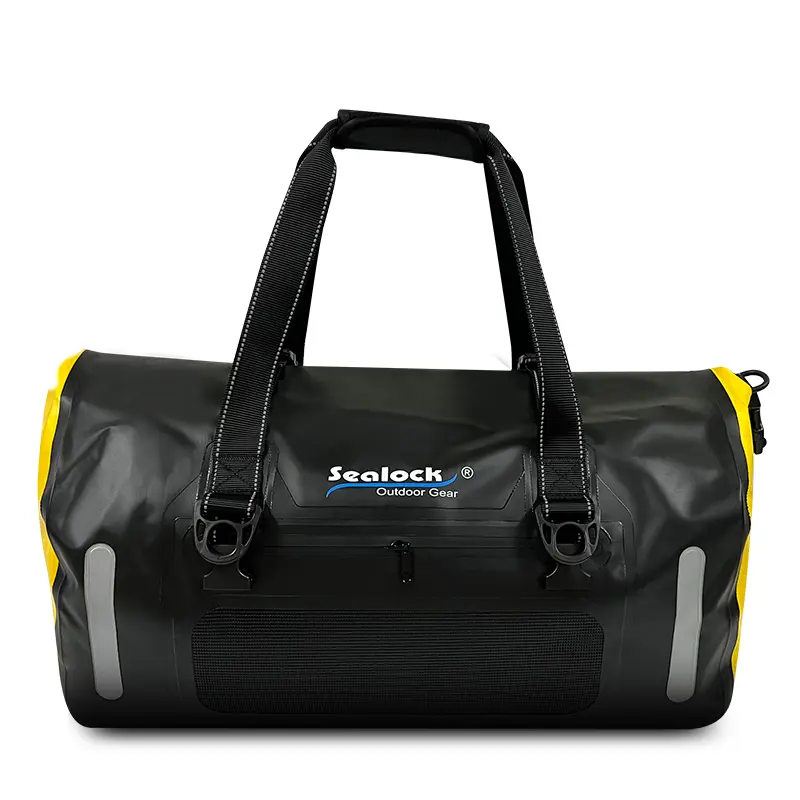
SL-K099 Duffel | 40 / 60L | 840D TPU | IPX7 | View |
|
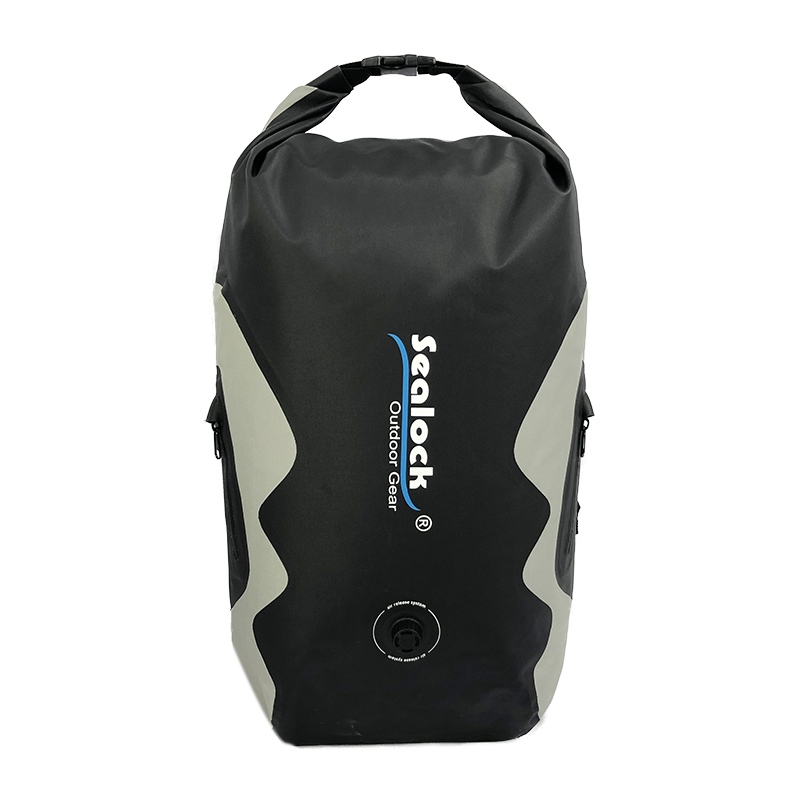
SL-E070 Dry Backpack | 25L | 420D TPU | IPX8 | View |
|
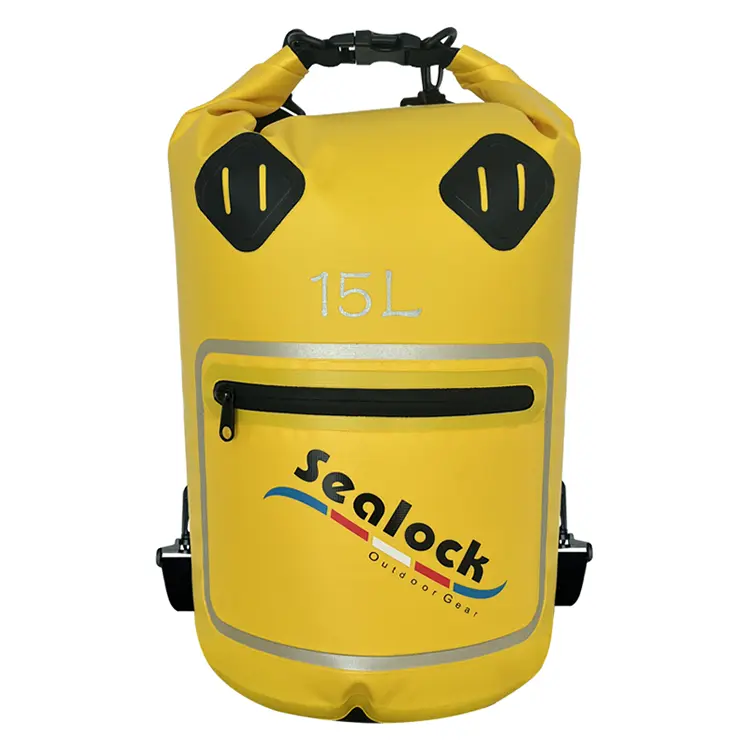
SL-D693 Window Dry Bag | 15 / 20L | 500D PVC + PVC film | IPX7 | View |
|
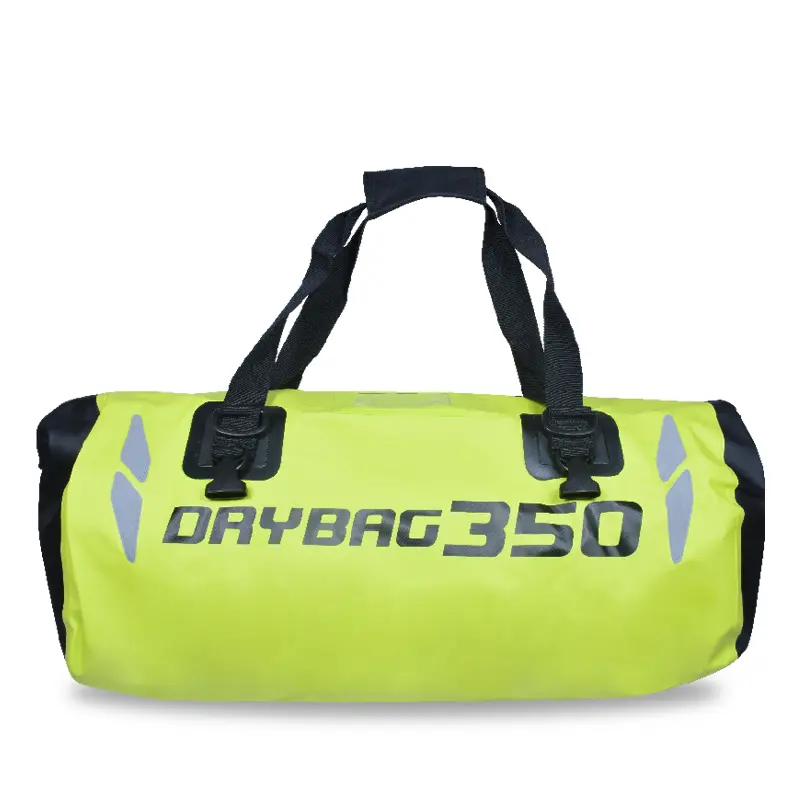
SL-C619 Motorcycle Bag | 35 / 50L | 500D PVC | IPX6 | View |
Full ranges sit under dry bags, dry backpacks, and duffels. Ground-up development from a sketch, sample, or target spec is supported — new geometries mean new tooling, which is part of the standard development path rather than an obstacle. MOQ 300 pcs, samples in 7–15 days, bulk in 30–45 days, from Dongguan, China or Ho Chi Minh City, Vietnam.
11. FAQ
Q: Why can't my polyethylene or polypropylene bag be RF welded?
A: Because those polymers are non-polar — their molecules barely respond to the electromagnetic field, so almost no internal heat is generated. They need RF-reactive coatings or tie layers, or a different method such as hot-air or impulse welding. This is a core reason PVC and TPU dominate welded waterproof bags.
Q: How strong is a welded seam compared to the fabric itself?
A: Correctly welded, the seam is typically as strong as the parent material or stronger. In a peel test, a good weld tears through the base fabric rather than separating at the interface — if the seam peels apart cleanly, the parameters were wrong.
Q: We changed colour and the welds started failing — why would that happen?
A: Pigments and fillers change how the material absorbs RF energy, as do plasticizer level, moisture content, and thickness. A new colour or fabric batch can require a different power, dwell, or pressure setting. Welds should be re-qualified with peel tests at the start of the run, not carried over on the assumption that "same material" means "same settings."
Q: Is a taped seam ever acceptable on a waterproof bag?
A: For light rain protection it can work, but not for immersion. Stitching perforates the waterproof layer thousands of times and the tape covering those holes lifts with flexing, heat, and age. If the specification says submersible, it has to be welded.
Q: Why does a custom bag shape add cost and lead time?
A: Each geometry needs its own machined die, which is a one-time tooling cost and a lead-time step before sampling can begin. It is the same reason a new shape carries a higher minimum than a colour change on an existing model.
Q: Can different materials be welded to each other?
A: Compatible polar materials can be — a transparent PVC film window welded into a PVC tarpaulin body is a routine example. Mixing dissimilar polymers, or a polar with a non-polar material, is where bonds fail, so material pairing is confirmed at the sampling stage.
Request a Process Walkthrough or Samples
For a video walk of the welding line, weld test data, samples, or a full OEM/ODM proposal, submit an inquiry. Sealock responds to procurement enquiries within 24 hours.