

1. What TPU Is, and Why the Construction Differs
TPU (thermoplastic polyurethane) is a thin, non-porous film laminated to a base fabric of nylon or polyester by heat, creating a continuous waterproof barrier across the surface. The distinction that matters for buyers: TPU is heat-laminated without adhesives that degrade over time, whereas PVC is a thicker plasticized coating, and PU is a lighter coating typically used on entry-level, rain-resistant rather than submersible bags. The base fabric still carries the strength and denier; the TPU layer carries the waterproofing and the material's defining properties. Welded to seamless construction, TPU maintains a waterproof seal even under pressure or temporary immersion.
2. The Material Advantages, With the Numbers
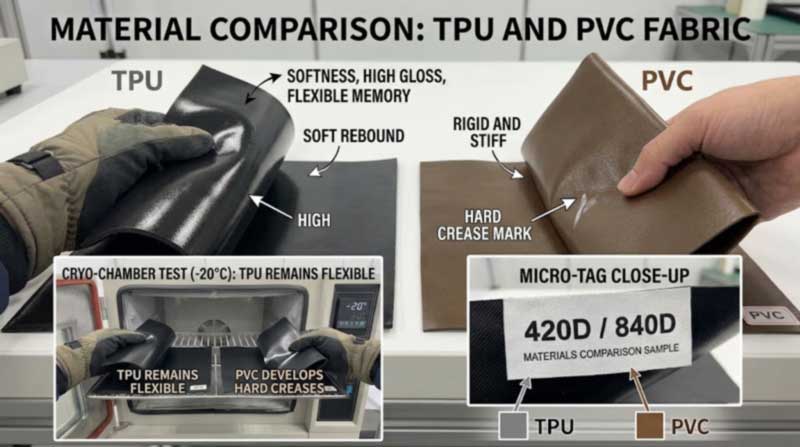
TPU's premium positioning rests on measurable properties rather than marketing. Against PVC, the standard comparison point in the category:
| Property | TPU laminate | PVC coating |
|---|---|---|
| Tear strength | Higher — roughly 50–100 N/mm | Roughly 20–40 N/mm |
| Cold flexibility | Stays flexible to around −50°C | Stiffens, turns brittle below about −20°C |
| UV endurance | Holds up beyond ~2,000 hours exposure | Begins breaking down at ~500–1,000 hours |
| Outdoor service life | Around 3–5 years typical | Around 1–2 years typical |
| Chemical resistance | Resists oils, greases, many solvents | More easily attacked by the same |
| Weight | Lighter film for the same protection | Heavier coating |
| Hand-feel / finish | Soft, smooth, high-gloss — premium | Thicker, stiffer, rugged |
Two of these matter more than the rest for a premium line. Cold flexibility is the field-visible one: testers consistently report a TPU bag is easier to roll and seal one-handed, which is exactly what a paddler standing in cold water notices. And elasticity drives longevity — TPU is naturally elastic and returns to shape after thousands of rolling cycles, while PVC depends on plasticizers that migrate out over time and leave the fabric progressively stiffer.
3. The Odor and Compliance Advantage
The "vinyl" smell buyers get complaints about on PVC gear comes from plasticizers — phthalates or softening agents blended into PVC to make it flexible — migrating to the surface and evaporating, especially in heat. TPU needs no plasticizers, so it is near-odorless in an enclosed bag. That same difference is a compliance advantage: TPU is free of phthalates and chlorine and is recyclable, which positions it for markets with REACH and similar restrictions and for brands with a sustainability claim to protect. For a buyer selling into the EU or to environmentally-positioned retail, this moves TPU from "nicer" to "necessary."
4. Denier: Reading TPU Fabric Correctly
A common sourcing mistake is treating "TPU" as a single spec. TPU is the coating; the number in front — 210D, 420D, 840D — is the base fabric's denier, and it sets abrasion and tear performance. Abrasion resistance is not the coating alone: it depends on base denier, coating thickness, surface, and weld quality together. Practical reading for a spec sheet:
- 210D TPU: lightest, for ultralight and packable premium bags where weight leads.
- 420D TPU: the balanced mid-point — light enough to carry, tough enough for daily outdoor and technical packs.
- 840D TPU: heavy-duty, for duffels and gear that gets dragged, stacked, and abraded.
- Two-denier builds: a lighter body with a heavier 840D base and side panels puts weight only where abrasion demands it.
Sealock builds across this full TPU range, so a brand specifies the denier to the use rather than accepting one house weight.
5. Where TPU Is Worth the Premium — and Where It Isn't
TPU costs more at the material level — roughly in the range of $4–7 per square meter against PVC's $2–4 — and it demands tighter control during coating, welding, and bulk production. That premium is justified where weight, cold performance, longevity, hand-feel, odor, or compliance carry the product: technical packs, expedition and marine lines, cold-climate markets, and premium retail positioning. It is not the right call for every program — for a rugged, cost-driven, budget outdoor line where a thick, structured look is a selling point, PVC remains the sensible choice, and Sealock builds both. The honest framing for a buyer is that TPU raises perceived value and service life, which the premium and mid-premium segments will pay for and the value segment often will not.
6. Sealock TPU Range
TPU models across capacities and use cases, organized by type rather than priority:
| Image | Model | Capacity | TPU spec | Rating / feature | Product Page |
|---|---|---|---|---|---|
|
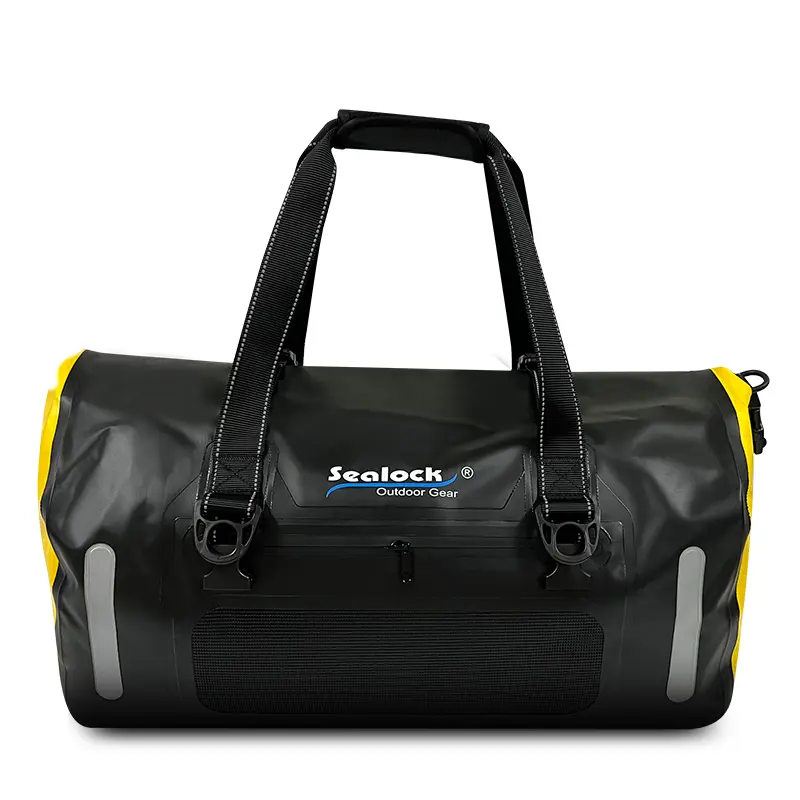
SL-K099 Duffel | 40 / 60L | 840D TPU | IPX7, heavy-duty | View |
|
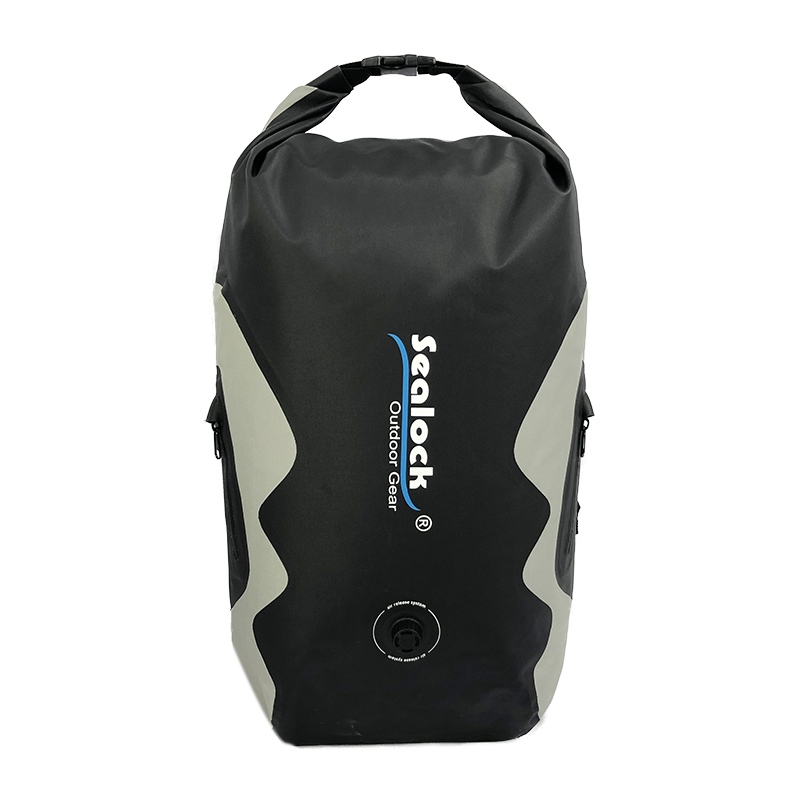
SL-E070 Dry Backpack | 25L | 420D TPU laminated nylon | IPX8, air valve | View |
|
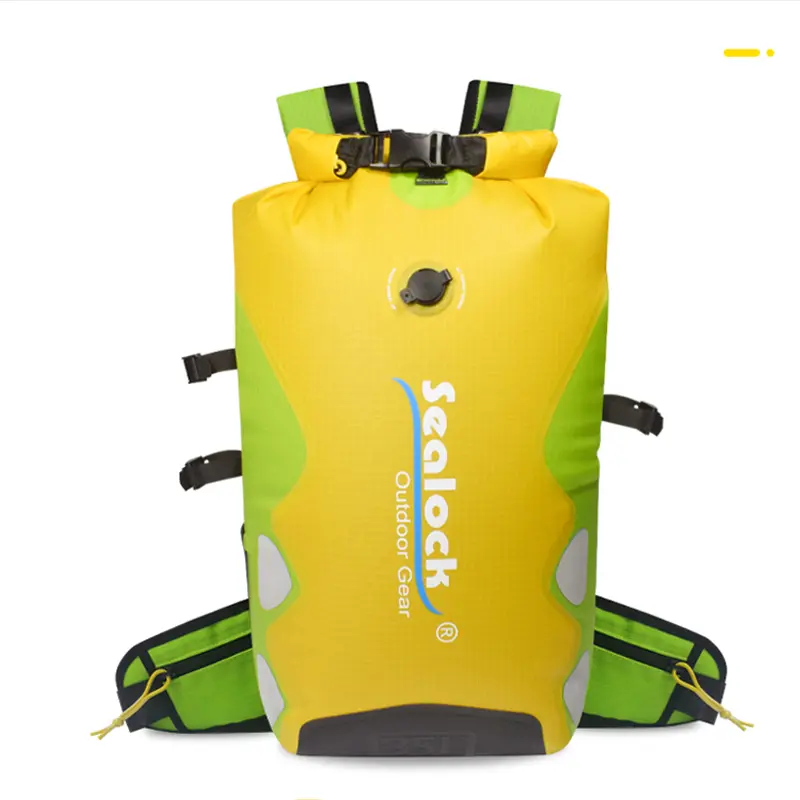
SL-E801 Roll-Top Backpack | 35L | 420D TPU | IPX7, air valve, ergonomic | View |
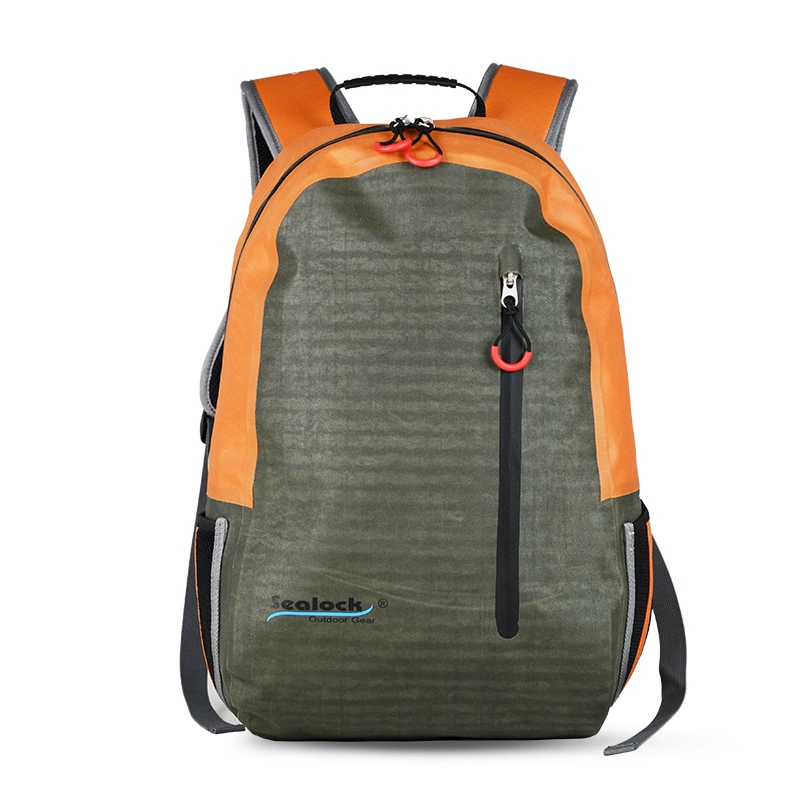
|
SL-E071 Urban Backpack | 22L | 420D TPU | IPX6, laptop sleeve | View |
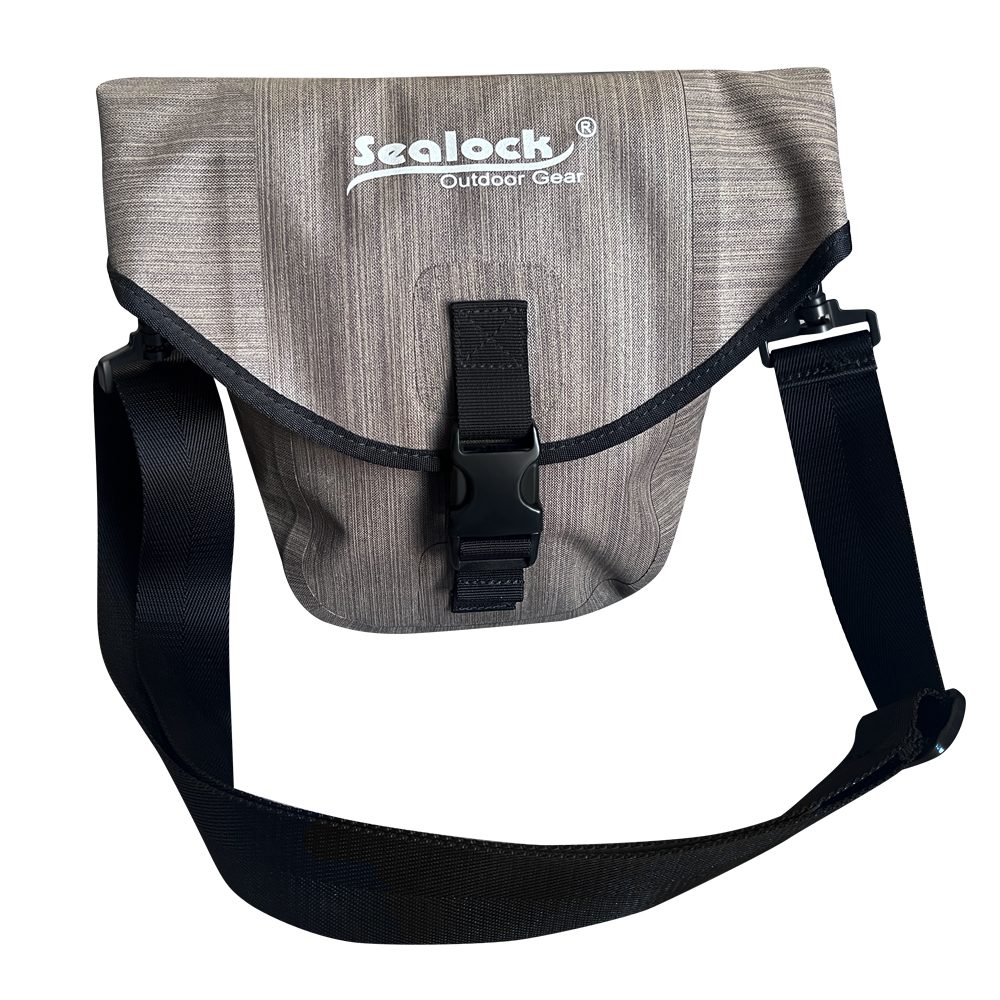
|
SL-H017C Messenger | 8–10L | 600D TPU laminate | IPX5–6, crossbody | View |
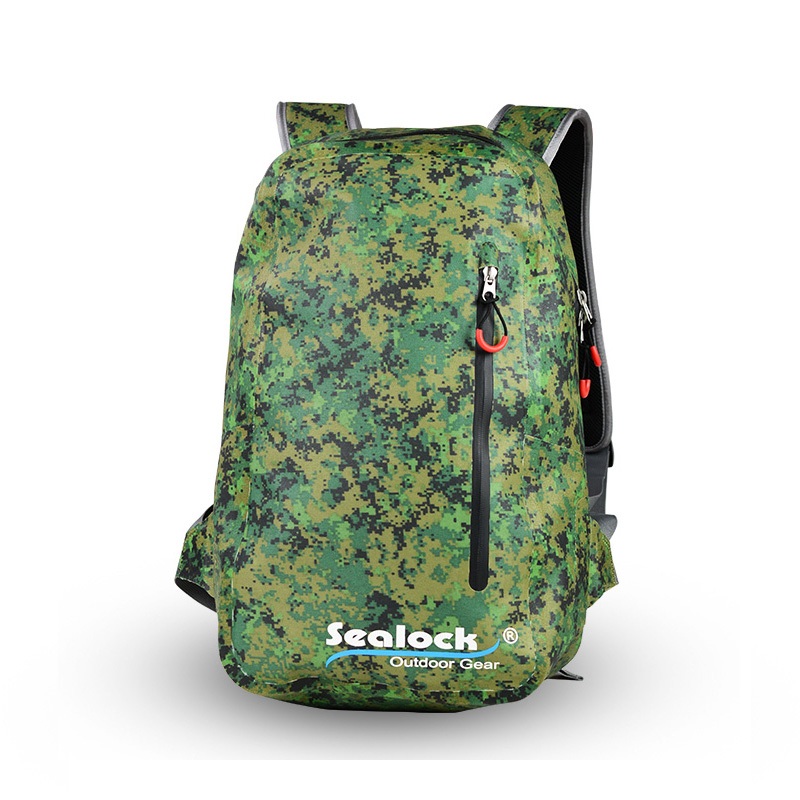
|
SL-E061 Zipper Backpack | 15L | 420D TPU (600D TPU / 500D PVC optional) | IPX6, airtight zipper | View |
Beyond the catalog, Sealock develops ground-up from a sketch, sample, or target spec — capacity, IPX rating, TPU denier, hardware, and structure all to the buyer's requirement. Full ranges sit under dry bags, dry backpacks, and duffels.
7. Manufacturing TPU Correctly
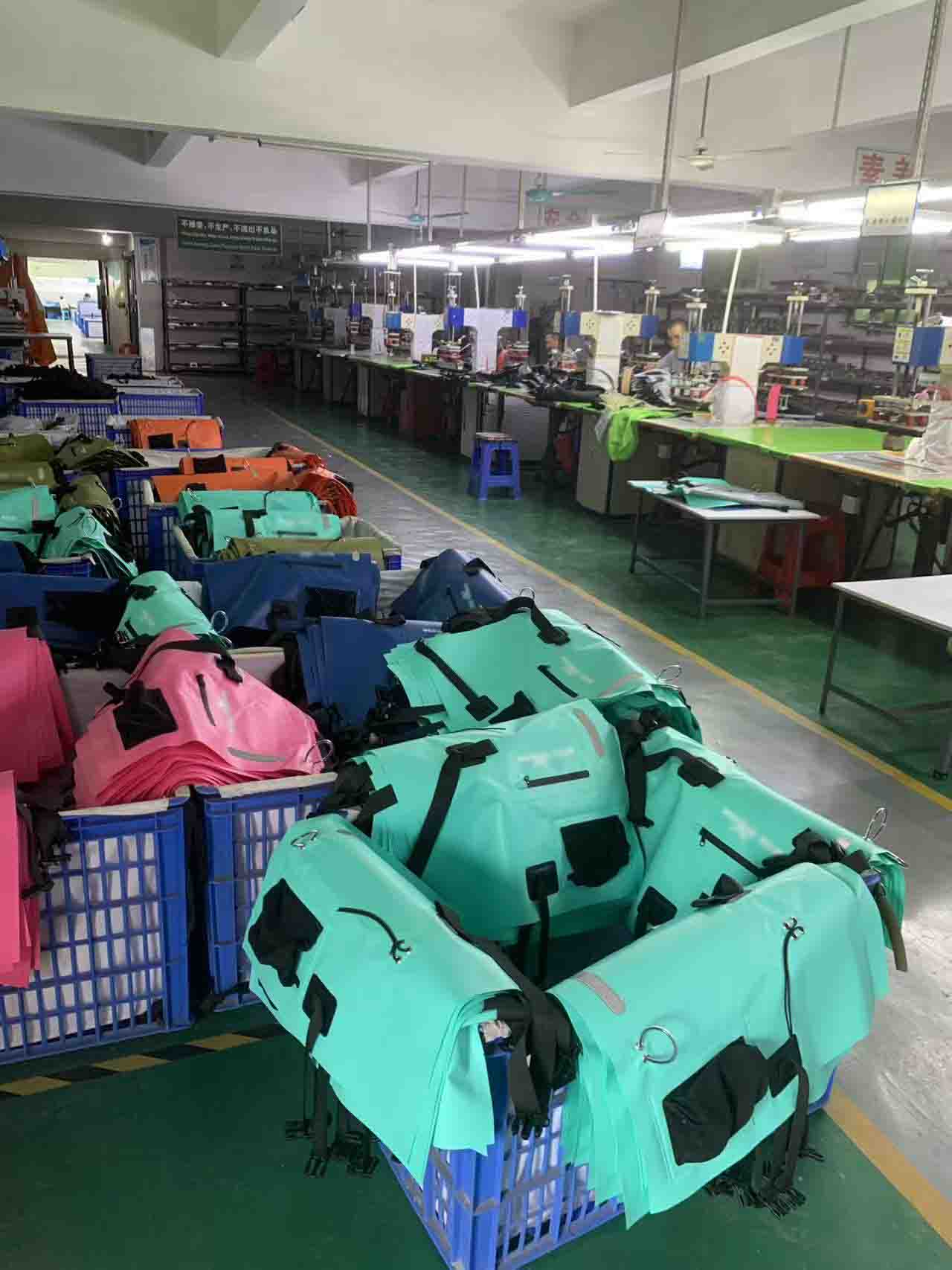
TPU rewards process control, because a laminated film welded badly loses the advantage it was paid for. Sealock welds TPU by 27.12 MHz high-frequency welding into seamless, needle-hole-free seams, then verifies each batch through three-stage control: IQC on incoming TPU-laminated fabric and hardware; IPQC on welds and lamination in line, including peel tests on sample welds at run start; and OQC with AQL sampling, batch immersion testing, and signed gold-sample comparison. The laboratory suite covers full water immersion, a load test of over 1,500 cycles, 3,000 sealed-zipper cycles on zippered models, tensile and bonding strength, salt spray, friction resistance, color fastness, and color difference. Bonding strength is watched closely on TPU, since the lamination and weld are where a premium material is won or lost. Compliance is backed by ISO 9001, BSCI, SMETA, HIGG, GRS, and SCAN, with production from Dongguan, China or Ho Chi Minh City, Vietnam. MOQ is 300 pcs, samples in 7–15 days, and bulk in 30–45 days.
8. FAQ
Q: Is a TPU dry bag actually more waterproof than PVC, or just lighter?
A: Waterproofing is comparable when both are welded — the seal comes from seamless construction, not the coating type. TPU's real gains are elsewhere: lighter weight, far better cold flexibility, higher tear strength, longer UV and service life, and no plasticizer odor. You pay the premium for durability and usability, not for a higher waterproof number.
Q: Why does "840D TPU" cost more than "840D PVC" if the denier is the same?
A: The denier is the base fabric, which is similar; the price difference is the coating. TPU film and its lamination cost more than a PVC coating — roughly $4–7 vs $2–4 per square meter — and TPU needs tighter control in welding and production. The trade is lower weight, cold performance, longer life, and a cleaner compliance profile.
Q: Does TPU eliminate the chemical smell buyers complain about?
A: Largely, yes. The vinyl smell on PVC comes from plasticizers migrating out of the material; TPU uses no plasticizers, so it is near-odorless in a closed bag — a frequent driver of returns removed at the material level.
Q: Is TPU tough enough for heavy-duty use, or only lightweight bags?
A: Tough enough — TPU's tear strength is higher than PVC's, and abrasion depends on base denier, coating thickness, and weld quality together. Specify 840D TPU, or a heavier base at the wear points, and it handles duffel and expedition duty; the lighter deniers are for packable premium bags.
Q: When should I choose PVC over TPU?
A: For cost-driven, budget outdoor lines where a thick, rugged look is a selling point and the market won't pay a premium. PVC gives reliable waterproofing and structure at lower cost. TPU earns its place on technical, cold-climate, marine, sustainability-positioned, and premium retail lines.
Q: Is TPU compliant for the EU and eco-positioned retail?
A: It is well suited — TPU is phthalate- and chlorine-free and recyclable, which aligns with REACH-type restrictions and sustainability claims. Confirm the specific certifications your channel requires; Sealock can supply the paperwork behind its certifications and arrange testing to a buyer's target standard.
Request TPU Material Specs and Samples
For TPU denier options, material data, samples, or a full OEM/ODM proposal, submit an inquiry. Sealock responds to procurement enquiries within 24 hours, with production available from Dongguan, China or Ho Chi Minh City, Vietnam.