
1. Buy From the Factory, Not Through It
The first cost decision happens before any negotiation. Trading companies advertise very low minimums because they aggregate demand across buyers, but that convenience is priced in — a margin typically layered above factory-direct. A real factory can name its welding equipment and frequency, show the production line, state monthly capacity by category, and answer process questions in depth; a reseller cannot. Sealock welds in-house at 27.12 MHz across roll-top dry bags, dry backpacks, and duffels, with an MOQ of 300 pcs, samples in 7–15 days, and bulk production in 30–45 days.
2. Lock the Terms Before Pushing on Price
Importers who anchor on unit price first usually pay for it elsewhere. Settle these four in order:
- Incoterm. FOB is the standard for China–export sea freight and the most common for bags: the seller delivers to the port and clears export, while the buyer controls the forwarder, the carrier, and the freight rate. CIF/CNF shifts freight booking to the seller — simpler for a first shipment, but the seller's freight margin is built in and carrier choice is lost. EXW gives maximum control and the lowest seller price, but requires a forwarder able to handle China-side collection and export clearance. A practical path: start with CIF/CNF while learning the destination port, then move to FOB once a forwarder relationship exists.
- Payment terms. The market standard is 30% deposit by T/T with the 70% balance after inspection but before the bill of lading is released. Never pay 100% upfront to a new supplier; for very large orders a letter of credit is the safer instrument.
- Lead time. Confirm production lead time separately from transit, and add buffer around Chinese New Year, when factories close. Sealock quotes 30–45 days for bulk, with sampling ahead of it.
- The pro forma invoice. Get the agreed SKU, specification, material, quantity, price, Incoterm, payment schedule, and lead time onto a signed PI. That document is the contract if anything goes wrong.
3. Model Landed Cost, Not FOB
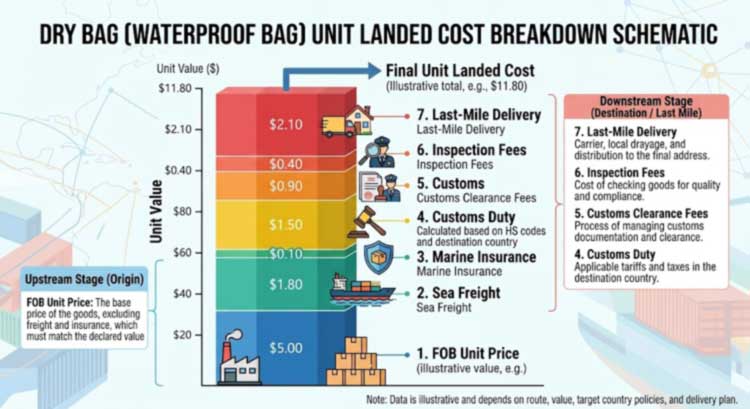
The most common bulk-buying error is budgeting FOB plus freight and calling it done. The real formula runs: supplier price + freight + insurance + import duty + customs and brokerage fees + inspection + last-mile delivery. Duty is charged on the customs value, and bags are classified under HS heading 4202 — the commodity code should be confirmed before the order is placed, since it sets the duty rate and the compliance obligations, and a wrong code stalls clearance at the port. Experienced importers apply a buffer multiple to FOB rather than trusting a thin margin, and add a currency buffer on top. Freight mode matters too: sea is the default for volumetric goods like bags, with an FCL becoming more economical than LCL as volume grows.
4. Make Inspection the Release Trigger
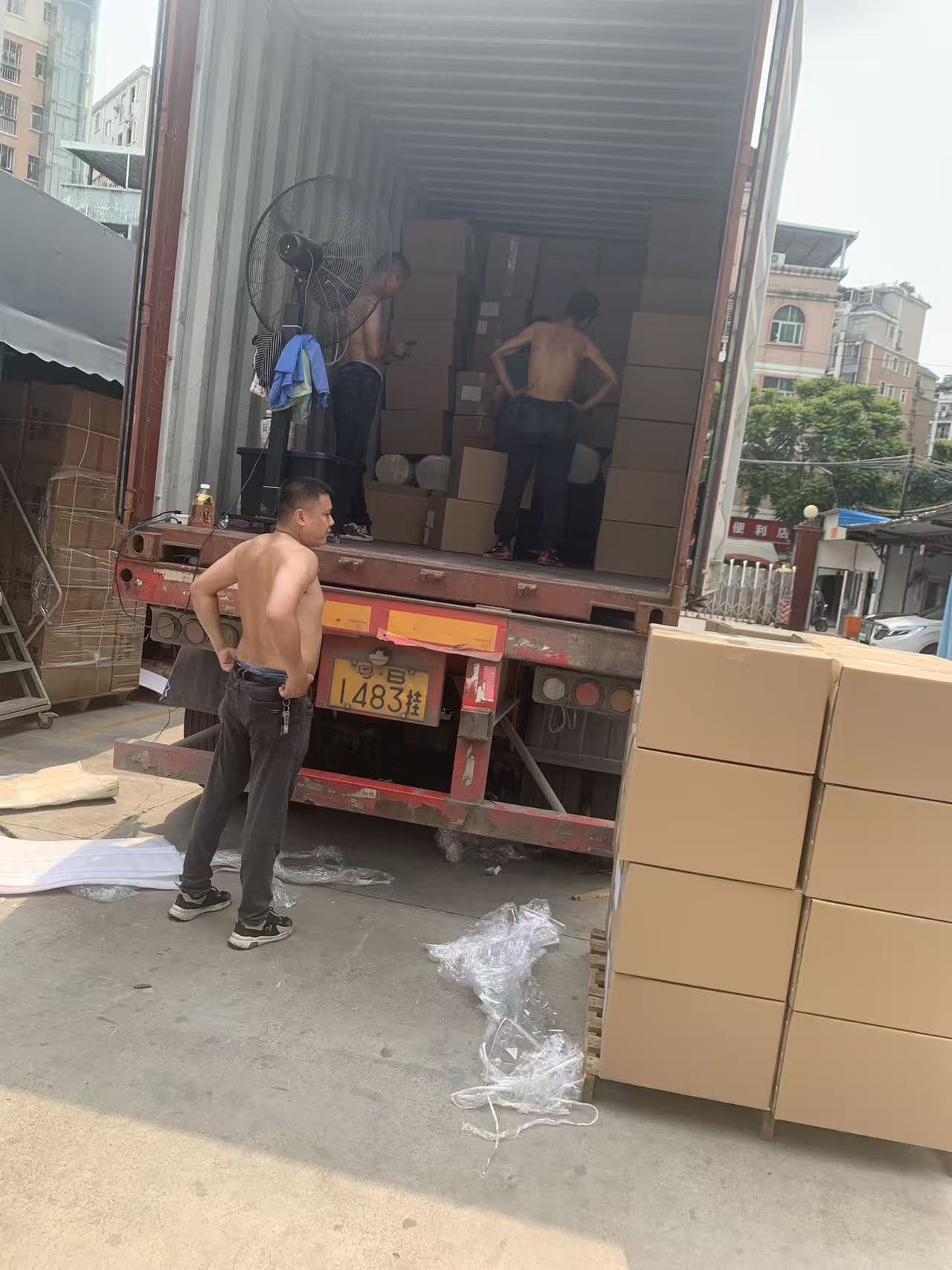
A gold sample being perfect says nothing about the production run — this is where importers lose money. The discipline that prevents it is simple: tie the 70% balance to a passed pre-shipment inspection, not to a promise. Book a third-party inspection with SGS, QIMA, Bureau Veritas, or Intertek; a standard consumer-goods inspection runs about one man-day, and the report becomes the release trigger. No report, no balance payment.
On a dry bag order specifically, the inspection should cover the function, not just the appearance: weld and seam consistency, roll-top or zipper closure function, a water immersion check against the claimed rating, strap and handle pull strength, buckle strength, logo adhesion, color consistency against the approved standard, finished size and usable capacity after closure, and packing. Sealock runs its own three-stage control ahead of any third-party visit — IQC on incoming fabric and hardware, IPQC on welds in line, and OQC with AQL sampling, batch immersion testing, and signed gold-sample comparison — so a buyer's inspector is confirming a result rather than discovering a problem.
5. Get the Waterproof Claim Right Before You List It
Bulk buyers inherit the warranty risk of whatever the listing claims. A splash-and-rain bag should not be marketed to the same standard as a submersible one — overstating performance drives returns and complaints. Confirm in writing which IPX level applies to the model ordered, and match the retail copy to it. Two other specification traps worth closing on a wholesale order: rated capacity is measured open, so a roll-top holds less once folded shut — ask for size before closure, after three rolls, and the recommended usable volume — and load-bearing hardware is a separate problem from waterproofing, since a fully sealed bag can still fail at an under-built strap.
6. Origin Flexibility and Tariff Exposure
For importers into tariff-sensitive markets, country of origin is a live commercial lever rather than a footnote. Sealock operates facilities in Dongguan, China and Ho Chi Minh City, Vietnam, so a bulk program can be routed through either origin to suit a buyer's duty position — an option a single-country supplier cannot offer. Because duty rates and trade measures change, an importer should verify the current rate against the correct commodity code for the destination market at the time of ordering rather than relying on a figure quoted in a previous season.
7. Wholesale Range and Volume Pricing
Bulk pricing improves as setup cost spreads across more units, so a wholesale program is usually built around a few high-turnover sizes rather than a wide, thin range. Representative models available for bulk order, organized by type rather than priority:
| Image | Category | Model | Capacity | Material / Rating | Product Page |
|---|---|---|---|---|---|
|
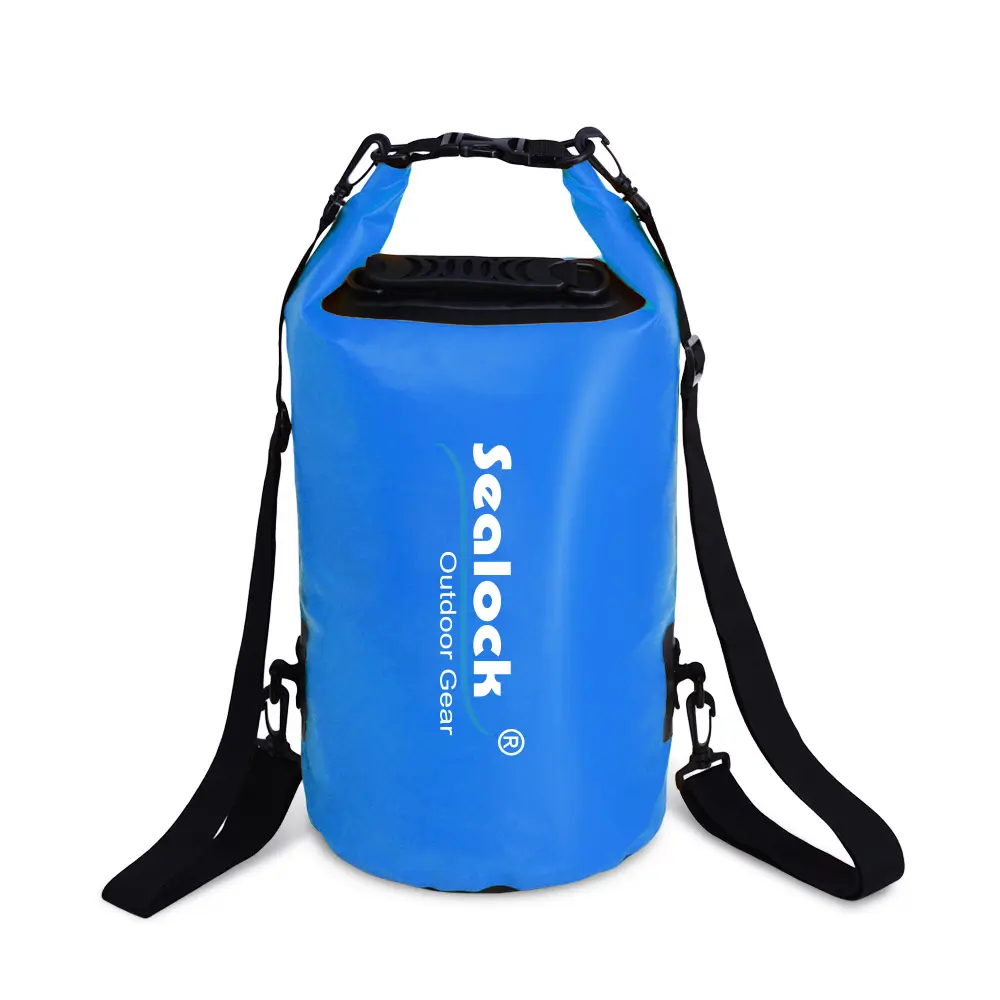
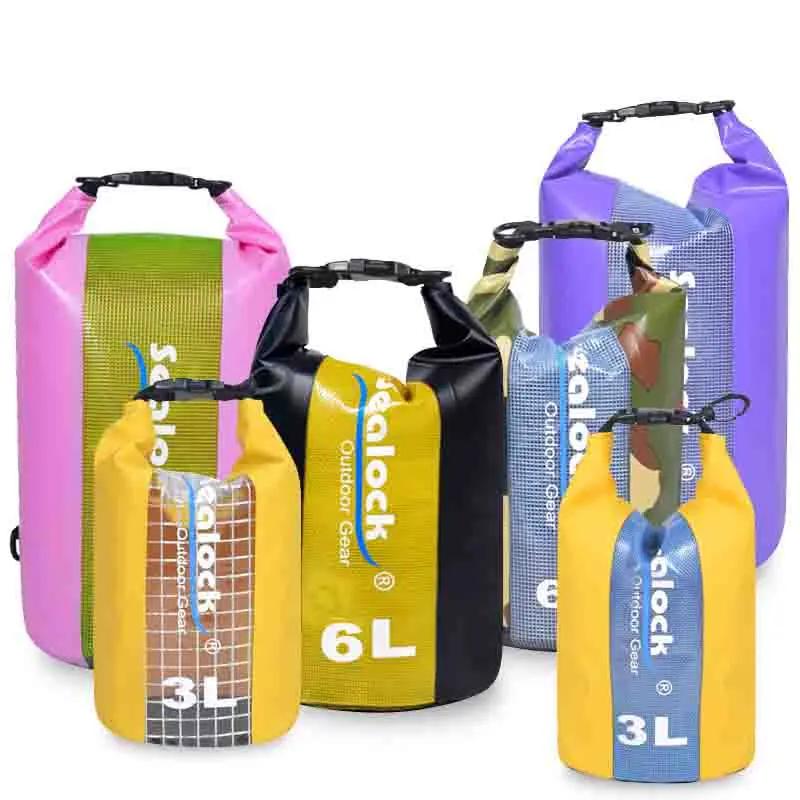
Roll-top dry bag | SL-D002, UTX buckles | 5 / 10 / 15 / 20 / 63L | 500D PVC · IPX7 | View |
|
Window dry bag | Clear Window Dry Bag | 3 / 6 / 10L | PVC · roll-top | View |
|
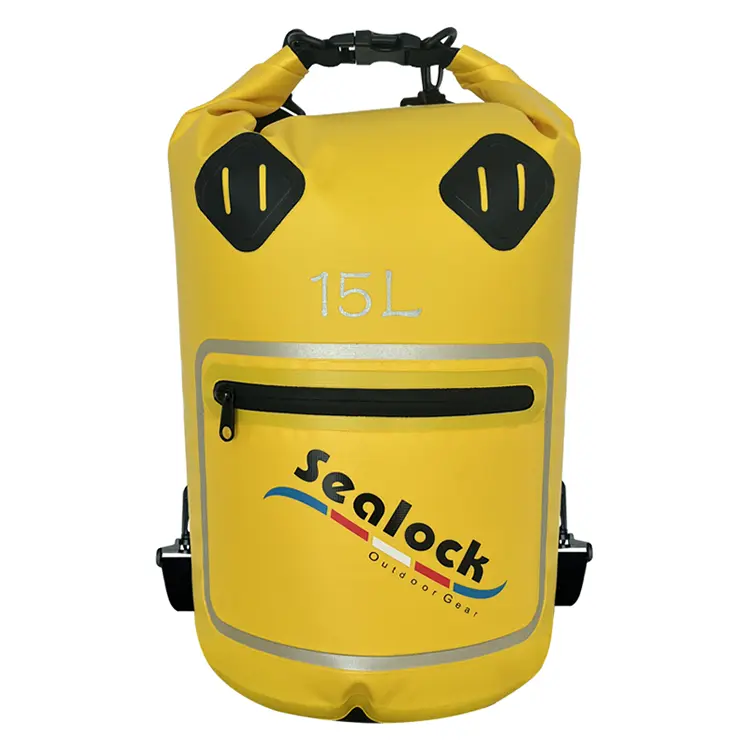
Dry/wet separation | SL-D693 | 15 / 20L | 500D PVC · IPX7 | View |
|
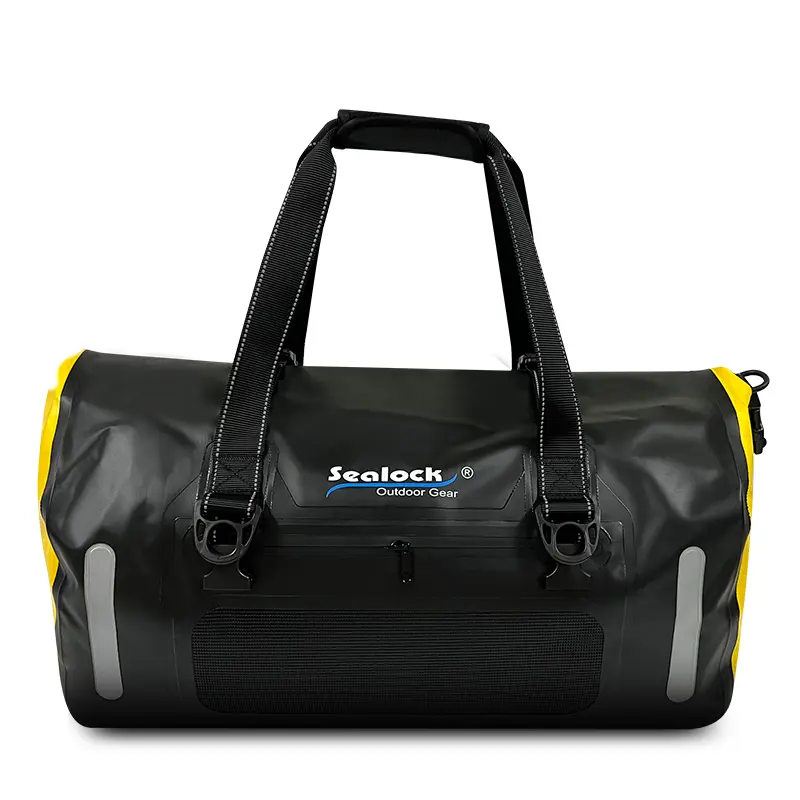
Waterproof duffel | SL-K099 | 40 / 60L | 840D TPU · IPX7 | View |
|
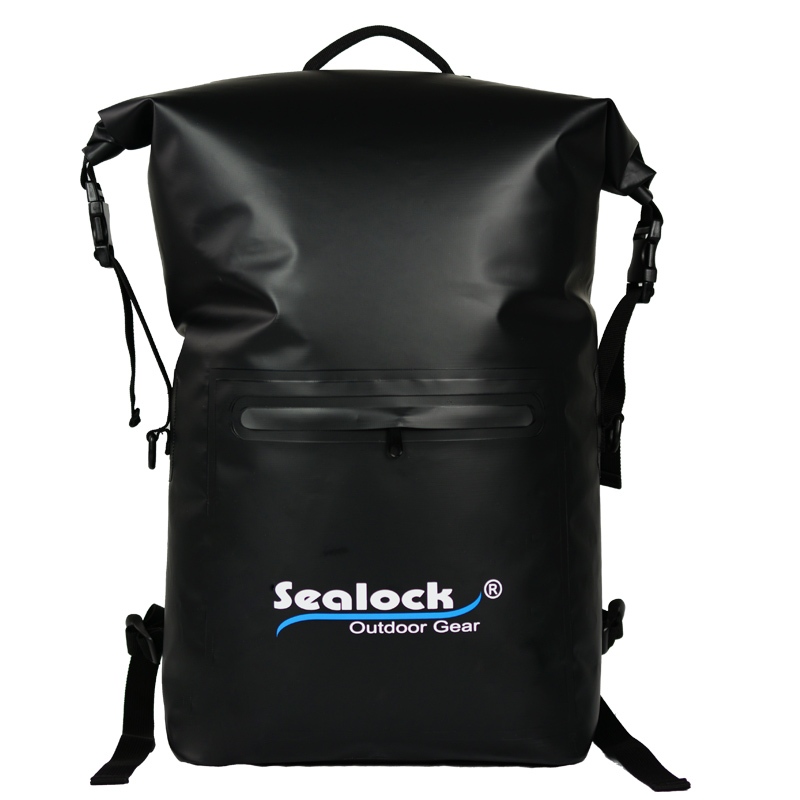
Dry backpack | SL-E036 | 30L | 500D PVC · IPX6 | View |
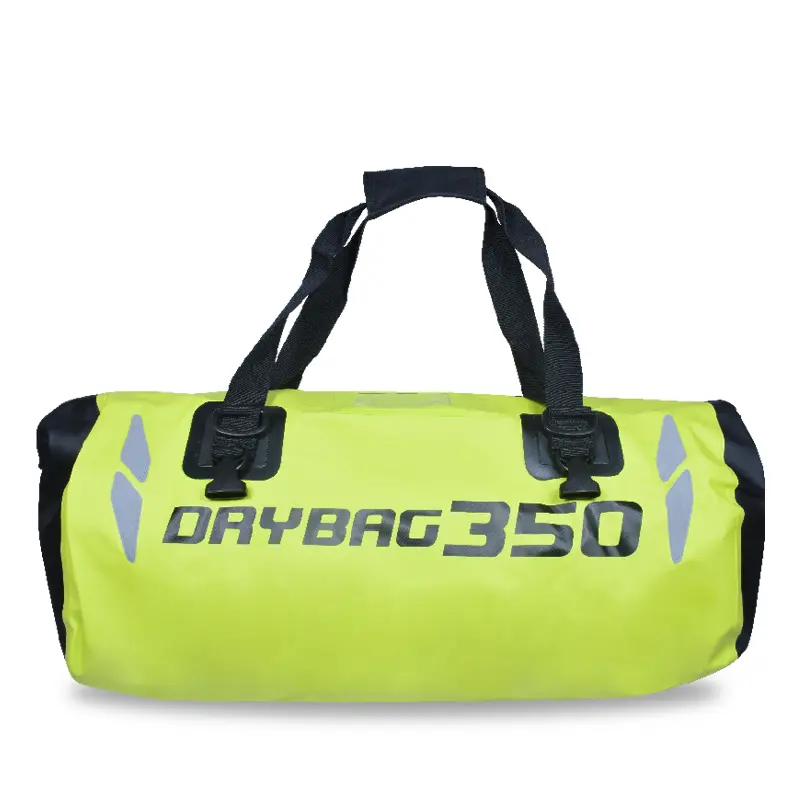
|
Motorcycle luggage | SL-C619 | 35 / 50L | 500D PVC · IPX6 | View |
Wholesale orders ship with logo and Pantone-matched color if required, and packaging is matched to the channel — polybag and carton marks for pure wholesale, or hangtags, barcode labels, and color boxes for retail and e-commerce resale.
8. The Bulk Order Sequence
- 1. Define SKUs, sizes, colors, and target quantity per SKU; confirm the commodity code for the destination market.
- 2. Request a quotation with Incoterm, MOQ, lead time, and packaging stated; compare suppliers on the same Incoterm.
- 3. Order and approve samples; hold one signed gold sample each side.
- 4. Sign the pro forma invoice; pay the 30% deposit.
- 5. Production under IQC / IPQC / OQC, 30–45 days.
- 6. Book third-party pre-shipment inspection; release the 70% balance against the passed report.
- 7. Ship, clear customs against the correct code, and reconcile actual landed cost against the model for the next order.
9. FAQ
Q: Should I buy FOB or CIF for a first bulk dry bag order?
A: CIF or CNF is simpler for a first shipment because the seller books the ocean freight, but the freight margin is built into the price and you lose carrier choice. Once you have a forwarder relationship, FOB usually lowers total cost and gives visibility over the freight line. Whichever you pick, compare all quotes on the same Incoterm — otherwise you are comparing different things.
Q: What payment terms are normal, and what should I refuse?
A: 30% deposit by T/T with the 70% balance after inspection and before the B/L is the market standard. Refuse 100% prepayment to a new supplier, and make the inspection report — not a photo or a promise — the trigger that releases the balance.
Q: The sample was perfect but the bulk run wasn't — how do I prevent that?
A: This is the most expensive failure in bulk buying and it is preventable: hold a signed gold sample, write the inspection criteria into the spec before production, and book a third-party pre-shipment inspection tied to payment release. On dry bags, insist the inspection includes an immersion check and strap pull test, not just a look at the print.
Q: Why is my landed cost so much higher than the quoted unit price?
A: Because FOB is only the first line. Freight, insurance, duty on the customs value, brokerage and port charges, inspection, and last-mile delivery all stack on top, and duty depends on a commodity code you should confirm before ordering. Build the full landed-cost model before setting a retail price, not after the container lands.
Q: A trading company quoted a much lower MOQ — is that better?
A: Lower MOQ from an intermediary usually reflects demand aggregated across buyers, with a margin above factory-direct and less control over the process. If your volume supports a factory MOQ — 300 pcs per model here — going direct typically gives a better unit price and lets you resolve a seam or color problem at source rather than through a middleman.
Q: Can I split one bulk order across sizes and colors?
A: Yes, though the MOQ generally applies per model, and custom Pantone colors or special materials can carry their own minimums. Confirm whether the quoted MOQ is per style, per color, or per logo method before assuming a mixed order qualifies.
Request a Wholesale Quotation
For bulk pricing, samples, packaging options, or an origin recommendation for your tariff position, submit an inquiry. Sealock responds to procurement enquiries within 24 hours, with production available from Dongguan, China or Ho Chi Minh City, Vietnam.