
- English
- Español
- Português
- русский
- Français
- 日本語
- Deutsch
- tiếng Việt
- Italiano
- Nederlands
- ภาษาไทย
- Polski
- 한국어
- Svenska
- magyar
- Malay
- বাংলা ভাষার
- Dansk
- Suomi
- हिन्दी
- Pilipino
- Türkçe
- Gaeilge
- العربية
- Indonesia
- Norsk
- تمل
- český
- ελληνικά
- український
- Javanese
- فارسی
- தமிழ்
- తెలుగు
- नेपाली
- Burmese
- български
- ລາວ
- Latine
- Қазақша
- Euskal
- Azərbaycan
- Slovenský jazyk
- Македонски
- Lietuvos
- Eesti Keel
- Română
- Slovenski
- मराठी
- Srpski језик

When the Goods Arrive: Acceptance, Claims and Resolving Quality Disputes
Sealock produces waterproof bags for OEM and wholesale buyers from factories in China and Vietnam, with a signed gold sample held by both sides and pre-shipment inspection tied to the balance payment. Most sourcing guidance stops at the container leaving the factory. What happens if it arrives wrong gets almost no coverage, which leaves buyers improvising in the hours when their position is most fragile. This sets out what to do on arrival, how a claim differs from a complaint, and what outcomes are realistically available.
1. The First Hour Decides Whether You Have a Claim
The most common and costly mistake is treating arrival as a logistics event rather than an evidence event. Buyers move goods into inventory, unpack without recording, resell part of the shipment, or mix it with existing stock — and once that happens, proving the original condition becomes difficult.
If something looks wrong, stop unpacking. Before moving or using the goods:
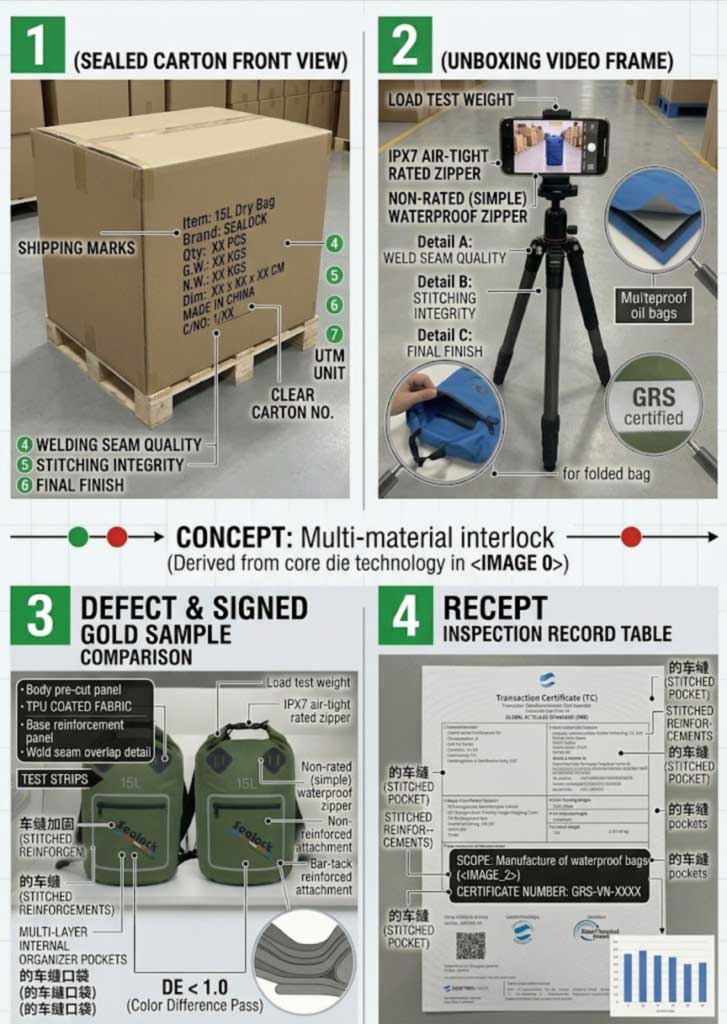
- Photograph the cartons before opening — including shipping marks, carton numbers, and any external damage. Carton condition is what separates a factory problem from a freight problem.
- Record the unpacking. Video is better than stills for showing sequence and condition.
- Compare against the documents — purchase order, pro forma invoice, packing list, and the approved sample specification.
- Quantify. Count how many units are affected out of how many inspected, and from which cartons. A defect rate is a fact; "a lot of them are bad" is an opinion.
- Keep the goods identifiable and unchanged until the position is settled. Do not return, rework, or dispose of anything before agreeing the arrangement in writing.
2. Check Your Reporting Window Before Writing Anything
Read the contract first. A pro forma invoice or sales contract usually carries a defect remedy clause covering what counts as a defect, the reporting window, and what the supplier owes. Some windows run as short as seven days from arrival, and missing one weakens a position that would otherwise be strong.
If testing or a full count will take longer than the window allows, send an initial written notice immediately that reserves your position, then follow it with detailed findings. Months of silent investigation creates a timeliness dispute that is entirely avoidable.
3. Separate Three Different Problems
They look similar on arrival and lead to different remedies and different counterparties:
| Problem | What it means | Who it goes to |
|---|---|---|
| Defective goods | The correct product with quality problems — leaking seams, failed zippers, torn anchors | The factory |
| Wrong goods | Correct quality, but the model, size, material, colour, configuration, packaging, or labels do not match what was agreed | The factory — and this is a contract breach even if the product works perfectly |
| Transit damage | Damage from handling or water ingress in transit, typically in crushed or wet cartons | The carrier or insurer |
The fault line between factory and freight is usually visible in the pattern. A supplier-caused defect is consistent — the same flaw, in the same place, spread evenly through the batch, inside cartons that arrived intact. Transit damage clusters by location in the container and comes with damaged packaging.
4. Raise a Claim, Not a Complaint
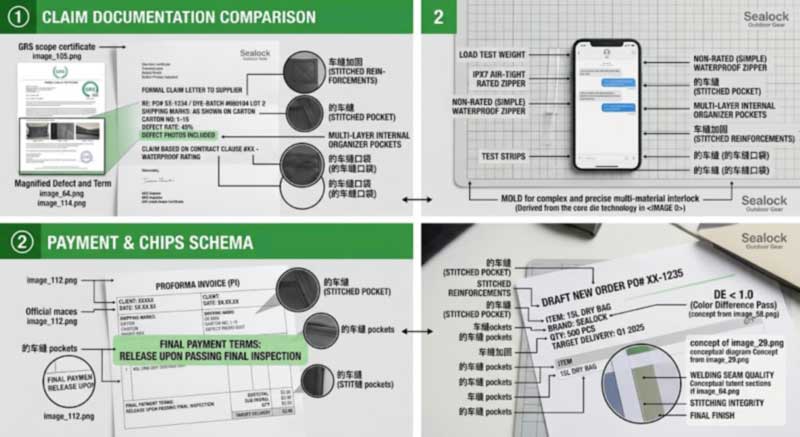
This distinction changes outcomes more than any other single factor. A complaint says the quality is bad. A claim is written, dated, and quantified. It should contain:
- Order number and shipping marks
- Carton numbers affected
- Defect rate — units affected out of units inspected
- Photographs showing the specific defect, and the approved sample for comparison
- The contract clause being invoked
- The remedy requested, and a response deadline
One message, factual, unemotional. Attaching an inspection report and highlighting the specific findings shifts the exchange from relationship negotiation to evidence-based commercial resolution — which is the ground a reasonable factory can act on and an unreasonable one finds hard to argue with.
For waterproof bags specifically, the most persuasive evidence names the failure point rather than the symptom: water entering at a zipper end, a base seam, a roll-top junction, or a logo patch. The methods for identifying that are set out in the guide to evaluating a waterproof bag sample.
5. The Remedies Actually Available
The realistic list is short, and which fits depends on the defect rate and whether the goods are saleable:
- Rework — practical where the fault is localised and the goods are still with the factory or can be reworked locally.
- Replacement — of the affected units, often shipped with the next order to avoid standalone freight.
- Credit note against the next order — frequently the fastest route to agreement, because it costs the factory less cash than a refund while giving the buyer real value.
- Price reduction on the current shipment — suits cosmetic defects on goods that remain saleable.
- Refund — the hardest to obtain and normally reserved for serious breach.
Be specific about which one you want. A claim that asks for "a solution" invites a counter-offer; a claim that asks for rework of a stated quantity by a stated date invites a yes or no.
6. Your Real Leverage Is Commercial, Not Legal
Worth being direct about this, because it changes how buyers should spend their energy. Almost no bulk buyer sues a factory over one bad batch — legal costs exceed the value of the goods. What a buyer actually holds is the unpaid balance, the next purchase order, and the supplier's interest in a repeat customer.
Evidence turns that leverage into a number; anger does not. Two practical implications:
- Do not release the balance under time pressure. If the issue surfaces before final payment, state in writing that the payment is linked to resolution of the documented quality issue. This is the strongest position available and it disappears the moment the money moves.
- Frame the claim around the ongoing relationship where you intend to continue. A factory weighing a rework cost against losing a repeat programme usually resolves quickly; one that believes the relationship is over has less reason to.
Where a dispute does escalate, the deciding issue is rarely who is right in principle — it is whether the contract, invoice, payment records, inspection material, and correspondence tell one coherent story. Courts distinguish sharply between serious breach, minor defects, late objections, and unclear evidence. That is another reason the first hour matters.
7. Put the Arrangement in Writing Before Moving Anything
If the supplier proposes repair, replacement, or return, agree the terms before the goods move. The arrangement should cover custody, inspection access, freight, customs, deadlines, and what happens if the repair fails or the supplier continues to deny liability. Shipping goods back on a verbal promise removes both your evidence and your leverage in one step.
8. Most of This Is Preventable at the Order Stage
Every claim mechanism above is a recovery from something that should have been caught earlier. The controls that prevent arrival disputes:
- A signed gold sample held by both sides, so "not as agreed" has a physical reference rather than two opinions. Covered in the guide to reorder consistency.
- Written acceptance criteria in the order — AQL level, defect classification, and the tests that apply to the stated rating.
- Pre-shipment inspection tied to the balance payment, so problems are found while the goods are still in the factory and rework is cheap. Standard terms here are 30% deposit with the 70% balance released against a passed inspection.
- A defect remedy clause with a workable reporting window, agreed before production rather than read for the first time after a problem.
- Milestone tracking during production, which surfaces slips and substitutions before they become containers — covered in the guide to tracking an order in production.
9. How This Works Here
Sealock (YiFuLong Outdoor Gear Co., Ltd.) has built waterproof bags for over 20 years, producing for international outdoor brands including OSPREY, KAILAS, Helly Hansen, SIMMS, ORVIS, and West Marine.
- Reference standard: a signed gold sample held by both sides, with production compared against the original approval rather than the previous batch
- Inspection: three-stage IQC, IPQC and OQC with AQL sampling and batch testing to each model's stated rating; buyer-appointed and third-party inspectors accepted at either site
- Verification: the full customer inspection procedure — unboxing, vacuum extraction, a 24-hour static rest, and air-leak determination — can be witnessed end to end
- Payment: T/T 30% deposit, 70% balance against a passed pre-shipment inspection
- Terms: MOQ 300 pcs per model, samples 7–15 days, bulk 30–45 days, FOB Guangdong
- Certifications: ISO 9001, BSCI, SMETA, Sedex, HIGG, GRS, SCAN
Standards and defect classification are set out in the quality control standards for waterproof production.
10. Range
Organized by category rather than priority:
| Image | Model | Category | Material | Rating | Product Page |
|---|---|---|---|---|---|
|
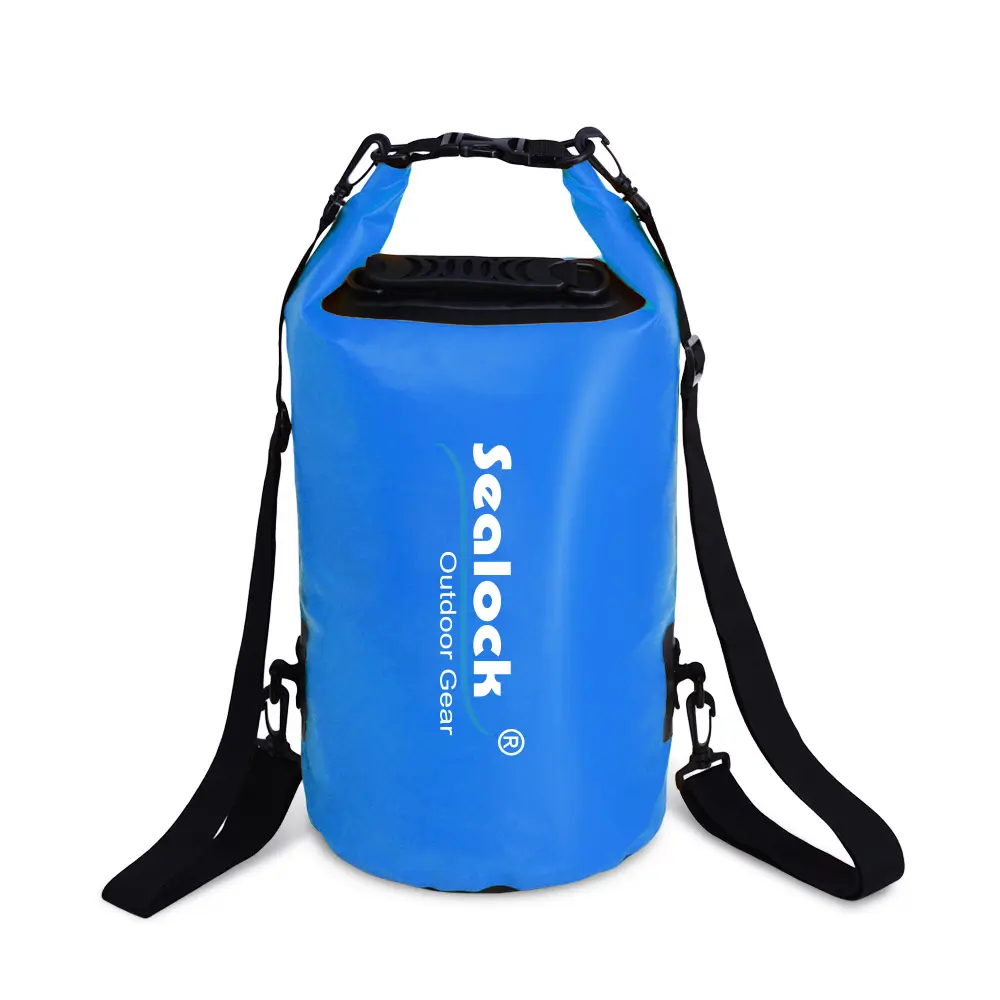
SL-D002 | Dry bag, 5–63L | 500D PVC | IPX7 | View |
|
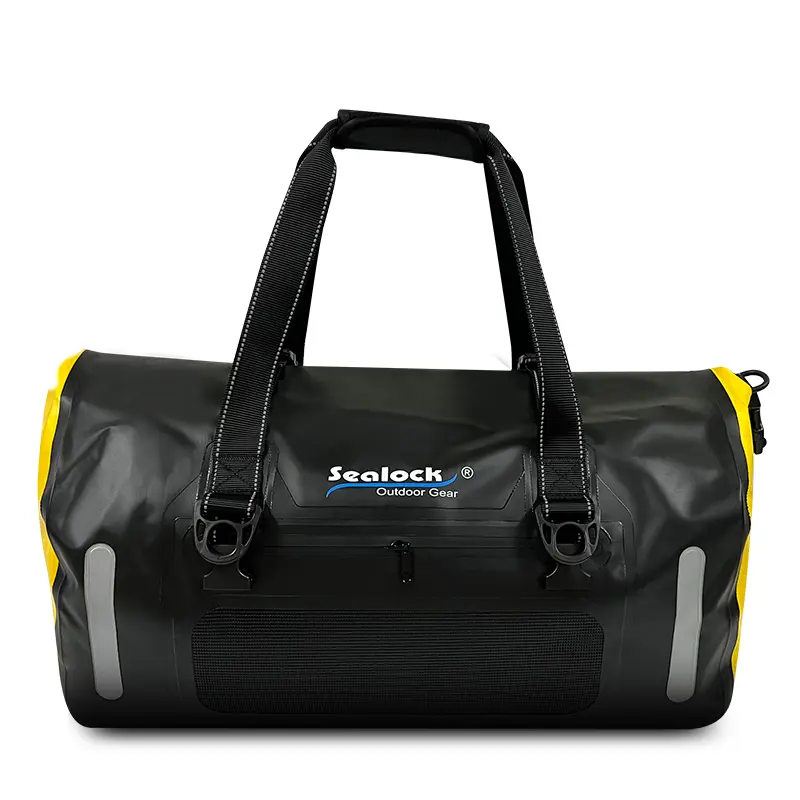
SL-K099 | Duffel, 40 / 60L | 840D TPU | IPX7 | View |

|
SL-E119 | Backpack, 20L | Cationic TPU composite | IPX8 | View |
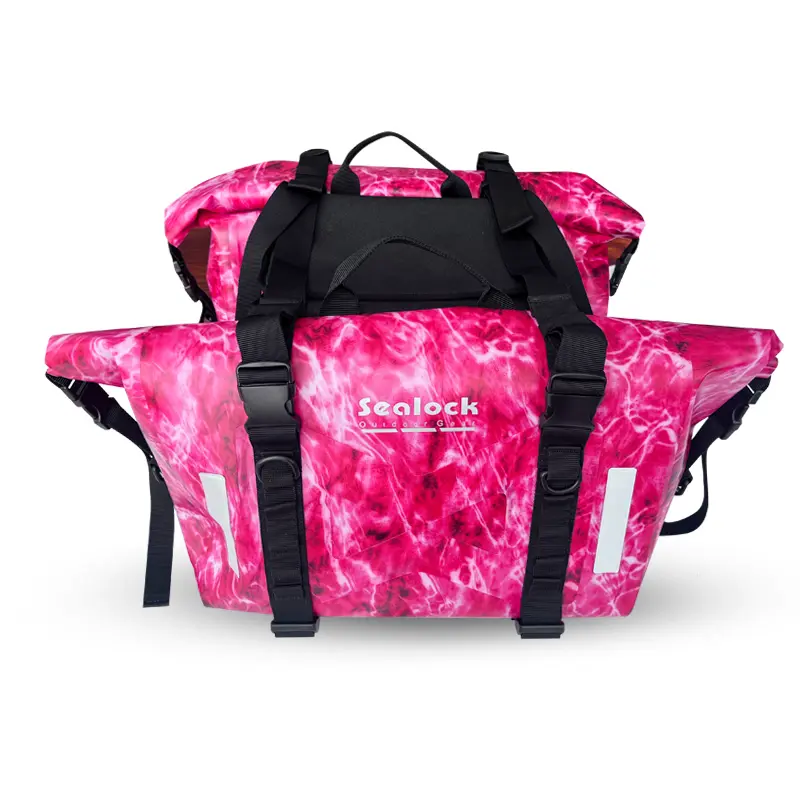
|
SL-C807 | Motorcycle, 45L | 500D PVC / 420D TPU | IPX6 | View |
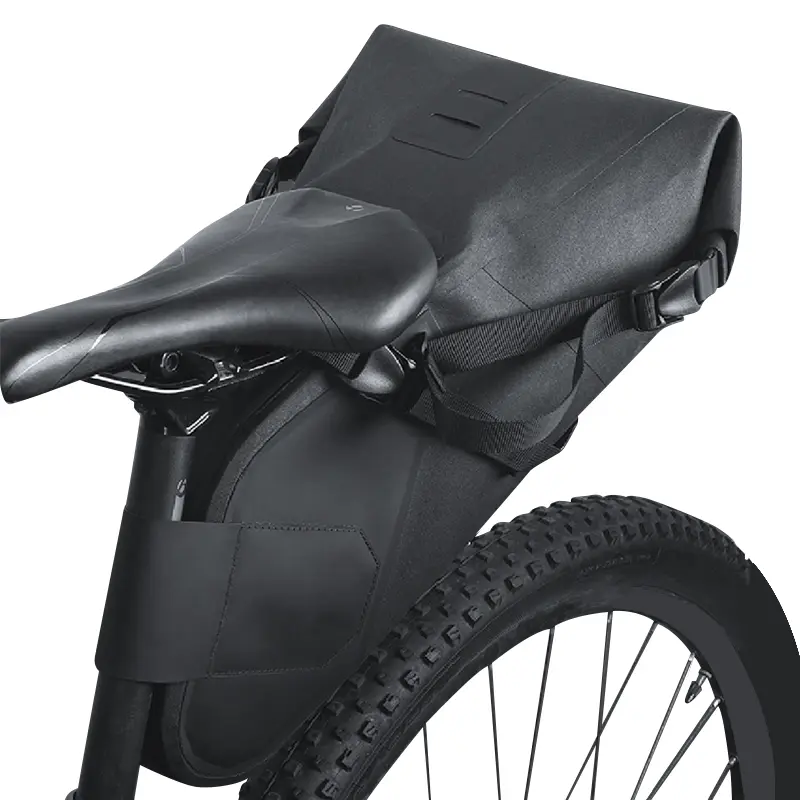
|
SL-K022 | Bike saddle bag, 10–14L | 420D / 600D TPU | IPX6–7 | View |
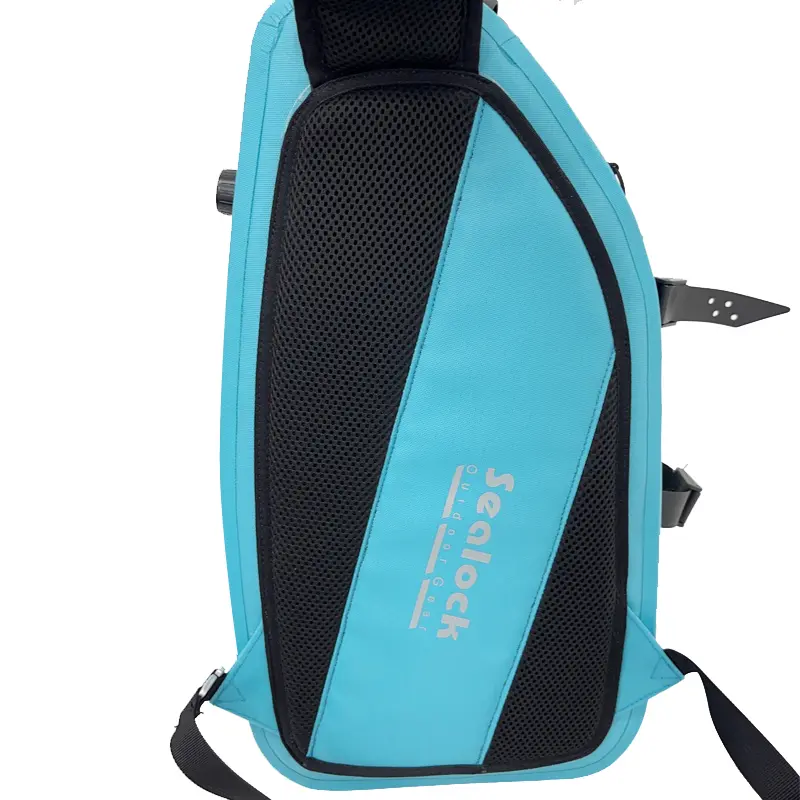
|
SL-E868A | Fishing sling, 12L | 840D TPU | IPX8 | View |
Full categories sit under waterproof bags, dry backpacks, and dry bags.
11. FAQ
Q: The shipment looks wrong. What do we do first?
A: Stop unpacking and document. Photograph cartons with shipping marks intact before opening, record the unpacking, compare against the purchase order and approved sample, and count how many units are affected out of how many inspected. Moving goods into stock or reselling part of the shipment makes the original condition hard to prove.
Q: How long do we have to report a problem?
A: Check the contract, because windows can be as short as seven days from arrival. If a full assessment will take longer, send an immediate written notice reserving your position and follow it with detailed findings — silent investigation creates an avoidable timeliness argument.
Q: Is this a factory problem or a freight problem?
A: Look at the pattern. A factory defect is consistent — the same flaw in the same place, spread evenly through the batch, in cartons that arrived intact. Transit damage clusters by container position and comes with crushed or wet packaging. The two go to different parties, so separate them before writing.
Q: What remedy should we ask for?
A: Name one. Rework, replacement, a credit note against the next order, a price reduction, or a refund — each fits a different situation, and a credit note is often the fastest to agree because it costs the factory less cash while giving you real value. Asking for "a solution" invites a counter-offer.
Q: Should we threaten legal action?
A: Rarely useful as an opening move. Legal costs usually exceed the value of one batch, and your real leverage is the unpaid balance, the next order, and the supplier's interest in keeping a repeat customer. A documented, quantified claim converts that leverage into a number.
Q: How do we avoid being in this position at all?
A: Hold a signed gold sample, write acceptance criteria and a defect remedy clause into the order, track production milestones, and tie the balance payment to a passed pre-shipment inspection. Problems found in the factory are cheap to fix; the same problems found in your warehouse are not.
Discuss Terms Before You Order
If you want acceptance criteria, inspection points and a defect remedy clause written into the order rather than discovered later, send your specification and we will quote against them — submit an inquiry. Sealock responds to procurement enquiries within 24 hours, with production from Dongguan, China or Ho Chi Minh City, Vietnam.