- English
- Español
- Português
- русский
- Français
- 日本語
- Deutsch
- tiếng Việt
- Italiano
- Nederlands
- ภาษาไทย
- Polski
- 한국어
- Svenska
- magyar
- Malay
- বাংলা ভাষার
- Dansk
- Suomi
- हिन्दी
- Pilipino
- Türkçe
- Gaeilge
- العربية
- Indonesia
- Norsk
- تمل
- český
- ελληνικά
- український
- Javanese
- فارسی
- தமிழ்
- తెలుగు
- नेपाली
- Burmese
- български
- ລາວ
- Latine
- Қазақша
- Euskal
- Azərbaycan
- Slovenský jazyk
- Македонски
- Lietuvos
- Eesti Keel
- Română
- Slovenski
- मराठी
- Srpski језик

Protecting Your Design When Manufacturing Waterproof Bags in China
Sealock manufactures waterproof bags to buyers' own designs from factories in China and Vietnam, with tooling quoted separately and design ownership stated in writing before sampling. Brands commissioning a custom product ask the same question before they send anything: what stops the factory from selling our design to a competitor. It is a fair question, and the honest answer is that a signature on a Western confidentiality template stops very little. This sets out what actually protects a design, and when each protection has to be in place.
1. Why an NDA Is the Wrong Instrument
The pattern is well documented and repeats constantly: a brand develops a distinctive product, sends drawings to a factory for quotation, and later finds the design listed on marketplaces at a lower price — or sold to a competitor in its own market. Many of those brands believed they were covered because they had signed a confidentiality agreement downloaded from a Western template.
The reason it failed is structural rather than bad luck. A Western NDA is built to prevent one thing: disclosure of secrets to third parties. In an overseas manufacturing relationship, public disclosure is rarely the actual risk. The real risks are that the factory uses the design for its own benefit, and that it goes around you to your customers — neither of which a disclosure clause addresses, because the factory is not disclosing anything. It is manufacturing.
2. What an NNN Agreement Adds
An NNN agreement is the instrument built for this situation. Each letter closes a specific gap:
| Clause | What it prevents |
|---|---|
| Non-Disclosure | Sharing your designs, specifications, or commercial information with third parties |
| Non-Use | The factory manufacturing your design for anyone else — including for its own product line. This is the clause an NDA lacks entirely |
| Non-Circumvention | The factory approaching your customers or distributors directly, or going around you to your own suppliers |
Three drafting points determine whether it works in practice. It should be governed by Chinese law and enforceable in a Chinese court rather than a foreign one, since foreign judgments are generally not enforced there. It should exist in Chinese, not only in English. And it should carry specific, calibrated remedies rather than a general promise of damages, so a breach has an obvious and fast consequence.
3. Sign It Before the First Drawing Leaves
This is the single most important sequencing rule, and it is where most brands lose their position. Information sent without protection cannot be retrieved by any later contract — a quotation exchange where technical drawings, specifications, or pricing are shared before anything is signed leaves no contractual basis to establish misuse afterwards.
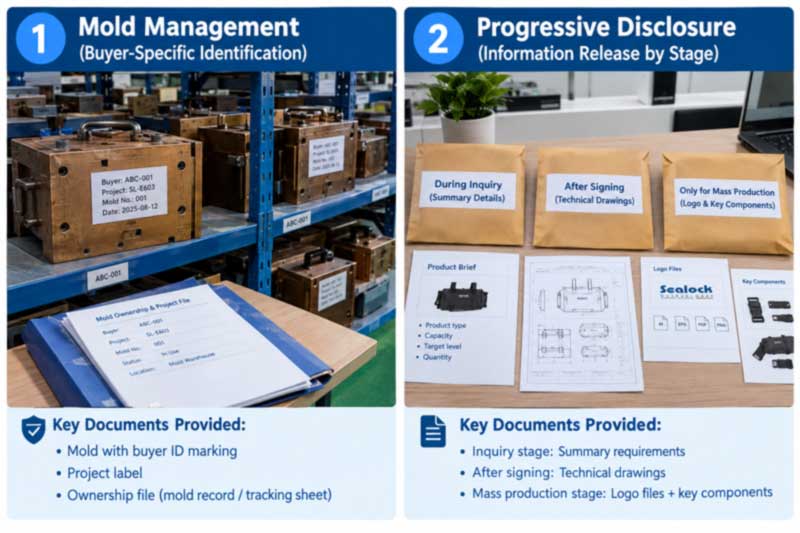
Two practical habits follow. Sign before sending anything proprietary, including prototype photographs, since even images can constitute disclosure. And for an initial enquiry, share only what a factory genuinely needs to indicate feasibility and a price range — product type, approximate capacity, target rating, target quantity. Detailed construction, internal layout, and artwork belong after the agreement, not before it.
4. Check the Chop, Not Just the Signature
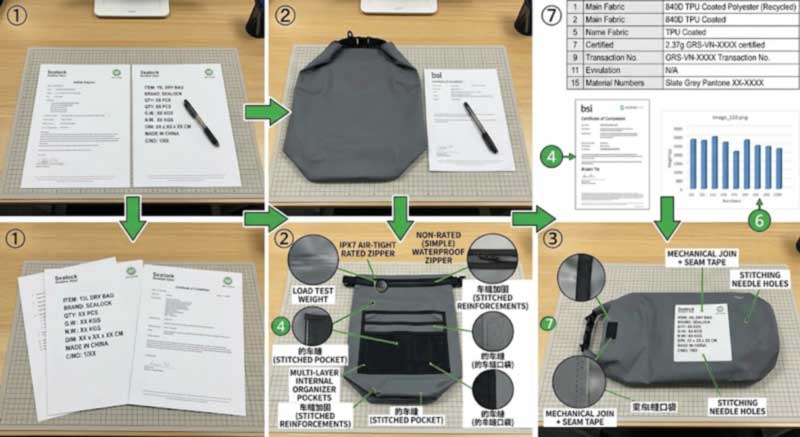
A detail Western buyers routinely miss: in Chinese commercial practice the company chop carries the binding authority, and an agreement signed without it may be difficult to enforce. Confirm that the chop matches the legal entity named in the agreement, and that the entity is the one that will actually produce your goods rather than an affiliated trading company.
This overlaps with basic supplier verification — the business licence, unified social credit code, and registered scope should all name the same entity you are contracting with. How to verify that is covered in the guide to selecting a manufacturing partner.
5. Tooling Is a Separate Agreement
An NNN protects information. It says nothing about who owns the physical tooling — and these are treated as separate legal concepts. Buyers have held a solid NNN and still lost their tooling, because no ownership clause existed and the factory argued the tool was its own asset under local commercial custom.
On a welded waterproof bag this matters, because a new geometry requires its own machined die before a sample can exist. The terms worth fixing:
- Title passes on full payment, stated explicitly rather than implied by an invoice.
- Physical custody does not affect ownership. The factory keeps the die because that is where it is used; that is normal and should be written as such.
- A transfer process on termination — timeline, cost, and who arranges it.
- A retention period long enough for your reorder rhythm, since a seasonal programme with a gap year needs more than a continuous one.
- Identification. Marking tooling with the buyer's reference supports an ownership claim and makes it harder to argue the die belongs to the factory's own assets.
One structural warning worth passing on: combining tooling, IP, and production terms into a single blended document tends to create overlapping provisions and unclear remedies, so that when a breach occurs nobody can say quickly which clause applies. Keep the obligations clearly separated, whether as distinct agreements or clearly delineated sections. What a tooling charge covers is set out in the guide to tooling and die costs.
6. Register Your Trademark in China, Even If You Never Sell There
China operates a first-to-file trademark system: whoever files first owns the mark, regardless of who used it first anywhere else. A competitor or an opportunistic filer can register your brand name before you do, then use that registration to obstruct your manufacturing or your exports.
Filing in China is worth doing even for a brand that only manufactures there and sells elsewhere, because the registration is what allows your own goods to leave without a third party asserting rights over the name printed on them.
7. Practical Measures Beyond Paperwork
Contracts set the consequences; these reduce the opportunity:
- Disclose progressively. Share only what each stage of negotiation genuinely requires rather than the full package at first contact.
- Separate the sensitive element where a design has one — one supplier assembles, another supplies the distinctive component, so no single party holds the complete picture.
- Register the design where it matters. A registered appearance design gives a basis for action that a contract alone does not, and it travels with the product into the markets where you sell.
- Watch the marketplaces. Periodic searches for your silhouette on wholesale platforms catch a problem while it is still small.
- Make the relationship worth keeping. Repeat volume is a stronger deterrent than any clause, because a factory weighing a copy against losing an ongoing programme usually chooses the programme.
8. What to Ask a Factory Directly
How a supplier responds to these questions is itself information:
- Will you sign a Chinese-law NNN agreement before we send drawings? Reluctance at this stage is the clearest signal available.
- Who owns tooling we pay for, and what are the transfer terms?
- Is the design you are offering us your own, or another brand's? A supplier that cannot answer clearly is a liability in both directions — the import risk of carrying a copied design sits with the buyer, as covered in the guide to supplier selection.
- Do you hold registered designs of your own? A factory that protects its own work generally understands why you want to protect yours.
On the last point, our own 55L three-way motorcycle bag carries a registered appearance-design patent, and OEM partners commissioning custom work receive original development rather than a reissued shape — which is also why we do not reproduce another brand's protected artwork on request.
9. How This Works Here
Sealock (YiFuLong Outdoor Gear Co., Ltd.) has built waterproof bags for over 20 years, producing for international outdoor brands including OSPREY, KAILAS, Helly Hansen, SIMMS, ORVIS, and West Marine.
- Confidentiality: NNN agreements accepted and signed before technical drawings are exchanged
- Tooling: quoted separately from unit price, with ownership and transfer terms stated in the order rather than implied
- Custom development: ground-up from a sketch, sample, or target spec — developed as original work for that buyer
- MOQ: 300 pcs per model | Samples: 7–15 days | Bulk: 30–45 days
- Facilities: Dongguan, China | Ho Chi Minh City, Vietnam — either origin on any model; factory audit available at both
- Certifications: ISO 9001, BSCI, SMETA, Sedex, HIGG, GRS, SCAN
This article outlines common commercial practice rather than legal advice. Agreements of this kind should be drafted by a qualified China-based practitioner for your specific situation.
10. Platforms for Custom Development
Most custom programmes modify a proven construction, which avoids new tooling entirely. Organized by category rather than priority:
| Image | Model | Category | Material | Rating | Product Page |
|---|---|---|---|---|---|
|
SL-D002 | Dry bag, 5–63L | 500D PVC | IPX7 | View |
|
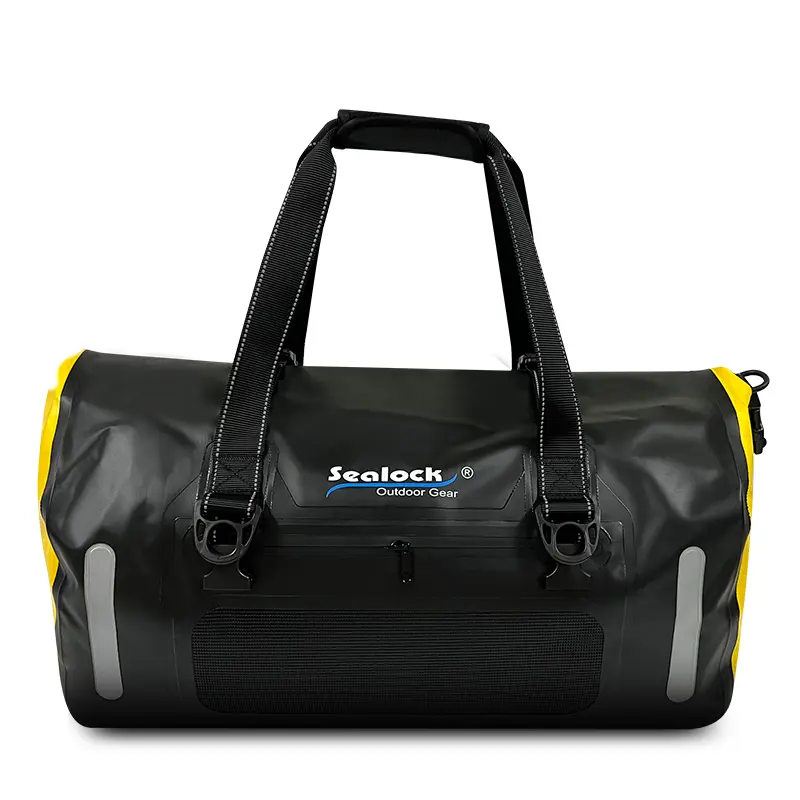
SL-K099 | Duffel, 40 / 60L | 840D TPU | IPX7 | View |

|
SL-E119 | Backpack, 20L | Cationic TPU composite | IPX8 | View |
|
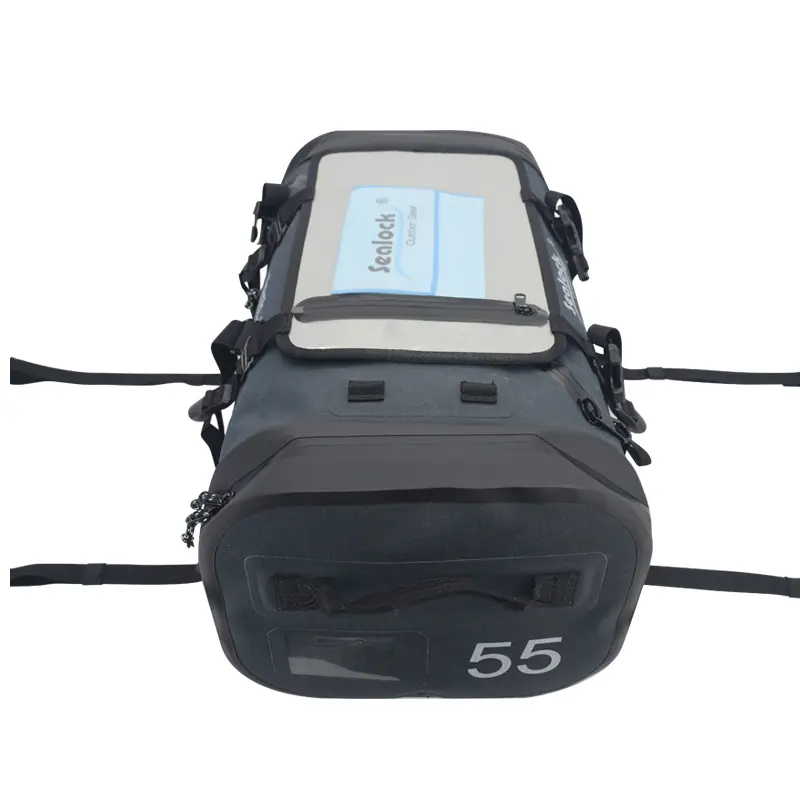
SL-E984 | Motorcycle, 55L | Ripstop TPU | IPX7 · registered design | View |
|
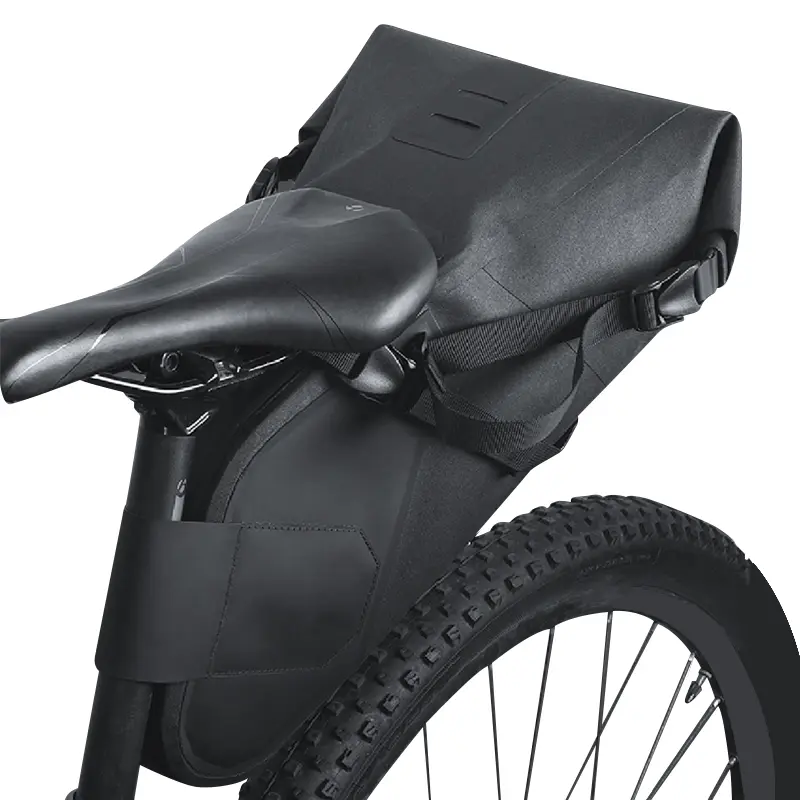
SL-K022 | Bike saddle bag, 10–14L | 420D / 600D TPU | IPX6–7 | View |
|
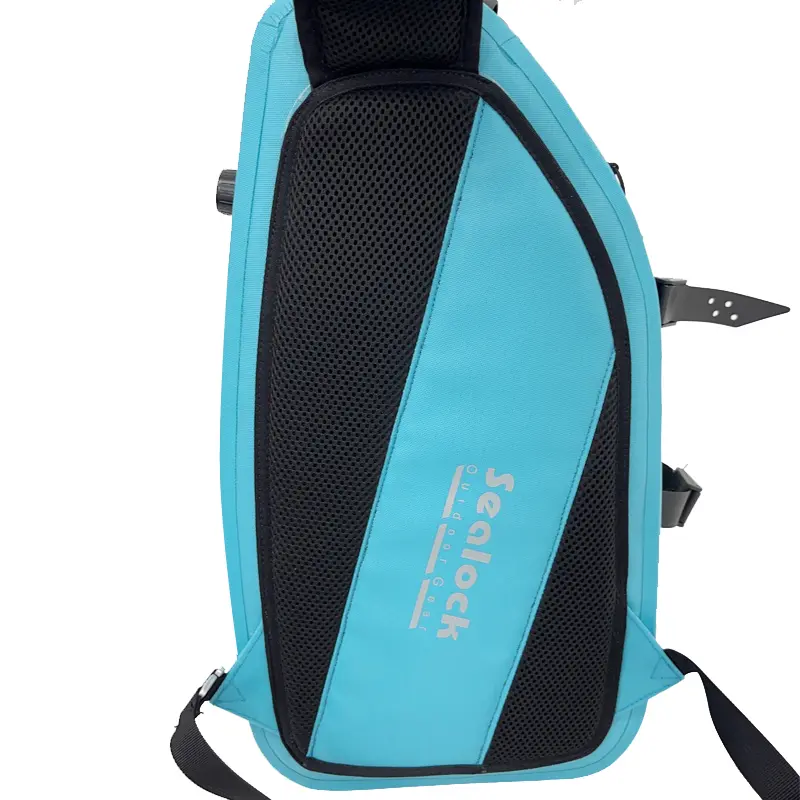
SL-E868A | Fishing sling, 12L | 840D TPU | IPX8 | View |
Full categories sit under waterproof bags, dry backpacks, and dry bags. How to document a custom design for production is covered in the guide to writing a tech pack.
11. FAQ
Q: Is an NDA enough to protect our design?
A: Generally not in a manufacturing relationship. A Western NDA addresses disclosure to third parties, while the real risks are the factory using the design for other customers or for itself, and approaching your customers directly. An NNN agreement adds non-use and non-circumvention, which is what closes those gaps.
Q: When should we sign it?
A: Before sending anything proprietary — drawings, specifications, artwork, or even prototype photographs. Information that leaves without protection cannot be recovered by a later contract, so for an initial enquiry share only product type, approximate capacity, target rating, and quantity.
Q: What language and jurisdiction should it be in?
A: Chinese language, Chinese law, and Chinese jurisdiction, with specific calibrated remedies. Foreign court judgments are generally not enforced in China, so an agreement written for a foreign court offers limited practical protection. Have it drafted by a China-qualified practitioner rather than adapted from a template.
Q: Does an NNN cover our tooling?
A: No. It protects information; tooling ownership is a separate legal concept requiring its own terms — title passing on payment, custody not affecting ownership, a transfer process on termination, and a retention period. Buyers with sound NNNs have still lost tooling for lack of an ownership clause.
Q: Should we register our trademark in China if we do not sell there?
A: Usually yes. China is first-to-file, so a third party can register your brand name before you do and use it to obstruct your production or shipments. The registration protects goods leaving the country as much as goods sold in it.
Q: How do we know a factory will respect this?
A: Ask it to sign before drawings are exchanged and watch the response; ask whether the designs it offers you are its own; and check whether it protects its own work. A factory that holds registered designs and declines to reproduce other brands' protected shapes is applying the same standard it is asking you to trust.
Start With an Agreement, Then a Drawing
If you have a custom design to develop, send your NNN for review and we will sign before technical files are exchanged, then quote against your specification — submit an inquiry. Sealock responds to procurement enquiries within 24 hours, with production from Dongguan, China or Ho Chi Minh City, Vietnam.