
1. Private Label, White Label, and OEM: The Real Difference
These three terms get used interchangeably and cost brands money when confused:
- White label: a generic, already-designed bag that many brands can apply a logo to. Fastest and cheapest, lowest MOQ, but the identical product appears under other names.
- Private label: a bag built for one brand — usually based on a proven construction, then adjusted with the brand's branding, colorway, trims, and packaging so it reads as that brand's product rather than a stock item. More control and differentiation than white label, without the full cost of ground-up design.
- OEM: a design engineered from the brand's own tech pack — maximum differentiation and ownership, highest investment and longest lead time.
For most outdoor equipment brands entering a category, private label is the practical middle path: a Sealock construction that is already tested and manufacturable, finished to the brand's identity. A brand can start there and move to full OEM for a hero product once the line proves out.
2. What the Brand Controls
Private label is not "logo on a stock bag." The brand controls the elements that make the product read as its own:
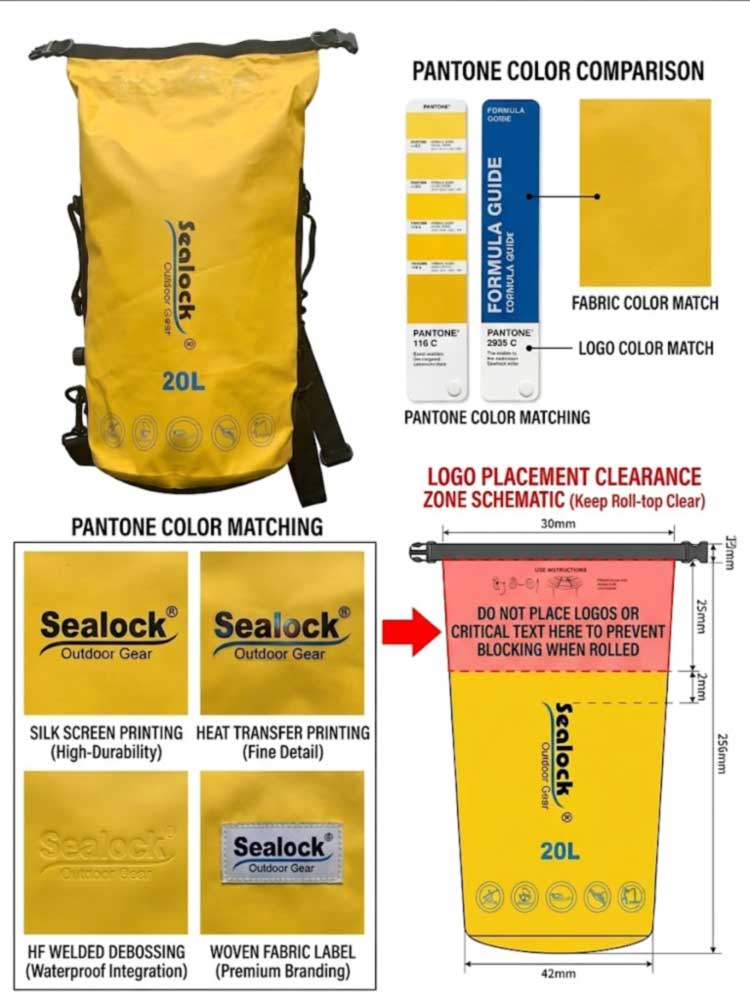
- Branding method: silkscreen, heat transfer, welded emboss, rubber patch, or woven label — matched to material and brand positioning.
- Color: standard factory colors, or custom Pantone-matched fabric for exact brand alignment across the range.
- Base construction and size: which proven model, in which capacities, with which closure and hardware.
- Trims and details: branded zipper pulls, custom webbing colors, printed interior, custom D-ring or buckle finish.
- Packaging: the piece most brands underestimate — matched to the sales channel.
On ambition, the answer is open: beyond logo and color, Sealock can adjust construction, hardware, and versions, or develop a design ground-up from a sketch, sample, or performance target. Full custom development runs longer than a branded-and-packaged version of an existing model, so plan the timeline to the launch.
3. Packaging by Sales Channel
Packaging is where a private label line either looks finished or looks like a rebadged stock bag, and it is specified to the channel it sells through:
- Pure wholesale: simple polybag and carton marks may be enough when a retailer repackages or shelves in bulk.
- Retail: hangtags, woven labels, care cards, barcode labels, and color boxes — the shelf presentation a store expects.
- E-commerce / Amazon: barcode and SKU labels checked carefully, compact protective packaging, and an unboxing that matches the brand — with product consistency across repeat orders being the priority.
Packaging should be confirmed at the sample stage, not after, because it affects cost, presentation, and shipping. Sealock matches packaging to the channel and prepares export cartons, packing lists, and carton marks to the order's requirements.
4. Labeling Compliance Is the Brand's Responsibility
This is the part of private label that catches new brands, because the compliance obligation transfers to the brand whose name is on the bag. For the US market, many bags fall under FTC textile labeling rules, which can require fiber content, country of origin, and the manufacturer or dealer identity (company name or RN number) on a permanently attached label — a hangtag alone may not satisfy the rule. Requirements change for other markets: some regions require multilingual labels or different placement, and getting it wrong can mean shipments delayed or rejected at customs, or inventory rejected by a retailer. Two channel-specific points a brand should settle before the first factory inquiry: selling direct-to-consumer puts product liability entirely on the brand, so appropriate product-liability insurance is worth having; and selling wholesale into major outdoor retailers usually means passing that retailer's own vendor compliance questionnaire. Sealock provides country-of-origin marking, care and content labels, and the compliance paperwork behind its certifications (ISO 9001, BSCI, SMETA, HIGG, GRS, SCAN), and can advise on label placement — but the brand owns the final compliance decision for its market.
5. Protecting Brand Value: Originality and Consistency
A private label line should build the brand's own value, not borrow someone else's. Avoid copying a well-known brand's distinctive logo, pattern, hardware, or silhouette too closely — the risk is legal and reputational, and it undermines the brand being built. The other half of brand value is consistency across reorders: color, logo placement, hardware finish, and construction should not drift between the first order and the fifth. The control for that is a repeat-production record — approved sample photos, material names, Pantone color codes, logo artwork and position, hardware finish, packaging method, and carton spec — held against a signed gold sample. Sealock keeps this reference and runs color-fastness and color-difference testing against the approved standard so a reorder matches the original.
6. From Brief to Shelf
A private label program runs as a defined sequence:
- 1. Brief: product type and use, target customer and price point, sales channel, chosen base model and capacities, branding method, packaging, quantity, and target FOB price.
- 2. Quotation and MOQ: MOQ depends on material, color, size, print method, and accessories — standard colors and existing sizes support lower minimums; custom Pantone colors and special materials raise them. A practical route for a new market is to launch on standard material and size, then upgrade to custom colors or trims once reorders stabilize.
- 3. Sampling: a proto sample plus one or two revision rounds, then an approved sample that becomes the production standard. This is the only chance to catch problems before they are multiplied across the run.
- 4. Pre-production approval: final material, color, hardware, logo, and packaging signed off.
- 5. Production under QC: IQC on materials and hardware, IPQC in line, OQC with AQL sampling, immersion testing, and gold-sample comparison.
- 6. Export packing and shipment: cartons, marks, and documents to the order's requirements, with third-party inspection available.
Sealock quotes MOQ at 300 pcs, samples in 7–15 days, and bulk in 30–45 days, FOB Guangdong, with production available from either China or Vietnam to suit a brand's tariff position.
7. Private-Label-Ready Range
Private label works best starting from proven constructions a brand can brand and ship quickly. Representative models, organized by type rather than priority:
| Image | Category | Model | Capacity | Material / Rating | Product Page |
|---|---|---|---|---|---|
|
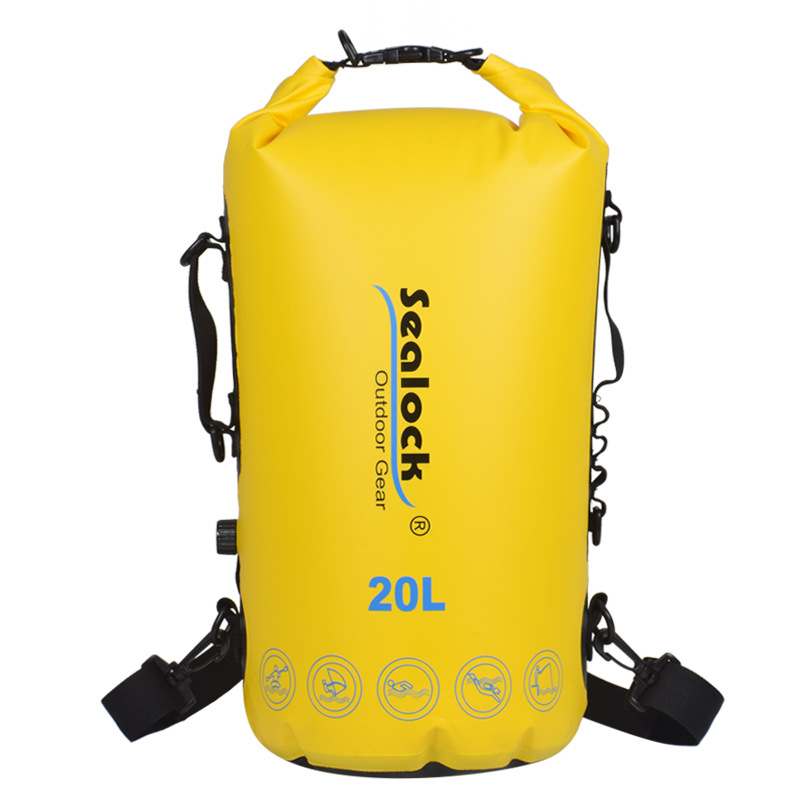
Roll-top dry bag | SL-E102 | 15-20L | 500D PVC · IPX7 | View |
|
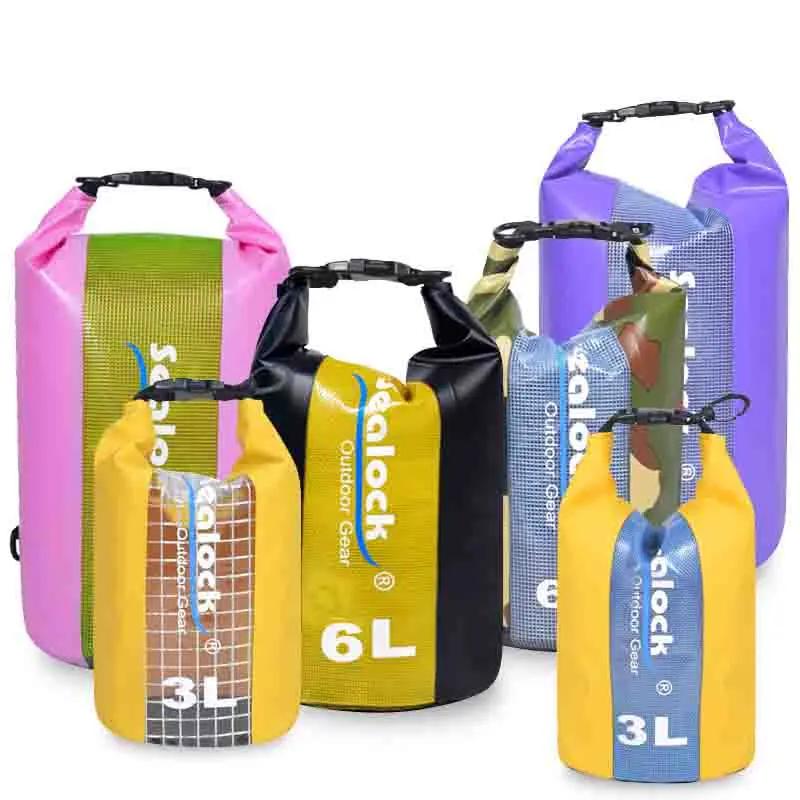
Window dry bag | Clear Window Dry Bag | 3–10L | PVC · roll-top | View |
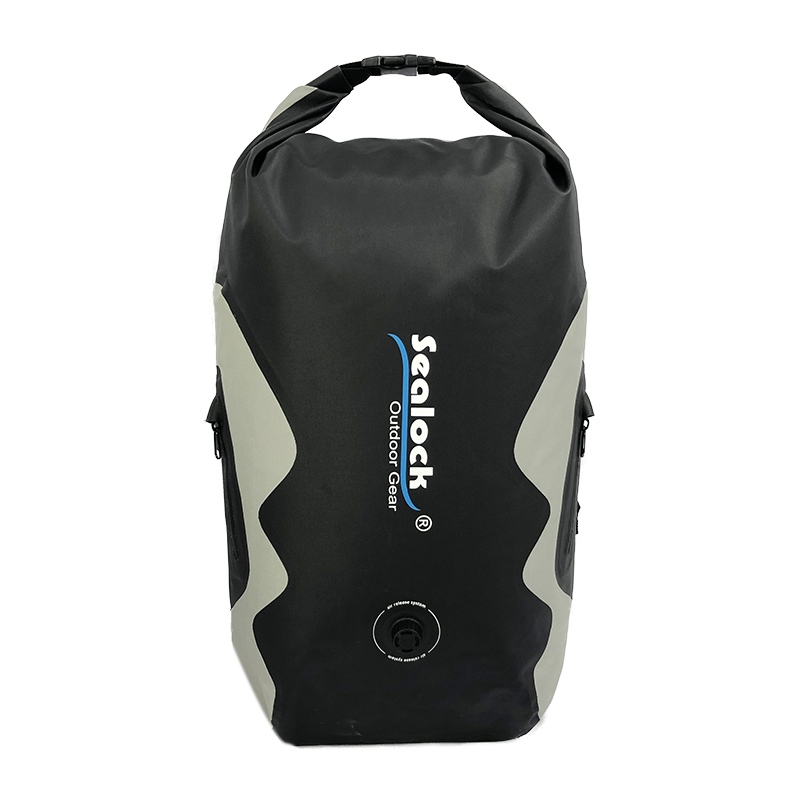
|
Dry backpack | SL-E070 | 25L | 420D TPU · IPX8 | View |
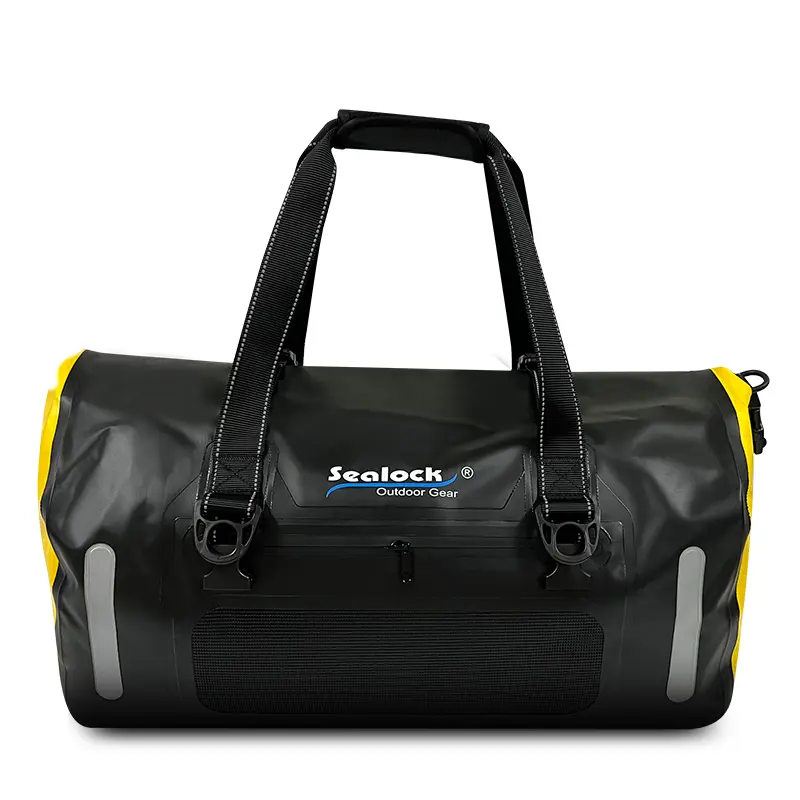
|
Waterproof duffel | SL-K099 | 40 / 60L | 840D TPU · IPX7 | View |
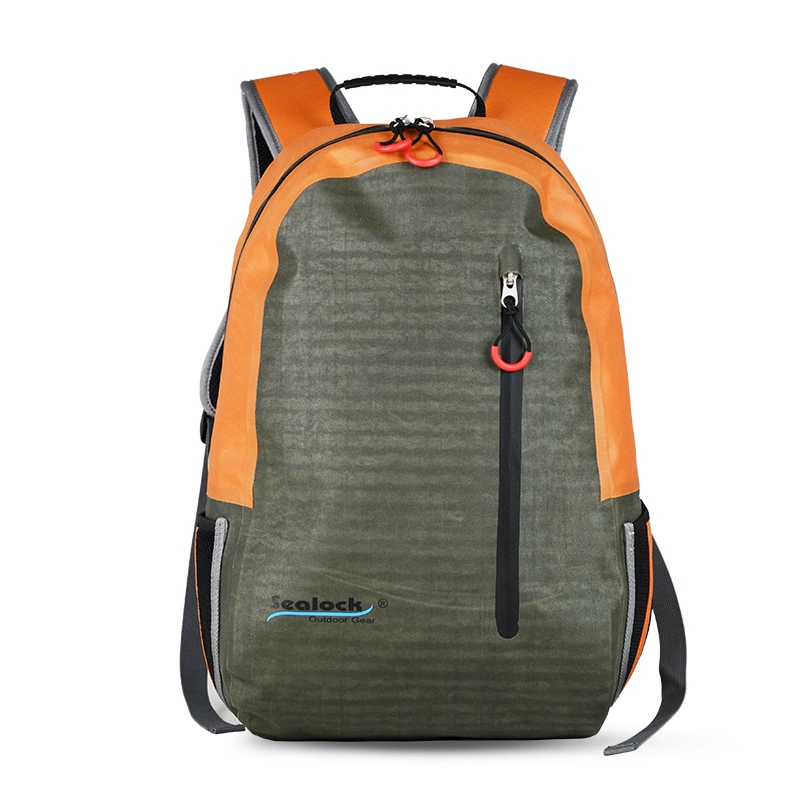
|
Urban / commuter | SL-E071 | 22L | 420D TPU · IPX6 | View |
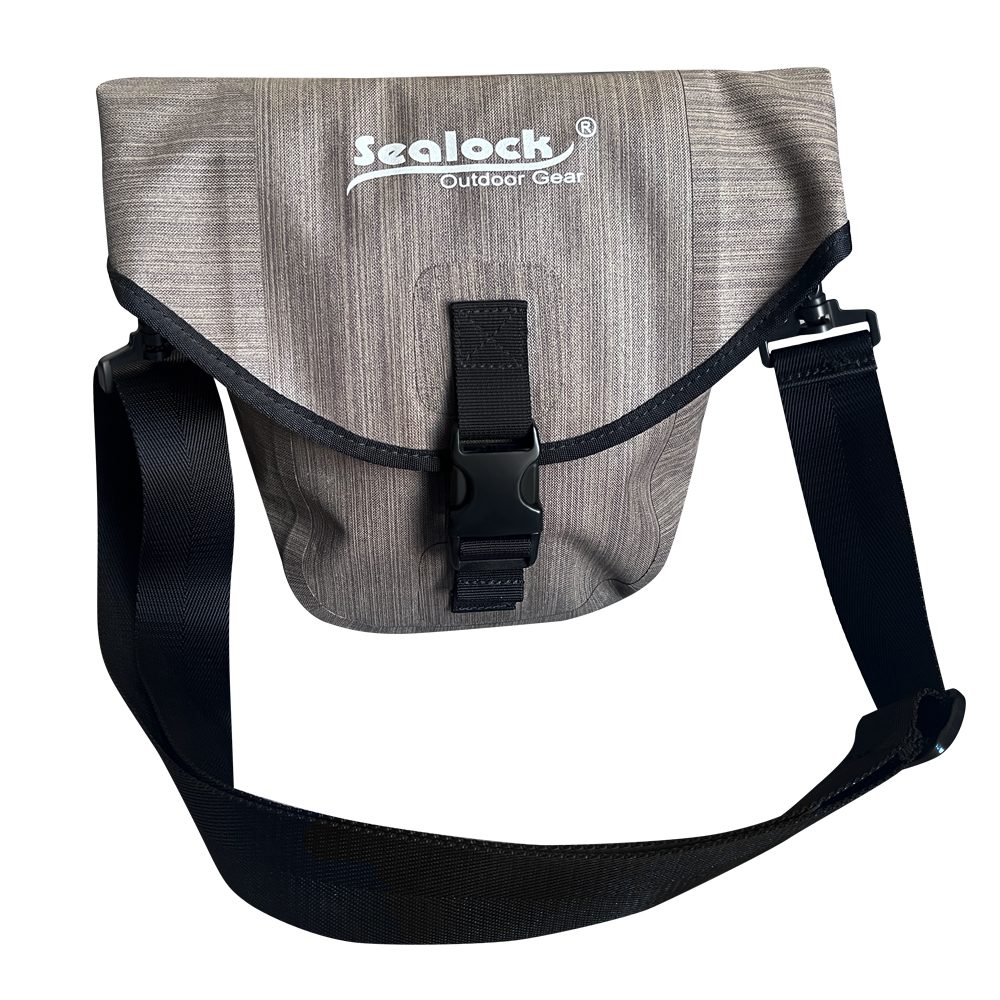
|
Messenger / crossbody | SL-H017C | 8–10L | 600D TPU · IPX5–6 | View |
A brand can take several of these under one logo, colorway, and packaging spec and ship a coordinated line in a single run. Browse full categories under dry bags, dry backpacks, and duffels.
8. Quality Control and Compliance
Sealock applies three-stage control on every batch: IQC on incoming fabric, zippers, and hardware; IPQC on welds and processes in line; and OQC with AQL sampling, batch immersion testing, and signed gold-sample comparison, with optional SGS/QIMA third-party inspection. The laboratory suite covers a load test of over 1,500 cycles, 3,000 sealed-zipper cycles on zippered models, tensile and bonding strength, salt spray, friction resistance, color fastness, color difference, and full water immersion. Compliance is backed by ISO 9001, BSCI, SMETA, HIGG, GRS, and SCAN.
9. FAQ
Q: What's the difference between white label and private label dry bags?
A: White label is a generic bag many brands apply a logo to, so the same product appears under different names. Private label is finished for one brand — its branding, color, trims, and packaging on a proven construction — so it reads as that brand's own product. Private label costs a little more and differentiates a lot more.
Q: Who is responsible for labeling and product compliance — the factory or the brand?
A: The brand whose name is on the bag owns the compliance decision for its market. The factory provides country-of-origin marking, content and care labels, and certification paperwork and can advise on placement, but requirements like FTC textile labeling in the US or multilingual labels elsewhere are the brand's responsibility, and selling DTC puts product liability on the brand.
Q: Can I start small and scale the private label line later?
A: Yes. Start on a standard model, standard size, and standard color to keep MOQ and cost down, prove the market, then upgrade to custom Pantone colors, trims, or a ground-up OEM version once reorders are stable. MOQ here is 300 pcs per model.
Q: How do I keep color and quality consistent across reorders?
A: With a signed gold sample and a repeat-production record — Pantone codes, logo artwork and position, hardware finish, material names, and packaging spec — plus color-fastness and color-difference testing against the approved standard. That is what stops the fifth order drifting from the first.
Q: Can I copy a popular brand's bag design and put my logo on it?
A: No — copying a recognizable logo, pattern, hardware, or silhouette is a legal and reputational risk, and it undermines the brand you are building. Private label should create original brand value on a proven construction, not imitate a competitor.
Q: What packaging do I actually need?
A: It depends on the channel: polybag and carton marks for pure wholesale; hangtags, care cards, barcodes, and color boxes for retail; barcode/SKU labels and compact protective packaging for e-commerce. Confirm it at the sample stage, because it affects cost and shelf presentation.
Start Your Private Label Line
For a private label quote, samples, packaging options, or a compliance and origin recommendation for your target market, submit an inquiry. Sealock responds to procurement enquiries within 24 hours, with production available from Dongguan, China or Ho Chi Minh City, Vietnam.