

A dry bag is the simplest piece of waterproof gear most people own — and the most misunderstood. Here is exactly what it is, the three things that make it keep water out, and why not every dry bag is "waterproof" in the same way.
The phrase "dry bag" describes the job, not a single product. At its core it is a soft container designed to keep its contents dry when the outside gets wet — rain, spray, a capsized kayak, a soaked car trunk. But the moment you ask how it does that, you find the real differences between a bag that survives a season and one that lets water seep in on its first trip. This guide walks through the "what" and then the "how," because the how is what you are actually buying.
What a dry bag is — and what it is not
A dry bag is a waterproof or highly water-resistant sack, most often cylindrical, that you fill, seal, and carry. It is built from a coated fabric rather than ordinary woven cloth, and it closes by folding the top over on itself or, on some models, with a waterproof zipper. Sizes run from a 2-litre pouch for a phone and wallet up to 80-litre bags that swallow a tent and sleeping kit.
It helps to be clear about what a dry bag is not. It is not a rigid waterproof case — there is no hard shell. It is not pressurised dive equipment for use deep underwater. And "dry bag" is not a guarantee of a fixed waterproof rating; two bags can both be called dry bags and protect your gear very differently. That last point is the one that trips up most buyers, and we will come back to it.
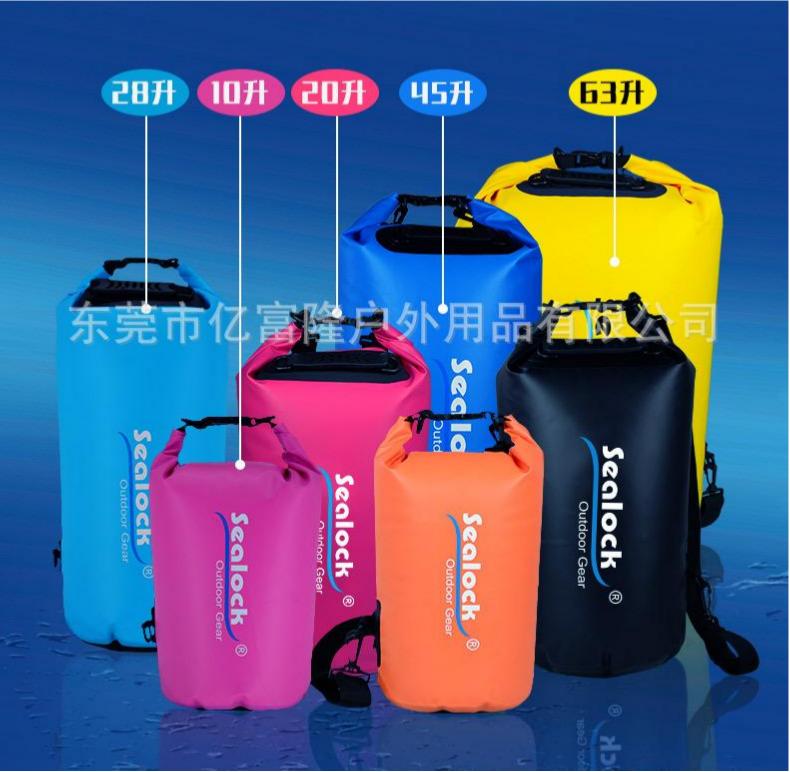
How a dry bag works: three things keep the water out
Everything about a dry bag's performance comes down to three parts working together. If any one of them is weak, the bag leaks — which is why understanding all three is the key to understanding the product.
1. The fabric — a coating, not just cloth
Ordinary fabric soaks through. A dry bag uses a base fabric (often nylon or polyester scrim) bonded with a waterproof coating, typically PVC tarpaulin or TPU (thermoplastic polyurethane). The coating is what actually blocks water; the base fabric gives it strength and tear resistance. Thicker, higher-denier fabrics (for example 500D versus 840D) trade weight for toughness. The fabric is the wall of the container — but a wall is only as good as its joints, which brings us to the second part.
2. The seams — where cheap bags fail first
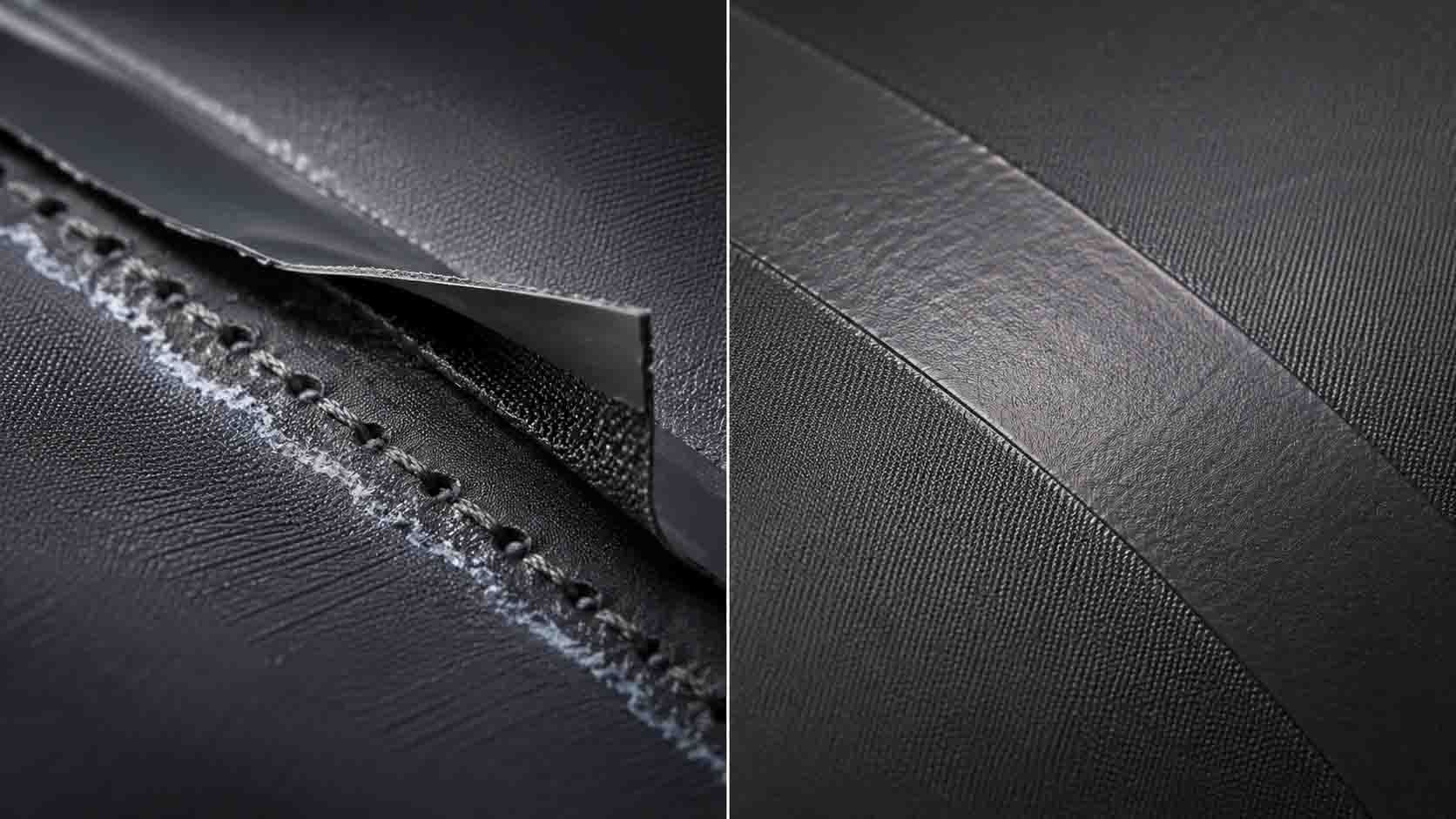
A bag is not made from one piece of material; panels are joined, and those joins are where water attacks. There are two ways to make them:
- Stitched and taped: panels are sewn, then sealed with tape over the needle holes. This works against rain and splash, but every stitch is a hole, and under pressure or over time those holes are the weak point.
- Welded: the coated layers are fused together with heat or high-frequency energy, creating a continuous join with no needle holes at all. This is what lets a bag hold out water even when pushed against, not just rained on.
This is the single biggest quality divide in dry bags. We build ours with seams fused by 27.12 MHz high-frequency welding precisely because a welded seam removes the failure point that stitched bags carry by design. A perfect fabric with a punctured seam still leaks — so the seam decides whether the wall actually holds.
3. The closure — sealing the one opening you need
A bag has to open to be useful, so the opening is the last gap water can use. The most common solution is the roll-top: you fold the top edge over on itself three or more times and clip it, and the rolled folds press together into a seal. Some bags instead use a waterproof zipper for quicker access at higher cost. Either way, the closure only works if it is used correctly — an under-rolled top is the most common reason a perfectly good dry bag leaks. We compare the two approaches in detail in Roll-Top vs Zipper.
Put the three together and the logic is clear: the fabric forms a waterproof wall, the seams keep that wall continuous, and the closure seals the only opening. A dry bag is only as waterproof as the weakest of the three — which is exactly why "waterproof" turns out to be a spectrum, not a yes/no.
Why "waterproof" is a spectrum, not a promise
Because performance depends on how those three parts are built, two bags both labelled "dry bag" can sit at very different points on a scale. It is more accurate to think in three levels:
| Level | What it handles | Typical build |
|---|---|---|
| Water-resistant | Rain, splash, brief drizzle | Lighter coating, often stitched-and-taped |
| Waterproof / immersion | Brief, accidental submersion | Welded seams, secure roll-top |
| Submersible / pressure-validated | Sustained underwater pressure near the surface | Welded seams, validated to a pressure standard |
This is why a spec sheet matters more than the word on the label. A bag tested to a sustained-pressure standard — we validate our submersible constructions to 1.0 bar of hydrostatic pressure — is genuinely different from one that has only passed a quick splash test. If you want the honest limits of full submersion, we cover them in Can Dry Bags Be Submerged?. The takeaway: match the level to your use, and don't assume "waterproof" on a tag means the same thing on every bag.
So which dry bag is right for you?
Now that the "how" is clear, choosing becomes straightforward — it is just a matter of matching the three parts and a level to what you actually do:
- Rain and everyday wet weather: a water-resistant bag is enough; prioritise size and convenience.
- Kayaking, rafting, boating: step up to welded seams and a true immersion level — the bag will get dunked.
- Diving support, repeated submersion: a submersible, pressure-validated build is worth the cost.
Size is the other half of the decision, and it deserves its own logic rather than guesswork — our Dry Bag Size Guide breaks capacity down by activity.
Keep going
Now you know what a dry bag is and how it works, these answer the next questions buyers ask:
- Roll-Top vs Zipper — which closure to choose
- Dry Bag Size Guide — what capacity you need
- Can Dry Bags Be Submerged? — the real waterproof limits
- Browse the full waterproof dry bag range
See how it works in real Sealock dry bags
The three-part principle above isn't theory — it's how we actually build. A few examples from our range, all welded at 27.12 MHz and pressure-tested to 1.0 bar:
| Product | Closure | Key spec | Best for |
|---|---|---|---|
| Roll-Top Small Dry Bag | Roll-top | Submersible, welded seams, D-ring | Phone, wallet, swimming |
| Dry Bag with Phone Window | Roll-top | 10L / 20L, transparent TPU window | Kayaking, navigation on deck |
| Outdoor Dry Bag | Roll-top + air valve | Welded seams, multiple sizes | Boating, canoeing, rafting |
All made by Sealock, a waterproof bag manufacturer with 21+ years' experience (ISO 9001 / BSCI / GRS certified). MOQ from 300 pcs, OEM available.
Frequently asked questions
- What is a dry bag used for?
- It keeps gear dry when the outside gets wet — on kayaks, boats, hikes in the rain, at the beach, or for separating wet items like a swimsuit from dry clothes. Small sizes protect a phone and wallet; large ones carry clothing, a sleeping bag, or a tent.
- How does a dry bag keep water out?
- Through three parts working together: a waterproof-coated fabric (PVC or TPU), seams with no needle holes (welded, on better bags), and a closure — usually a roll-top — that seals when folded and clipped. The bag is only as waterproof as the weakest of these three.
- Are all dry bags fully waterproof?
- No. "Dry bag" describes the design, not a fixed rating. Some only resist rain and splash, while others have welded seams and are tested to hold out sustained submersion. Check how the seams and closure are built rather than relying on the word "waterproof" alone.
- Is a roll-top or a zipper better on a dry bag?
- A roll-top is economical, reliable against driven rain, and forgiving to use; a waterproof zipper offers quicker access at higher cost. The roll-top suits most uses, provided the top is folded over enough times before clipping.
- What material is a dry bag made of?
- Most use a base fabric coated with PVC tarpaulin or TPU. PVC is rugged and economical; TPU is lighter and stays flexible in the cold. Higher-denier fabrics (e.g. 840D) add durability at the cost of weight.
Have a specific use in mind? Tell us what you'll carry and where, and we'll point you to the right size, material, and waterproof level.