
- English
- Español
- Português
- русский
- Français
- 日本語
- Deutsch
- tiếng Việt
- Italiano
- Nederlands
- ภาษาไทย
- Polski
- 한국어
- Svenska
- magyar
- Malay
- বাংলা ভাষার
- Dansk
- Suomi
- हिन्दी
- Pilipino
- Türkçe
- Gaeilge
- العربية
- Indonesia
- Norsk
- تمل
- český
- ελληνικά
- український
- Javanese
- فارسی
- தமிழ்
- తెలుగు
- नेपाली
- Burmese
- български
- ລາວ
- Latine
- Қазақша
- Euskal
- Azərbaycan
- Slovenský jazyk
- Македонски
- Lietuvos
- Eesti Keel
- Română
- Slovenski
- मराठी
- Srpski језик

Wholesale Bikepacking Bags: Custom Waterproof Bike Frame & Saddle Bags Manufacturer
| Engineering Metric | Standard Stitched Gravel Bag | Sealock RF-Welded Bikepacking Gear |
|---|---|---|
| Vibration Resistance | Stitched strap joints fray and rip under continuous off-road gravel vibrations. | Laser-cut Hypalon anchor patches fused directly via molecular RF welding. Zero tearing. |
| Waterproof Integrity | Relies on internal seam tape (peels off over time due to tight frame stretching). | 100% seamless hermetic sealing. Resists heavy downpours and wheel-spray pressure. |
| Global Compliance | Traces of regulated chemicals or standard PVC backings failing EU customs audits. | Certified PFAS-Free, REACH, and RoHS compliant eco-friendly TPU composite options. |
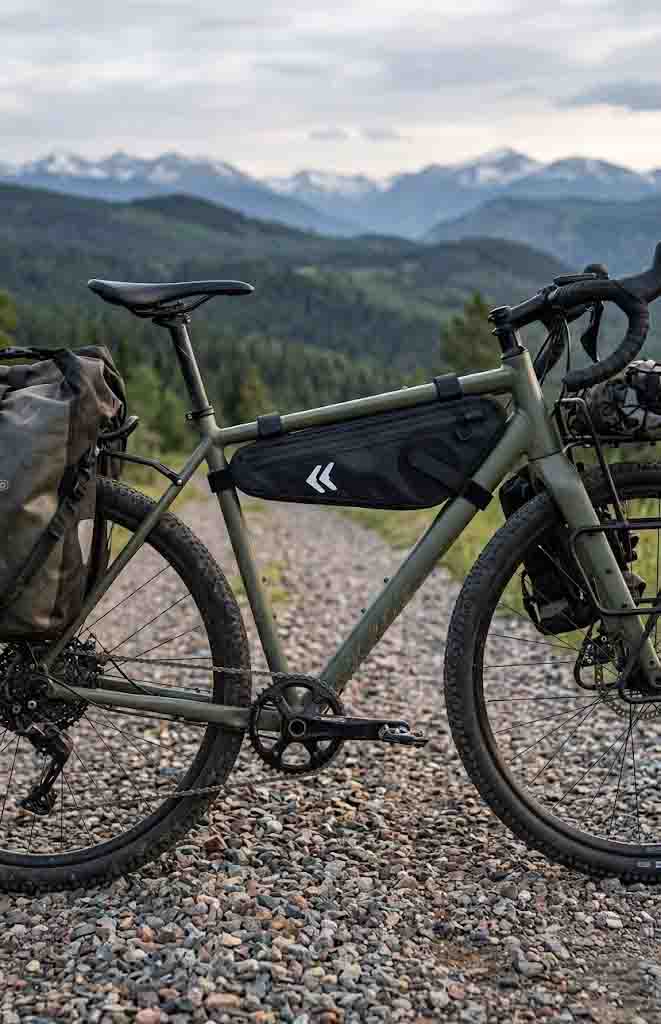
For international bicycle accessory brands, outdoor retail chains, and volume importers across Europe, North America, and Australia, the bikepacking and gravel cycling boom has fundamentally altered consumer expectations. In 2026, premium buyers are no longer ordering loose, stitched canvas panniers that sag and leak. To maintain a competitive retail shelf space, your inventory must showcase specialized material engineering, high-frequency seam fusion, and rock-solid mounting stability designed for extreme trail conditions.
When a cyclist hits technical singletrack or washboard gravel tracks with fully loaded frame bags, the mounting straps face immense, repetitive dynamic loading. If your current supplier relies on traditional needle stitching to attach hook-and-loop fasteners to the bag body, the fabric will inevitably puncture, tear, and leak. To protect your brand's reputation and minimize retail return rates, you need a manufacturing partner who builds fully welded, structurally reinforced bikepacking systems.
Off-Road Stress: Fusing Hypalon Patches with RF Welding
The primary failure zone on any bike frame bag or under-seat saddle pack is the strap anchor point. Traditional sewing creates thousands of micro-punctures, weakening the base fabric. When the bag is stuffed tightly with camping gear and stretched against the bicycle tubes, these needle paths turn into tear zones and water entry corridors.
Our industrial production line completely bypasses this structural flaw. We leverage high-end 27.12 MHz Radio Frequency (RF) welding technology to fuse heavy-duty **Laser-Cut Hypalon patches** straight onto our lightweight TPU base fabrics. Hypalon provides unmatched abrasion resistance and absolute zero water absorption. By melting the Hypalon anchor panel and the TPU shell into a single interconnected layer, we ensure that the mounting points can withstand aggressive out-of-the-saddle climbing and rough trail vibration without ever pulling apart or deforming.
This technical fusion process allows your product lineup to deliver the rigid stability off-road cyclists demand. You can explore our exact production layouts and machinery infrastructure via our dedicated waterproof dry bag manufacturing line blueprint.
Green Gateways: Sourcing PFAS-Free & TPU Coated Fabrics
Navigating international regulatory frameworks is a critical task for modern B2B procurement teams. The European Union and various North American jurisdictions have introduced strict prohibitions against hazardous chemicals and non-recyclable plastics in consumer outdoor gear. Stocking heavy, toxic PVC or bags with chemical water-repellent coatings is a major liability for your supply chain.
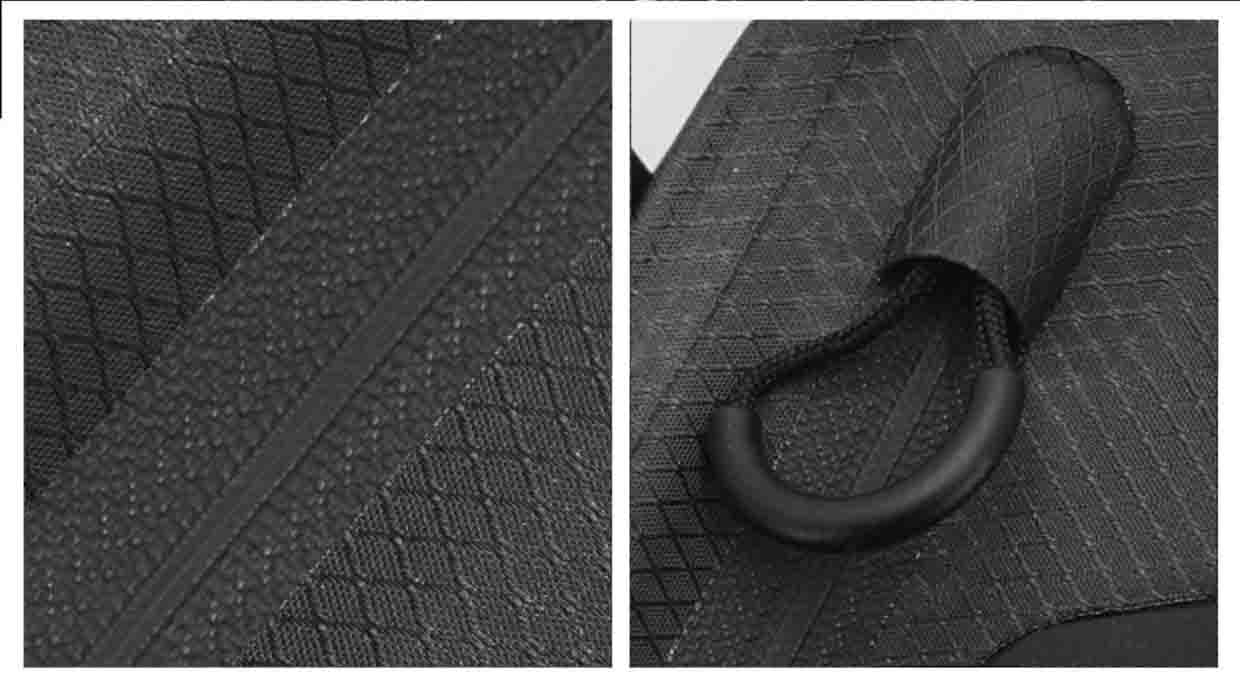
We solve this compliance barrier by specializing in **Double-Sided TPU Coated Nylon (210D, 420D, and 840D variants)**. TPU film coatings offer massive engineering advantages: they remain perfectly supple and split-proof in sub-zero winter temperatures, provide excellent UV defense on long desert tours, and comfortably clear strict **REACH, RoHS, and PFAS-Free material declarations**. Offering a clean, PVC-Free product line allows your brand to seamlessly enter premium retail networks and corporate fleet tenders without legal friction.
B2B Factory Direct Sourcing: Technical Bikepacking Ecosystems
If your bicycle brand, e-commerce store, or wholesale catalog requires a rugged, fully sealed bikepacking range that guarantees zero water ingress and stable frame geometry, review our active factory configurations:
📍 Premium Production Categories: Waterproof Bike Frame & Saddle Bags
- Waterproof Bike Frame Bags: Slim, anti-sway side profiles utilizing weather-sheltered premium zippers or roll-top closures to maximize frame triangle storage.
- Waterproof Bicycle Saddle Bags: Large-capacity under-seat seatpacks built with rigid internal structural poly-plates to eradicate side-to-side tail wagging during hard out-of-the-saddle efforts.
- Flexible Bulk Framework: Standard OEM MOQ starting at 300-500 pieces per color with full custom hardware, strap length adjustments, and private logo embossing.
Stability Engineering: Eradicating Frame Sway and Zip Failure
A poorly engineered bike bag doesn't just let water in—it actively degrades the cyclist's safety and performance. If a large under-seat saddle bag sways erratically every time the rider stands up, it disrupts the bicycle’s balance and compromises handling. Similarly, if a frame bag bulges outward when packed, it causes immediate knee-rubbing against the side walls, resulting in a frustrating user experience.
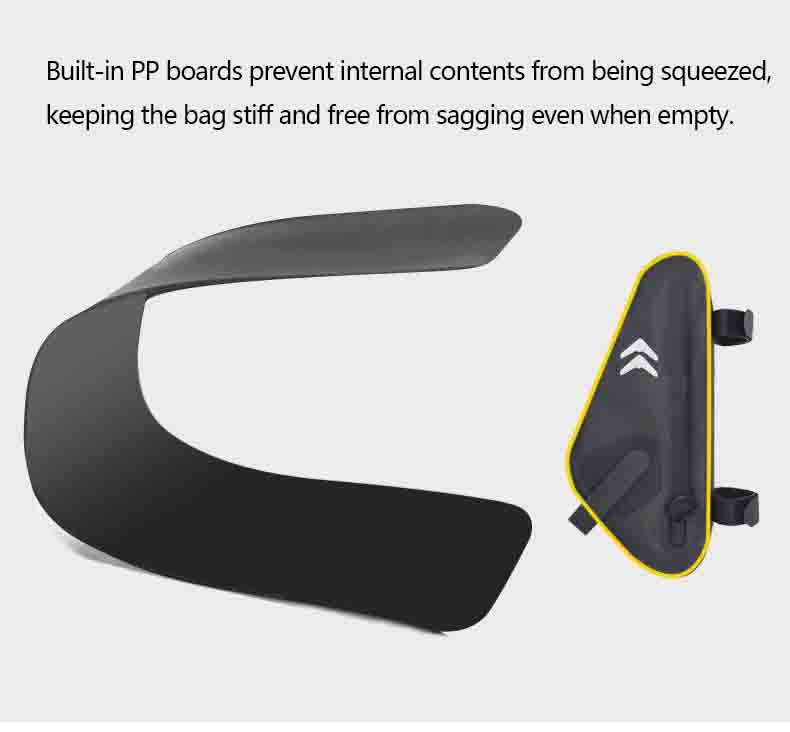
Our engineering team eliminates these common product flaws during the 3D prototyping phase. We build internal semi-rigid HDPE stiffening sheets straight into the side panels of our saddle packs and frame bags. This ensures the luggage maintains a crisp, narrow aerodynamic profile even when stuffed to its maximum capacity. For opening enclosures, we use high-grade water-repellent sliders equipped with garage docks, or premium airtight tracking systems, protecting vulnerable electronics from tire-thrown mud and wheel-spray.
Our Bikepacking Product Line: Specs at a Glance
| Product | Material | Construction | Mounting |
|---|---|---|---|
| Bike Frame Bag | TPU coated | 27.12 MHz HF welded | Frame clips + velcro |
| Handlebar Bag | 420D Poly + TPU | HF welded | Handlebar straps + velcro |
| Saddle / Seat Bag | TPU coated | HF welded | Under-saddle quick-release |
| Under-Seat Dry Bag | 420D Poly TPU | HF welded + air valve | Under-saddle straps |
Standard terms: Double-sided TPU-coated nylon in 210D / 420D / 840D · Laser-cut Hypalon reinforcement at mount points · MOQ 300 pcs · OEM/ODM · PFAS-free / REACH / RoHS declarations · made in Dongguan, China & Ho Chi Minh, Vietnam. Full range on our company & capability page.
B2B Sourcing FAQ: Production & Customization
Q: Can you adjust strap placements to match custom bike frame geometries?
A: Yes. For volume OEM contracts, we can customize the position, length, and quantity of the Hypalon mounting slots based on your frame blueprint data sheets. We can also provide modular, removable hook-and-loop strap options to give retail users total placement freedom.
Q: What measures does your factory take to prevent bike paint abrasion from the straps?
A: We utilize soft-backed, non-slip composite materials on all interior contact sections of our straps. This composite tightly clamps onto the painted aluminum, carbon, or steel tubing, blocking micro-movements and preventing grit from grinding down the frame's clear coat.
Q: Can we run an independent third-party quality audit on our batch before it leaves the factory?
A: Absolutely. We operate an open, completely transparent assembly floor and actively support pre-shipment inspections by registries like SGS, Intertek, or TUV. You can inspect our global compliance background and certification tracking on our verified factory compliance matrix page.
Dual-Factory Supply Chain & Tariff Mitigation Advantages
For corporate bicycle accessory brands, global sports distributors, and large-scale e-commerce importers dealing with shifting customs laws and trade barriers, manufacturing diversification is a crucial commercial shield. At Sealock Outdoor Gear Co., Ltd., we provide a fully integrated, dual-country production footprint. We execute our high-precision product design, custom hardware engineering, and rapid sample prototyping at our corporate headquarters in Dongguan, China, coupled with our mass-production assembly lines operating out of our Phase II plant in Ho Chi Minh City / Binh Duong zone, Vietnam.
This dual-base setup allows our partners across North America and Europe to seamlessly execute large-volume private-label programs while securing direct tariff exemptions and trade protections. Our production processes fully line up with the absolute highest international standard requirements, backed by comprehensive audits including SMETA 4-Pillar, amfori BSCI, GRS, SCAN, and ISO9001:2015. To review material physical sample swatches or coordinate a factory tour, reach out to our trade team via our official B2B case studies gateway or our standard inquiry channels today.