
- English
- Español
- Português
- русский
- Français
- 日本語
- Deutsch
- tiếng Việt
- Italiano
- Nederlands
- ภาษาไทย
- Polski
- 한국어
- Svenska
- magyar
- Malay
- বাংলা ভাষার
- Dansk
- Suomi
- हिन्दी
- Pilipino
- Türkçe
- Gaeilge
- العربية
- Indonesia
- Norsk
- تمل
- český
- ελληνικά
- український
- Javanese
- فارسی
- தமிழ்
- తెలుగు
- नेपाली
- Burmese
- български
- ລາວ
- Latine
- Қазақша
- Euskal
- Azərbaycan
- Slovenský jazyk
- Македонски
- Lietuvos
- Eesti Keel
- Română
- Slovenski
- मराठी
- Srpski језик

How to Fix a Leaking Dry Bag: 3-Minute Pinhole & Leak Repair Guide
You pack your bag, roll it down three times, clip it, and throw it into the kayak or onto the back of your bike. But at the end of a rainy day or a rough river run, you open it up only to find damp clothes, a wet sleeping bag, or worse—a ruined phone.
If your dry bag is leaking or starting to smell like a damp basement, you don't necessarily need to throw it out. Most leaks are caused by tiny, hidden holes that you can fix at home in less than ten minutes. This guide will help you find the leak fast, patch it securely, and know when your bag is safe to head back out onto the water.
| What’s Wrong with Your Bag? | How to Check It Fast | Is It Fixable? |
|---|---|---|
| Mystery dampness inside | The 3-Minute Flashlight Test (Look for pinholes) | Yes (Easy glue fix) |
| Sour, musty mold smell | Check interior coating for peeling or sticky spots | Yes (Wash & Dry protocol) |
| Separated seams / splits | Visual check along the welded edges | No (Time to replace) |
Step 1: The 3-Minute Flashlight Trick (Find the Leak)
Trying to find a microscopic hole in a dry bag by dunking it in water can be messy and inaccurate. Instead, use this simple campsite and home trick to spot hidden pinholes instantly:
- Find a dark room (or wait until nightfall at your campsite).
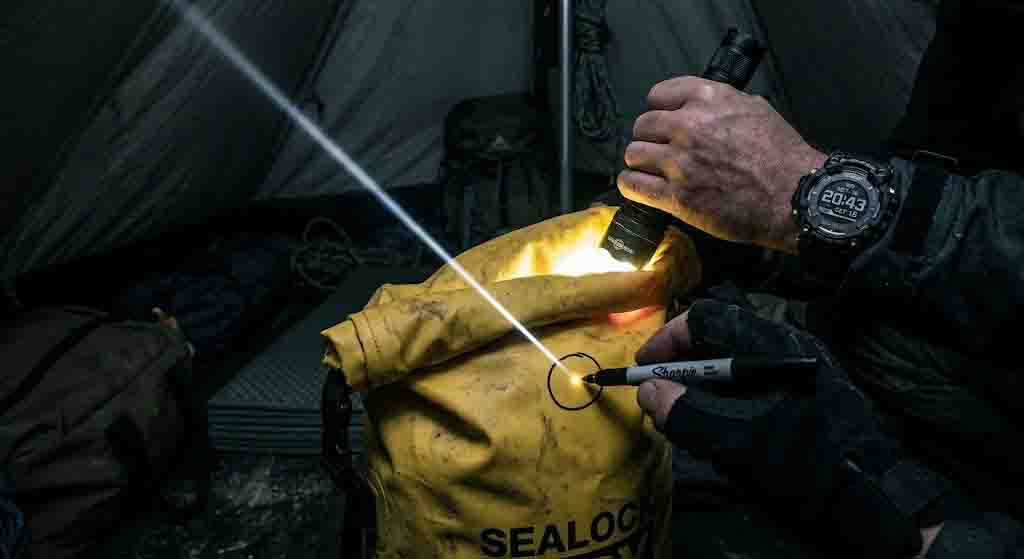
- Turn on a bright flashlight or your phone's horizontal torch and place it inside the dry bag.
- Roll the top closure down tightly to trap the light inside.
- Slowly rotate the bag in your hands. Any pinhole or worn spot will instantly show up as a sharp pinpoint of light piercing through the fabric. Mark the leaking spots on the outside with a piece of tape or a marker.
Step 2: How to Patch Your Dry Bag at Home
If your bag is made from premium TPU fabric (Thermoplastic Polyurethane), it has a massive advantage over cheap PVC bags: it loves glue. TPU fabric reacts incredibly well to flexible polyurethane adhesives (like Seam Grip). Instead of just sitting on top like standard duct tape, the right adhesive bonds with the material to create a permanent, flexible seal.
For tiny pinholes: Clean the area with rubbing alcohol to remove any river mud or grease. Apply a single drop of flexible polyurethane glue directly onto the hole. Smooth it out so it covers about 10mm around the leak. Let it dry flat for 12 to 24 hours.
For larger cuts (up to 30mm): Use a rounded TPU patch from a standard outdoor repair kit. Apply a thin layer of glue to both the bag and the patch, let it sit for two minutes until it feels tacky, and press them firmly together. Smooth out any trapped air bubbles from the center to the edges.
The Safety Limit: How Reliable is a Repaired Bag?
Can it handle heavy rain and splashes? Yes. A properly cured patch easily restores your bag's standard splashproof protection.
Can you submerge it? Use caution. While a patched pinhole can hold air pressure, do not pack expensive electronics or cameras in a repaired bag if you expect it to be fully underwater for long periods.
How long does a patch last? A good polyurethane glue bond on TPU fabric can easily last for several seasons if kept away from direct heat.
Why Did My Bag Leak in the First Place?
Understanding why your gear wears out is the best way to prevent your next leak. The two biggest culprits are sand and bad storage habits:
- The Sand Factor: Fine sand and grit get trapped in the creases of your roll-top system. When you roll the bag closed, that grit acts like sandpaper, grinding against the waterproof coating until a microscopic hole opens up. Always wipe down the rim of your bag before rolling it.
- The Storage Trap: Storing your bag while it is still damp inside from wet gloves, wet towels, or overnight rainstorms creates a breeding ground for mold. Over months, this trapped moisture breaks down the waterproof lining, making the inside sticky and prone to peeling. Always wash your bag with fresh water and hang it upside down to dry completely before packing it away for the winter.
When Is It Time to Replace Your Bag?
If the leak is along a seam line, or if the fabric is splitting where two panels join, home glues will not save it. True waterproof bags rely on factory high-frequency heat welding to fuse the fabric together. Once a factory weld splits due to age or extreme stress, it cannot be rebuilt with a DIY repair kit.
If your bag has structural seam splits, it is safer to upgrade before your next major trip. To understand what goes into building a reliable, factory-sealed edge, you can read our deep dive on waterproof submersion testing standards, or browse our current heavy-duty waterproof gear collection.
A Note for Outdoor Brands & Outfitters
At Sealock Outdoor Gear Co., Ltd., we know that field durability defines a brand's reputation. That is why we don't rely on stitched and taped seams that fail over time. We manufacture heavy-duty TPU dry bags using industrial-grade 27.12 MHz molecular welding to ensure seams never delaminate under pressure. Operating from our primary facilities in Dongguan, China, and our tariff-optimized Phase II plant in Binh Duong, Vietnam, we provide global brands with certified B2B manufacturing compliant with SMETA P4, HIGG, SCAN, GRS, BSCI, and ISO9001.
To discuss custom material specs, bulk sourcing, or to request factory documentation, please reach out through our B2B contact gateway.