
- English
- Español
- Português
- русский
- Français
- 日本語
- Deutsch
- tiếng Việt
- Italiano
- Nederlands
- ภาษาไทย
- Polski
- 한국어
- Svenska
- magyar
- Malay
- বাংলা ভাষার
- Dansk
- Suomi
- हिन्दी
- Pilipino
- Türkçe
- Gaeilge
- العربية
- Indonesia
- Norsk
- تمل
- český
- ελληνικά
- український
- Javanese
- فارسی
- தமிழ்
- తెలుగు
- नेपाली
- Burmese
- български
- ລາວ
- Latine
- Қазақша
- Euskal
- Azərbaycan
- Slovenský jazyk
- Македонски
- Lietuvos
- Eesti Keel
- Română
- Slovenski
- मराठी
- Srpski језик

TPU Waterproof Duffel Bags: Performance Advantages
Sealock manufactures TPU waterproof duffel bags for OEM and wholesale buyers from factories in China and Vietnam. TPU has become the default material for premium waterproof duffels, but the reason is not a single headline property — it is that TPU delivers an unusual combination at once: it stretches without tearing, stays pliable in freezing conditions, resists abrasion, and bonds cleanly under RF welding. This sets out how each of those behaves specifically on a duffel, and the one material distinction most buyers never ask about.
1. Company and Production Base
Sealock (YiFuLong Outdoor Gear Co., Ltd.) has built welded waterproof bags for over 20 years, producing for international outdoor and marine brands including OSPREY, Helly Hansen, West Marine, and CHUMS.
- Established: 2003
- Facilities: Dongguan, China | Ho Chi Minh City, Vietnam — either origin available on any model
- Certifications: ISO 9001, BSCI, SMETA, HIGG, GRS, SCAN
- Terms: MOQ 300 pcs per model, samples 7–15 days, bulk 30–45 days, FOB Guangdong
2. What TPU Actually Is on a Duffel
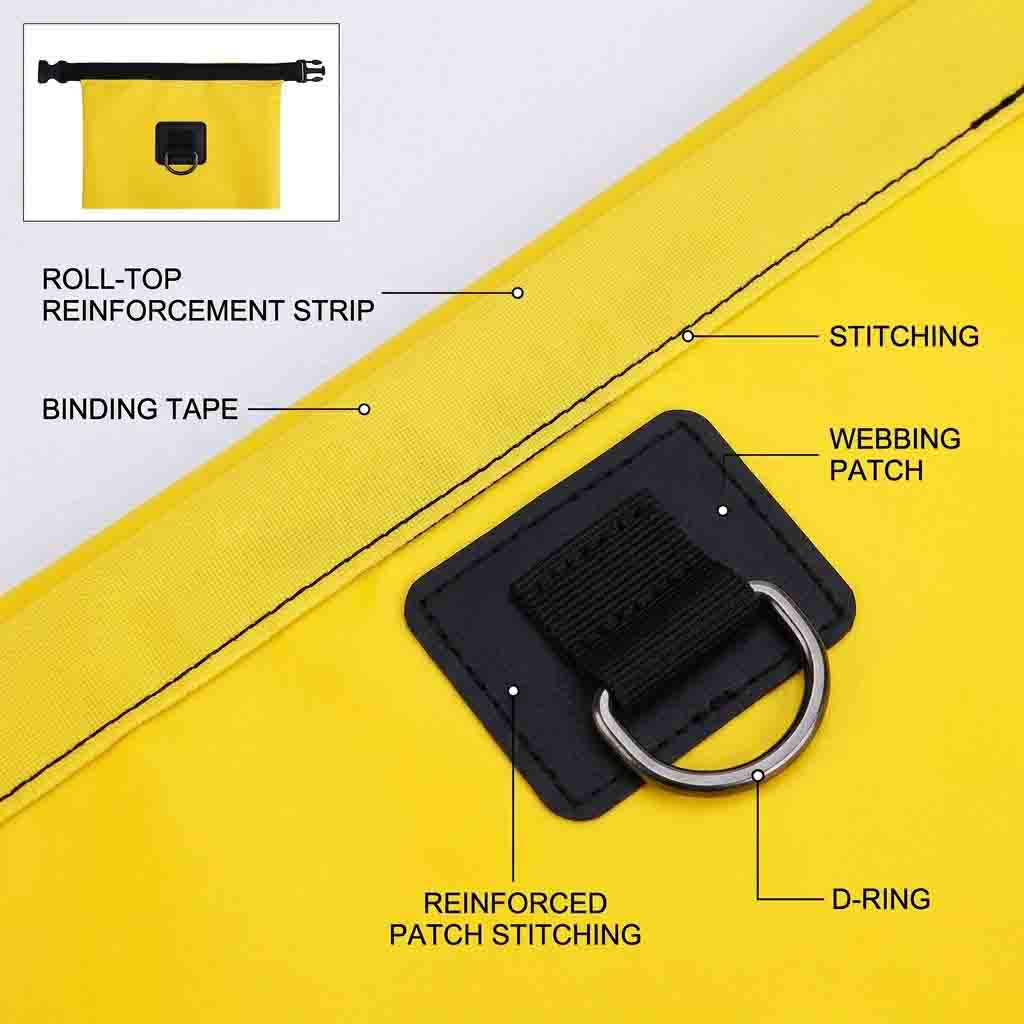
TPU is a thermoplastic polyurethane film laminated to a base textile — usually nylon or polyester. The film is the waterproof barrier; the fabric underneath provides the mechanical strength. Premium outdoor programmes generally specify TPU-laminated nylon rather than polyester, because nylon offers higher tear strength and abrasion resistance at equivalent denier.
The distinction between coating and lamination matters at the specification level: a coating is spread or sprayed onto the fabric, while a laminate is a pre-made film heat-bonded to it, which gives stronger adhesion. On a welded duffel this is not academic — the bond between film and fabric is what the weld ultimately relies on.
3. The Performance Advantages, on a Duffel Specifically
- Cold-weather flexibility. TPU stays elastic and pliable at temperatures well below freezing, with a typical working range spanning roughly −30 °C to +80 °C. On a duffel this shows up as a bag you can still fold, roll, and load on a winter dock or an alpine morning, and a zipper track that lies flat rather than fighting the operator.
- Abrasion resistance where duffels take it. Duffels are dragged, stacked, and set down more than any other category. TPU withstands friction from rock, sand, gravel, and vegetation, and resists stress cracking, punctures, and tearing from repeated bending or impact — the specific failure mode that ends a duffel's life at the base and corners.
- Elasticity under load. TPU stretches and recovers rather than splitting, which suits a bag that gets over-packed and compressed. Repeated stretching and compression is where brittle materials fail first.
- Strength without dead weight. The thin laminate delivers protection at lower weight, which matters most on 40–70L bags that are already heavy when full.
- Chemical and oil resistance. TPU resists mild acids, alkalis, oils, and solvents — relevant on fuel docks, in truck beds, and around marine engines where duffels routinely live.
- Low odour. TPU needs no plasticizers, so it avoids the vinyl smell that builds up inside a sealed PVC bag, a recurring source of end-user complaints on enclosed gear.
- Clean RF welding. TPU bonds reliably under high-frequency welding, allowing the continuous needle-hole-free skin a waterproof duffel depends on.
4. The Question Buyers Rarely Ask: Ether or Ester?
Not all TPU is the same, and on a duffel the difference is commercially significant. TPU comes in two families:
|
|
Ester-based TPU | Ether-based TPU |
|---|---|---|
| Strength and abrasion | Excellent | Good |
| Chemical resistance | Excellent | Good |
| Hydrolysis resistance | Lower — more prone to breakdown in prolonged wet or humid conditions | Higher — the reason it is preferred where moisture is constant |
| Cold flexibility | Good | Superior |
Hydrolysis is the chemical degradation that moisture drives over time, causing a material to soften, crack, and lose structural integrity. For a duffel that lives on boats, sits in humid storage, or ships through tropical maritime lanes, hydrolysis resistance is what separates a bag that lasts years from one that degrades much sooner. Buyers specifying for marine, tropical, or long-storage programmes should raise this with any supplier — it is a formulation question, not a denier question, and it is the single most useful TPU detail most enquiries never cover.
5. Denier: TPU Is the Coating, Not the Strength
A recurring sourcing error is treating "TPU" as a complete specification. TPU is the barrier; the number in front of it — 420D, 840D — is the base fabric that carries tear and abrasion strength. On duffels:
- 840D TPU — the heavy-duty standard for travel and expedition duffels, matching the abrasion resistance buyers expect from a rugged bag while keeping TPU's weight and flexibility advantages.
- 420D TPU — for lighter, more packable programmes where weight leads over maximum abrasion life.
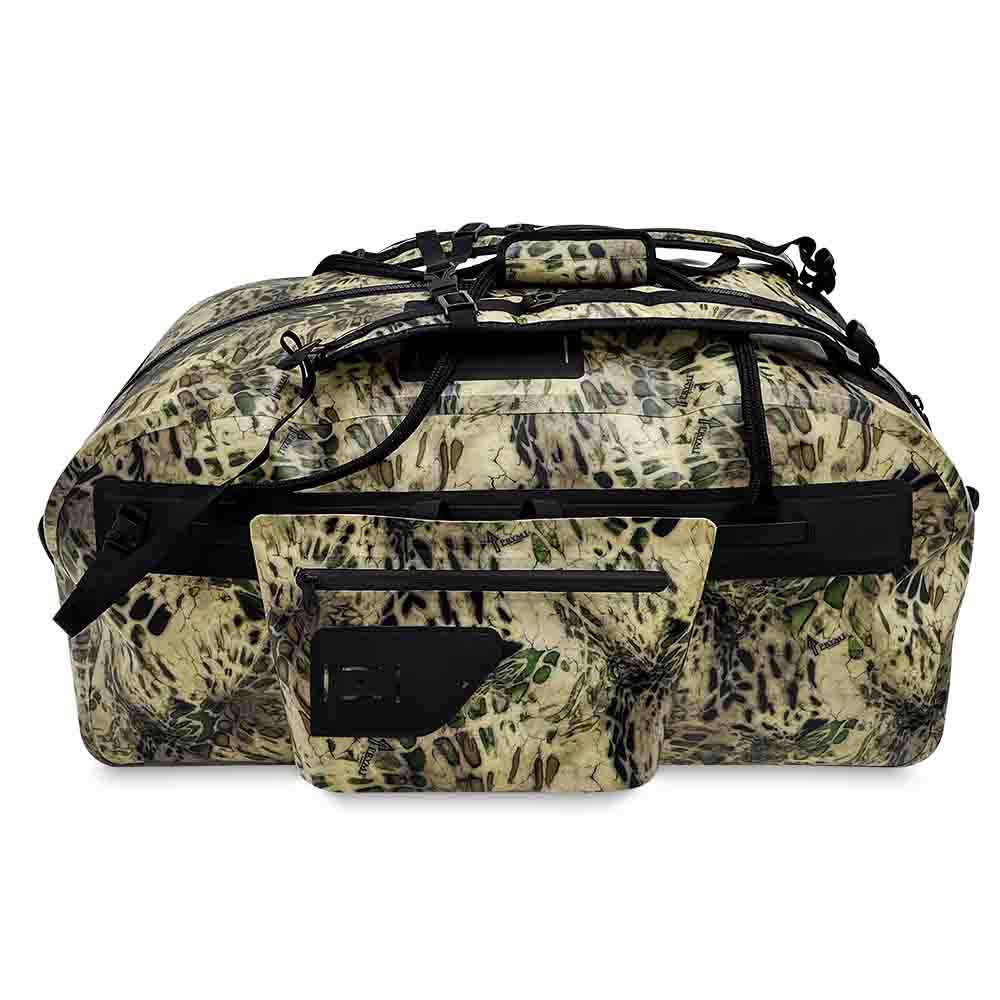
- Printed TPU laminate — for camo and pattern programmes, with tear and abrasion resistance retained through the print.
Coating thickness and total GSM should be confirmed alongside denier, since two fabrics labelled the same can differ materially. The wider material comparison is set out in the guide to TPU material advantages, and the direct trade-off against PVC in TPU duffels versus traditional PVC designs.
6. Where PVC Still Wins
Sealock builds both, and TPU is not the answer to every programme. PVC's thicker coating gives excellent surface abrasion resistance and a rigid body that holds its shape, at a materially lower cost — which suits value lines, high-volume programmes, and bags where a structured form is a selling point. The honest framing for a buyer is that TPU buys longevity, cold performance, low weight, and a cleaner environmental profile; PVC buys cost and rigidity. The PVC cost and performance guide covers where that case holds.
7. Verifying TPU Performance in Production
Material advantages only survive if the welding and lamination hold, so bonding strength is watched closely on TPU programmes. Every batch runs IQC on incoming laminate, zippers, and hardware; IPQC on welds and zipper installation in process, including peel tests on sample welds at run start; and OQC with AQL sampling, batch immersion testing, and signed gold-sample comparison. The laboratory suite covers full water immersion, load testing over 1,500 cycles at handles and anchors, 3,000 sealed-zipper cycles, tensile and bonding strength, salt spray, friction resistance, colour fastness, and colour difference.
On technical duffels a 100% inflation and leak-testing gate is applied after assembly, with technicians manually verifying the top closure zipper and base welding points, and the full customer inspection procedure — unboxing, vacuum extraction, a 24-hour static rest, and air-leak determination — can be witnessed end to end. Standards are set out in the quality control standards for waterproof production.
8. TPU Duffel Range
Models organized by type rather than priority:
| Image | Model | Capacity | TPU spec | Closure / rating | Product Page |
|---|---|---|---|---|---|
|
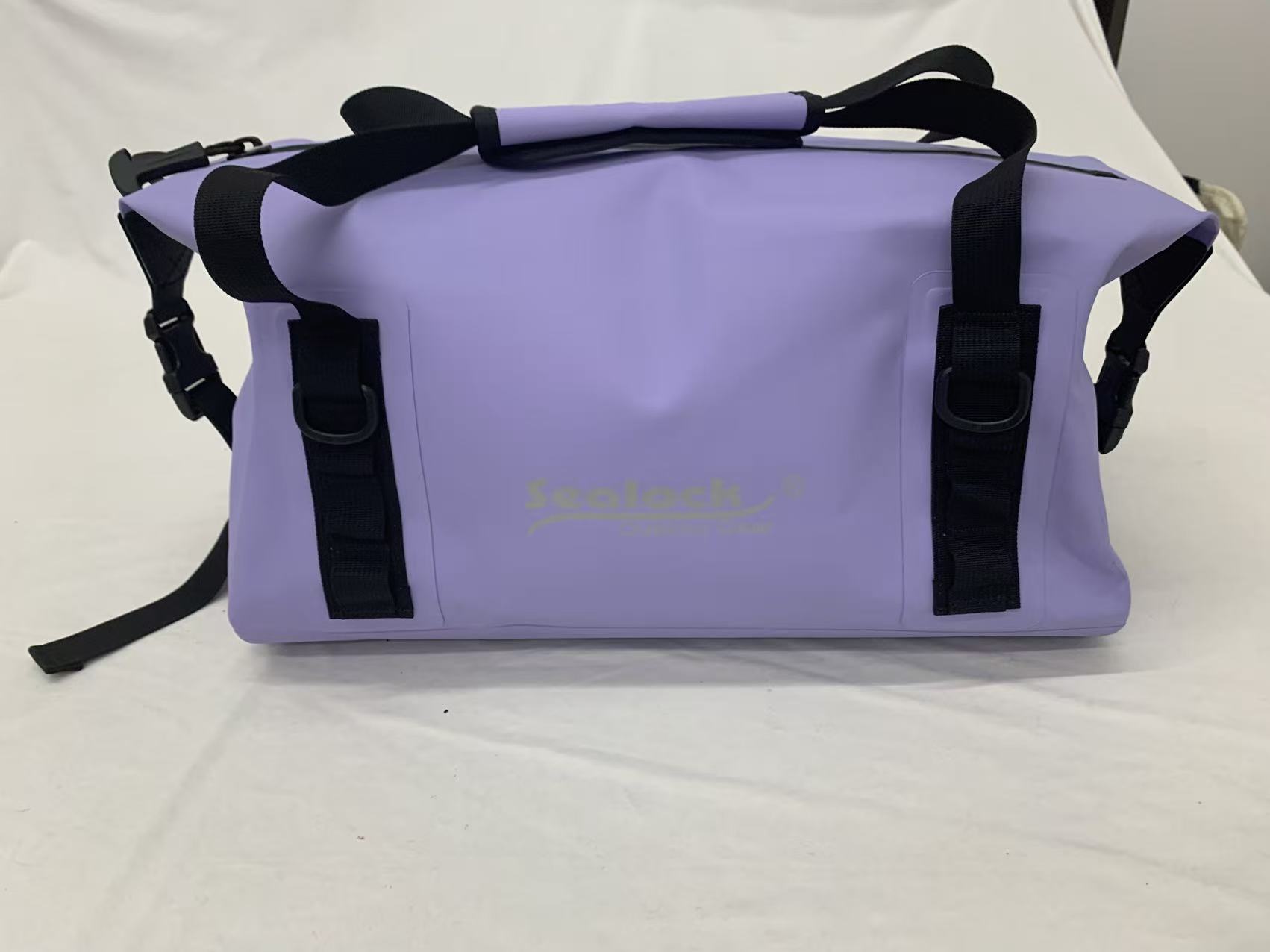
SL-C878 | 20L | 840D TPU laminate | Airtight zipper · IPX7 · base board | View |
|
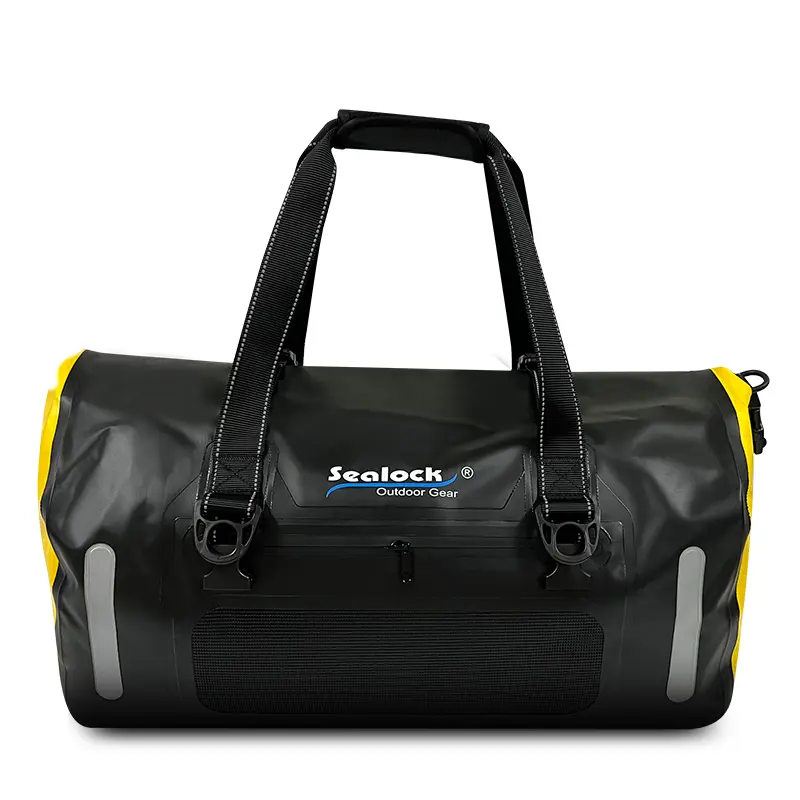
SL-K099 | 40 / 60L | 840D TPU | Roll-top · IPX7 · removable strap | View |

|
SL-C261 | 30L | TPU composite | IPX8 zipper · foldable | View |
|
SL-C893 | 70L | Printed TPU laminate | Coated zipper · IPX6 · detachable pouch | View |

|
SL-C689 | 25L | TPU (HF welded) | Roll-top / zipper · backpack straps | View |
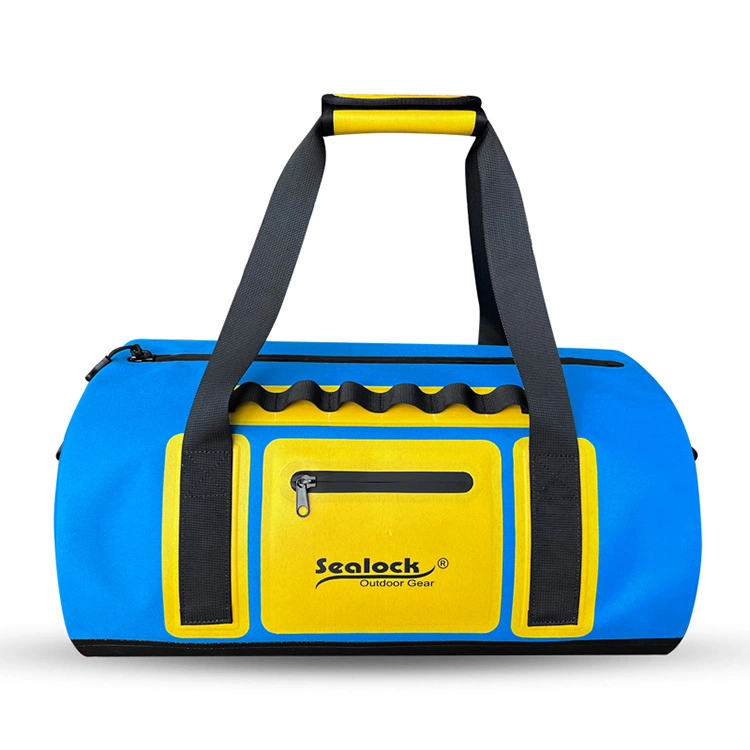
|
SL-C759 | 25L | TPU composite | Waterproof zipper · multi-sport | View |
A PVC design can also be quoted in a TPU version where a buyer wants the material upgrade — the 55L SL-C594 is offered both ways. Full categories sit under duffels, dry bags, and dry backpacks. Customization scope is covered in the guide to OEM duffel factory customization.
9. FAQ
Q: Is TPU actually more waterproof than PVC?
A: No — both are impermeable, and the waterproof rating comes from welded construction and the closure, not the coating type. TPU's advantages are elsewhere: cold flexibility, elasticity, abrasion and stress-crack resistance, low weight, low odour, and longer service life.
Q: What is hydrolysis and should I worry about it?
A: It is moisture-driven chemical degradation that softens and cracks a material over time. It matters on duffels used in marine environments, stored humid, or shipped through tropical lanes. Ether-based TPU resists it better than ester-based; raise the formulation with your supplier rather than only discussing denier.
Q: Does TPU hold up to being dragged and stacked?
A: Yes, in an appropriate denier. TPU resists friction from rock, sand, and gravel and resists stress cracking and puncture from repeated bending — specify 840D for heavy-duty duty and add a reinforced base where wear concentrates.
Q: Will a TPU duffel work in freezing conditions?
A: That is one of its strongest cases. TPU stays flexible well below freezing across a working range of roughly −30 °C to +80 °C, so the bag still folds and the closure still operates on a winter dock, where stiffer materials crease and crack.
Q: Why does the same denier cost more in TPU?
A: The denier describes the base fabric, which is similar; the difference is the laminated film and its processing, plus tighter welding control. You are paying for longevity, cold performance, lower weight, and a plasticizer-free profile rather than for a higher waterproof rating.
Q: Can I upgrade an existing PVC model to TPU?
A: Yes, on most designs — the 55L travel duffel is quoted in both. Material change affects weight, hand-feel, cost, and sometimes welding parameters, so it is confirmed at sampling rather than assumed to be a drop-in substitution.
Request TPU Specs and Samples
For TPU denier options, formulation guidance, material data, or an OEM proposal, submit an inquiry. Sealock responds to procurement enquiries within 24 hours, with production from Dongguan, China or Ho Chi Minh City, Vietnam.