
- English
- Español
- Português
- русский
- Français
- 日本語
- Deutsch
- tiếng Việt
- Italiano
- Nederlands
- ภาษาไทย
- Polski
- 한국어
- Svenska
- magyar
- Malay
- বাংলা ভাষার
- Dansk
- Suomi
- हिन्दी
- Pilipino
- Türkçe
- Gaeilge
- العربية
- Indonesia
- Norsk
- تمل
- český
- ελληνικά
- український
- Javanese
- فارسی
- தமிழ்
- తెలుగు
- नेपाली
- Burmese
- български
- ລາວ
- Latine
- Қазақша
- Euskal
- Azərbaycan
- Slovenský jazyk
- Македонски
- Lietuvos
- Eesti Keel
- Română
- Slovenski
- मराठी
- Srpski језик

Motorcycle Tail Bag Manufacturer for OEM Projects
Sealock manufactures motorcycle tail bags for OEM and private label projects from factories in China and Vietnam. The tail bag is the highest-volume position in motorcycle luggage for a structural reason: it needs no side racks, no permanent hardware, and no bike-specific frames, so a single product can sell across a whole dealer catalogue. That also makes it the position where specification mistakes are most expensive, because a bag that does not sit properly on a pillion seat cannot be fixed after tooling. This covers the OEM decisions that matter on this product type.
1. Company and Terms
Sealock (YiFuLong Outdoor Gear Co., Ltd.) has built welded waterproof bags for over 20 years, producing for international outdoor and motorcycle brands including Benelli, Helly Hansen, OSPREY, and CHUMS.
- Facilities: Dongguan, China | Ho Chi Minh City, Vietnam — either origin available on any model
- MOQ: 300 pcs per model | Samples: 7–15 days | Bulk: 30–45 days by quantity
- Capacity: 30,000 pcs/month on the roll-top luggage line; 15,000 pcs/month on tail bag lines
- Terms: FOB Guangdong from Shenzhen, T/T 30% deposit and 70% balance against inspection
- Certifications: ISO 9001, BSCI, SMETA, HIGG, GRS, SCAN
2. Why the Tail Bag Position Sells
A tail bag mounts over the pillion seat or rear rack and carries its load low and centred over the rear axle, which is why a properly packed one barely affects handling — problems come from overpacking or uneven strapping rather than the bag itself. For a brand that means a product with no fitment matrix to maintain, no rack purchase attached to the sale, and a customer who can strip the bike back to standard in a minute. It is also the position riders reach for first: a rider who owns nothing else buys a tail bag before panniers.
3. Five OEM Platforms in This Position
| Platform | Type | Suits |
|---|---|---|
| SL-C807 45L | Roll-top ADV tail bag, hook-and-loop panel plus compression straps, rated 8–12 kg | Adventure and touring ranges |
| SL-C619 35 / 50L | Roll-top rack bag, POM buckles, heavy-duty D-rings, reflective print | High-volume core line |
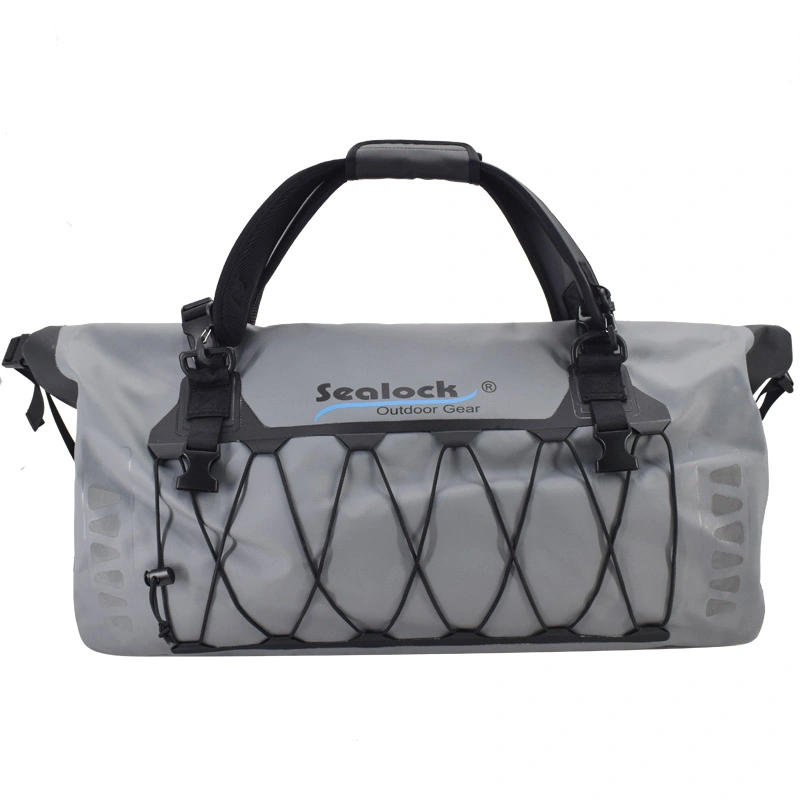
| SL-C629 40 / 60 / 90L | Backseat tail bag, one-year warranty, wide capacity ladder | Touring and cargo-heavy markets |
| SL-C624-A 45 / 60L | Backseat tail bag, five stock colours | Value and colour-led programmes |
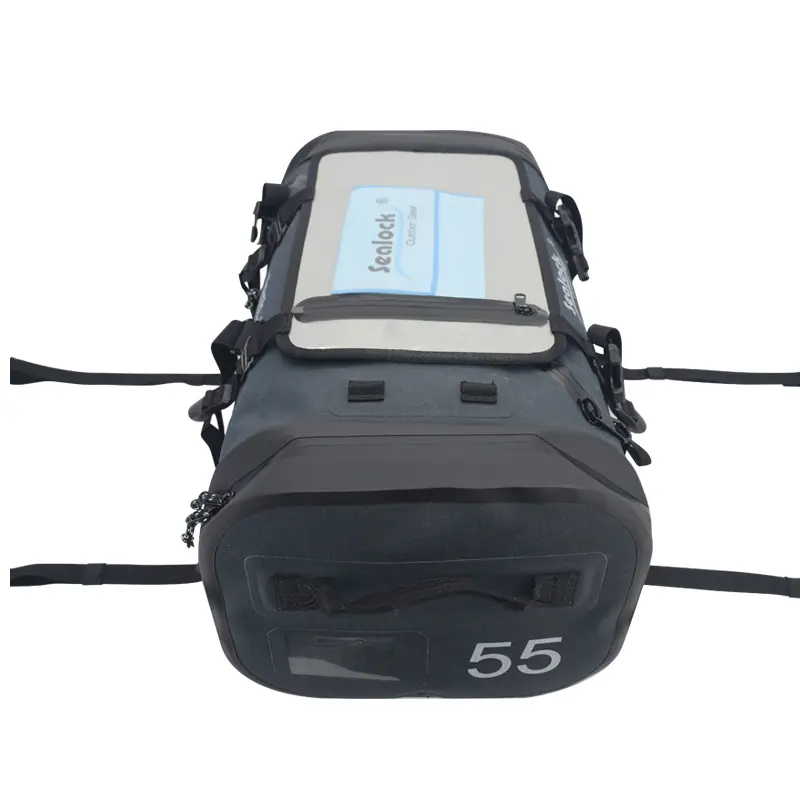
| SL-E984 55L | Airtight-zipper TPU three-way, IPX7, 1.27 kg, registered design patent | Premium tier |
Most OEM projects start from one of these and are modified, which avoids new die tooling and shortens development. Ground-up development from a sketch or target spec is also supported.
4. Specify Footprint Before Capacity
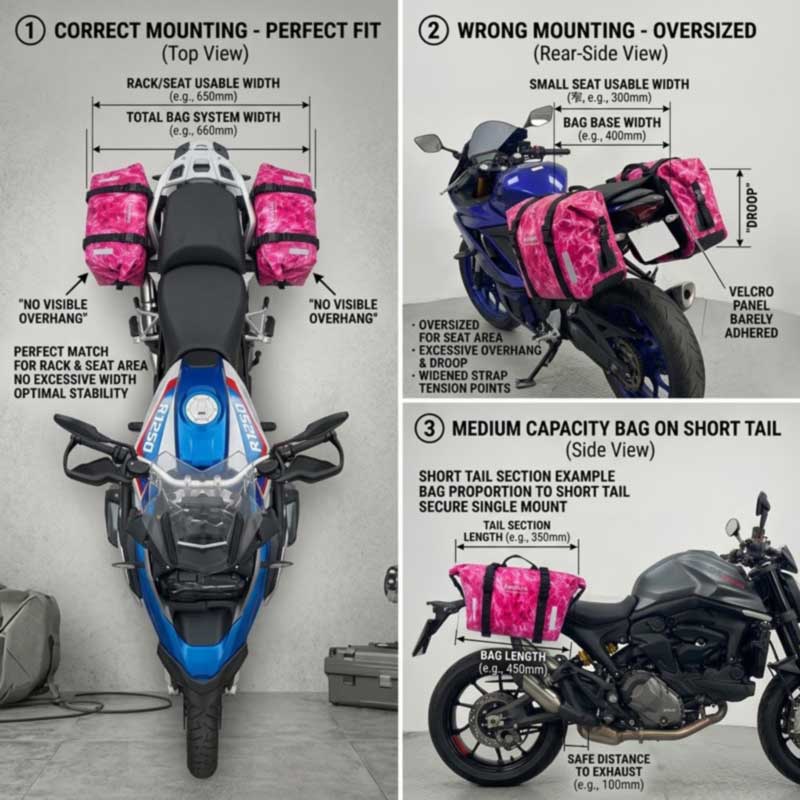
This is the mistake that ruins tail bag programmes. Capacity is what marketing wants to lead with, but fit is what determines whether the product works: bag length and width should stay within an inch or two of the available surface on the pillion seat or rack, because a bag that overhangs the sides sags, shifts, and looks wrong on the bike. The motorcycle's tail section shape also decides how stable a loaded bag can be under acceleration and braking — short tail sections need moderate volume, not maximum volume.
For an OEM brief that means starting from the seat and rack dimensions of the machines in the target market, then choosing capacity to fit, rather than the reverse. Base dimensions across the platforms — 58 × 32 × 28 cm on the 45L, 48 × 30 × 35 cm on the 50L, 45 × 25 × 31 cm on the 35L, 57 × 32 × 26 cm on the 55L — are the numbers worth checking against those surfaces first.
5. The Capacity Ladder and Passenger Compatibility
Across the platforms the ladder runs 35, 40, 45, 50, 55, 60, and 90L, which covers the full spread of use cases from a commuter carrying a helmet and jacket to a tourer carrying camping gear. Two specification points follow:
- Passenger use is a real constraint. Compact bags mounted forward on the seat can leave room for a pillion; larger bags reduce passenger space significantly or rule out two-up riding entirely. A range covering both a compact and a large option serves customers who ride solo and those who do not.
- Bigger is not automatically better. The most common rider need sits in the middle of the ladder, and the larger sizes serve touring and cargo markets specifically rather than the general catalogue.
6. Expansion: The Feature and Its Trap
Expandable tail bags are popular because they behave like two bags in one — compressed for a commute, expanded for a tour. The trap is well documented in independent testing: expanding a bag to its full width can push the strapping points out so far that securing it stably to a rack or pillion seat becomes difficult, so the bag works well at moderate volume and poorly at maximum.
The engineering answer is to expand upward rather than outward, keeping the mounting footprint constant while the height changes, and to route compression straps so they hold the load down at the same anchor spacing in both states. A roll-top achieves the same outcome naturally — rolling more or fewer turns changes volume without moving a single strap point, which is one reason roll-top construction dominates this position.
7. Mounting Specification
- Strap sets. Include more straps than the minimum and in more than one length — fitment across different seat shapes and subframes is the single biggest source of support enquiries, and generous strapping is consistently praised in rider testing.
- Contact surface. Specify a soft, non-abrasive base so the bag does not mark paintwork, and route straps so they do not drag across bodywork during fitting.
- Mounting method. A hook-and-loop panel plus adjustable compression straps suits pillion-seat mounting; quick-release strap sets suit riders who remove the bag daily; rack mounting with D-ring anchors suits heavier loads.
- Glove operability. Buckles and pulls should work with cold, wet, gloved hands — the condition in which the bag is actually fitted and removed.
8. Off-Bike Carry Changes the Price Point
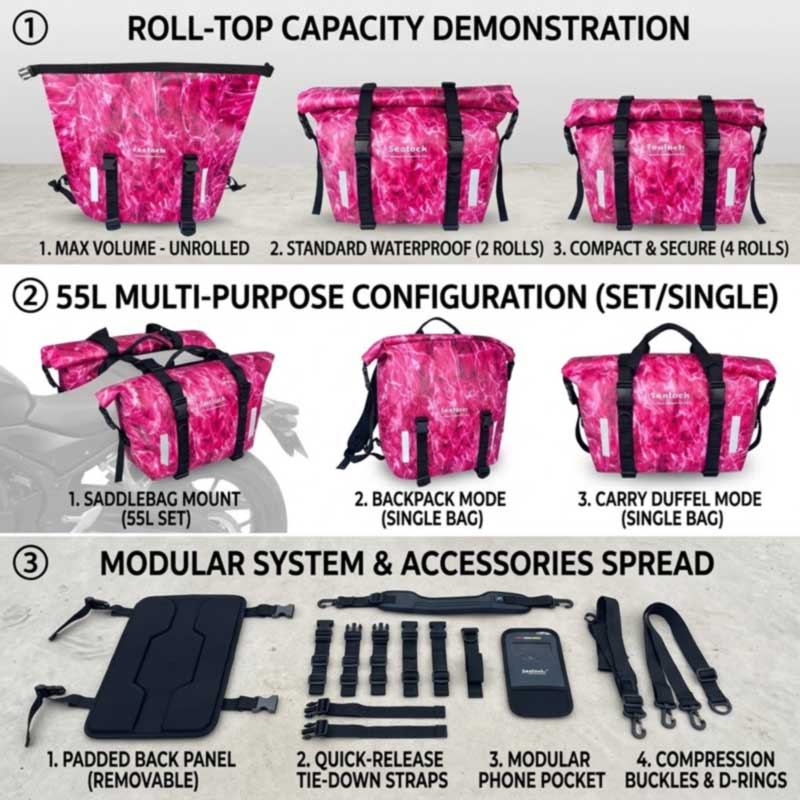
The category has shifted toward modular, quick-release bags that convert for off-bike carry, which matters at overnight stops and moves a product up a tier. The 55L three-way platform is built around this: it strap-mounts to the bike, converts to a backpack with a removable padded harness board, or carries by hand, with four quick-release straps, a shoulder strap, and a sealed phone pouch that all come off when not needed. A brand adding one convertible model above a roll-top core line gets a visible reason for the higher ticket rather than a price step the customer has to take on faith.
9. Publish a Load Rating
Most tail bag listings avoid the question, and dealers get asked it constantly. Soft tail bags typically carry a modest load comfortably, and overloading strains the straps and affects handling — so a published figure protects the brand as much as it helps the customer. The 45L platform is rated 8–12 kg, and any OEM programme should carry its own stated figure. It is worth explaining in customer-facing copy that a motorcycle's rack rating is a separate number describing what the rack may carry, not what the bike can carry.
10. OEM Scope
Beyond logo and colour, a tail bag programme can specify base dimensions and footprint, capacity and expansion method, closure type from roll-top to airtight zipper, fabric and denier across 500D PVC tarpaulin and 420D TPU laminate, mounting system and strap set composition, rated load, reflective placement and coverage, matte or gloss finish, D-ring and lash point layout, carry modules for off-bike use, and packaging for dealer and e-commerce channels. New geometries need their own machined die, quoted separately and built before sampling, so launch dates should be shared at enquiry. The 55L platform's appearance is protected by a registered design patent; OEM partners receive distinct original development rather than copies of protected artwork.
11. Tail Bag Range
Models organized by type rather than priority:
| Image | Model | Capacity | Dimensions | Material / closure | Product Page |
|---|---|---|---|---|---|
|
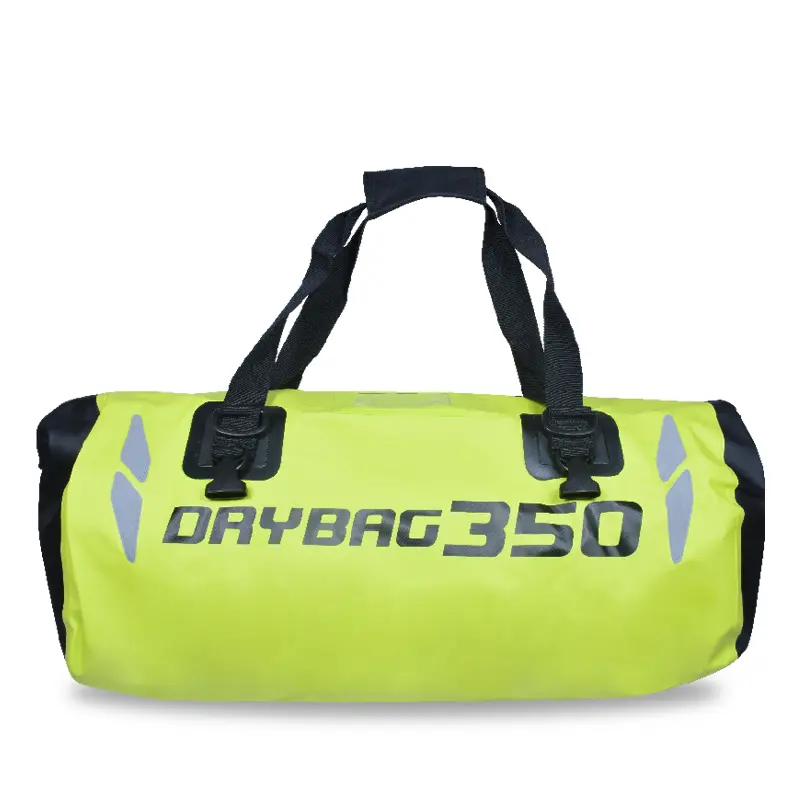
SL-C807 | 45L | 58 × 32 × 28 cm | 500D PVC / 420D TPU · roll-top · IPX6 · rated 8–12 kg | View |
|
SL-C619 | 35 / 50L | 50L 48 × 30 × 35 cm · 35L 45 × 25 × 31 cm | 500D PVC tarpaulin · roll-top · IPX6 · rack mount | View |
|
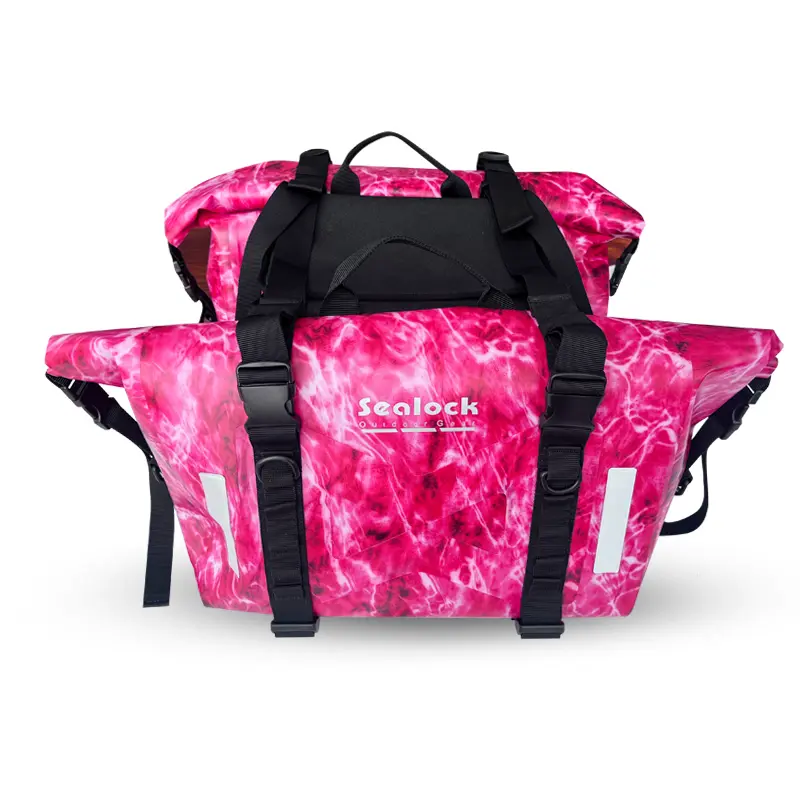
SL-E984 | 55L | 57 × 32 × 26 cm · 1.27 kg | Ripstop TPU · airtight zipper · IPX7 · three-way carry | View |
|
SL-C629 | 40 / 60 / 90L | 56 × 32 × 50 cm | 500D PVC tarpaulin · backseat / tail rack · one-year warranty | View |

|
SL-C624-A | 45 / 60L | To specification | PVC tarpaulin · backseat mount · five stock colours | View |
Full categories sit under waterproof bags, duffels, and dry bags. Sizing guidance for the most common capacity is in the 40L tail bag guide, category engineering in the guide for adventure brands, and the welding behind the construction in the RF welding factory guide.
12. Quality Control
Every batch runs IQC on incoming tarpaulin, hardware, and reflective materials; IPQC on welds and mounting-point construction in process, including peel tests on sample welds at run start; and OQC with AQL sampling, batch testing, and signed gold-sample comparison. Load cycling over 1,500 cycles targets mounting straps, D-rings, and handles, alongside tensile and bonding strength, salt spray, friction resistance, colour fastness, and colour difference. Waterproof verification runs as immersion testing for IPX7 models and rain and jet testing for IPX6. The full customer inspection procedure — unboxing, vacuum extraction, a 24-hour static rest, and air-leak determination — can be witnessed end to end, with SGS or QIMA inspection available. Standards are set out in the quality control standards for waterproof production.
13. FAQ
Q: What should we specify first on a tail bag project?
A: The footprint, not the capacity. Bag length and width should stay within an inch or two of the pillion seat or rack surface on the bikes in your market. A bag that overhangs sags and shifts, and no amount of strapping fixes it after tooling is cut.
Q: Should the bag be expandable?
A: Only if it expands upward. Expanding outward pushes the strap points wide and makes the bag hard to secure stably at full volume — a documented complaint in independent testing. A roll-top gives the same volume flexibility without moving any anchor point.
Q: What capacity should the core model be?
A: The middle of the ladder covers most riders, with larger sizes serving touring and cargo markets. Remember that larger bags reduce or eliminate pillion space, so a range with a compact and a large option covers both solo and two-up customers.
Q: How many mounting straps should be included?
A: More than the minimum, and in more than one length. Seat shapes and subframes vary widely, generous strap sets are consistently praised in rider testing, and fitment is the largest source of after-sale support enquiries.
Q: Does a tail bag affect handling?
A: Not when properly mounted and reasonably packed, because the load sits low and centred over the rear axle. Handling complaints come from overpacking and uneven strapping — which is why publishing a load rating and clear fitting instructions is part of the product, not an extra.
Q: How do we justify a premium model above the core line?
A: With a visible functional difference rather than a spec claim. Off-bike carry conversion, an airtight zipper at IPX7, and removable carry modules give the customer a reason they can see and use at an overnight stop.
Request a Tail Bag OEM Proposal
For platform selection, footprint matching to your market's machines, samples, or a full OEM proposal, submit an inquiry. Sealock responds to procurement enquiries within 24 hours, with production from Dongguan, China or Ho Chi Minh City, Vietnam.