

What Anglers Ask About Fish Kill Bags: Leaks, Ice Life, Smell and Size, and the Specifications That Answer Them
A fish kill bag is an insulated soft cooler built to hold a catch on ice aboard a boat, a kayak or a pier, then roll flat when it is empty. Anglers ask the same questions again and again: will it leak, how long will the ice last, why does it smell, what size do I need, and will the zipper survive salt water. Each question points to one specification you can fix before you order: the liner construction, the insulation thickness, the drain valve, the stated length and the zipper. This guide answers each question in plain language, explains why, and tells you what to write into the product page and the order. It also shows the insulated 30L to 120L kill bags we manufacture.
Sourcing fish kill bags for your brand, shop or fleet? Send us your sizes, quantity and logo and we will reply within 24 hours.
Quick Reference: Angler Question, Answer and Specification
| Angler question | Plain answer | What to specify |
|---|---|---|
| Will it leak? | Cheap bags leak at seams, zipper and drain | Welded heavy-duty liner, threaded drain valve, airtight zipper |
| How long will ice last? | A day, into a second with good loading | 25 mm closed-cell foam; never quote hours without conditions |
| Why does it smell? | Fish fluid in the foam, or zipped away wet | Welded, non-absorbent food-grade liner |
| What size do I need? | Match the longest fish, not the litres | Publish true internal length in cm and inches |
| Will it fit my kayak? | Yes, if it rolls flat and is sized to the hull | 30L size, or custom size to the locker |
| Will it survive salt and rough use? | Zippers and handles fail first | Airtight zipper, wrap-around webbing, salt tests |
Will a Fish Kill Bag Leak?
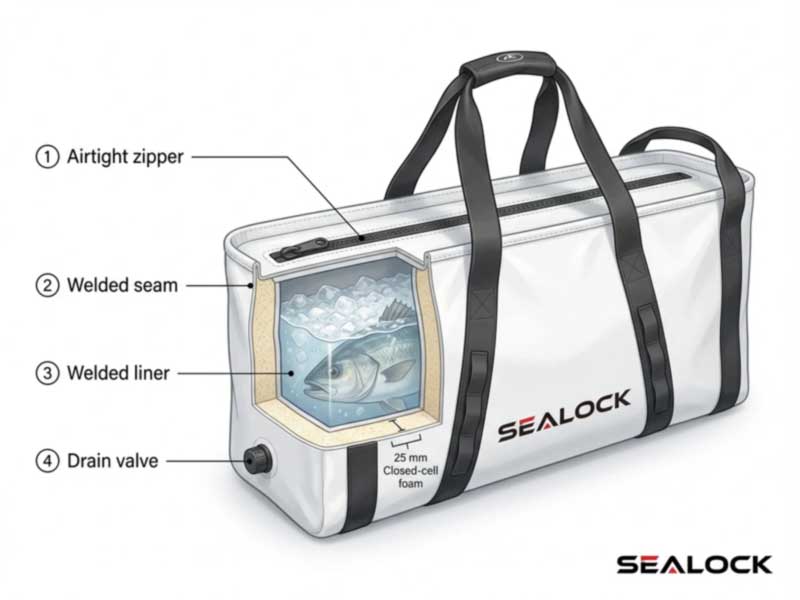
What to tell the customer: Basic kill bags often leak at the bottom seams and through the zipper, and some come with a drain plug that pulls off easily or none at all. A welded bag with a threaded drain valve should hold ice water without leaking, as long as it is not overfilled and is kept upright.
Why it happens: A stitched or loosely sealed seam lets water and fish fluid creep through. Over time the fluid gets into the foam, and that is when the bag starts to smell and loses insulation. Some anglers argue a bag should leak a little so meltwater does not sit around the fish. The better answer is a sealed liner plus a drain valve you control: keep cold meltwater early in the day, then drain it once it warms.
What to specify: A welded outer shell, a separate welded food-grade liner that holds ice slurry away from the foam, a full-length airtight zipper and a threaded drain valve with a gasket. Our insulated fish kill bag uses all four, and we test the liner seal and water retention on every production run.
How Long Will Ice Last in a Fish Kill Bag?
What to tell the customer: A good kill bag holds ice for a full day and into a second one in moderate weather, if it is loaded properly. In very hot weather on an open deck, expect much less. Anglers report ice lasting only until noon on some August days and two days in cooler weather.
Why it happens: The bag is only one of several factors. Air temperature has the biggest effect. A rule of thumb is two parts ice to one part fish by volume. Pre-chilling the bag removes the cost of cooling the insulation itself, and every time the zipper opens, warm air replaces cold. Meltwater is useful while it is cold, but once it warms it works against the fish.
What to specify: Insulation thickness is the number that matters most. Our kill bags use 25 mm closed-cell foam, where many soft bags in the category use about 10 to 15 mm. Closed-cell foam does not soak up water, so it keeps its value after a wet trip. When you write the product page, state the conditions behind any ice-life claim, such as "a full day at moderate temperatures with a 2 to 1 ice ratio", rather than a single bare number of hours.
Why Does My Kill Bag Smell, and How Do I Clean It?
What to tell the customer: Rinse it out after every trip, let it dry fully open, and never zip it away wet. A smooth, non-absorbent lining rinses clean in a few minutes. Many anglers add a little white vinegar to the rinse water for odour.
Why it happens: Fish fluid that escapes the liner and soaks into the insulation can never be washed out. A bag zipped up while damp grows mildew, and bags with a rough or stitched interior hold smell.
What to specify: A welded, non-absorbent food-grade liner and closed-cell foam, so fluid cannot reach the insulation. Add a short care card to the pack: rinse, drain, dry open.
What Fish Kill Bag Size Do I Need?
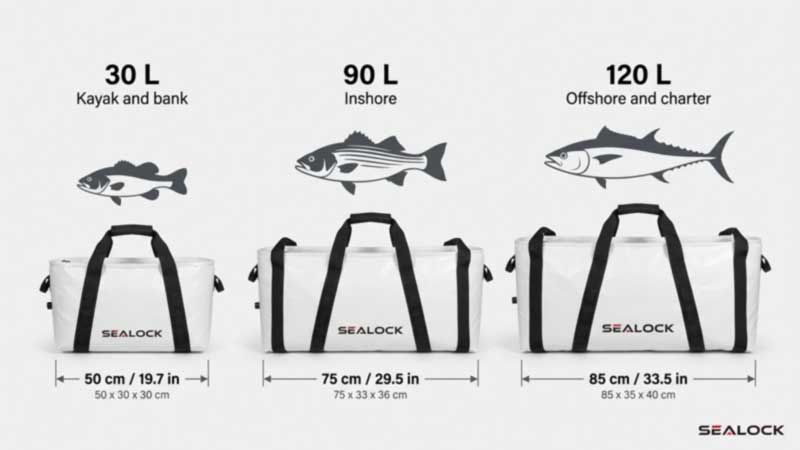
What to tell the customer: Choose the bag by the longest fish you expect to keep, not by total litres. A fish folded to fit a short bag bruises at the bend. Also check the stated size: some buyers complain that the real bag is slightly smaller than the advertised size.
Why it matters: Litres tell you volume, but a long, thin fish needs length. A full-length zipper opening lets the fish go in straight.
| Model | Capacity | Internal size | Suited to |
|---|---|---|---|
| SL-C377 | 30 L | 50 x 30 x 30 cm (19.7 x 10.2 x 9.1 in) | Kayaks, skiffs, bank and pier fishing; bass, trout and panfish |
| SL-C379 | 90 L | 75 x 33 x 36 cm (29.5 x 13.0 x 14.2 in) | Inshore and nearshore boats; striped bass, snapper, grouper |
| SL-C380 | 120 L | 85 x 35 x 40 cm (33.5 x 13.8 x 15.7 in) | Offshore and charter; tuna, wahoo, mahi, kingfish |
What to specify: Publish the true length, width and height in centimetres and inches, and measure them on the finished bag. We can also size a bag to a species or to a named boat's locker.
Will a Kill Bag Fit My Kayak or Small Boat?
What to tell the customer: Yes, if you choose a size that matches your hull and the bag folds down when empty. A hard cooler takes the same space whether it is full or empty. A soft bag settles into the deck or hatch space, stays put instead of sliding, and rolls flat for the trip home.
What to specify: The 30 L size for kayaks and skiffs, plus tie-down points or an adjustable carry strap if the bag rides on deck. We can add rod holders, internal dividers and dual drains on larger sizes.
Will the Zipper and Handles Survive Salt Water and Rough Use?
What to tell the customer: Zippers are the most common failure, especially in salt water, and handles fail when the webbing is anchored to a small patch. Rinse the zipper after salt use and do not overload the handles.
Why it happens: Salt and grit grind into zipper teeth. A loaded bag with fish and ice can weigh many kilograms, and that weight tears a handle patch loose if the load has nowhere else to go.
What to specify: An airtight moulded tooth zipper, and handle webbing that wraps around the whole body and base so the load passes into the structure. We cycle zippers 3,000 times, run a loaded handle test, and expose the shell, liner and hardware to salt water and the cleaning agents used on fish.
Kill Bag or Hard Cooler?
| Option | Strengths | Trade-offs | Best for |
|---|---|---|---|
| Insulated soft kill bag | Conforms to deck space; will not slide; lighter; rolls flat when empty; will not crack | Slightly lower insulation at equal thickness; cannot be sat on | Kayaks, skiffs, small boats, anglers who store the bag between trips |
| Hard cooler | Strong; can be sat on; very good insulation | Fixed size; heavy; takes the same room full or empty | Larger boats with a dedicated space |
If a customer needs a smaller, general-purpose insulated bag for drinks, lunch or bait, see our waterproof coolers and cooler backpacks.
Why Is the Kill Bag Shell White?
What to tell the customer: White reflects sunlight. A dark bag on an open deck absorbs heat straight into the insulation, and the ice melts faster. We make white as the standard colour and black on request.
How We Test a Fish Kill Bag
For kill bags, the tests that matter most are the liner seal and water retention test, the insulation thickness check across every panel including the base and lid, a cold retention test at a controlled temperature with a defined ice load, the drain valve seal test under a full head of slurry, a zipper fatigue test of 3,000 cycles, and a loaded handle test. Inspection runs at three stages, IQC on incoming materials, IPQC through welding and liner assembly, and OQC before the container is sealed, with SGS or QIMA third-party inspection available on request.
Our waterproof test standard: Put a clean paper towel inside the waterproof bag, submerge it in 1.5 meters of water for a 2-hour test. After taking it out, the paper towel must have no water stains.
That standard applies to our submersible dry bags. Our kill bags are rated IPX6, sealed against spray and washdown, and are not designed to be submerged or left floating full.
Fish Kill Bags and Coolers We Manufacture
These products are built in our own factories in China and Vietnam. Every one can be produced with your logo and colours; click the model name for full specifications, or use the inquiry link for pricing and samples.
| Image | Model | Capacity and size | Construction | Use | Inquiry |
|---|---|---|---|---|---|
|
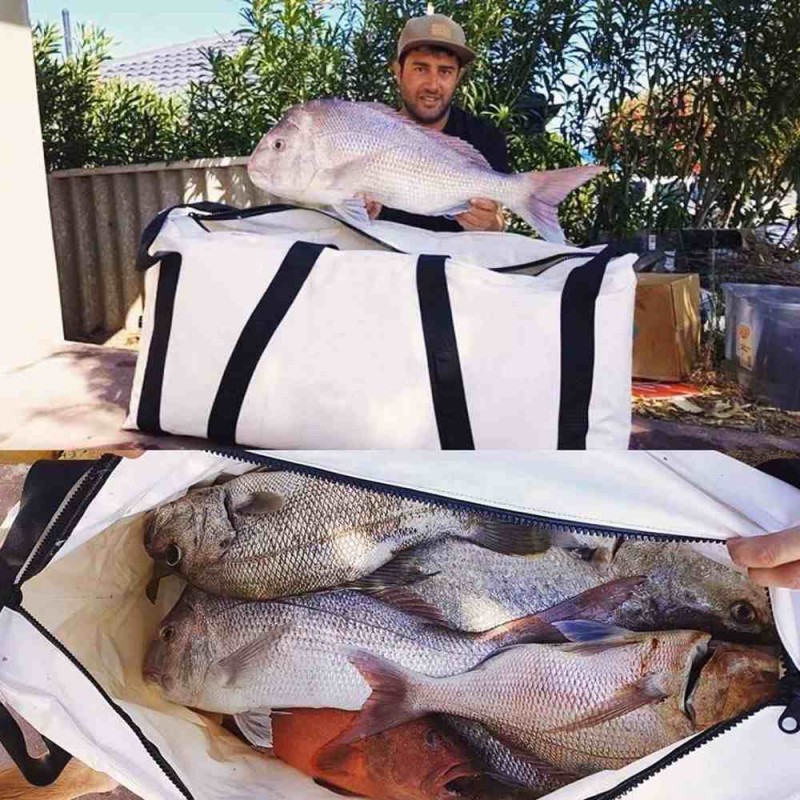
Insulated Fish Kill Bag, 25 mm Insulation (SL-C377, SL-C379, SL-C380) |
30 L: 50 x 30 x 30 cm 90 L: 75 x 33 x 36 cm 120 L: 85 x 35 x 40 cm |
RF-welded PVC shell, 25 mm closed-cell insulation, welded food-grade liner, full-length airtight zipper, threaded side drain valve, wrap-around handle webbing, adjustable detachable strap, IPX6; white or black | Offshore, charter, inshore, kayak and bank fishing, and transport to market | Send inquiry |
|
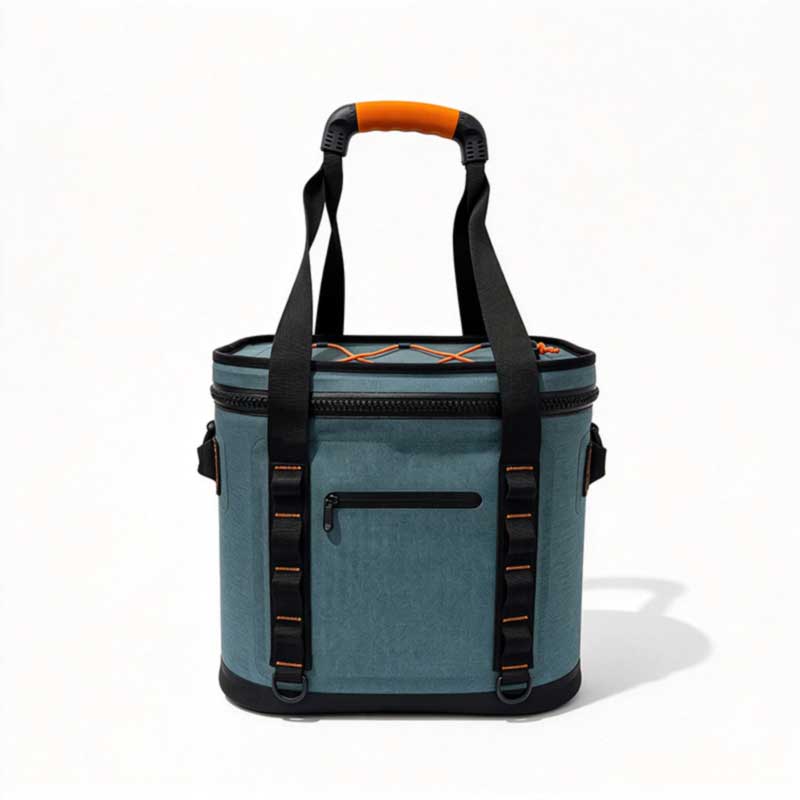
SL-I138 18L Soft Cooler with Bungee Lid and Rigid Handle | 18 L | 26 mm insulated welded TPU body, bungee lid, rigid handle | Bait, drinks and lunch on kayaks and day trips | Send inquiry |
The full range is on our fish cooler bags for kayak, fish cooler bag and fish bag pages, and for gear carried with it, see our fly fishing bags.
Specification Checklist for a Fish Kill Bag Order
| Item | What to decide |
|---|---|
| Size range | 30 L for kayaks and bank, 90 L for inshore, 120 L for offshore; or a custom size to a species or locker |
| Insulation | 25 mm closed-cell standard; thicker or thinner to hit a price or performance target |
| Liner | Welded, non-absorbent, food-grade |
| Drain | Threaded valve with gasket and welded mounting; dual drains on larger sizes |
| Zipper and handles | Full-length airtight zipper; wrap-around handle webbing; detachable strap |
| Colour | White standard for solar reflectance; black on request; Pantone matching |
| Logo | Silkscreen, heat transfer or welded patch; printed capacity marking |
| Extras | Tie-down points, rod holders, internal dividers, care card in the pack |
| Commercial terms | MOQ 300 pieces per design; samples 7 to 15 days; production 30 to 45 days; FOB Guangdong |
Developing a Fish Kill Bag for Your Brand
For fishing brands, tackle retailers, charter operators and tournament organisers, the details that decide reviews are the liner, the drain, the zipper, the stated length and the colour. We can customise the size to a species or a boat's locker, adjust the insulation thickness, add tie-down points, rod holders and dividers, and print a full-panel logo on the white shell. The MOQ is 300 pieces per design, samples take 7 to 15 days and production 30 to 45 days, quoted FOB Guangdong with Vietnam origin available. For how we work with fishing brands, see our waterproof fishing bag manufacturer guide and our fishing bag supplier selection guide.
Frequently Asked Questions
How long will a fish kill bag keep ice?
A full day and into a second under moderate conditions with a 2 to 1 ice ratio and a pre-chilled bag. In very hot weather on an open deck, expect much less.
How much ice should I put in a fish kill bag?
Two parts ice to one part fish by volume. Loading some ice an hour before departure helps, because the first ice cools the bag itself.
Can I use a kill bag for ice slurry?
Yes, if the liner is welded and holds water. Ice and water together cool a fish to the core far faster than dry ice layers.
Can a kill bag be hosed down?
Yes. Our kill bags are rated IPX6 for spray and washdown, but they are not designed to be submerged or left floating full.
Can you make a kill bag to fit a specific boat?
Yes. Send the internal size of the locker or deck space and the species you want to carry, and we will develop against them.
What is the MOQ for custom fish kill bags?
300 pieces per design, with logo printing by silkscreen, heat transfer or welded patch. Samples take 7 to 15 days.
Request a Quote
Tell us the sizes, insulation thickness, colours, logo and quantity you need, and we will reply within 24 hours with suitable base models, an FOB price and a sample timeline. Send an inquiry, or email info@sealock.com.hk.