
- English
- Español
- Português
- русский
- Français
- 日本語
- Deutsch
- tiếng Việt
- Italiano
- Nederlands
- ภาษาไทย
- Polski
- 한국어
- Svenska
- magyar
- Malay
- বাংলা ভাষার
- Dansk
- Suomi
- हिन्दी
- Pilipino
- Türkçe
- Gaeilge
- العربية
- Indonesia
- Norsk
- تمل
- český
- ελληνικά
- український
- Javanese
- فارسی
- தமிழ்
- తెలుగు
- नेपाली
- Burmese
- български
- ລາວ
- Latine
- Қазақша
- Euskal
- Azərbaycan
- Slovenský jazyk
- Македонски
- Lietuvos
- Eesti Keel
- Română
- Slovenski
- मराठी
- Srpski језик

Compression Packing Bags OEM: Valve, Zip and Electric Pump Designs for Travel Brands
Listen to this article
Sealock manufactures compression packing bags for travel brands, luggage retailers and corporate gift buyers, with OEM production from 300 pieces, hand-press valve and built-in electric pump designs, and factories in Dongguan, China and Ho Chi Minh City, Vietnam. This guide explains how the different compression systems work, why construction decides whether a bag stays flat for a whole trip or puffs back up overnight, what changes when a battery is built in, and what MOQ, price and testing to expect when developing your own range.
Compression packing has moved from a niche backpacker trick into mainstream travel retail. Shoppers have seen what a vacuum bag does to a winter jacket and want the same thing in a suitcase. They are also quick to complain when the result does not last. Reviews of budget compression products repeatedly describe bags that lose their compression within hours, valves that let air back in, and zippers that strain and split under load. Each of those complaints traces back to a specific manufacturing decision.
Which Compression System Should Your Range Use?
There are three ways to make packed clothing smaller, and they suit different customers.
The first is the zip compression cube. A sewn fabric cube has a second zipper around its middle, and closing it squeezes the contents. It is light, familiar and inexpensive, but it compresses by mechanical squeeze only, and independent testing of compression cubes finds that budget versions often achieve little real space reduction.
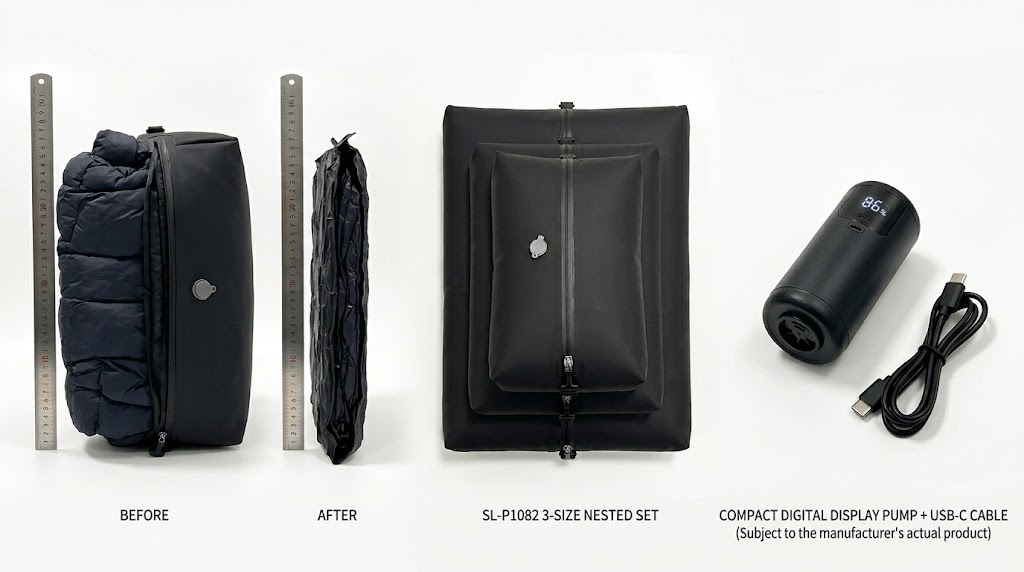
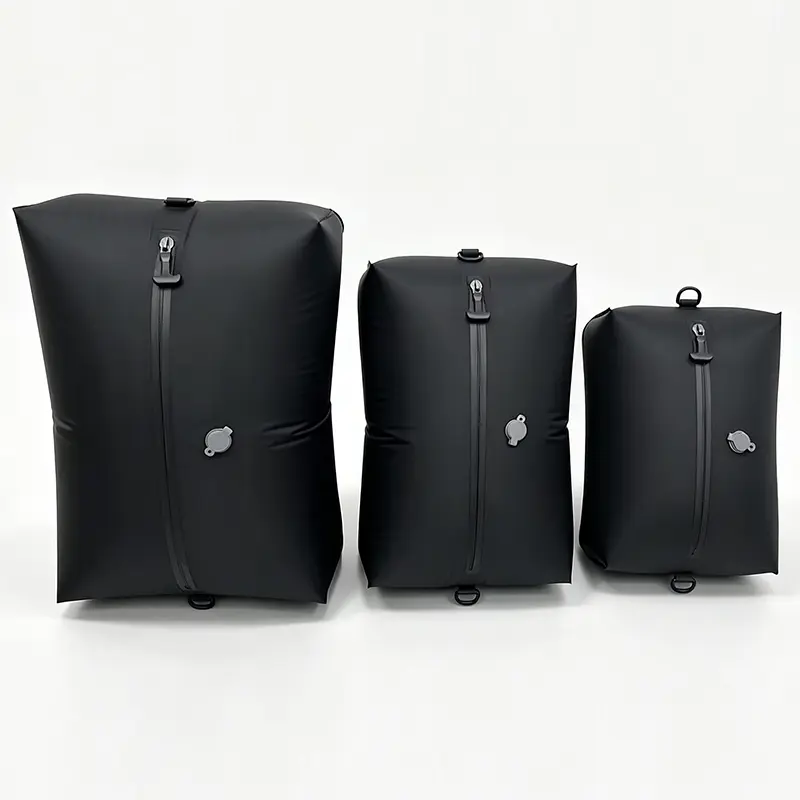
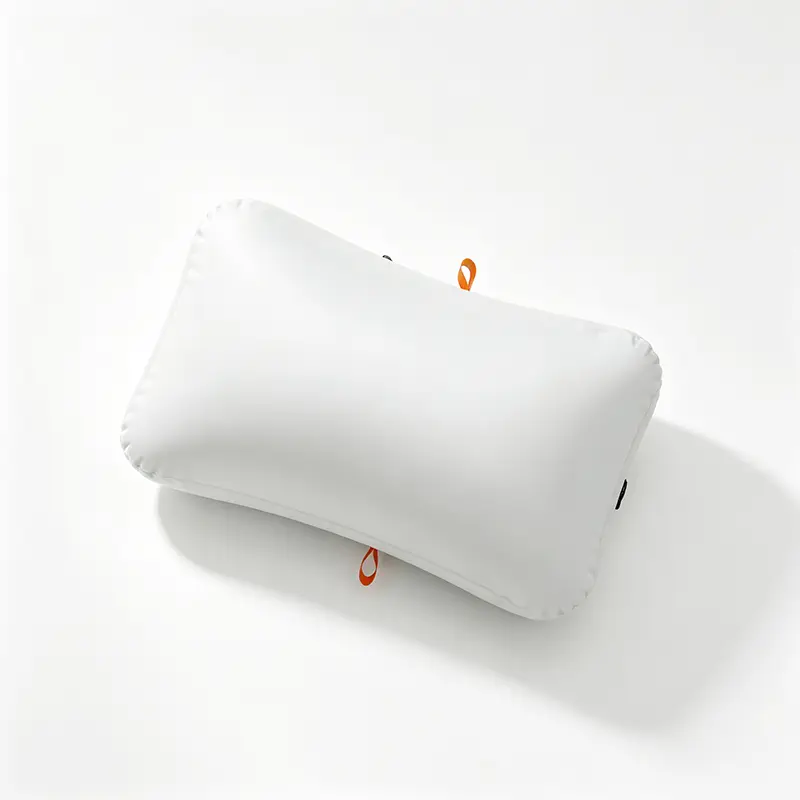
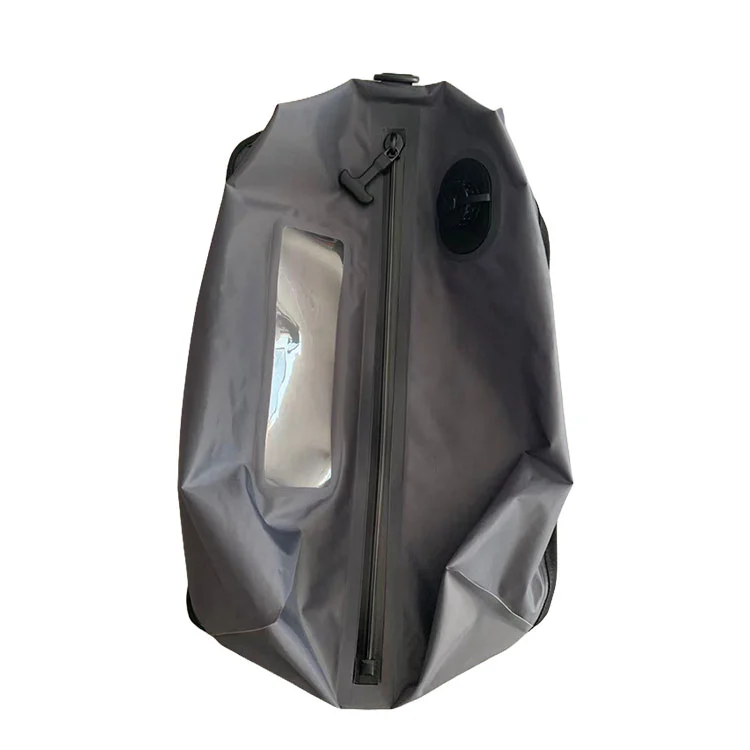
The second is the hand-press valve bag. The bag is sealed with a waterproof zipper and has a one-way valve on its face. The traveller closes the zipper, rolls or presses the bag, and air escapes through the valve but cannot return. No pump, no power and nothing to break inside the suitcase. Our SL-P1082 works this way, in three nesting sizes. Our SL-P1133 uses the same one-way principle with a threaded valve cap, an oval clear window so the traveller can see what is packed, and a small hand pump that screws onto the valve for deeper compression. It holds about 25 to 30 litres of loose clothing and compresses it to roughly 14 litres, 3 to 5 centimetres thick.
The third is the electric pump bag. A small rechargeable pump is built into the bag. One press draws the air out in seconds and a display shows the battery level. Our SL-P1083 electric compression packing bag uses an integrated lithium battery of about 2,000 milliamp hours, charged by USB-C in two to three hours. It gives the deepest and most consistent compression with the least effort, and it is the product that photographs best on a retail listing, but it brings battery compliance into the picture.
Why Welded Construction Keeps a Compression Bag Flat
A vacuum bag is only as good as its weakest seam. When a compression bag is sewn, every stitch is a needle hole, and once the bag is under vacuum, outside air is pulled in through those holes. The bag slowly fills, and by the next morning the contents have sprung back. Tape over the seams helps, but tape peels under the constant pull of a vacuum.
Our compression bags are made with high-frequency welded seams. The panels are fused into one piece, so there are no needle holes for air to find. That is why a welded bag holds its compression across a long flight and a week of hotel repacking. The second weak point is the closure. We use a waterproof zipper with a sealing strip, closed with a moulded pull and an end keeper so the slider cannot creep open under load. The third is the valve. A one-way valve has a seat that must close cleanly every time, and dust or lint on that seat is the most common cause of slow leaks. We specify a valve with a protective cap and test every batch for air hold.
We are clear about one limit. These bags are splash-, dust- and damp-resistant, which keeps clothes clean and dry inside a wet suitcase or a damp hostel room, but they are not designed for submersion. The valve is a breathing component, not a submersible seal. Customers who need a bag to survive going under water should use a roll-top or airtight-zipper dry bag instead, and our listings say so.
What Do Customers Get Wrong About Compression Bags?
The biggest misunderstanding is weight. Compression saves volume, not weight. A suitcase full of compressed clothing can easily exceed an airline's weight limit even though it closes comfortably. Putting a short line on the packaging, that compression bags reduce space but not weight, prevents a surprising number of negative reviews from travellers caught at the check-in desk.
The second is overfilling. A bag stuffed to the zipper strains the closure and the welds, and cannot compress evenly. Filling to roughly 80 percent and rolling from the closed end towards the valve gives the best result. The third is fabric choice. Compression is ideal for knitwear, fleece, down and synthetic insulation, but adds creases to crisp cotton shirts and linen, and structured jackets do not benefit much. Down and synthetic insulation should also be stored uncompressed at home, because long-term compression reduces loft. A simple care card covering these three points makes the product work better for the end user and is easy to print with your order.
What Changes When the Bag Has a Built-In Battery?
An electric compression bag is a consumer electronic product as well as a bag, and that brings rules a soft-goods buyer may not have dealt with before. The lithium battery needs a UN38.3 test summary and a safety data sheet so it can be shipped. Products with batteries contained in equipment are shipped under their own dangerous goods classification, which affects freight booking. For travellers, a 2,000 milliamp hour cell at a typical 3.7 volts is around 7.4 watt hours, far below the 100 watt hour threshold most airlines apply to passenger batteries, but your listing should still state the capacity so customers and airline staff can check it.
For the European Union, the Batteries Regulation is phasing in new obligations. A general information label on batteries applies from 18 August 2026, or later if the implementing rules are delayed. From 18 February 2027, batteries must carry a QR code, and portable batteries must be readily removable and replaceable by the end user, subject to the exemptions set out in the regulation. Brands planning European sales after that date should review now whether their electric compression bag needs a user-removable battery or pump module, or whether an exemption applies, and we can redesign the pump housing accordingly. CE marking for electromagnetic compatibility and RoHS compliance apply in Europe, and an FCC declaration applies in the United States. We supply the battery and product test documentation with each programme.
For brands that would rather avoid batteries altogether, the hand-press valve bag delivers most of the benefit with none of these requirements, which is why many ranges launch with both.
What Is the MOQ and Price for Custom Compression Packing Bags?
The standard MOQ is 300 pieces per design, including your logo. The three SL-P1082 sizes can usually be combined in one order, which suits brands selling a three-piece nesting set. Custom shell and binding colours need their own material run. A new pouch size or shape on the hand-press design needs a new welding die, which is quoted separately. Electric designs have a longer development path because the pump, battery and housing have to be validated together.
On price, the hand-press valve bag is the entry point, with cost driven mainly by size, fabric and the valve. A three-size set in retail packaging costs more than three loose bags, but sells at a much higher price point. The electric bag sits several times higher, because the pump, battery, charging circuit and display make up a large share of the cost. We send a firm FOB quote within 24 hours once we have your sizes, quantity, colours, logo and packaging requirements.
How Are Compression Packing Bags Tested?
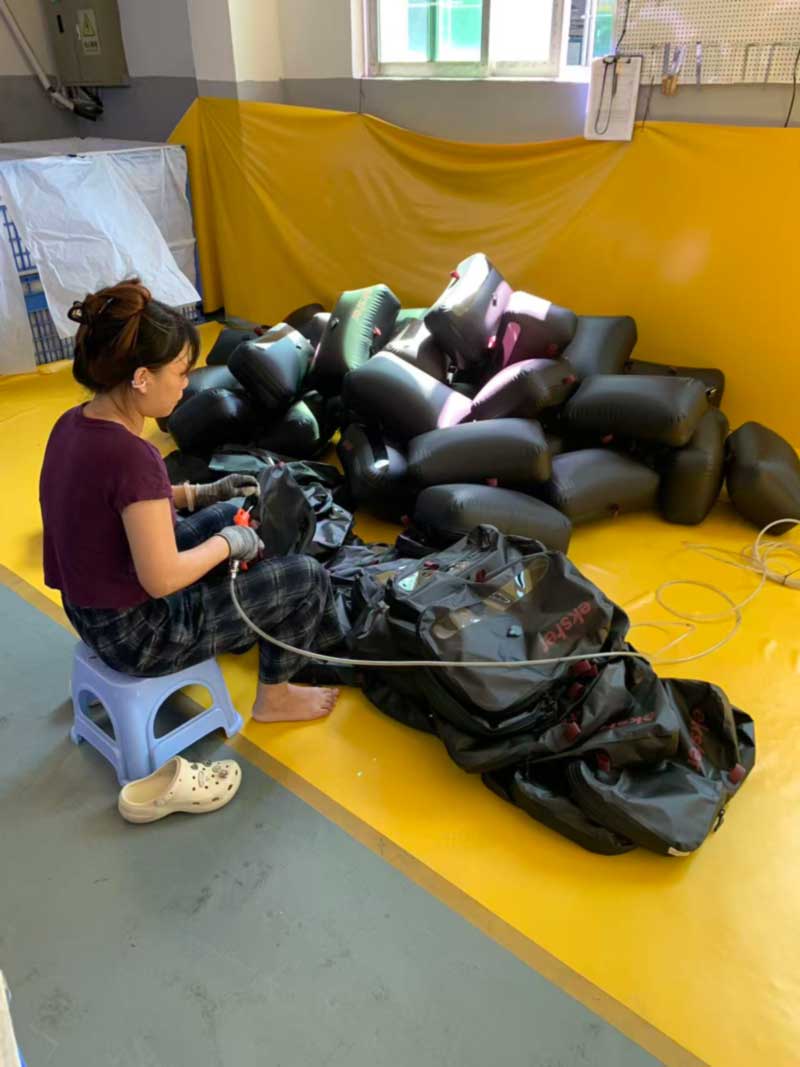
The test that matters most for a compression bag is the one our customers already use for leak checks: unboxing, vacuum extraction, a 24-hour static rest, and then the air-leak determination. A bag that is still flat after 24 hours under vacuum will stay flat through a trip. We run this air-hold check on samples from every batch, alongside weld peel tests at the start of each production run. Zippers are cycled 3,000 times on our fatigue tester, valves are cycled and checked for return flow, and handles and pull loops are pull-tested. For electric designs, every pump is function-checked and charging is verified before packing. Incoming materials, in-line production and finished goods are each inspected, with SGS or QIMA inspection available on request.
How Can Compression Bags Be Branded?
The flat face of a compression bag carries a logo well. Screen printing on the TPU shell is the standard option, a welded TPU logo patch adds a premium raised finish without piercing the shell, and debossing gives a subtle tone-on-tone look. Branded zipper pulls, coloured binding and a printed size marking on each bag of a set make a nesting range look finished. Retail packaging options include a printed sleeve for a three-piece set, a gift box for corporate programmes, and a care card in several languages.
Origin in 2026
Goods of both Chinese and Vietnamese origin have carried the 12.5 percent Section 301 baseline in the United States since 24 July 2026, and Chinese origin additionally carries the existing China-specific Section 301 duties. Our compression bags can be produced at either factory, so United States buyers can compare both origins at the same specification.
Compression Packing Bag Models for OEM
The models below are organised by type rather than priority. Each can be produced with your logo, colours and packaging.
| Image | Model | Compression System | Size | Construction and Protection | MOQ |
|---|---|---|---|---|---|
|
SL-P1082 Small | Hand-press one-way valve, no pump needed | 38 by 27 by 14 cm | High-frequency welded TPU, waterproof zipper, splash-, dust- and damp-resistant | 300 pcs |
|
|
SL-P1082 Medium | Hand-press one-way valve, no pump needed | 46.5 by 31.5 by 14 cm | High-frequency welded TPU, waterproof zipper, side carry loop | 300 pcs |
|
|
SL-P1082 Large | Hand-press one-way valve, no pump needed | 53.5 by 38.5 by 16 cm | High-frequency welded TPU, sizes nest as a three-piece set | 300 pcs |
|
SL-P1133 | One-way valve with threaded cap, supplied hand pump, electric pump option | 48 by 29 by 10 cm, 0.18 kg, about 25 to 30 litres compressed to about 14 litres | 0.30 mm TPU-coated shell, clear TPU window in a welded frame, laminated waterproof zipper, rain-, splash-, dust- and damp-resistant | 300 pcs per colour |
|
SL-P1083 | Built-in rechargeable pump, about 2,000 mAh, USB-C, digital battery display | 42 by 29 by 11 cm, 0.2 kg | Waterproof zipper with sealing strip, clear window, splash-, dust- and damp-resistant | 300 pcs |
Standard Terms
Samples take 7 to 15 days on existing designs with your logo. Bulk production typically takes 30 to 45 days after sample approval. Prices are quoted FOB Guangdong for China origin, with Vietnam origin quoted on request. Sealock has over 20 years of manufacturing experience in welded and sewn travel and outdoor bags, so compression bags can ship in the same order as duffels and backpacks. See our article on waterproof duffel bag manufacturing for the bag most often paired with a compression set, and our guide to promotional dry bags with custom logo for corporate gift programmes.
Frequently Asked Questions
Why does a compression bag puff back up overnight?
Air is getting back in, usually through stitched seams, a dirty valve seat or a zipper that was not fully closed. Welded seams and a capped valve prevent most of it. Wipe the valve and check the zipper end before compressing.
Do compression bags reduce luggage weight?
No. They reduce volume only. A well-compressed suitcase can still exceed airline weight limits.
Do I need a pump?
Not for the hand-press valve bag. You close the zipper and roll the bag towards the valve to push the air out. The electric version has its own built-in pump.
Can I take the electric compression bag on a plane?
Its battery is around 7.4 watt hours, well below the 100 watt hour limit most airlines apply. Check your airline's rules, as policies on carry-on and checked batteries vary.
Is the compression bag waterproof?
It is splash-, dust- and damp-resistant, which keeps clothes dry inside luggage. It is not designed to be submerged. For water sports, use a roll-top or airtight-zipper dry bag.
Will compression damage my down jacket?
Not during a trip. For long-term storage at home, keep down and synthetic insulation uncompressed so it keeps its loft.
Request a Quote for Custom Compression Packing Bags
Send us the sizes, quantity, colours, logo file and target markets, and tell us whether you want hand-press, electric or both. We will reply within 24 hours with an FOB price, compliance notes for your markets and a sample timeline. Contact Sealock about compression packing bags, or email info@sealock.com.hk.