
1. Why "Brochure Capacity" Misleads
A factory's headline capacity figure is usually its theoretical peak — what the line could produce with perfect uptime, no changeovers, and zero defects. Real output is always lower, because capacity is eroded by three things: availability (breakdowns, changeovers, material waits), performance (running below designed speed, minor stoppages), and quality (units that fail first-pass inspection and need rework). A plant quoting peak numbers while running at typical effectiveness will miss a launch date, and the gap is not always deliberate deception — it depends on equipment age, operator skill, material supply, QC checkpoints, and order complexity. The buyer's job is to ask for demonstrated capacity, not potential capacity.
2. What to Ask For: Capacity by Line, Not by Headline
Capacity questions get useful answers when they are specific:
- Output per category, per month. A factory knows what each line does. Sealock's motorcycle luggage line alone runs up to 30,000 pcs/month; welding lines run in parallel across categories, which is what allows volume without queuing behind a single machine.
- The bottleneck. Line output is set by its slowest effective stage, not its fastest. On a dry bag line the constraint is usually the welding station or the die changeover between geometries — ask which stage limits the run, and what the changeover time is between models.
- Recent demonstrated output. Ask for the last two to three months of actual output on a comparable product, not a forecast.
- Shift structure. Single or double shift materially changes maximum output; if surge capacity depends on a second shift, confirm that QC coverage exists on that shift too.
- Lead time separated from transit. Sealock quotes samples in 7–15 days and bulk in 30–45 days; a buyer should confirm production lead time distinctly from shipping and add buffer around Chinese New Year.
3. Verify Capacity in Three Steps, Not One
Capacity verification works best as a staged process, with each stage costing more and revealing more:
- Step 1 — Sample. Proves the factory can build the product to specification at all, and reveals how it handles a technical brief.
- Step 2 — Small trial order. Proves it can repeat the sample across a run. This is the step most buyers skip and most regret skipping — sample quality and production quality are different problems. Sealock's MOQ of 300 pcs keeps a controlled trial order practical.
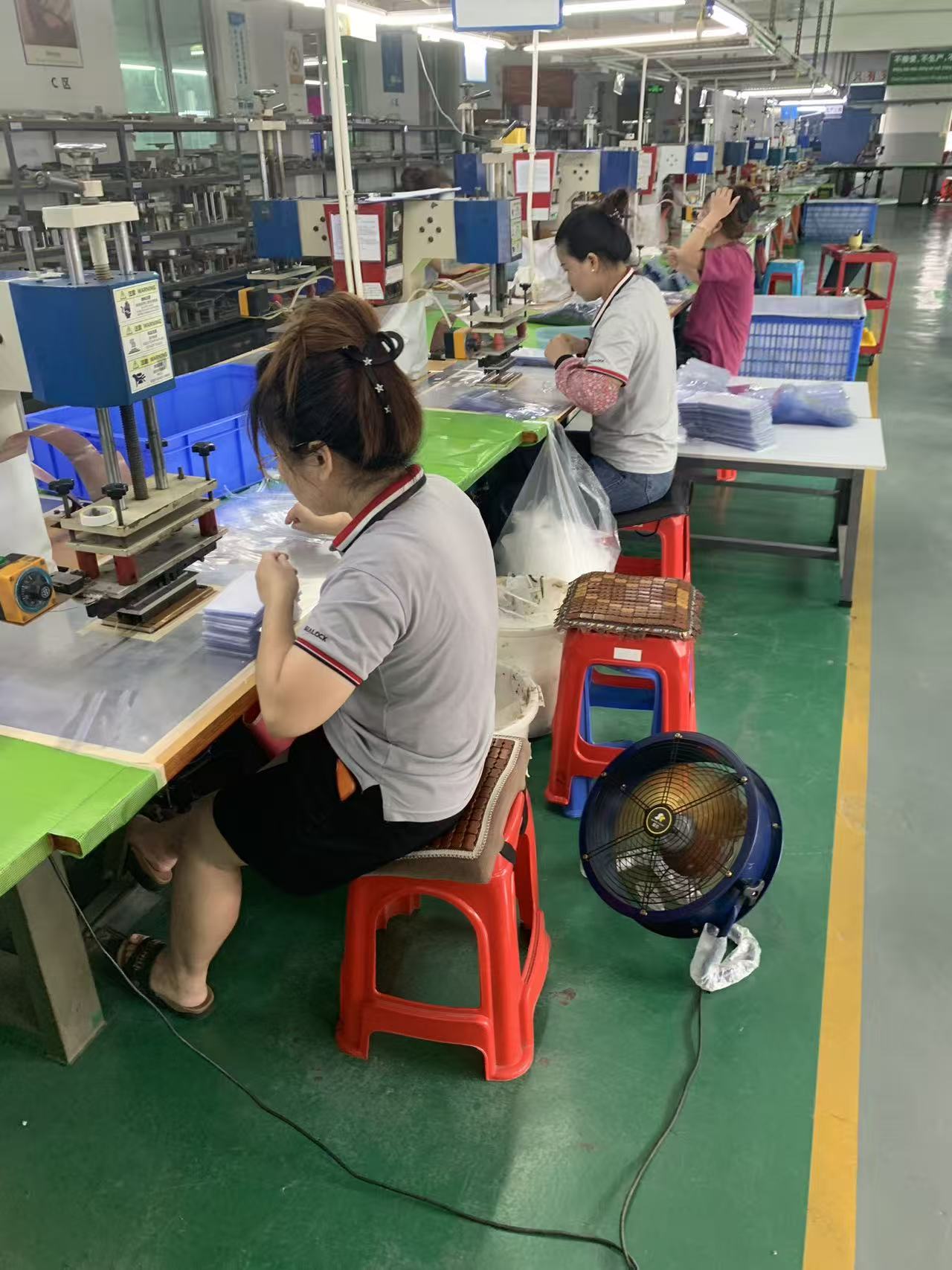
- Step 3 — On-site or third-party audit. For a significant program, an audit through SGS, QIMA, Bureau Veritas, or Intertek confirms equipment, staffing, QC stations, and material handling. Auditors look for a consistent line, organized material storage, and visible staff at work; empty floors and unmarked equipment are the classic warning signs.
Contract levers lock in what the audit validates: milestone payments tied to inspection, and a stated remedy if delivered volume falls materially short of the agreed quantity.
4. Quality Standards That Can Actually Be Audited
"High quality" is not a standard. A standard is a number a third party can check. On a dry bag order, the auditable quality framework has four parts:
- A written specification with tolerances. Material and denier, finished dimensions and tolerance, weld width, closure type and rating, hardware grade, color standard, and logo placement — written before production, not described in an email.
- An agreed AQL level. The acceptable quality limit defines how many defects in a sampled batch trigger rejection. Agree it, and the defect classification (critical / major / minor), in the contract.
- A defined waterproof test. The IPX level must be tied to a test method, not a slogan. Sealock validates by full water immersion testing on batch samples, so a rating is a result rather than a marketing line.
- A signed gold sample. One approved reference held by each side. Every subsequent batch is judged against it — this is what stops color and construction drifting between the first order and the reorder.
5. The Test Suite Behind the Rating
Quality standards on a waterproof bag have to cover more than whether it leaks, because most field failures are mechanical rather than hydraulic. Sealock's laboratory suite runs:
| Test | What it protects against |
|---|---|
| Full water immersion | Seam and closure leakage against the claimed IPX rating |
| Load test, 1,500+ cycles | Handle, strap, and anchor failure under repeated full loads |
| Sealed-zipper cycling, 3,000 cycles | Zipper seal wearing out or seizing over service life |
| Bonding strength | Weld or lamination separating under packing pressure |
| Tensile strength | Fabric tearing at stress points |
| Salt spray | Hardware corrosion in marine use |
| Friction resistance | Abrasion from dragging over rock, decks, and gravel |
| Color fastness / color difference | Fading in UV, and batch-to-batch color drift against the approved standard |
6. Quality Control Across the Line, Not at the End
Final inspection alone catches problems too late to fix cheaply. Sealock runs three-stage control on every batch: IQC on incoming fabric, zippers, and hardware, so a bad roll never reaches the welder; IPQC in line, including peel tests on sample welds at run start and checks on closure function and logo application as the run proceeds; and OQC before shipment, with AQL sampling, batch immersion testing, and signed gold-sample comparison. Third-party pre-shipment inspection through SGS or QIMA is available on request, and buyers are welcome to send their own inspector. Compliance is auditable rather than asserted — ISO 9001, BSCI, SMETA, HIGG, GRS, and SCAN.
7. Production Range and Standard Terms
The same integrated lines run the full waterproof range, so a brand can add categories without re-qualifying a new factory. Representative models, organized by type rather than priority:
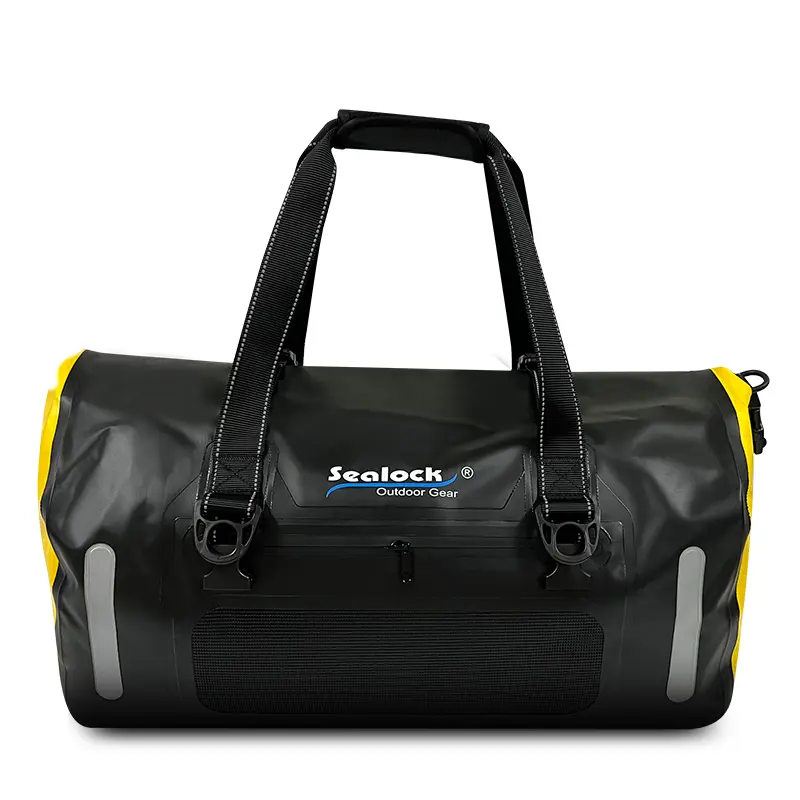
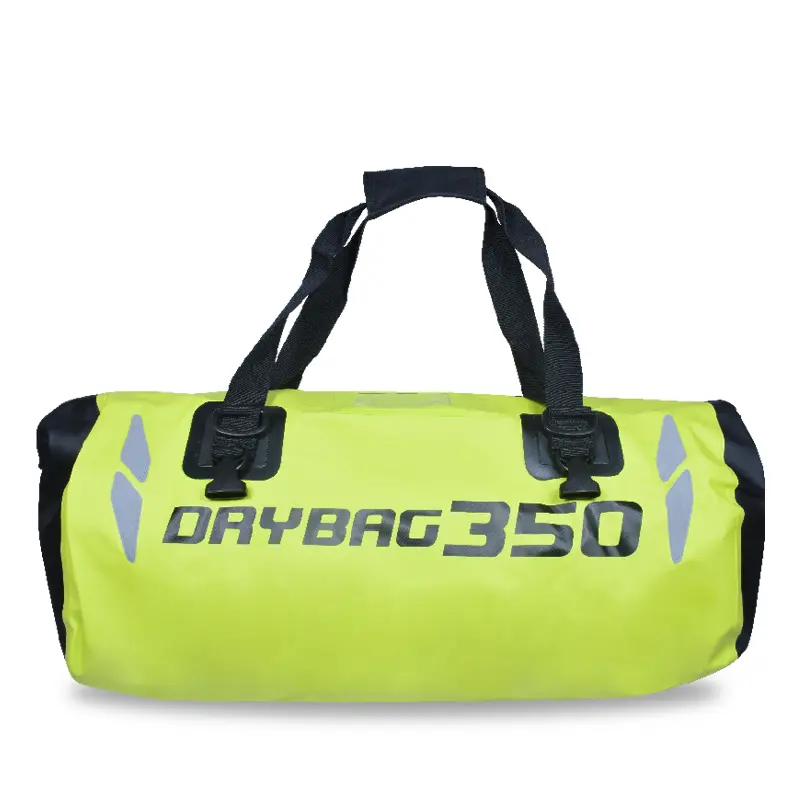
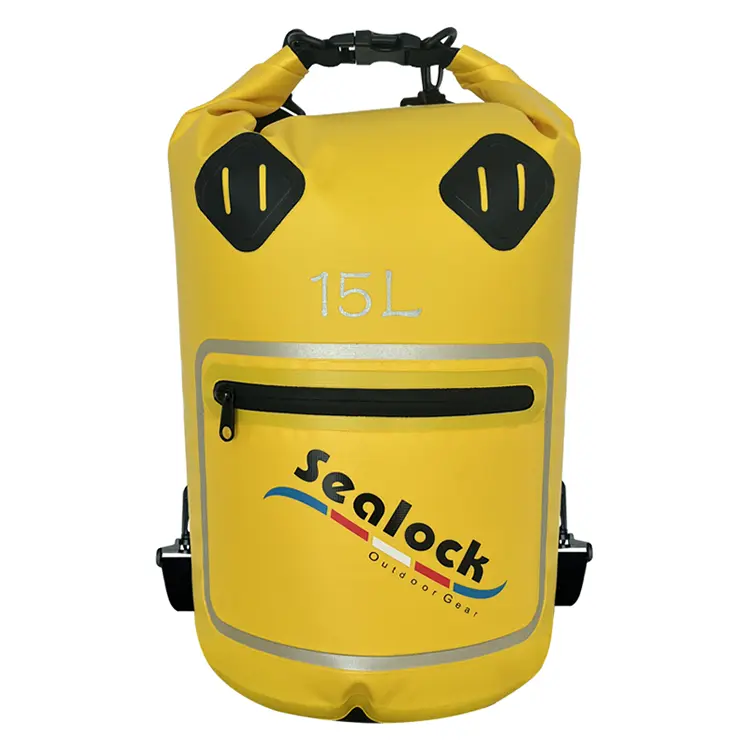
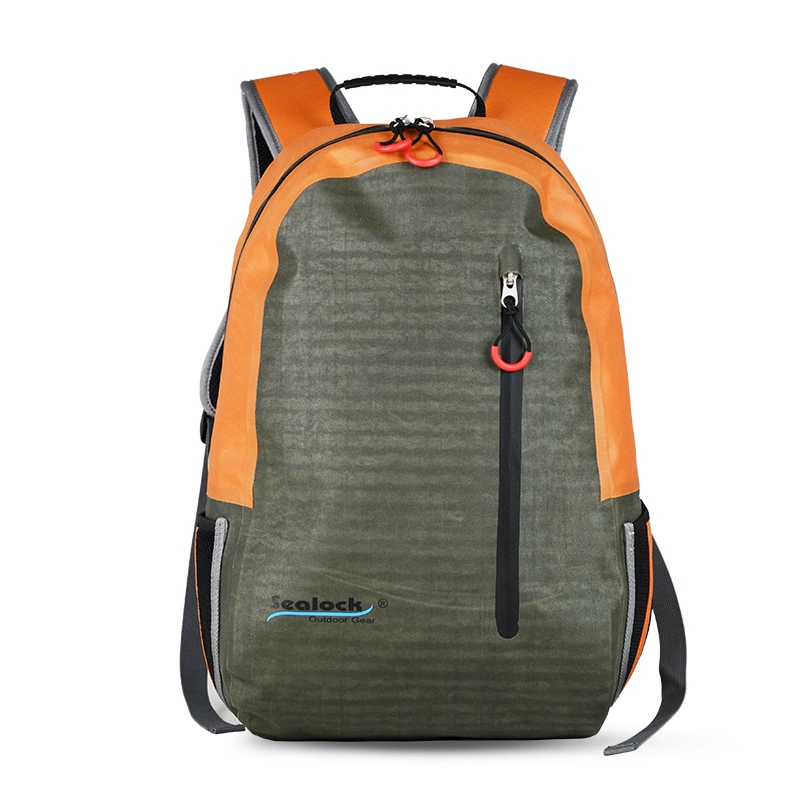
| Image | Category | Model | Capacity | Material / Rating | Product Page |
|---|---|---|---|---|---|
|
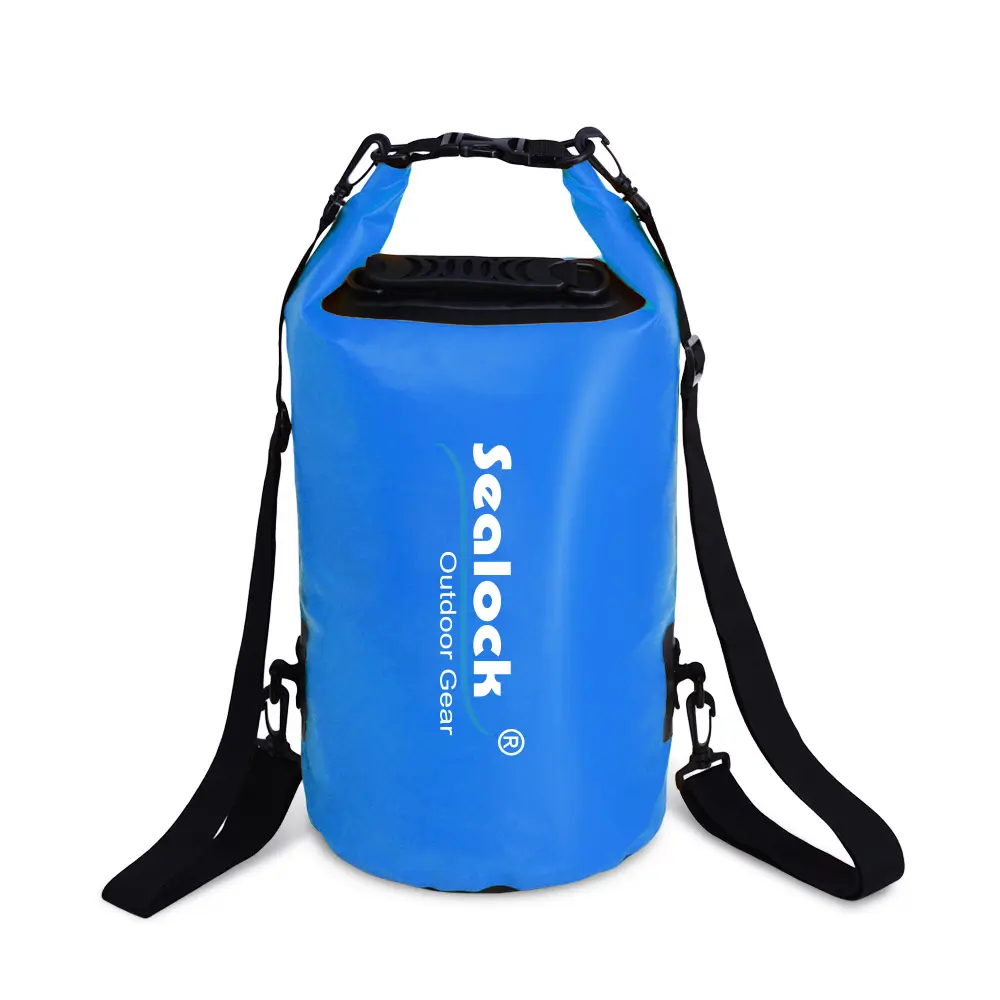
Roll-top dry bag | SL-D002 | 5–63L | 500D PVC · IPX7 | View |
|
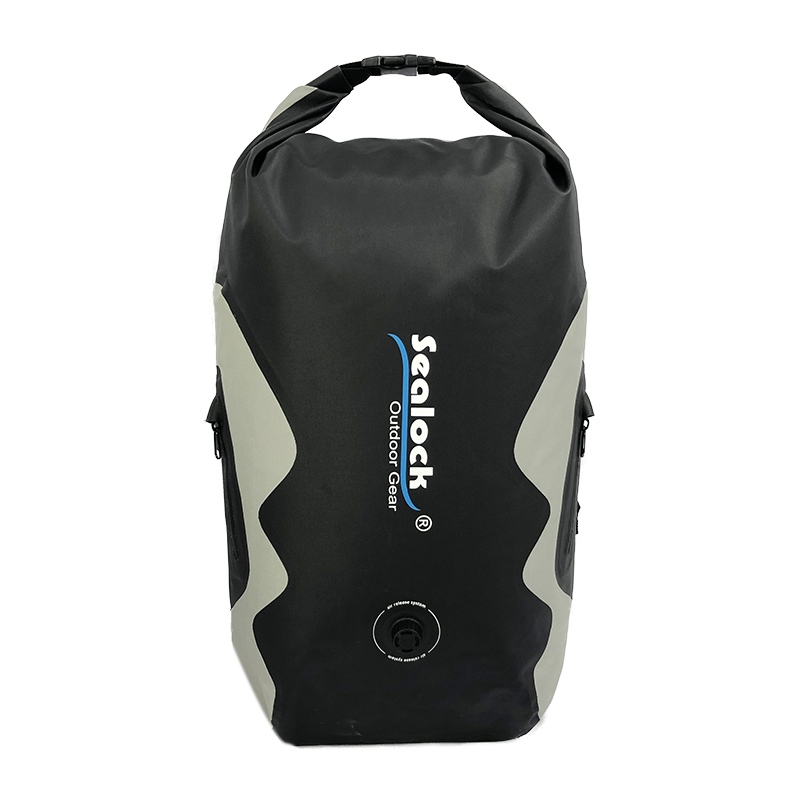
Dry backpack | SL-E070 | 25L | 420D TPU · IPX8 | View |
|
Waterproof duffel | SL-K099 | 40 / 60L | 840D TPU · IPX7 | View |
|
Motorcycle luggage | SL-C619 | 35 / 50L | 500D PVC · IPX6 | View |
|
Window / dry-wet split | SL-D693 | 15 / 20L | 500D PVC · IPX7 | View |
|
Urban / commuter | SL-E071 | 22L | 420D TPU · IPX6 | View |
Standard terms across the range: MOQ 300 pcs, samples in 7–15 days, bulk in 30–45 days, FOB Guangdong, with production available from Dongguan, China or Ho Chi Minh City, Vietnam. Beyond the catalog, ground-up development from a sketch, sample, or performance target is supported, with complex development scheduled ahead of a launch date. Full ranges are listed under dry bags, dry backpacks, and duffels.
8. FAQ
Q: A factory quoted a huge monthly capacity — how do I know it's real?
A: Ask for capacity per line and per category, the recent demonstrated output on a comparable product, the bottleneck stage, and the shift structure. Then test it in stages: sample, small trial order, then an audit before scaling. Headline figures are usually theoretical peak, not what the line sustains.
Q: What quality standard should I actually write into the contract?
A: Measurable ones: a written specification with dimensional tolerances, an agreed AQL and defect classification, the IPX rating tied to a named test method, and a signed gold sample as the reference for every batch. "High quality" is unenforceable; an AQL and an immersion test are not.
Q: The first order was good and the reorder drifted — why?
A: Usually because nothing anchored the standard. Without a signed gold sample and color-difference testing against a fixed color standard, fabric batches and hardware substitutions drift. Hold the gold sample and require every batch be compared to it.
Q: Does a bag that passes a waterproof test still fail in the field?
A: Yes, and usually mechanically rather than hydraulically — a strap tears, a buckle breaks, or a zipper seal wears out. That is why the test suite covers load cycling, zipper cycling, bonding strength, and abrasion, not just immersion.
Q: Can I send my own inspector, or must I use the factory's report?
A: You should send one, or book a third party. A factory confident in its process welcomes an independent pre-shipment inspection and can show its own IQC/IPQC/OQC records alongside. Reluctance to allow inspection is itself the answer to the capacity question.
Request Capacity and Quality Documentation
For capacity confirmation by category, the test suite and certification pack, samples, or a third-party audit arrangement, submit an inquiry. Sealock responds to procurement enquiries within 24 hours.