

Three soft sacks, three similar names, and one expensive mistake waiting to happen: buying a stuff sack when you needed a dry bag. Here's the one difference that actually matters, and how to pick the right one.
These three turn up side by side in the same kit lists, often in the same shape and size, and the names get used loosely enough that even gear shops mix them up. But there's a clean line running through all three, and once you see it the confusion disappears. That line is waterproofing — so let's sort the three by it.
Why these three get confused
The mix-up is understandable. All three are soft, packable sacks you fill from the top. Two of them ("dry bag" and "dry sack") share a word, and the third ("stuff sack") looks almost identical on a shelf. Manufacturers don't help — some use "dry sack" and "dry bag" interchangeably, while a few label a basic stuff sack as "water-resistant" and blur the line further. So rather than memorise three definitions, anchor on the one property that separates them: does it keep water out?
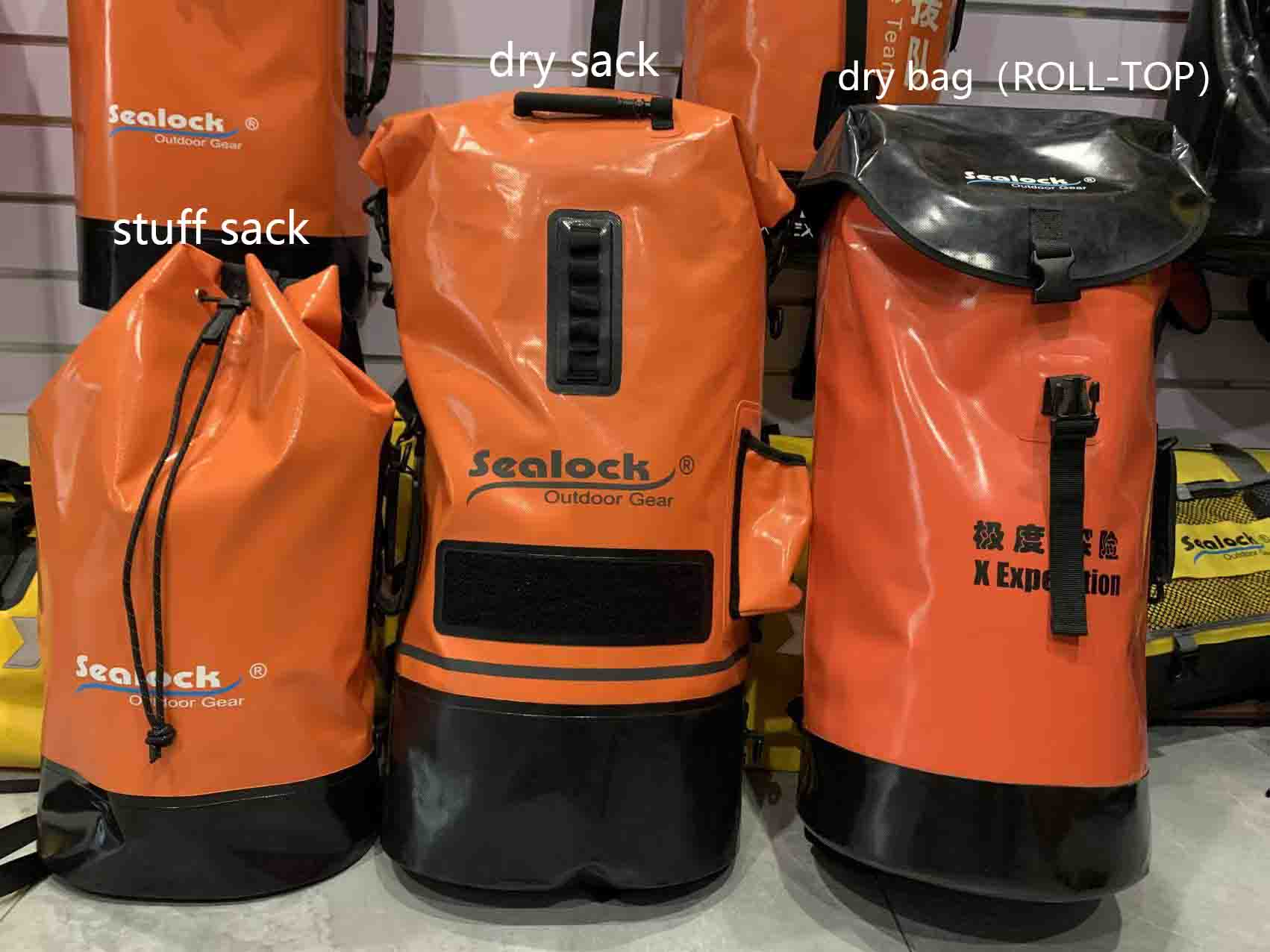
Stuff sack: organises, does not waterproof
A stuff sack is the simplest of the three. It's a lightweight fabric bag, usually closed with a drawstring, made to compress soft gear — a sleeping bag, a jacket, spare clothes — into a tight bundle and keep your pack tidy. That drawstring top is the giveaway: it cinches, but it does not seal. Water runs straight in.
So a stuff sack is about volume and organisation, not protection. Plenty of people buy one expecting it to shield gear from rain, then discover a drawstring was never going to do that. If staying dry matters at all, a stuff sack is the wrong tool — which is exactly why the next two exist.
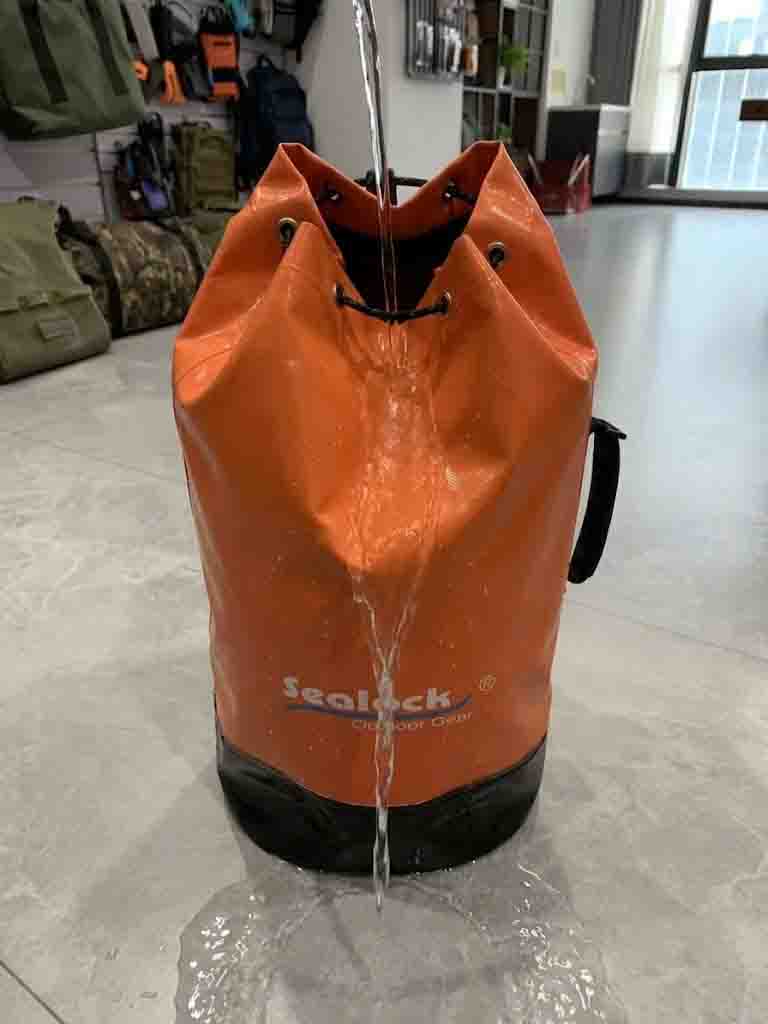
Dry bag and dry sack: built to keep water out
Both a dry bag and a dry sack are made from waterproof-coated fabric and close with a roll-top that seals when folded over — the opposite of a drawstring. Both keep water out. (How that sealing actually works is covered in What Is a Dry Bag & How Does It Work?.)
So what separates "dry bag" from "dry sack"? Honestly, less than the two different names suggest. In most usage they're the same product, and many brands print them on the same item. Where a distinction exists at all, it tends to be one of emphasis:
- "Dry sack" is more often used for the lighter, simpler, single-compartment roll-top — the kind you'd line a backpack with.
- "Dry bag" is the broader, catch-all term, and is more likely to describe larger or feature-rich versions: straps, windows, heavier fabric, duffel and backpack styles.
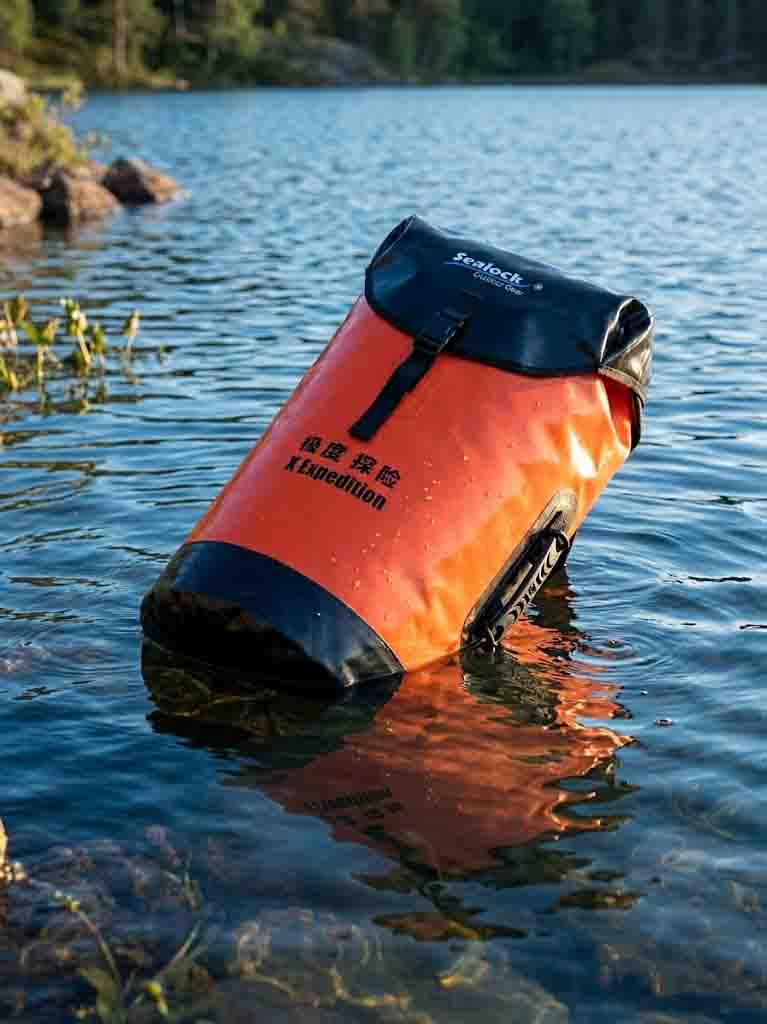
But that's a soft tendency, not a rule — don't buy on the name alone. Read the spec (fabric, seams, closure), because a well-built "dry sack" beats a poorly built "dry bag" every time. The name on the tag tells you far less than how it's made.
For example, our simple roll-top small dry bag is the lightweight, single-compartment "dry sack" style, while our 10L–20L dry bag with a phone window is the feature-rich end — same waterproof roll-top principle, different jobs.
The difference at a glance
Line them up by how they're built, and why only two of them keep water out becomes obvious:
|
|
Stuff sack | Dry sack | Dry bag |
|---|---|---|---|
| Fabric | Uncoated nylon | Coated TPU / PVC | Coated TPU / PVC |
| Seams | Stitched (open holes) | Welded or taped | Welded (best) |
| Closure | Drawstring (cinches) | Roll-top (seals) | Roll-top or welded zip |
| Keeps water out? | No | Yes | Yes |
| Main job | Compress & organise | Keep gear dry, lightweight | Keep gear dry, often feature-rich |
| Typical use | Sleeping bag, clothes in a pack | Line a pack, light trips | Kayaking, boating, beach, larger loads |
The fabric coating can be TPU or PVC on a dry bag — both are waterproof; they differ in flexibility, cold resistance and cost rather than in whether they keep water out.
So which one should you buy?
The decision collapses to a single question — do you need to keep water out? — and then a second, smaller one:
Pick by what you actually need
- Just organising dry gear inside a pack? A stuff sack is fine, lighter, and cheaper. Don't pay for waterproofing you won't use.
- Need it to stay dry, keeping things light? A dry sack — a simple roll-top — is the sweet spot.
- Need it dry and tougher, bigger, or with features (straps, window, submersion)? That's a dry bag.
Common questions about mixing the two
Three closely related questions come up constantly — here's the quick answer to each:
Are stuff sacks waterproof? No. A stuff sack's drawstring cinches the opening but never seals it, and the fabric is usually uncoated. It resists nothing more than a light brush of moisture — treat it as zero protection against rain or immersion.
Can a stuff sack be used as a dry bag? Not reliably. You can line a stuff sack with a plastic bag in a pinch, but it won't seal at the top and the fabric isn't coated, so it's a stopgap, not a substitute. If gear must stay dry, use an actual dry bag.
Do I need both? Often, yes — and that's the smart setup, not a redundancy.
One practical combo that catches people out: many experienced packers use both — a dry bag or dry sack to keep water out, with stuff sacks inside it to stay organised. They're not really rivals; they solve different problems, and the only real error is asking a stuff sack to do a dry bag's job.
Frequently asked questions
- Is a dry sack the same as a dry bag?
- For most purposes, yes — the terms are used interchangeably, and many brands print them on the same product. Where any distinction exists, "dry sack" leans toward the lighter, simpler roll-top, and "dry bag" toward larger or feature-rich versions. Both keep water out; judge by the spec, not the name.
- What does "compression sack" mean — is it a fourth type?
- A compression sack is a stuff sack with extra straps that squeeze the contents smaller. It's still not waterproof — it's about saving space, not keeping water out, so it sits in the same non-waterproof category as a stuff sack.
- Does putting a stuff sack inside a dry bag affect waterproofing?
- No. The dry bag does the waterproofing from the outside; stuff sacks inside simply organise your gear. This combination is common and doesn't compromise the seal as long as the dry bag's roll-top is closed properly.
- Which should I buy for kayaking?
- A dry bag with welded seams, since a capsize means brief full immersion. A drawstring stuff sack offers no protection, and a lightweight dry sack is fine for splash but check it's rated for immersion if a dunk is likely.
- Why do some brands call the same product different names?
- Because none of these terms is standardised. "Dry bag" and "dry sack" especially are marketing choices as much as technical ones, so two identical roll-tops can carry different names. Always read the fabric, seam, and closure spec rather than trusting the label term.
As a waterproof bag manufacturer with 21+ years' experience (HF-welded, 1.0-bar tested), we make all three types. Not sure which you need for your trip? Tell us what you'll carry and we'll point you to the right one.