
- English
- Español
- Português
- русский
- Français
- 日本語
- Deutsch
- tiếng Việt
- Italiano
- Nederlands
- ภาษาไทย
- Polski
- 한국어
- Svenska
- magyar
- Malay
- বাংলা ভাষার
- Dansk
- Suomi
- हिन्दी
- Pilipino
- Türkçe
- Gaeilge
- العربية
- Indonesia
- Norsk
- تمل
- český
- ελληνικά
- український
- Javanese
- فارسی
- தமிழ்
- తెలుగు
- नेपाली
- Burmese
- български
- ລາວ
- Latine
- Қазақша
- Euskal
- Azərbaycan
- Slovenský jazyk
- Македонски
- Lietuvos
- Eesti Keel
- Română
- Slovenski
- मराठी
- Srpski језик

Engineering for the Extremes: OEM Waterproof Motorcycle Luggage That Survives the Crash
Executive Summary
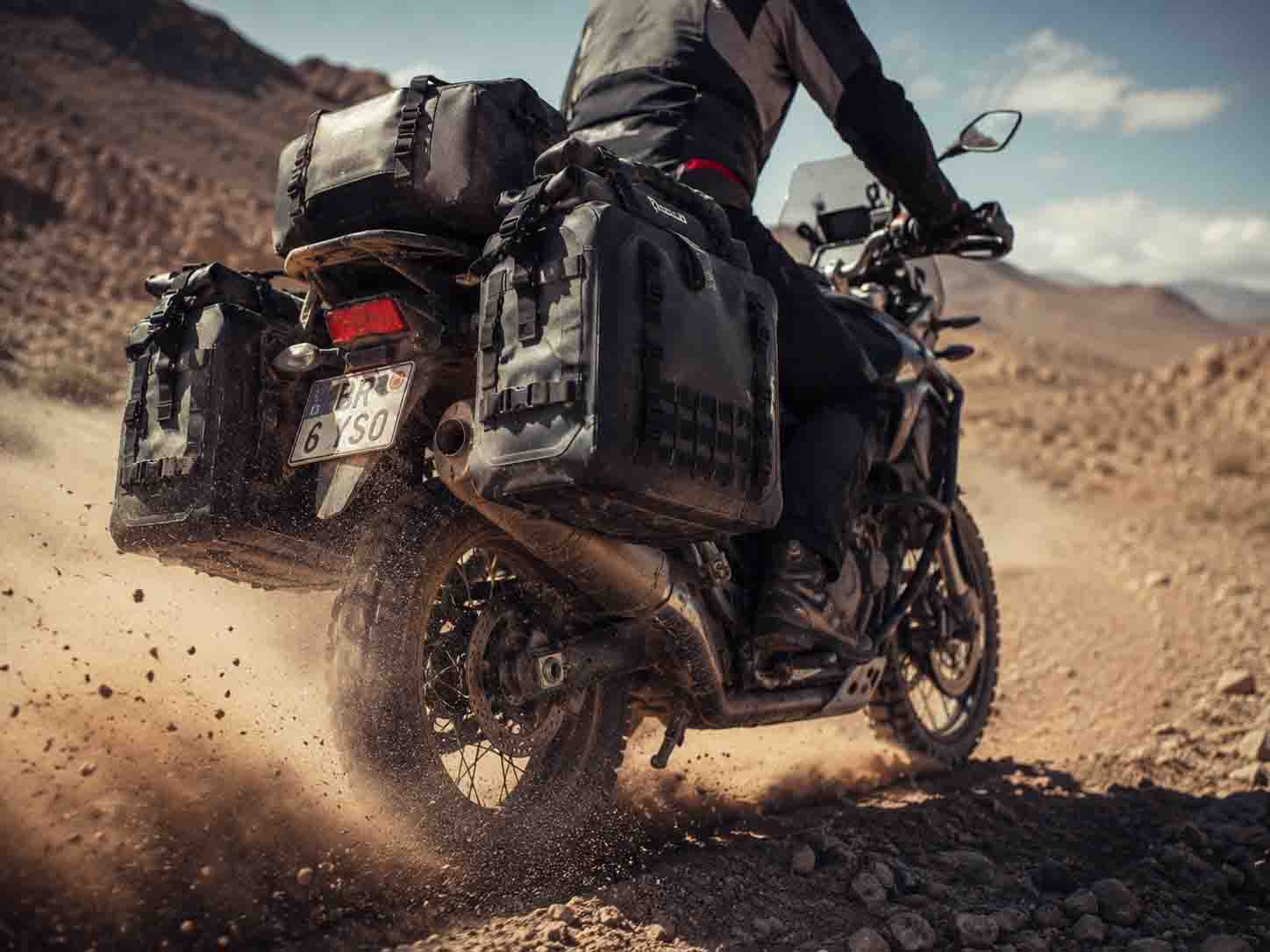
For Product Managers and Sourcing Directors in the Adventure (ADV) and Overlanding motorcycle industry, luggage failure is not an inconvenience; it is a critical safety hazard. A pannier or tail bag failing at 130 km/h on a dirt washboard road can lock up a rear wheel or scatter vital survival gear across the desert. Sourcing generic, cut-and-sew PVC bags for motorcycle applications guarantees catastrophic warranty claims and brand damage. This technical brief outlines the uncompromising OEM engineering standards required for professional motorcycle luggage—focusing on high-frequency vibration resistance, extreme abrasion defense, and thermal stability near exhaust systems.
Scenario 1: The Washboard Road and High-Frequency Vibration Fatigue
The Sourcing Nightmare: A rider is tackling a 500-mile stretch of corrugated dirt road (washboard). The constant, high-frequency vibration places extreme dynamic stress on the bag's mounting points. The brand sourced their panniers from a standard outdoor factory that used conventional stitching to attach the load-bearing straps to the main PVC body. Within hours, the micro-movements cause the thread to act like a saw, tearing the needle holes wider until the strap completely rips off the bag, sending the luggage into the rear spokes.
The OEM Solution: RF-Welded Anchor Plates
Motorcycle luggage cannot rely on stitching for load-bearing structural integrity on waterproof membranes.
- The Engineering: Elite OEM manufacturing utilizes Radio Frequency (RF) Welding to fuse heavy-duty, multi-layered TPU anchor plates directly to the exterior of the bag.
- The Result: The load of the mounting straps is distributed across a massive, molecularly bonded surface area rather than isolated needle points. This zero-stitch architecture completely eliminates mechanical fatigue and tear-outs, ensuring the bag stays firmly mounted regardless of vibration severity.
Scenario 2: The Asphalt Slide (Extreme Abrasion)
The Sourcing Nightmare: A rider suffers a low-side crash on asphalt at 80 km/h. The motorcycle slides on its side, with the soft pannier taking the brunt of the impact. The factory used standard 500D PVC to save on COGS. The friction instantly shreds the cheap PVC, melting it to the road and destroying the waterproof integrity, exposing expensive laptops and camping gear to ruin.
The Armor Solution: 1000D Ballistic TPU & Hypalon Reinforcement
Adventure luggage must act as a crash bar for the rider's gear.
- Advanced Materials: Upgrading the outer shell to 1000D Nylon-coated TPU (Thermoplastic Polyurethane) is mandatory. TPU offers up to 5 times the abrasion and tensile strength of equivalent PVC.
- Strategic Reinforcement: For impact zones (the bottom and outer corners of panniers), top-tier OEM partners integrate layers of Hypalon or structured EVA foam panels. This creates a sacrificial slide-zone that resists extreme friction and puncture forces, ensuring the internal waterproof bladder remains 100% intact even after a serious crash.
Scenario 3: Exhaust Heat and Chemical Degradation
The Sourcing Nightmare: Tail bags and rackless panniers sit perilously close to the motorcycle's exhaust pipe. Additionally, they are constantly exposed to UV radiation, unburned hydrocarbons (exhaust soot), and spilled gasoline. Standard PVC bags quickly plasticize, becoming sticky and eventually melting from radiant heat, or turning brittle and cracking from chemical exposure.
The Material Science Solution: TPU Thermal and Chemical Stability
The operational environment of a motorcycle demands industrial-grade chemical resistance.
- Thermal Tolerance: Premium TPU maintains structural integrity at significantly higher continuous temperatures than PVC, resisting radiant heat distortion from nearby exhausts.
- Chemical Immunity: Furthermore, TPU is inherently resistant to petroleum-based chemicals and UV degradation. It will not crack, discolor, or lose its elastomeric properties even after years of exposure to harsh sun and off-road grime, drastically lowering the Total Cost of Ownership (TCO) and warranty return rates for the brand.
Conclusion: Stop Compromising on Adventure Gear
In the competitive ADV motorcycle market, riders are willing to pay a premium for "bulletproof" reliability. Sourcing recreational-grade waterproof bags disguised with aggressive branding is a losing strategy. By partnering with an advanced OEM manufacturer capable of RF-welding heavy-duty TPU and engineering vibration-resistant anchor points, you deliver the zero-failure equipment that professional overlanders demand.
FAQ: Sourcing OEM Motorcycle Dry Bags
Q: Why do stitched straps fail on motorcycle dry bags?
A: High-frequency vibration from the motorcycle transfers directly to the mounting straps. If those straps are stitched into the bag's main waterproof material, the constant pulling causes the threads to tear through the fabric (mechanical fatigue), ruining both the waterproof seal and the structural integrity.
Q: What makes TPU better than PVC for motorcycle luggage?
A: TPU (Thermoplastic Polyurethane) is significantly superior to PVC because it offers vastly higher abrasion resistance (crucial for surviving crashes), better thermal stability against exhaust heat, and immunity to chemical degradation from gasoline and UV rays. It is also significantly lighter.
Q: How do you attach a motorcycle bag securely without stitching through the waterproof layer?
A: Professional OEM factories use High-Frequency (RF) welding to molecularly bond heavy-duty anchor patches to the outside of the bag. The mounting straps or buckles are then attached to these external patches, ensuring the main waterproof compartment is never pierced by a needle.
Engineered by Sealock
We are a leading OEM factory focused on manufacturing extreme-condition dry bags and submersible gear. From tactical maritime operations to adventure motorcycle overlanding, our RF-welded TPU architecture ensures absolute zero-failure reliability and 1.0 Bar hydrostatic survivability in the world's harshest environments.
Partner with us to build your mission-critical waterproof gear. »