
- English
- Español
- Português
- русский
- Français
- 日本語
- Deutsch
- tiếng Việt
- Italiano
- Nederlands
- ภาษาไทย
- Polski
- 한국어
- Svenska
- magyar
- Malay
- বাংলা ভাষার
- Dansk
- Suomi
- हिन्दी
- Pilipino
- Türkçe
- Gaeilge
- العربية
- Indonesia
- Norsk
- تمل
- český
- ελληνικά
- український
- Javanese
- فارسی
- தமிழ்
- తెలుగు
- नेपाली
- Burmese
- български
- ລາວ
- Latine
- Қазақша
- Euskal
- Azərbaycan
- Slovenský jazyk
- Македонски
- Lietuvos
- Eesti Keel
- Română
- Slovenski
- मराठी
- Srpski језик

The 2026 Procurement Guide to Technical Dry Bags: Merging PFAS-Free Compliance with 1.0 Bar Submersibility
Introduction: The Shifting Landscape of Technical Gear Procurement in 2026
For product managers and sourcing directors in the outdoor, maritime, and tactical sectors, 2026 presents a unique set of challenges. The era of sourcing generic "water-resistant" bags from unverified suppliers is over. Today, brands face a dual mandate: they must navigate increasingly stringent global environmental regulations (such as the sweeping bans on fluorinated chemicals) while simultaneously answering the consumer demand for flawless, expedition-grade durability.
At Sealock, we recognize that a technical waterproof gear failure in the field is not just a product defect; it is a critical blow to a brand’s reputation. Over our 25-year history of manufacturing, we have engineered a supply chain that eliminates these risks. This comprehensive guide outlines the critical metrics every B2B buyer must evaluate when sourcing technical dry bags today—focusing on material compliance, molecular-level seam engineering, rigorous hydrostatic testing, and the necessity of a secure, cross-border manufacturing strategy.
1. The Environmental Imperative: Transitioning to PFAS-Free TPU
The most disruptive shift in the outdoor textile industry over the past three years has been the regulatory crackdown on Per- and Polyfluoroalkyl Substances (PFAS). Known as "forever chemicals," these compounds were traditionally used to give fabrics their durable water repellent (DWR) properties.
1.1 Navigating Global Compliance (REACH & Prop 65)
Legislation across the European Union (REACH amendments) and North America (California Proposition 65, along with state-level bans in New York and Colorado) has effectively outlawed the importation of PFAS-laden outdoor gear. For a global brand, having inventory held at customs due to chemical non-compliance is a catastrophic supply chain failure. At Sealock, we have fully transitioned our premium lines to PFAS-Free TPU (Thermoplastic Polyurethane). This transition required extensive R&D to ensure that the new eco-friendly polymers could withstand the same punishing environments as their legacy counterparts.
1.2 The Mechanical Superiority of Technical TPU
Beyond chemical compliance, our technical TPU offers distinct mechanical advantages over traditional PVC. It possesses a higher abrasion resistance, superior UV stability, and crucial cold-crack resistance. In sub-zero environments, where traditional PVC becomes brittle and fractures under stress, our PFAS-Free TPU remains highly flexible, maintaining the structural integrity required for high-altitude mountaineering or arctic maritime operations.
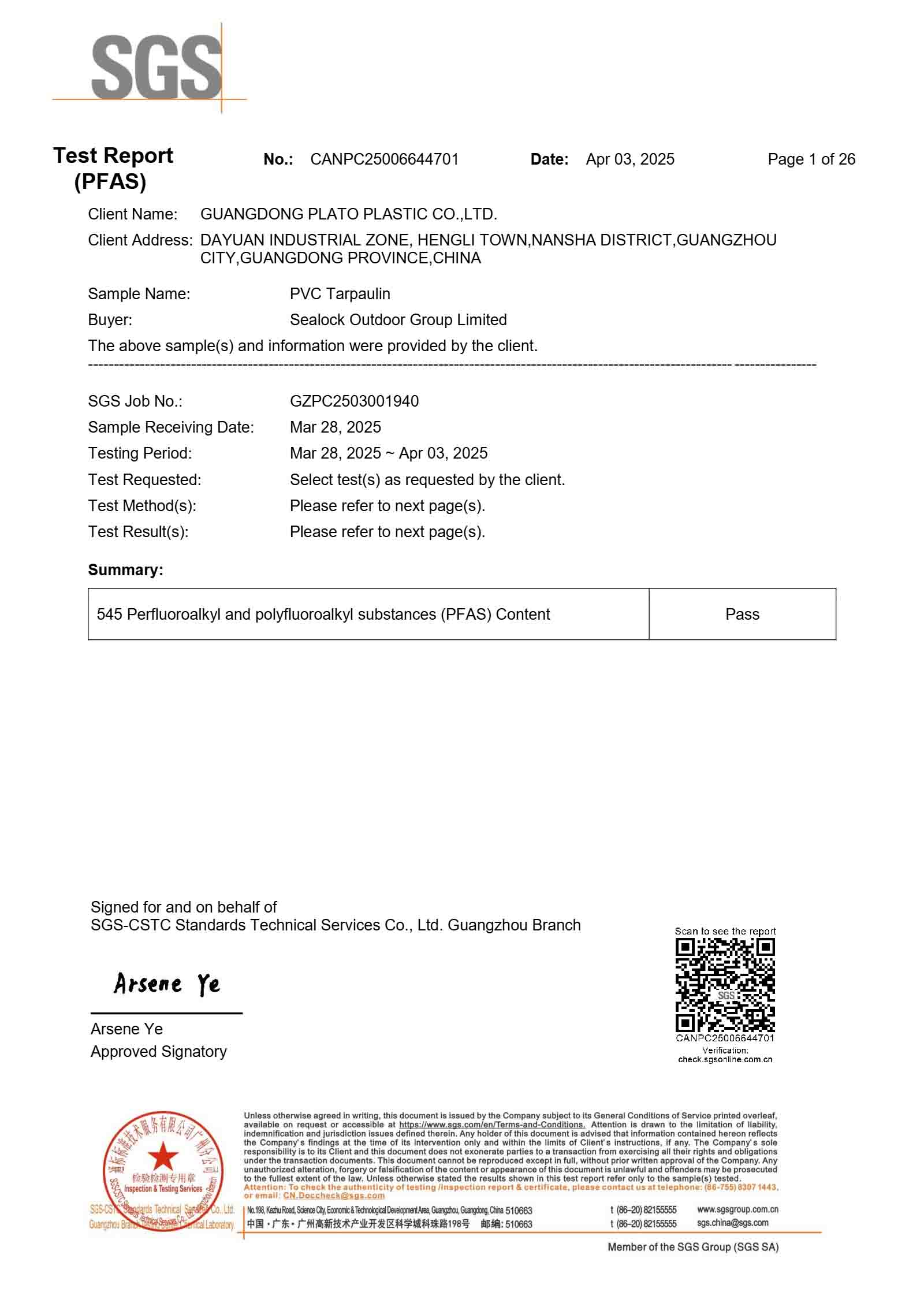
PFAS-Free TPU materials
2. Beyond Stitching: The Necessity of 27.12 MHz Molecular Fusion
Even the most advanced PFAS-Free TPU fabric is useless if the seams joining it are weak. The traditional methods of bag construction—needle stitching followed by heat-taping, or standard glue adhesion—create mechanical joints. These joints are inherently flawed; they rely on a secondary material (tape or glue) that will eventually degrade, delaminate, or peel when subjected to UV radiation, saltwater exposure, or high internal pressure.
2.1 The Engineering of Inseparable Seams
To achieve true submersibility, the fabric must not just be joined; it must be transformed. Sealock utilizes 27.12 MHz High-Frequency (HF) Welding. As detailed in our technical white papers, this industrial frequency creates a rapidly alternating electromagnetic field that causes the polar molecules within the TPU to rotate millions of times per second. The resulting internal friction melts the polymer from the inside out, fusing the two layers into a single, homogenous structure.
For procurement officers, the business value of this technology is simple: Zero Delamination. Seams welded at 27.12 MHz exhibit a tensile strength that often exceeds the base fabric itself, drastically reducing warranty claims and product return rates.
3. The Ultimate Metric: The 1.0 Bar Hydrostatic Standard
In B2B sourcing, vague marketing terms like "weatherproof" introduce unacceptable risk. A professional dry bag must be engineered to a quantifiable standard. While many consumer brands settle for IPX6 (heavy splashing) or basic IPX7 (shallow, temporary immersion), professional maritime, rescue, and tactical applications require a much higher safety margin.
3.1 Quantifying Airtight Reliability
Every technical series manufactured by Sealock must pass our proprietary 1.0 Bar Hydrostatic Integrity Standard. This means the internal volume of the bag is pneumatically pressurized to 100,000 Pascals (14.5 PSI), simulating the crushing ambient pressure of being submerged 10 meters underwater.
Our rigorous 12-step SOP ensures that the molecular fusion holds against this immense internal force for extended periods without a drop in pressure. When a brand partners with Sealock, they aren't just buying a bag; they are buying the empirical laboratory data that guarantees the product will survive the most extreme expedition environments on Earth.
4. Global Market Validation: Feedback from the Frontlines
Our commitment to PFAS-Free materials, 27.12 MHz HF welding, and 1.0 Bar testing is not developed in a vacuum. It is continuously refined through direct engagement with the world's most demanding buyers and end-users at premier international exhibitions.
4.1 Meeting North American Ruggedness in Denver
At the Outdoor Retailer (OR) show in Denver and Salt Lake City, the focus is on extreme durability. Rocky Mountain outfitters and river guides require gear that can survive severe abrasion against canyon walls and extended exposure to high-altitude UV rays. Our HF-welded TPU lines consistently exceed their expectations for heavy-duty performance.
4.2 Precision and Aesthetics at the Tokyo Bag Expo
The Japanese market, engaged through the Tokyo Bag Expo, demands flawless craftsmanship. Here, our molecular fusion technology is praised not just for its airtightness, but for its clean, seamless aesthetic. The absence of bulky taped seams allows for sleeker, more urban-friendly technical designs without compromising submersibility.
4.3 Deep-Sea Scrutiny at the DRT SHOW Shanghai
At the DRT SHOW (Diving Resort Travel Expo) in Shanghai, professional divers scrutinize our equipment's ability to protect sensitive electronics at depth. The feedback gathered here directly informs our R&D, ensuring our 1.0 Bar standard perfectly aligns with the real-world needs of the global diving community.
5. Mitigating Supply Chain Risk: The China-Vietnam Synergy
In the post-2020 global economy, technological capability must be paired with supply chain resilience. Brands need the assurance that the quality engineered in a prototype can be scaled across tens of thousands of units securely and efficiently.
5.1 R&D Excellence Meets Scalable Execution
Sealock operates on a highly optimized China-Vietnam Synergy Protocol. Our "Industrial Brain" in Dongguan, China, handles advanced prototyping, mold development, and the establishment of the Master SOPs for the 27.12 MHz parameters. Once perfected, these digital blueprints are synchronized with our expansive manufacturing facility in Ho Chi Minh City, Vietnam.
5.2 The Importance of a SCAN 97 Score
Our Vietnam facility is not just a production hub; it is a fortified asset. Achieving a SCAN (Supplier Compliance Audit Network) score of 97 means our factory exceeds the stringent security requirements mandated by US Customs (C-TPAT). For B2B buyers, this translates to reduced border inspections, faster port clearances, and absolute confidence that their intellectual property and supply lines are protected against tampering or delays.
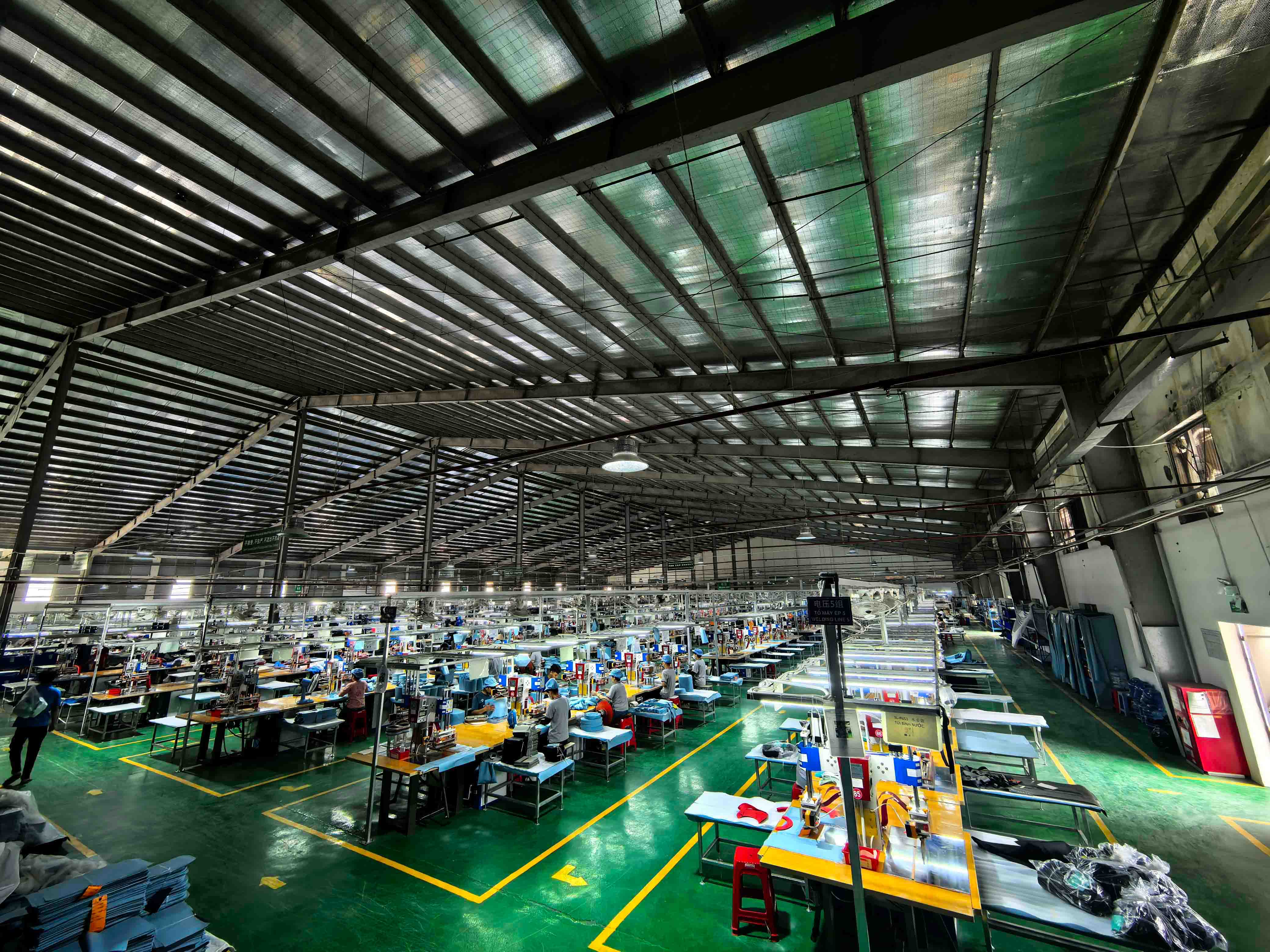
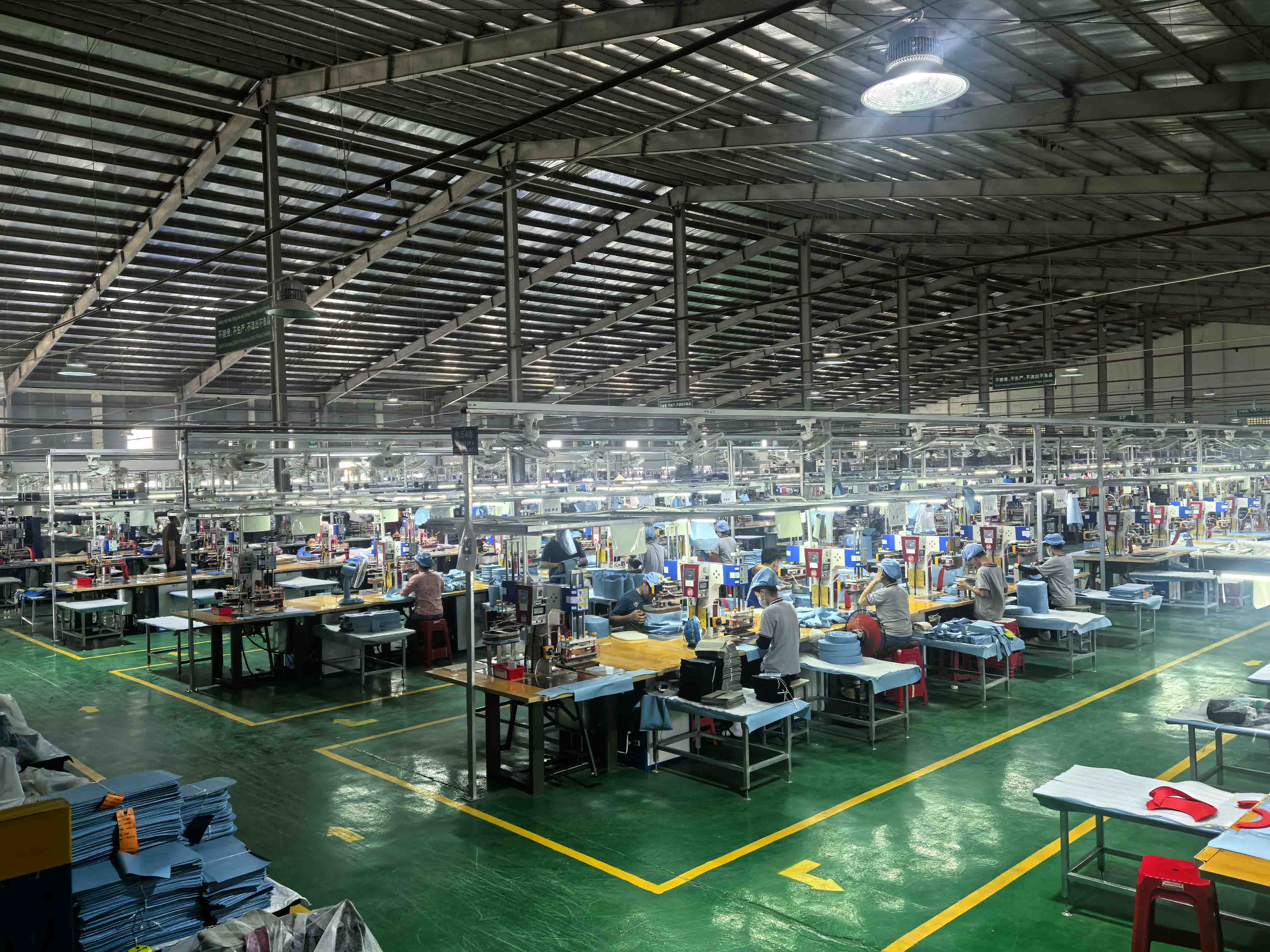
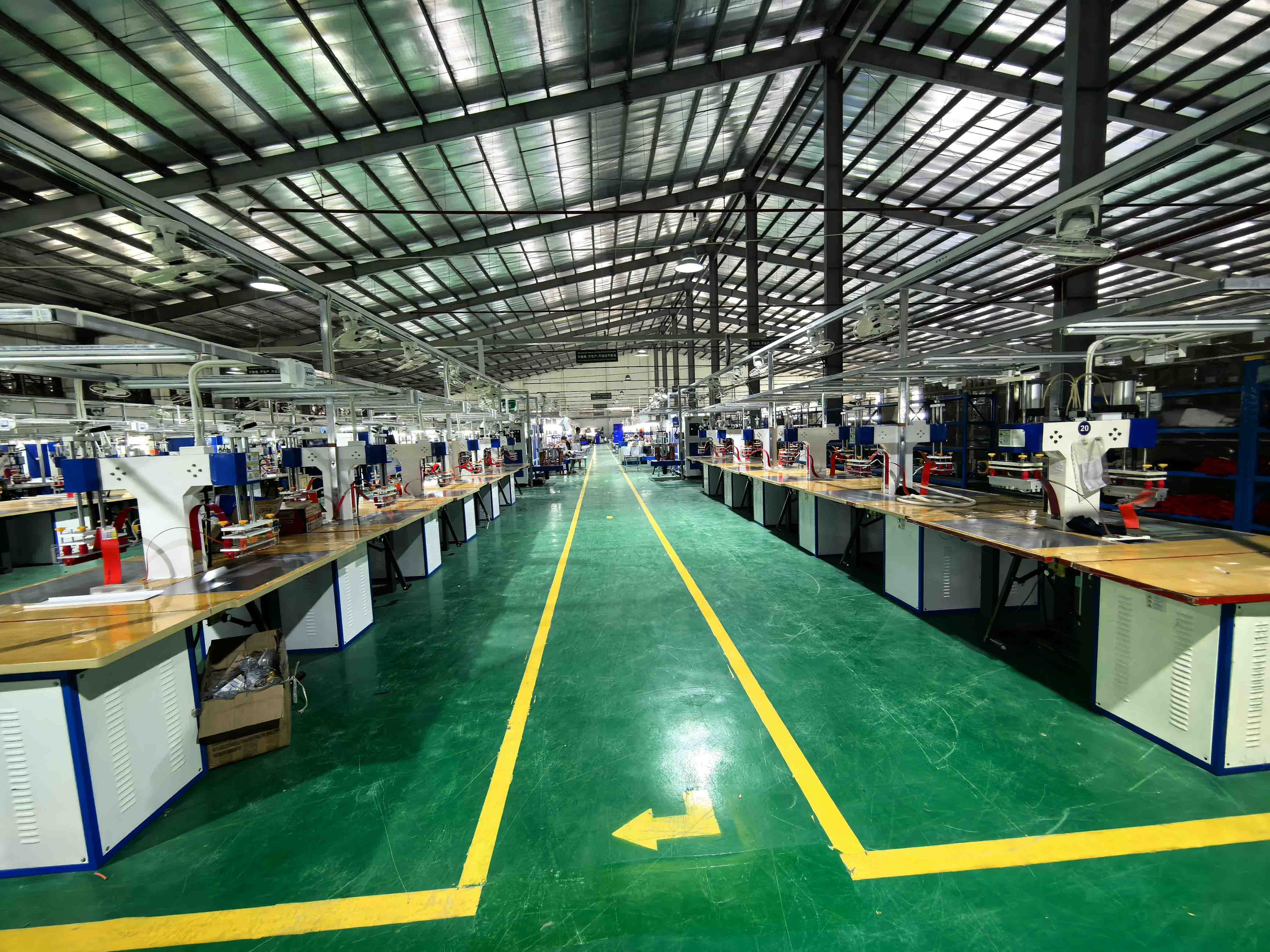
Alt: Sealock's SCAN-certified high-capacity manufacturing facility in Vietnam, ensuring secure and scalable production for global brands.
6. Frequently Asked Questions for Procurement Teams
Q1: Does sourcing PFAS-Free TPU increase lead times?
A: No. Sealock has proactively secured robust supply chains for high-grade PFAS-Free materials. Our integrated China-Vietnam model ensures raw materials are staged and ready for rapid OEM deployment.
Q2: Can Sealock assist with product redesign to achieve the 1.0 Bar standard?
A: Absolutely. Our Dongguan R&D team regularly consults with brands to optimize their existing designs, replacing failure-prone stitching with 27.12 MHz HF-welded architecture to achieve true submersibility.
Q3: How does the SCAN 97 score specifically benefit US importers?
A: A high SCAN score demonstrates a secure supply chain, aligning with C-TPAT guidelines. This categorizes your shipments as "low risk," significantly reducing the likelihood of costly and time-consuming US Customs examinations at the port of entry.
Secure Your 2026 Supply Chain Today
Partner with the manufacturer that sets the global standard for submersibility, environmental compliance, and supply chain security. Explore our technical capabilities and secure your OEM production slot.