
- English
- Español
- Português
- русский
- Français
- 日本語
- Deutsch
- tiếng Việt
- Italiano
- Nederlands
- ภาษาไทย
- Polski
- 한국어
- Svenska
- magyar
- Malay
- বাংলা ভাষার
- Dansk
- Suomi
- हिन्दी
- Pilipino
- Türkçe
- Gaeilge
- العربية
- Indonesia
- Norsk
- تمل
- český
- ελληνικά
- український
- Javanese
- فارسی
- தமிழ்
- తెలుగు
- नेपाली
- Burmese
- български
- ລາວ
- Latine
- Қазақша
- Euskal
- Azərbaycan
- Slovenský jazyk
- Македонски
- Lietuvos
- Eesti Keel
- Română
- Slovenski
- मराठी
- Srpski језик

Welding the Hardest Part of a Dry Bag: The See-Through Window
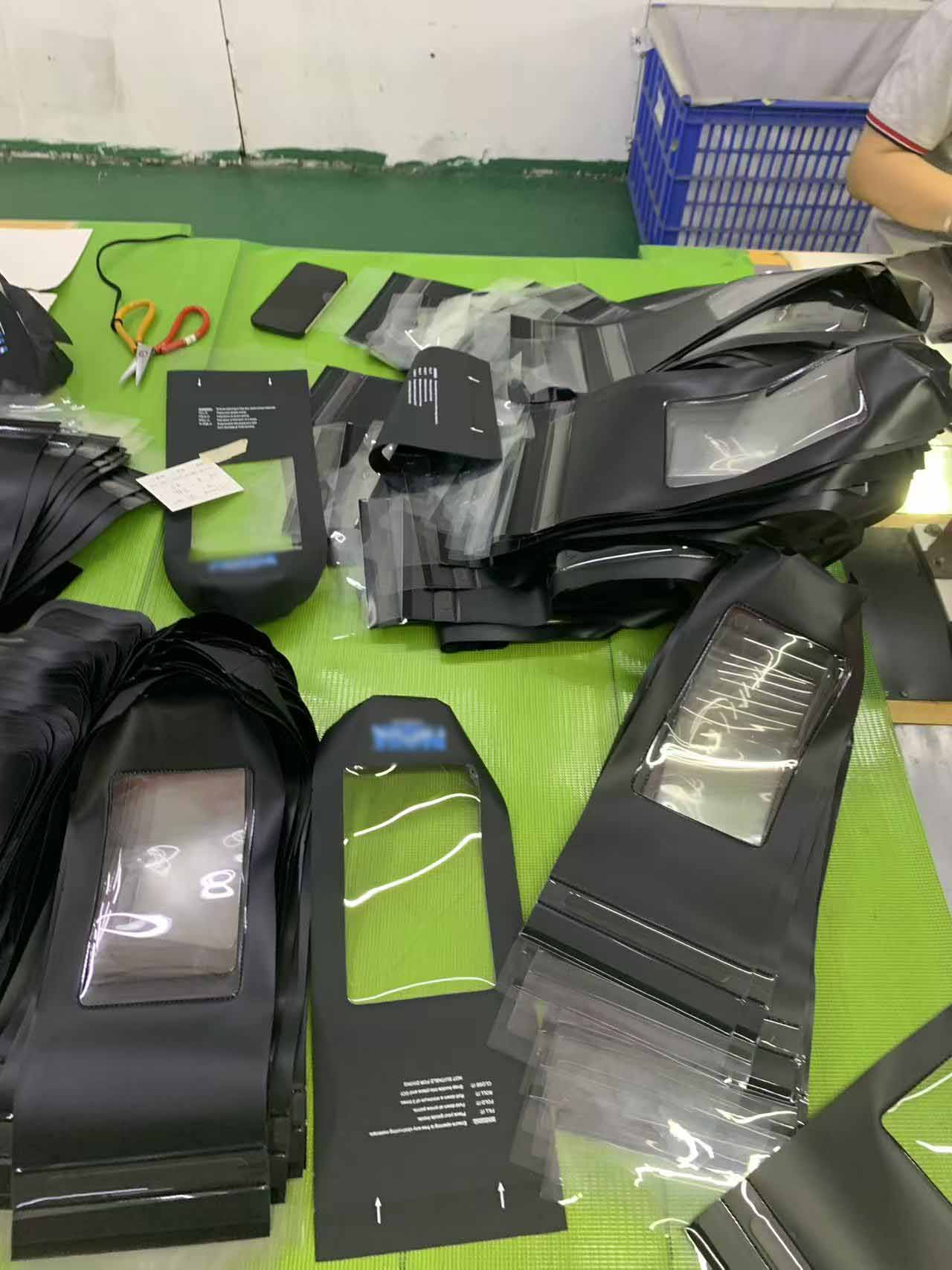
Inside a Sealock production run of clear-window roll-top dry bags — where a transparent panel has to become one continuous, leak-free membrane with an opaque body
DONGGUAN, China — [July], 2026 — A production run of see-through roll-top dry bags is moving through the high-frequency welding lines at Sealock (Dongguan Yifulong Outdoor Products Co., Ltd.) this week. Built for an overseas brand customer, the bags pair a black waterproof body with a clear front window — a combination that looks simple on a product page and is, in fact, one of the more demanding things a waterproof-bag factory is ever asked to weld.
This run is worth a closer look precisely because so much of the work is welding. There is very little stitching here to hide behind. What holds these bags together — and what keeps water out — is a series of fused, hole-free seams, and the most unforgiving of them is the one that joins a transparent panel to an opaque one.
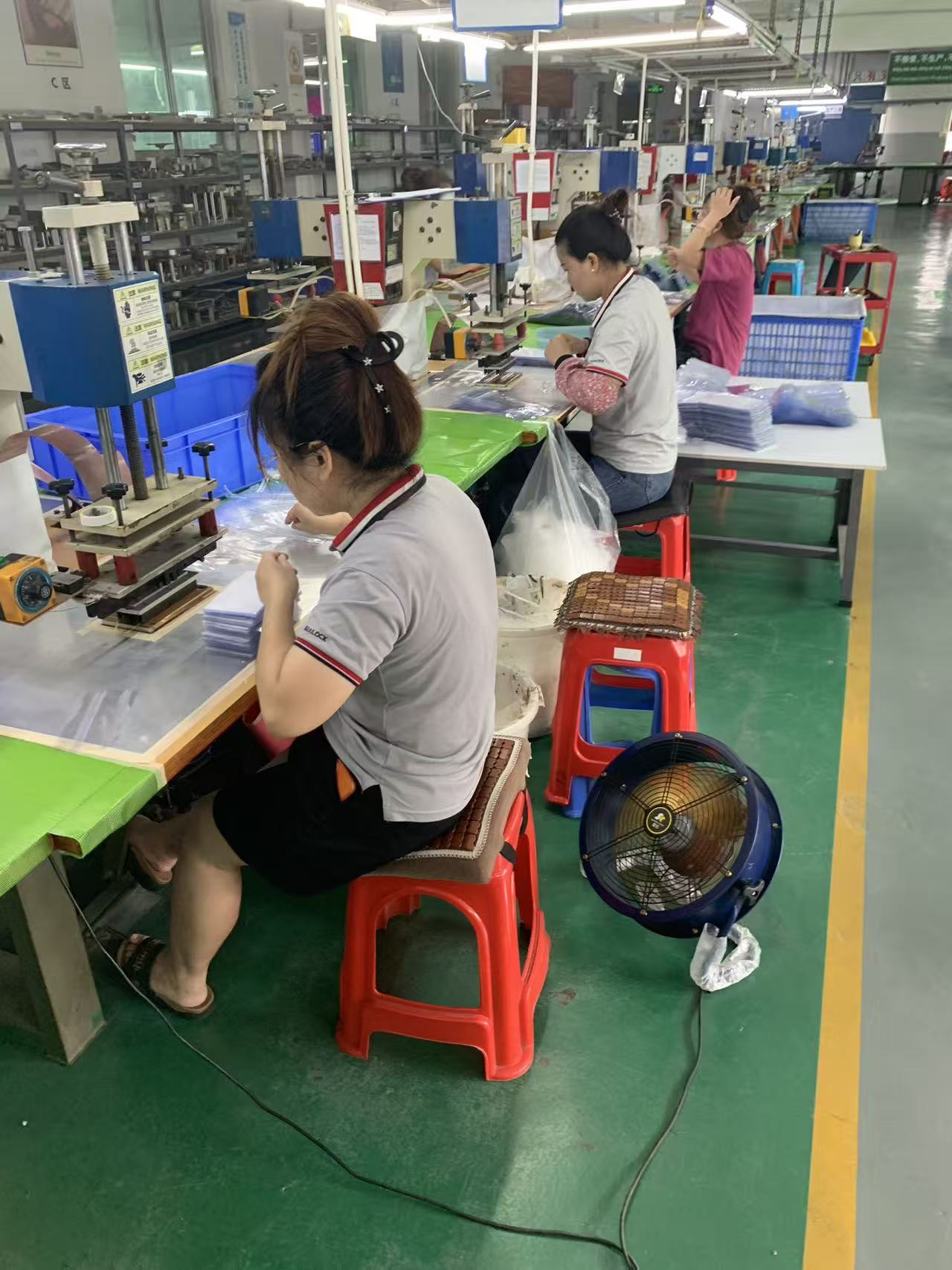
Why the clear window is the whole challenge
On most dry bags the body is a single opaque material, and a competent factory can weld it cleanly all day. A window changes the problem entirely. Now the seam has to fuse two different things — a clear TPU panel and the coated body fabric — into one continuous membrane, with no gap, no bubble and no puncture anywhere along the joint. If that transition isn't perfect, the window becomes the one place the bag leaks, and it's the first place a customer looks.
Clear material also removes any margin for hiding flaws. On black fabric a slightly uneven weld disappears; on a transparent panel every bubble, scorch mark and misalignment is visible to the naked eye, so the window has to pass a cosmetic bar and a waterproof bar at the same time. That's why, on this run, the window panels are welded as their own dedicated step before they ever reach a bag body — cut, aligned and fused under controlled heat and pressure, then checked while they're still flat and easy to inspect.
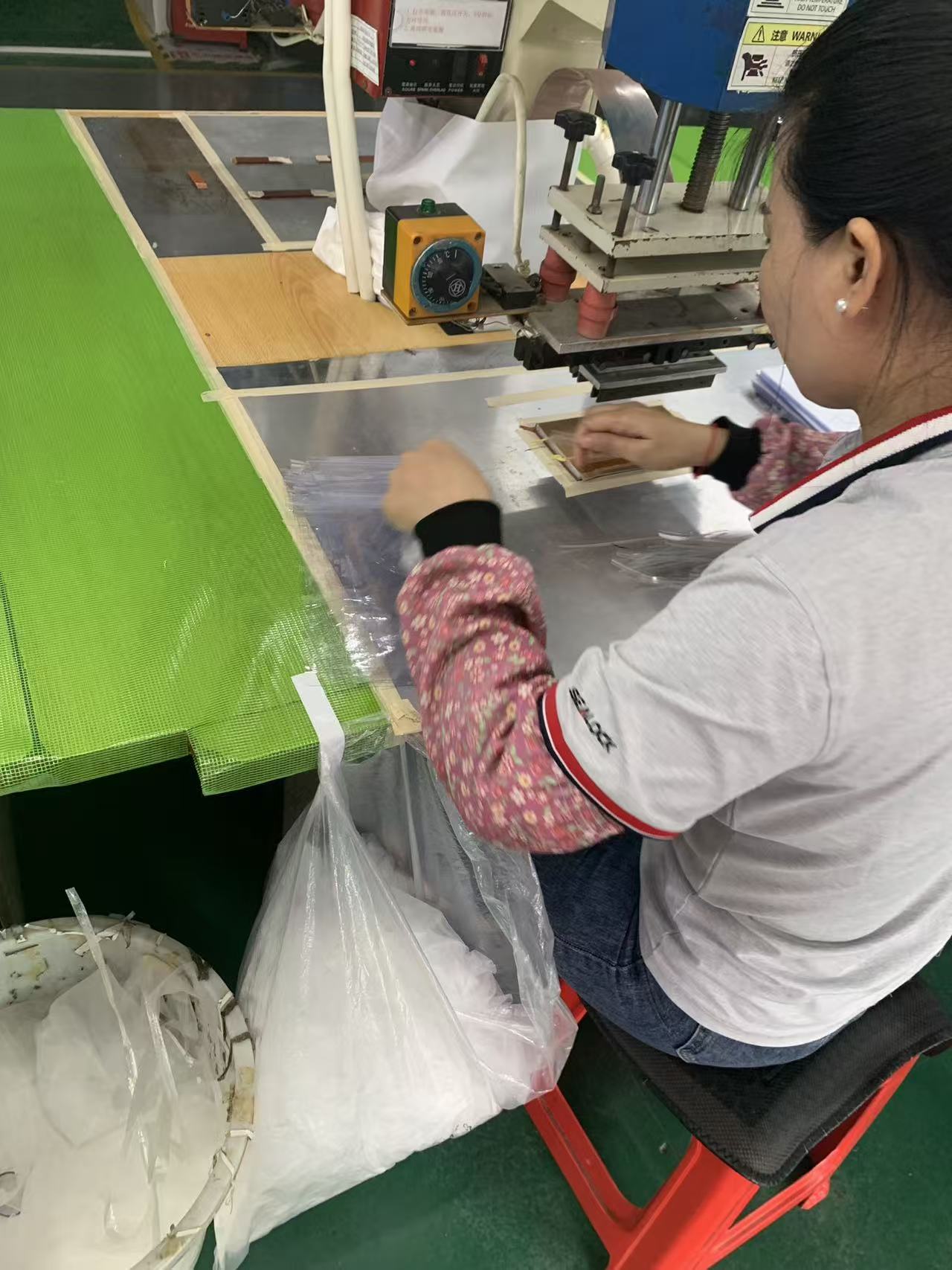
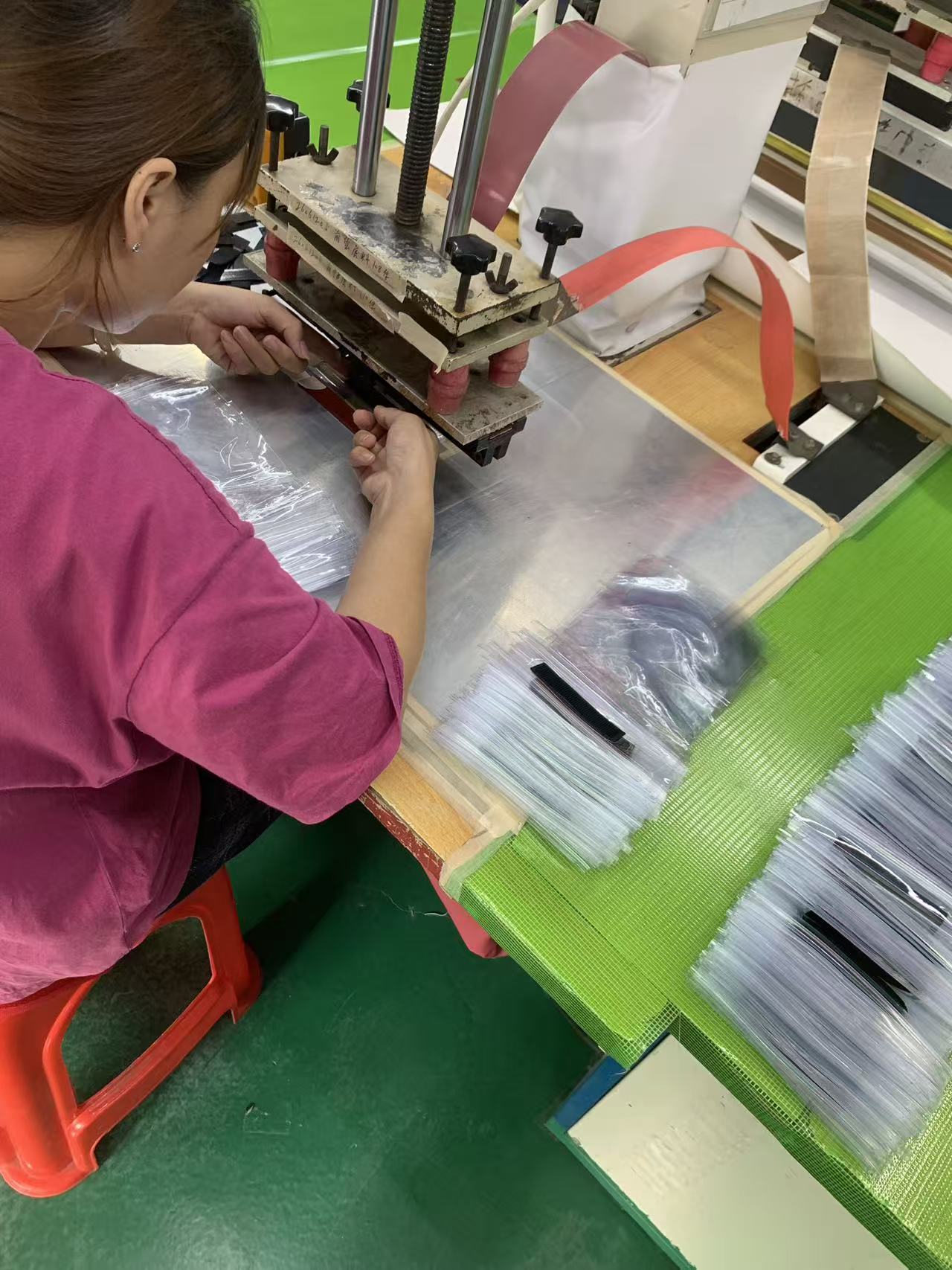
Fused into the body, not stitched onto it
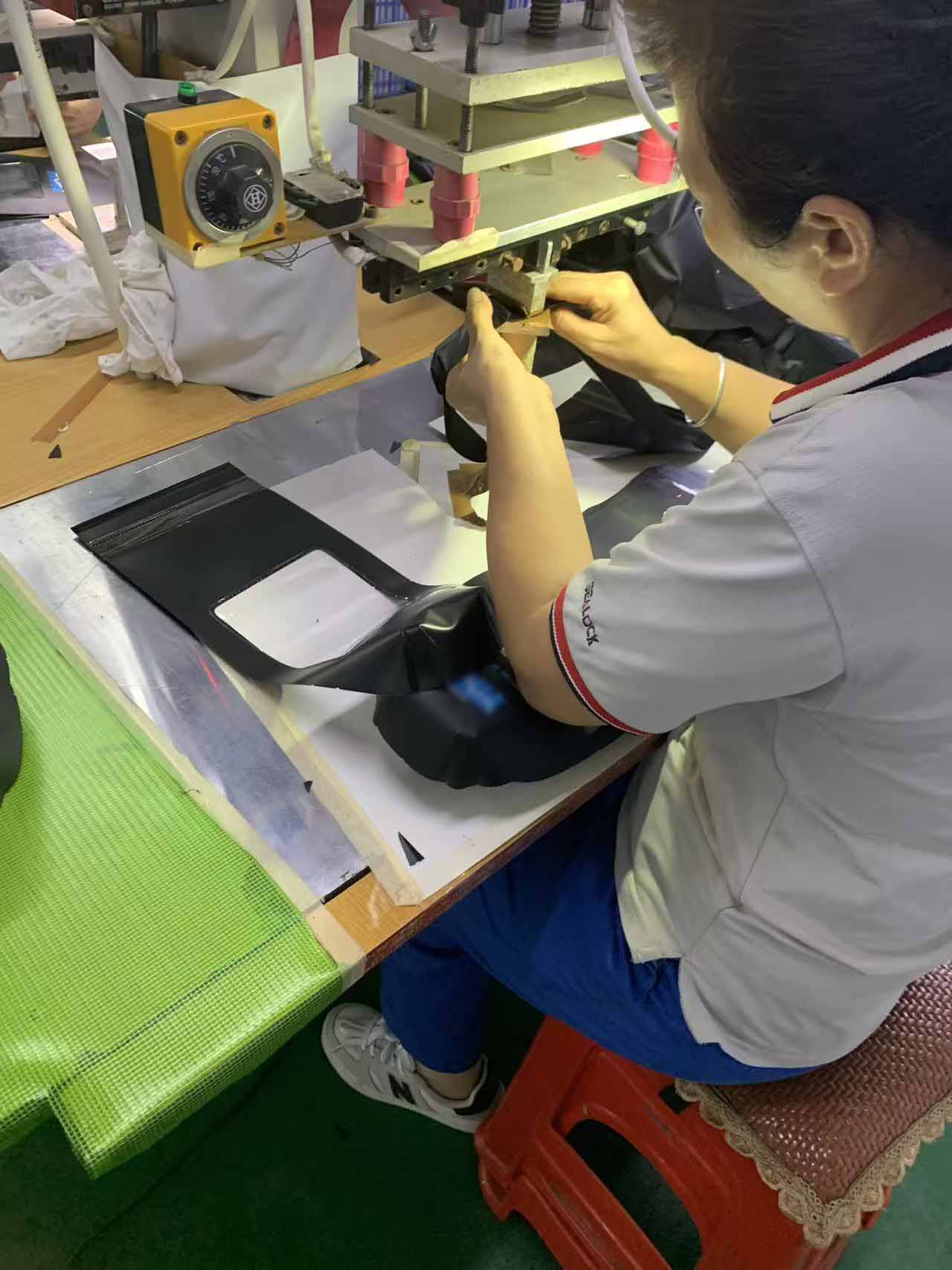
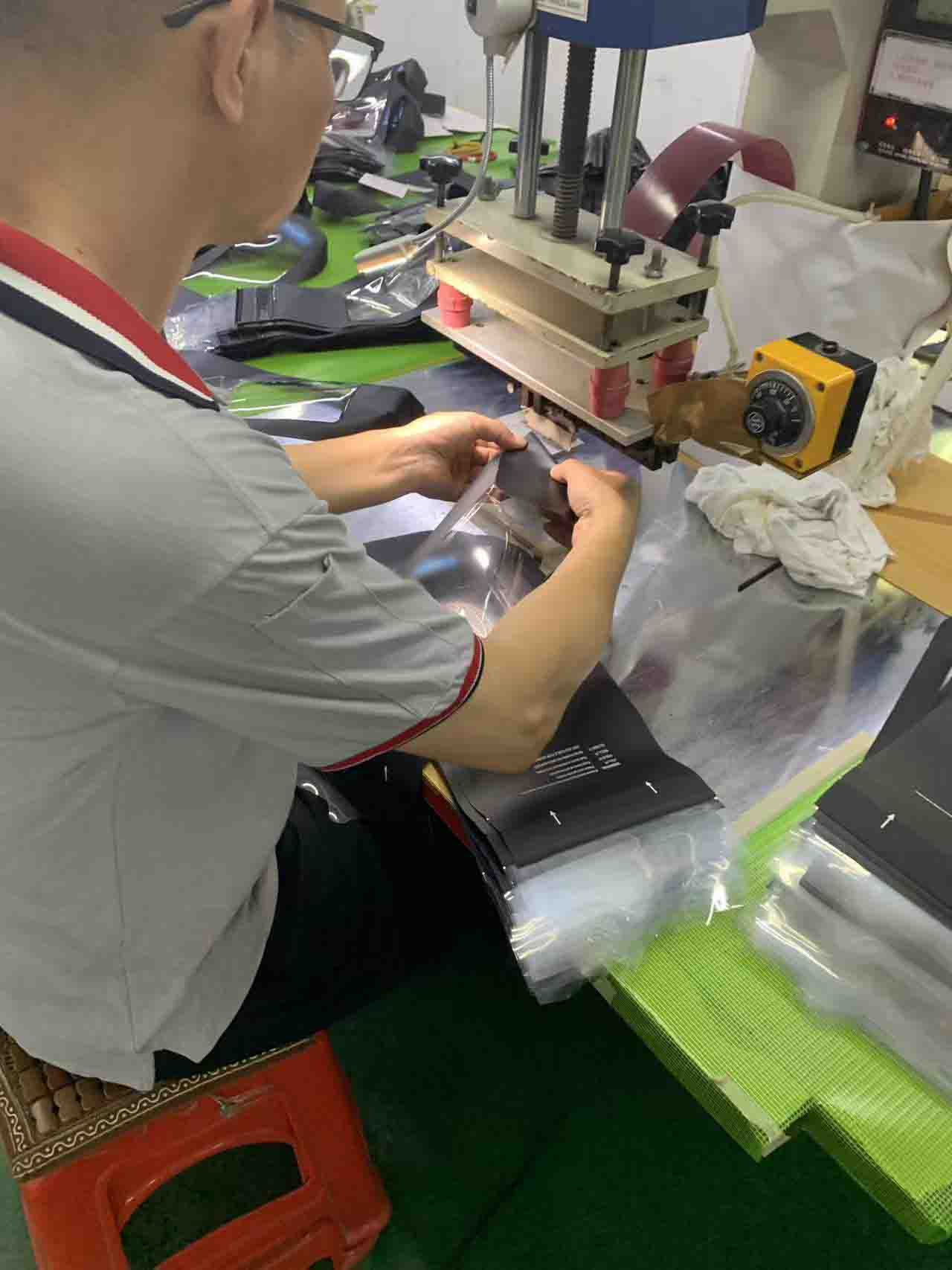
Once the windows are welded and cleared, they're joined to the body panels — again by welding, not sewing. High-frequency welding excites the polymer coating on the fabric until the panel and the body fuse into a single mass at the joint; there's no thread, no needle hole and no separate adhesive that can later peel. On a finished panel you can see the window sitting in the body as if it grew there, framed by a smooth weld line rather than a row of stitches.
This is the core discipline behind everything Sealock builds. A stitched seam is, by definition, a line of punctures, and every puncture is a path water can eventually travel. Welding removes the path instead of trying to seal around it — which is the difference between a bag that is genuinely waterproof and one that merely resists a light shower.
Honest about what it is: a roll-top, not a dive bag
These bags close the way the best simple dry bags do — fold the opening, roll it down several turns, and clip. There's no zipper to crack or jam; the waterproofing comes from the rolled seal working against a fully welded body, and the air trapped inside as you roll is also what lets the bag float if it goes overboard.
It's worth being straight about the limit, because the product itself is: the printed instructions on the body read "not suitable for diving." A roll-top dry bag is built for surface water — rain, spray, a dropped bag, a capsize, a wet deck or riverbank — not for the sustained pressure of being taken down to depth. Sealock builds and rates these bags for exactly what they're for, and prints that boundary on the bag rather than letting a buyer assume more. Getting the claim right is part of getting the product right.
Consistency is the real test at volume
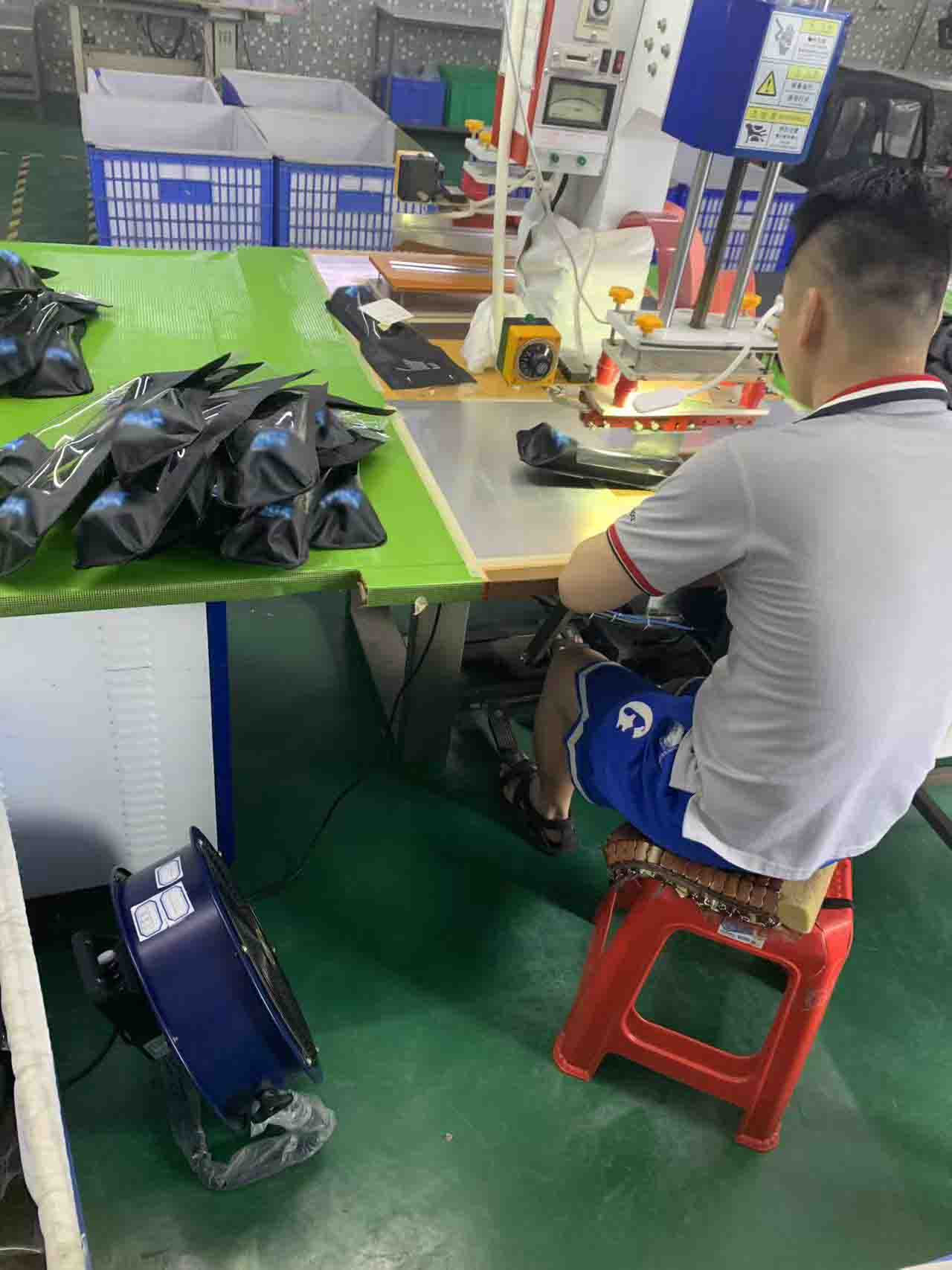
Any factory can produce one good welded window. Producing hundreds that are all leak-free is the harder problem, and it comes down to control. Weld quality depends on the right combination of current, dwell time and tooling: too little and the joint never fully fuses and will peel; too much and the material thins and embrittles at the seam. That's why the welding presses are run to set parameters and monitored rather than left to feel, and why finished bags are pulled for leak and air-tightness checks rather than passed on looks.
Across the run, inspection happens as the work moves — incoming material, in-process welding and finished units — with each piece handled and any defect flagged for rework instead of shipped. The standard the plant holds to is posted on the wall and unglamorous by design: don't accept, don't make, and don't pass on a defect.
Built in-house, by the people who weld them
What makes all of this repeatable is that it happens under one roof. Sealock has built waterproof and soft-sided bags for over 20 years from its own lines in Dongguan, China and Ho Chi Minh City, Vietnam. Because the factory welds, assembles and tests in-house rather than sub-contracting the difficult steps, it can stand behind an OEM or ODM program end to end — window, body, print, hardware and final QC are all decisions it owns. For brands, that control is the point: a see-through dry bag succeeds or fails at a single welded seam, and it's better when one factory answers for that seam from tooling to test.
About Sealock
Sealock (Dongguan Yifulong Outdoor Products Co., Ltd.), founded in 2003, is a manufacturer of high-frequency welded waterproof bags and soft-sided cooler bags, with production bases in Dongguan, China and Ho Chi Minh City, Vietnam. Its product range spans roll-top dry bags, waterproof backpacks and duffels, and soft cooler bags, produced for outdoor, marine and lifestyle brands worldwide under OEM and ODM programs. The company's systems and certifications include ISO 9001, BSCI, SMETA and GRS.
Media / business contact: info@sealock.com.hk